Thailand's 2026 Welfare Card: New Rules, Dates, How to Check Status
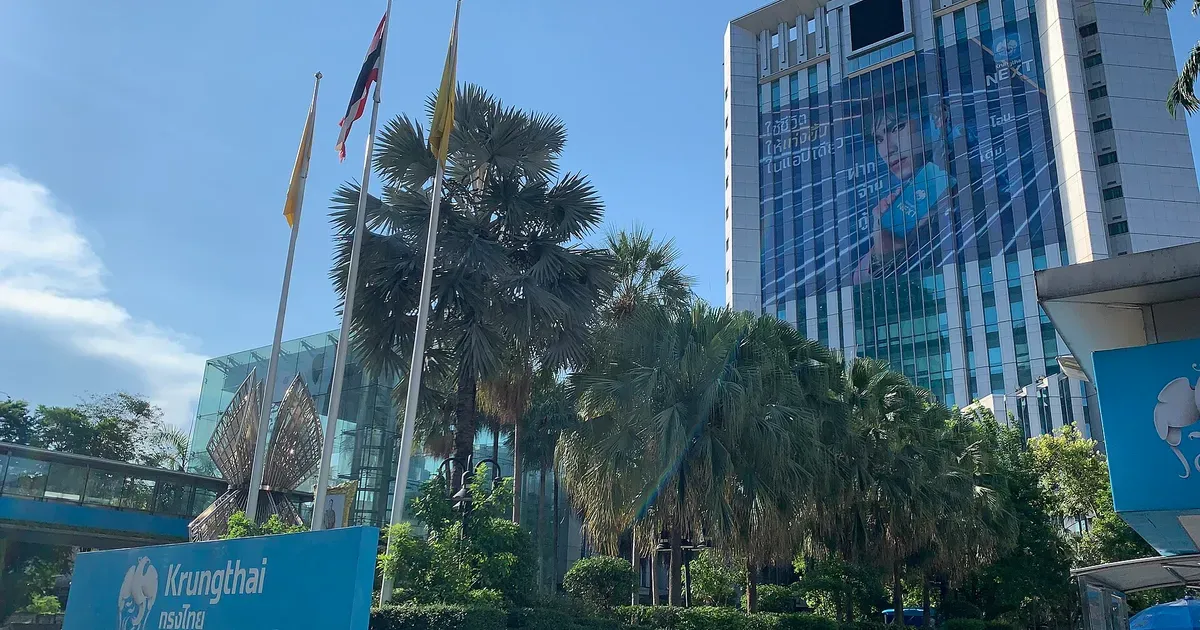
Every September, millions of Thais holding the State Welfare Card face the same question: "does my card still work?" This year the question matters more than usual, because it's a year of system-wide rule changes — the old card is about to expire, the new rules are stricter, and the verification process is more complicated than most people expect.
Whether you already hold a State Welfare Card or you're wondering if you'll qualify under the new round, this article puts everything you need in one place — the exact numeric eligibility criteria, a timeline of exactly which stage things are at right now, all 3 ways to check your status, the real baht value of the benefits, and what to do if you don't qualify. Read to the end and you shouldn't need to look anywhere else.
This article is based on announcements and reporting from the Ministry of Finance, the Comptroller General's Department, and reputable Thai media as of early September 2026 — conditions and dates can still be extended, so confirm with official channels before acting.
What's happening: why 2026 is a "whole system" rule change
The State Welfare Card (often called the "poor person's card" in everyday conversation) is a programme that channels cost-of-living benefits to low-income Thais through an electronic card, running since 2017 with periodic review rounds. The last major round, closed in 2022, qualified more than 14 million people.
The 2026 round is different because the Cabinet approved a complete overhaul of the eligibility criteria to target the intended group more precisely, after finding loopholes that let people better off than intended slip through — such as holders of small-value securities that weren't counted, or owners of certain business types whose real income was never checked. The new criteria add several disqualifying conditions, and in this round roughly 18.8 million people registered, but only about 9.5 million passed the initial screening — nearly half of all registrants were screened out, a clear sign the new rules bite harder.
What makes this round more confusing than previous ones is that the schedule has been extended multiple times — the identity-confirmation deadline for existing cardholders, the review-request deadline, and the data-correction deadline with agencies have all moved. That's left many people unsure which stage they're in right now (early September 2026) — the next section lays out the full timeline step by step.
The full timeline: where things stand right now, and what to do next
In chronological order (both what's already happened and what's still to come, counting from today, 2 September 2026):
| Period | Event | Status today |
|---|---|---|
| 4-21 Jun 2026 | Existing cardholders confirm identity / continued eligibility | ✅ Already passed |
| 17-31 Aug 2026 | Review-request window opens for those who didn't qualify (extended from 31 Jul) | ✅ Requests closed |
| Through 20 Sep 2026 | Local verification offices check and correct data for review applicants (extended from 16 Aug) | 🔄 In progress |
| ~21 Sep 2026 | Review results expected to be announced | ⏳ Pending (date may shift given earlier extensions) |
| 30 Sep 2026 | Previous-round card benefits expire (extended from 31 Jul) | ⏳ Approaching |
| 1 Oct 2026 | New-round State Welfare Card benefits start nationwide | ⏳ Coming up |
| Through 12 Jan 2027 | e-KYC identity verification deadline for "partially qualified" status | ⏳ Time to prepare |
What to do right now if you're an existing cardholder or previously registered: open the Pao Tang or Tang Rat app and check your status immediately. Don't wait until 30 September. If your status is "partially qualified," you technically have until January 2027 to complete e-KYC — but waiting until close to the deadline risks system overload when everyone rushes in at once. And if your status is "not qualified," you'll know early enough to build a backup financial plan before the old benefits expire at the end of this month.
Who qualifies for the 2026 State Welfare Card — the detailed income and asset criteria
Applicants must pass every single criterion, not just one. Here is the full list:
General eligibility
- Thai nationality, at least 18 years old (as of the registration date)
- Not bankrupt, not an ordained monk/novice/clergy member, and not currently incarcerated
- Not a civil servant, state enterprise employee, or holder of a political office
Income and savings criteria
- Personal income no higher than 100,000 baht per year (counting only the applicant's own income, not household income)
- Combined bank savings across every account, plus bonds and other securities held, no higher than 100,000 baht
- Combined unused credit lines across all accounts no higher than 100,000 baht
- No credit card of any kind is allowed — even one with no outstanding balance or that's never been used. Simply holding a credit card in the system disqualifies you immediately.
Property criteria (real estate)
- Condo unit: combined ownership no larger than 35 square metres
- Detached house or townhouse (including land): no larger than 25 square wah
- Agricultural land: no larger than 10 rai
- Other (non-agricultural, non-residential) land: no larger than 1 rai
- If you own both a house/condo and separate land, the combined proportion is calculated per the Comptroller General's Department's formula
Vehicle criteria
- Only allowed to own a motorcycle under 300cc, a commercial three-wheeler, or certain agricultural pickup/vehicle types — one of each at most
- This round relaxes the rule for very old vehicles: motorcycles older than 15 years and cars, trailers, or agricultural vehicles older than 20 years are no longer counted as disqualifying assets (unless they are rare or unusually high-value) — so someone relying on a single old vehicle for daily use isn't unfairly disqualified
New conditions added for the 2026 round
- Students enrolled in certain "non-formal education for all ages" programmes are excluded from the student exemption that used to apply to some conditions
- Owners of limited partnerships, social enterprises, and community enterprises are now counted as having business income and must declare it truthfully, rather than qualifying for the old blanket exemption
- Securities or bond accounts with no real ownership rights, or with very low combined value, are no longer automatically counted as a disqualifying asset the way the old criteria treated them (a slight easing on this one point)
Passing every item above still doesn't guarantee approval — results wait on cross-checking against multiple government databases (the Revenue Department, Department of Lands, Department of Provincial Administration, Social Security Office, and others), which is why the whole process takes several months.
The actual benefits — shopping allowance, transport, utility support
 Photo: Dieglop — CC BY-SA 4.0 (Wikimedia Commons)
Many people ask "how much cash do I actually get per month?" The answer is that the State Welfare Card doesn't pay out as pure cash — it's split into purpose-specific allowances, as follows (figures as of the current benefit cycle, September 2026):
| Benefit category | Monthly amount | Where to use it |
|---|---|---|
| Shopping for everyday goods | 300 baht/person | Blue Flag low-price stores and merchants with an EDC card reader / Thung Ngern app |
| Public transport | 750 baht/person | BMTA buses, BTS/MRT, State Railway trains, and participating shared-service vehicles |
| Cooking gas | 80 baht/person every 3 months | Participating cooking-gas retailers |
| Electricity | Up to 315 baht/household (paid against actual usage) | Deducted directly from your electricity bill |
| Water | Up to 100 baht/household (paid against actual usage) | Deducted directly from your water bill |
| Disability top-up | 200 baht/person (disability-card holders only) | Added to the card's balance |
The most common misunderstanding: the electricity and water allowances are not a fixed cash amount every month — they're a discount against your actual usage. If your electricity bill for the month is below 315 baht, you only get a discount equal to what you actually used, not the full 315 baht to spend elsewhere. The shopping and transport allowances are likewise "spending credit," not withdrawable cash to use however you like (cash withdrawal from the card has separate, limited conditions that can change between rounds — check your own Pao Tang app for the current rule).
 Photo: User:Diliff — CC BY-SA 3.0 (Wikimedia Commons)
How to check your status — the 3 outcomes explained
 Photo: Itpcc — CC BY-SA 4.0 (Wikimedia Commons)
Check through 4 free channels:
- welfare.mof.go.th website — enter your 13-digit national ID number and date of birth
- Pao Tang app — State Welfare Card menu
- Tang Rat app — benefits status-check menu
- Counters of 5 state banks — Krungthai, Government Savings Bank, BAAC, GH Bank, and the Islamic Bank of Thailand, with your physical ID card
Results fall into 3 statuses:
- Fully qualified (all green checkmarks): benefits start automatically from the programme's start date — no further action needed. Just wait for benefits to begin on 1 October 2026.
- Partially qualified: your income/asset data passed, but you still need to complete digital identity verification (e-KYC) by 12 January 2027, through the Pao Tang or Tang Rat app, using your phone's front camera to scan your face against your ID card record.
- Not qualified: you failed one or more criteria. You can file for a review during the designated window (see the next section).
How to appeal if you don't qualify — and what to do if you missed this round's deadline
For the 2026 round, the "review request" window ran 17-31 August 2026, which has already closed as of when this article was written. Applicants who filed in time now need to bring documents to verify or correct their data with a verification agency (district or subdistrict office, or a designated agency) by 20 September 2026, then wait for the new results — expected around late September to early October 2026.
If you missed this round's review deadline, here's what you can still do:
- Watch for the next review round announcement — this programme reopens review periods periodically throughout its life, not just once. Follow the Comptroller General's Department website (cgd.go.th) or the official "State Welfare Card" Facebook page.
- Prepare your documents in advance — your physical ID card, house registration, income evidence (payslips or an income certification letter), and every bank passbook you hold, so you can file the moment the next round opens instead of scrambling for documents.
- Correct any inaccurate records ahead of time — if you know you failed because of outdated land registry or house registration data (for example, your name is still listed on an inherited land title that was never formally divided or sold, or a credit card you cancelled is still showing as active in the bank's system), contact the relevant agency (Department of Lands, the card-issuing bank) now to correct the central database. This makes it far more likely you'll pass the next review round.
Common mistakes that cost people their benefits for no reason
- Assuming the old card renews automatically — it doesn't. The previous round's benefits expire completely on 30 September 2026. Only qualifying under the new 2026 criteria restores your benefits; there's no automatic renewal for existing cardholders.
- Forgetting to complete e-KYC before the deadline — "partially qualified" status gives you until January 2027, but many people put it off and simply forget. The system revokes the benefit automatically the moment the deadline passes, and there isn't always a repeated reminder. Do it as soon as you learn your status — it only takes a few minutes.
- Holding an unused credit card that was never formally closed — a credit card account left open with no balance still disqualifies you, because the system checks for "having a card," not "having debt on it." If you're not using it, call the issuing bank and close the account properly before the next registration round.
- Not realising your name is still on an old land title — many people inherit land jointly with siblings but never formally divide or sell it, so their name stays on the title even though they get no real benefit from it. This counts as exceeding the land-ownership limit even though the land isn't really "theirs" in practice. Check your own name on any land title at the Land Office before applying.
- Confusing "spending credit" with "cash" — as explained above, the shopping and transport allowances can only be spent through participating merchants and transport systems, not withdrawn as cash to spend on anything else.
If you don't qualify — build a financial backup plan before the old benefits expire
If you check and find you don't qualify this round, the priority is planning for the expenses the benefit used to cover (transport, water, electricity) before the old card expires at the end of September. Two things are worth doing in parallel: rebuild your monthly budget to cover the costs the benefit used to offset, and if you're carrying any debt, tackling it systematically will do a lot to protect your cash flow during the gap. See the full step-by-step approach in our systematic debt payoff guide, which covers both the snowball and avalanche methods and the Debt Clinic by SAM programme that cuts interest to 3-5% a year for people with credit card or personal loan debt.
The other thing people often overlook is gradually building an emergency fund, even starting from a small amount. Without a state benefit cushioning your monthly expenses anymore, an unexpected cost — a sudden medical bill, a gap in income — hits your wallet directly and harder. See how much you should aim for and how to actually build it in our emergency fund guide.
Bottom line: check your status today, don't wait until 30 September
The 2026 State Welfare Card round genuinely tightened the rules (only 9.5 million of 18.8 million registrants passed), and its schedule has shifted enough times to confuse almost everyone. But the short version everyone needs to know is: the old card expires 30 September 2026, the new card starts 1 October 2026. In between, check your own status through the Pao Tang or Tang Rat app right now — if you're partially qualified, complete e-KYC promptly even though you technically have until January 2027, and if you don't qualify, start building a financial backup plan now and prepare your documents for the next review round.
A few minutes of preparation today beats discovering you've lost your benefits on 1 October, after the old ones have already expired.
Sources
- Thairath — 2026 State Welfare Card latest conditions, benefits start together 1 October 2026
- Thai PBS — Checking 2026 State Welfare Card status, pass or fail, what to do
- Thai PBS — Comparing 2022 vs 2026 State Welfare Card eligibility, 5 new excluded groups
- Thai PBS — 2026 State Welfare Card new conditions, results announced 17 Jul, benefits start 1 Aug
- Sanook — Checking 2026 State Welfare Card status, the 3 outcomes and what to do next
- Cheewid — 2026 State Welfare Card update: who qualifies, how to apply, how to check
Frequently asked questions
- When does the 2026 State Welfare Card start, and when does the old card expire?
- The new 2026 round of the State Welfare Card lets everyone who qualifies start using their benefits together from 1 October 2026 onward. Anyone holding the previous round of the card can keep using it only through 30 September 2026 — after that, the old benefits expire immediately and only qualifying under the 2026 criteria restores them. Check your own status through the Pao Tang or Tang Rat app before the end of September so your benefits do not lapse.
- What are the 2026 income and asset requirements for the State Welfare Card?
- Applicants must have personal income no higher than 100,000 baht per year; combined bank savings plus bonds and other securities no higher than 100,000 baht; no more than 100,000 baht in unused credit lines; and no credit card of any kind. On property, applicants must not own a condo unit larger than 35 square metres, a detached house or townhouse (with land) larger than 25 square wah, agricultural land larger than 10 rai, or other land larger than 1 rai. Applicants must hold Thai nationality and be at least 18 years old.
- How do I check my 2026 State Welfare Card status, and what do the 3 outcomes mean?
- Check through 4 channels: the welfare.mof.go.th website, the Pao Tang app, the Tang Rat app, or the counters of 5 state banks (Krungthai, Government Savings Bank, BAAC, GH Bank, Islamic Bank of Thailand), using your 13-digit national ID number and date of birth. Results fall into 3 statuses: (1) fully qualified — benefits start automatically with no further action; (2) partially qualified — you must complete e-KYC identity verification by 12 January 2027; and (3) not qualified — you may file for a review during the designated window.
- I missed the 31 August 2026 review deadline — what can I do now?
- This round's review-request window (17-31 August 2026) has already closed. If you missed it, the next step is to watch for the next review round announcement from the Comptroller General's Department and Ministry of Finance — the programme reopens review periods periodically throughout its life. In the meantime, prepare your documents (ID card, income evidence, house registration) and correct any inaccurate personal records with the relevant agencies now, so the next round is easier to pass.
- What benefits does the State Welfare Card actually pay, and how much per month?
- The core monthly benefits loaded onto the card are: a 300-baht-per-person shopping allowance usable at Blue Flag stores and participating merchants; a 750-baht-per-person public transport allowance covering buses, BTS/MRT, and trains; an 80-baht cooking-gas subsidy every 3 months; electricity bill support up to 315 baht per household (paid against actual usage); water bill support up to 100 baht per household (also against actual usage); and a 200-baht monthly top-up for cardholders with a disability card. These figures reflect the current benefit cycle and can be adjusted in future rounds.
- I got 'partially qualified' — what do I do next, and what is e-KYC?
- A 'partially qualified' status means your income and asset data passed, but the system could not complete digital identity verification (e-KYC). Do this through the Pao Tang or Tang Rat app, which uses your phone's front camera to scan your face against your ID card record — it takes just a few minutes with good lighting and a stable connection. You must finish this by 12 January 2027, or the benefit is automatically forfeited and you must wait for the next application round.
Related articles

Thailand Home Loan Guide 2026: Rates, Approval, Affordability
2026 Thailand home loan guide: compare bank rates, check DSR affordability, LTV rules, transfer/mortgage fees, and the mortgage interest tax deduction.

Crypto for Beginners 2026: Start Smart and Stay Safe
Beginner's crypto guide 2026 — what crypto is, the real risks, Thai SEC-licensed exchanges, the 2025–2029 tax exemption, and scams to avoid.

DCA Investing for Beginners 2026: Grow Your Money by Investing Steadily
Beginner's guide to DCA investing in 2026 — how average cost works, choosing funds, stocks, gold or crypto, and auto-invest platforms in Thailand.