US Imposes 12.5% Tariff on Thai Goods, Thailand Races to Negotiate It Down to 10%

The United States began formally charging a 12.5% tariff on most Thai goods from July 24, 2026, replacing the temporary 10% rate that had applied before. The Office of the US Trade Representative (USTR) says Thailand hasn't done enough to block imports made with forced labour — Thailand is one of 38 trading partners placed in this 12.5% bracket. Thai officials say they're pushing hard to negotiate the rate down.
What happened
The tariff falls under Section 301 of the US Trade Act of 1974 — different from the broader "reciprocal tariffs" many countries have faced since early in the year, because Section 301 measures carry no automatic expiry date. USTR concluded that Thailand's failure to prohibit forced-labour-made imports burdens US commerce, and applied the tariff alongside dozens of other trading partners worldwide.
The one piece of good news for Thai exporters: negotiators secured an exemption for 2,120 product lines, representing more than half the total value of Thailand's exports to the US. Exempt categories include integrated circuits (chips), aircraft parts, natural rubber, tapioca starch, pineapple and other processed fruit, plus goods already covered by separate national-security tariffs such as automobiles, steel, aluminium and copper.
Why Thailand didn't get the same low rate as its neighbours
What's stinging for many in Thailand is that neighbours Malaysia, Indonesia and Cambodia landed a 10% rate — even though some of them don't have forced-labour laws any stricter than Thailand's. The difference is that those countries fully accepted the terms of an Agreement on Reciprocal Trade (ART) with Washington, which qualifies them for the lower base rate. Countries still negotiating, like Thailand, remain at the higher rate.
Thailand and the US signed a joint framework statement for an ART back in October 2025 and have been negotiating the details ever since. Dr Kirida Bhaopichitr, Vice Minister for Commerce, says Thailand has compiled proposals from relevant agencies and submitted them to the US side, and is now waiting to hear whether they'll be accepted or whether further changes will be requested. She described Thailand's approach as "sacrificing a pawn to save the king" — accepting some smaller concessions to protect the country's broader long-term interests, rather than rushing to close a deal.
The impact on Thai businesses
Between January and May 2026, Thailand exported roughly US$38.037 billion in goods to the US, about 23.5% of its total exports — the US remains one of Thailand's top export markets by a wide margin. The Federation of Thai Industries is urgently assessing the fallout, with the sectors most exposed being processed food, auto parts, textiles and apparel, gems and jewellery, and furniture — none of which made the exemption list.
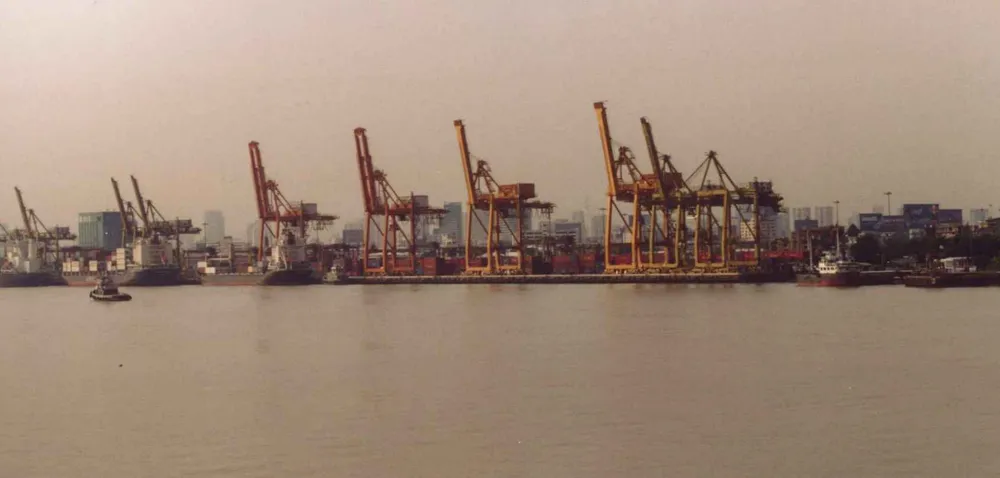 Illustrative photo: Bangkok Port (Khlong Toei), one of Thailand's export gateways — Photo by Ahoerstemeier — CC BY-SA 3.0 via Wikimedia Commons
Federation chair Pimpjai Leeisranukhul says Thai industry has consistently met international labour standards, and is pushing a four-pronged strategy: diversifying export markets, raising compliance standards, developing higher value-added products, and improving supply-chain traceability. Thai Chamber of Commerce chairman Poj Aramwattananont noted that most of Thailand's competitors landed the same or a similar rate, and is urging Thailand to strengthen its own forced-labour legislation as leverage for the next round of talks.
How the government is helping exporters
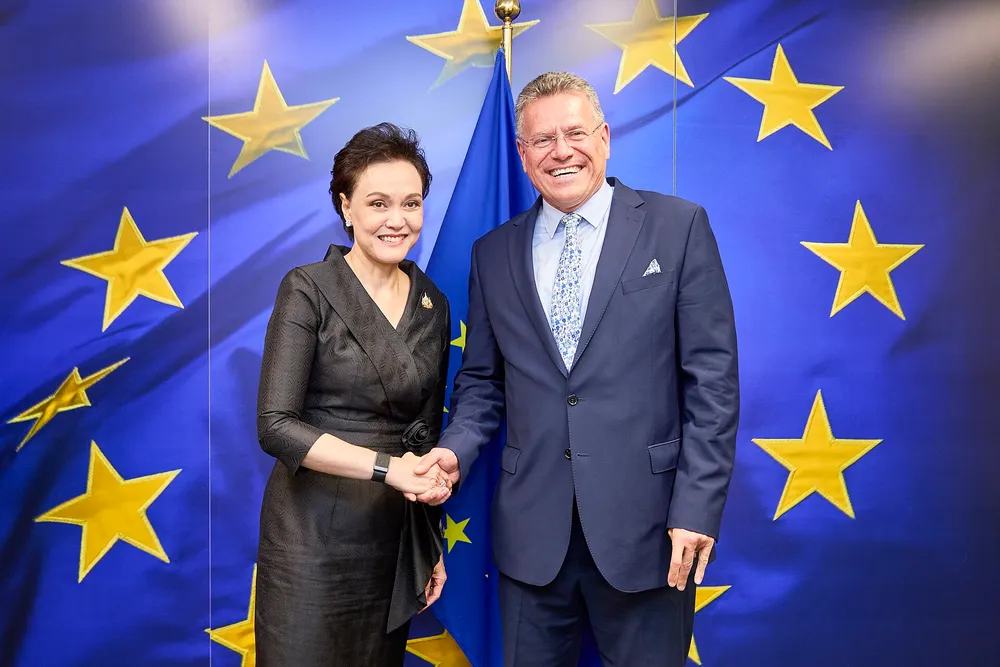 Photo: Suphajee Suthumpun, Deputy PM and Commerce Minister (left), meeting EU representatives earlier in 2026 — Photo by Claudio Centonze / European Union, 2026 — CC BY 4.0 via Wikimedia Commons
Alongside the negotiations, the Commerce Ministry rolled out support measures: low-interest financing for affected exporters, tax relief measures, lower transport and logistics costs, encouraging greater use of domestic raw materials in supply chains, and accelerating market diversification away from reliance on the US alone. Deputy PM and Commerce Minister Suphajee Suthumpun says Thailand continues "discussions with the United States in pursuit of an agreement providing balanced benefits" for both sides.
The bigger risk still ahead
More concerning for Thailand is a second, separate Section 301 investigation into "structural overcapacity" — Washington's concern that goods from other countries, particularly China, are being minimally processed in Thailand before being re-exported as Thai-made products, a practice known as circumvention. If that probe results in an additional 12.5% tariff, Thailand's combined rate could reach 25%. The product groups most at risk include mobile phones, communications equipment, integrated circuits, computers, steel, rubber, auto parts and transformers — together about 31% of Thailand's imports from China that flow into further manufacturing.
Trade economist Dr Aat Pisanwanich says "the US is watching Thailand more closely because the kingdom is deeply linked with China through machinery, components, raw materials and technology" — an issue Thailand will need a clear explanation and traceability measures for in the next round of talks.
What to watch next
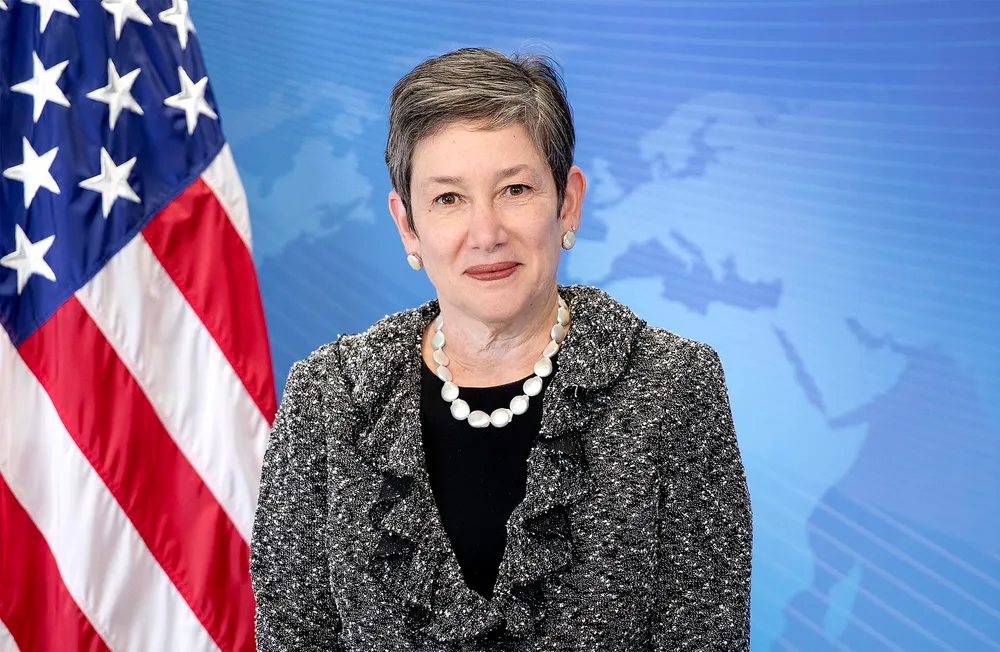 Illustrative photo: María L. Pagán, Deputy US Trade Representative and Chief of Mission in Geneva — one of the senior officials at the USTR office Thailand is negotiating its ART deal with — Photo by Executive Office of the President of the United States — Public domain via Wikimedia Commons
Thailand's negotiating team is waiting to hear back from Washington on the ART proposals it has already submitted — whether they'll be accepted as is or sent back for further changes. Separately, all eyes are on when the overcapacity investigation concludes and whether it adds to Thailand's tariff burden. In the meantime, the government is urging exporters to watch for Commerce Ministry announcements and make use of the loan and support measures already in place while the bigger negotiation plays out.
This comes at a time when Thailand's economy is also getting a boost from AI and electronics investment (Thailand ranked among the world's top 4 AI hardware exporters) — a category that's already exempt from this tariff — which limits the shock mostly to more traditional manufacturing sectors. It's part of a wider pattern of the US hardening its trade stance globally, echoing the 50% tariff Canada was hit with earlier.
Sources
- Nation Thailand — Thailand moves to shield exporters from 12.5% US tariff
- Nation Thailand — Thailand on alert as US Section 301 probe raises tariff risk up to 25%
- Nation Thailand — Thailand, US move ahead on reciprocal trade deal, says Suphajee
- Thai Enquirer — Thailand seeks lower US tariff as 12.5% levy takes effect
- Daily News — Federation of Thai Industries assesses impact of Trump's 12.5% tariff
- USTR — Fact Sheet: The United States and Thailand Reach a Framework for an Agreement on Reciprocal Trade
Frequently asked questions
- What is the 12.5% tariff the US is charging on Thai goods?
- It's an additional import tariff under Section 301 of the US Trade Act of 1974, applied to Thailand and dozens of other trading partners. Washington says these countries haven't done enough to ban imports made with forced labour. It took effect on July 24, 2026, replacing a temporary 10% rate that had applied under Section 122.
- Which Thai goods are exempt from the tariff?
- Thailand negotiated exemptions for 2,120 product lines, representing more than half the total value of its exports to the US. That covers integrated circuits (chips), aircraft parts, natural rubber, tapioca starch, pineapple and other processed fruit, plus goods already covered by separate national-security tariffs such as cars, steel, aluminium and copper.
- Why do Malaysia, Indonesia and Cambodia only pay 10%?
- Because those countries fully accepted the terms of their own Agreement on Reciprocal Trade (ART) with the US, which qualifies them for the lower base rate. Thailand is negotiating its own ART but hasn't reached a mutually accepted deal yet, so it remains at 12.5% for now.
- How much will this hurt Thai businesses?
- The sectors most exposed are processed food, auto parts, textiles and apparel, gems and jewellery, and furniture — none of which made the exemption list. The government has rolled out low-interest loans and lower logistics costs to cushion the impact while it keeps negotiating a longer-term reduction.
Related news
 Thailand
Thailand's Smart Durian Era: 10,000+ Farmers Embrace Tech to Defend the King of Fruit
depa's OTOD Digital Durian project brings over 10,000 Thai durian farmers onto traceability apps, expected to add up to 11.7 billion baht in value.
 Thailand
Thai Exports Hit Record High: April 2026 Jumps 23.1% for a 22nd Straight Month, Led by Electronics and Fruit
Thai exports grew a 22nd straight month, hitting US$31.58 billion in April 2026, up 23.1%, after a record March — led by AI-linked electronics and fruit.
 Thailand
Thailand, Indonesia Set $20bn Trade Target in Historic 2030 Roadmap
PM Anutin made the first official Thai visit to Indonesia in 15 years, targeting $20bn in trade by 2030 and launching new Bangkok-Jakarta flights.