Thailand's Smart Durian Era: 10,000+ Farmers Embrace Tech to Defend the King of Fruit

Thailand's king of fruits is entering a new era — as more than 10,000 durian farmers nationwide pair their orchards with digital technology, from crop-record apps and traceability systems to soil sensors and smart irrigation. The shift not only helps growers cope with increasingly erratic weather, but also strengthens Thai durian's grip on one of the country's most valuable export markets.
A 'Digital Durian' project for 10,000 farmers
The Digital Economy Promotion Agency (depa) is expanding its OTOD Digital Durian project, which aims to enroll more than 10,000 durian farmers across the country. At its heart is a digital platform that lets farmers record cultivation data and trace it from orchard to market, while lifting them toward Good Agricultural Practices (GAP) standards.
depa says the project is expected to cut production costs by about 1.7 billion baht and add as much as 11.7 billion baht in value to Thai durian output. In an earlier round it had already trimmed roughly 180 million baht in costs and added over 1.28 billion baht in market value. The platform has also added a greenhouse-gas tracking feature so growers can monitor their own carbon footprint — an increasingly important edge in an environmentally conscious global market.
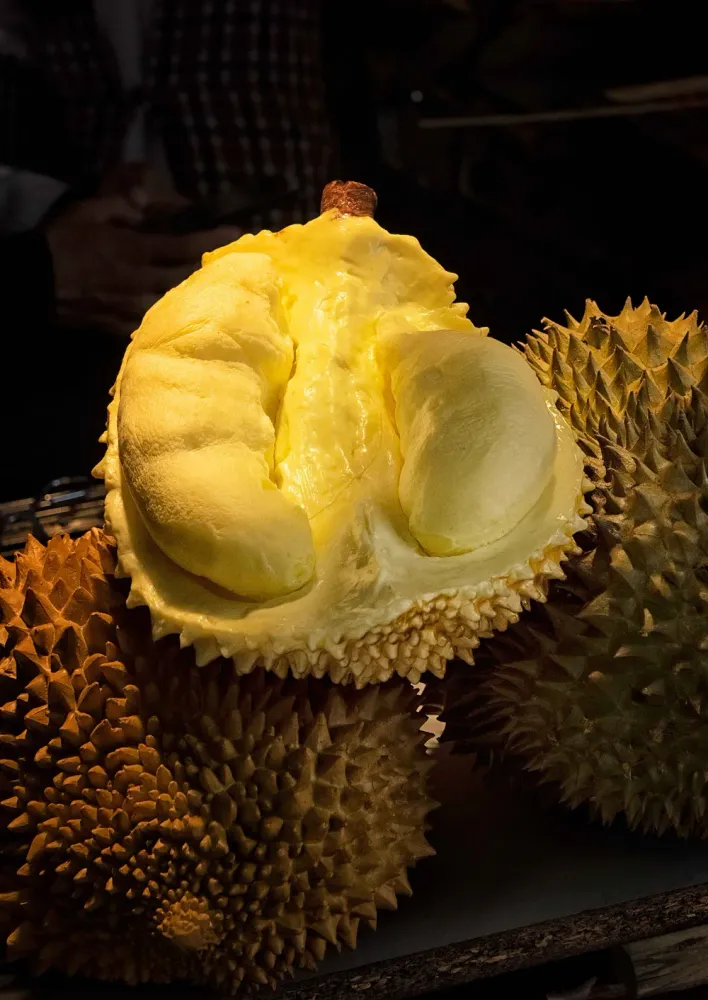 Illustrative: durian, the king of Thai fruits — CC (Wikimedia Commons)
The collaboration spans several partners, including the Department of Agricultural Extension, the Food Science and Technology Association of Thailand, the Agricultural Land Reform Office and private-sector distributors. The goal isn't simply higher yields, but a national quality standard that makes Thai durian more trustworthy.
A Chanthaburi model orchard — where the soil has sensors
In Chanthaburi, Thailand's durian capital, one model orchard has become a vivid picture of "smart farming." A technology firm installed an automated water-and-fertilizer system, soil sensors reading mineral content, moisture and pH, and real-time weather and pest-disease monitoring. All the data is uploaded to an online system that guides "scientific" farming decisions.
The results are tangible: the integrated water-and-fertilizer system cuts water use while doubling the efficiency of fertilization and pest control. One model orchard spans about 8 hectares with more than 640 young durian trees, each receiving precisely calculated amounts of water and nutrients instead of an eyeballed guess.
"Local farmers are at the mercy of the forces of nature. We water the orchards with an estimated amount, even though weather conditions in tropical areas are changing dramatically." — Chord Chanbuppha, a 56-year-old farmer in Chanthaburi
Thai-made quality-inspection tech
Another advance is a durian quality scanner built on near-infrared technology working alongside artificial intelligence. The gun-shaped device can judge a durian's ripeness with about 80% accuracy — and gets more accurate as more data is collected.
The technology grew out of a partnership between a major Thai agri-food group, agricultural research agencies and a cloud-technology partner. It tackles the long-standing "unripe durian" problem that has dented the reputation of Thai exports — because if low-quality fruit slips through to the destination, it erodes consumer confidence in the whole market.
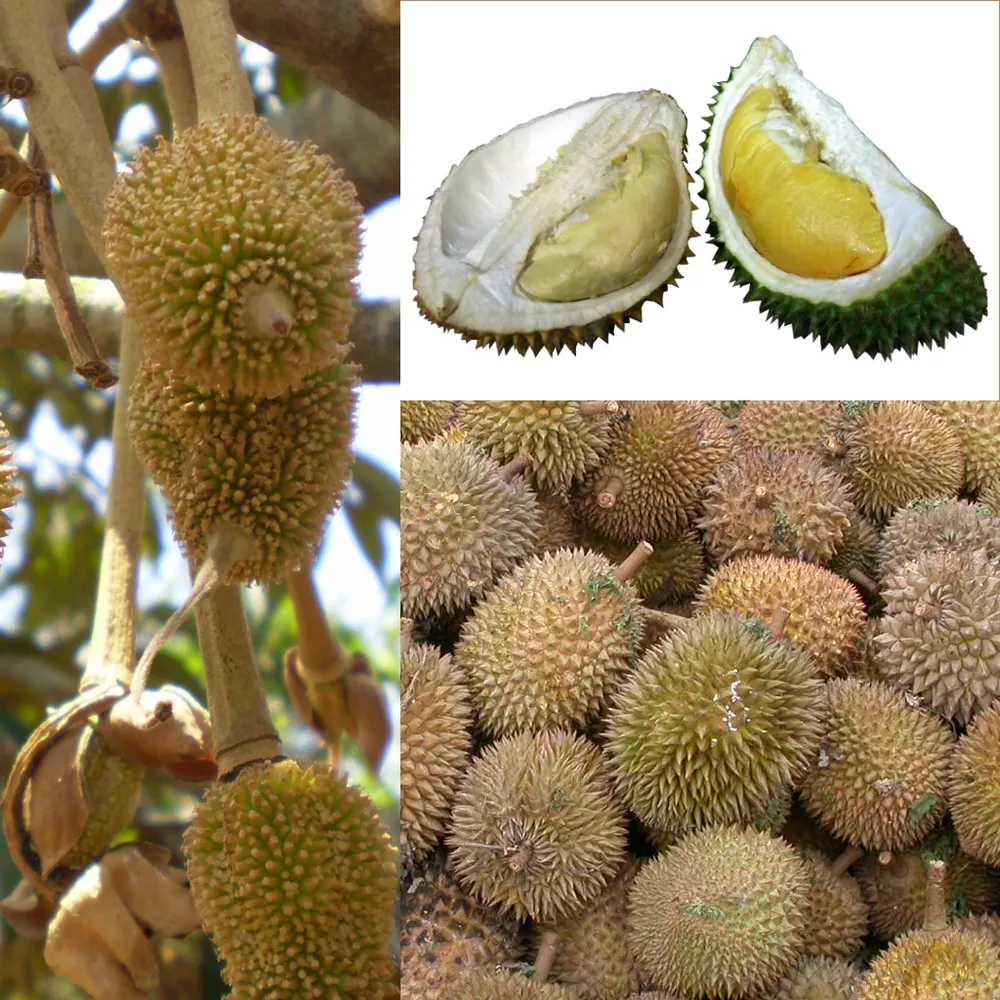 Illustrative: a durian orchard in Thailand — CC (Wikimedia Commons)
Why it matters for Thailand's economy
Durian isn't just a fruit — it's a flagship export of Thai agriculture. Last year China imported 1.56 million tonnes of durian worth nearly US$7 billion (around 227 billion baht), with Thailand holding nearly a 60% share. Chanthaburi province alone is expected to export about 800,000 tonnes this year, potentially surging to 1.1 million tonnes next year — nearly 90% of it bound for China.
With rivals such as Vietnam and Malaysia pushing hard into the same market, Thailand's move to raise quality and standards through technology is a more durable defense than competing on volume alone. Crucially, the money flows directly to smallholder farmers and local communities across the east and south, lifting farm-household incomes in a concrete way.
This positive momentum echoes a broader Thai recovery on several fronts — much like Chinese tourists reclaiming the top spot in Thai tourism and Thailand's record exports. Smart agriculture is yet another engine pulling income into the country.
What's next for Thai smart farming
While the technology is still concentrated among model orchards and early adopters, depa's two-year goal is to reach more than 6,100 farming households in data management and train roughly 12,200 farmers in e-commerce and GAP standards — aiming to grow the durian export market by several billion baht more within two years.
Key facts (as of June 2026):
- depa's OTOD Digital Durian project targets more than 10,000 farmers
- Expected to cut production costs by ~1.7 billion baht and add up to 11.7 billion baht in crop value
- Chanthaburi model orchard uses smart water-and-fertilizer + soil sensors to double efficiency
- China imported 1.56 million tonnes of durian worth nearly US$7 billion last year; Thailand holds nearly a 60% share
Farmers and traders planning harvests or shipments can check the free provincial weather forecast to dodge heavy rain and plan more precisely. By fusing growers' hands-on wisdom with data and technology, Thailand is writing a new chapter for its king of fruits — not just growing more, but growing better, with the quality and sustainability to hold its place in the global market for years to come.
Sources
Frequently asked questions
- What is the OTOD Digital Durian project?
- It is a Digital Economy Promotion Agency (depa) program that gives durian farmers digital platforms to record and trace their cultivation data, lift them to GAP (Good Agricultural Practices) standards, and build consumer confidence at home and abroad. It aims to support more than 10,000 farmers.
- How does smart farming boost durian yields?
- A model orchard in Chanthaburi uses an integrated water-and-fertilizer system, soil sensors that read minerals, moisture and pH, plus real-time weather forecasting. Together they cut wasted water while doubling the efficiency of fertilization and pest control.
- How much durian does Thailand export to China?
- China is Thailand's main durian market. Last year China imported 1.56 million tonnes of durian worth about US$6.99 billion, with Thailand supplying nearly 60%. Chanthaburi province alone sends nearly 90% of its durian exports to China.
- How do farmers join the program?
- Farmers register through a government mobile app and log their cultivation data in the system. The platform also includes a greenhouse-gas feature so growers can track their carbon footprint — adding value and competitiveness to their crop.
Related news
 Thailand
Thai Exports Hit Record High: April 2026 Jumps 23.1% for a 22nd Straight Month, Led by Electronics and Fruit
Thai exports grew a 22nd straight month, hitting US$31.58 billion in April 2026, up 23.1%, after a record March — led by AI-linked electronics and fruit.
 Thailand
US Imposes 12.5% Tariff on Thai Goods, Thailand Races to Negotiate It Down to 10%
The US began charging a 12.5% tariff on most Thai goods on July 24, 2026, citing forced-labour concerns. 2,120 product lines are exempt as Thailand pushes for a trade deal to match neighbours' 10% rate.
 Thailand
Thailand Joins Global Top 4 AI Hardware Exporters — IMF Recognises Tech-Export Surge
The IMF's July 2026 World Economic Outlook Update named Thailand alongside South Korea, Malaysia, and Taiwan as the world's four largest net exporters of AI-related hardware. Thai electronics exports surged 41.5% in the first five months of 2026.