Bank of Thailand Holds Rate at 1.00%, Lifts 2026 Growth to 2.4%
Thailand's central bank left borrowing costs unchanged on October 28, 2026, keeping its policy rate at 1.00% while nudging up its growth outlook and warning that higher energy prices will push inflation higher into next year.
The Bank of Thailand's Monetary Policy Committee (MPC) voted unanimously to hold, according to a report syndicated by Investing.com. The decision matched expectations: Kasikorn Research had forecast a hold at this meeting and through the end of the year. The rate has stood at 1.00% since a 25-basis-point cut in February.
What the committee said
The MPC said its accommodative stance, together with targeted financial measures, "continued to support the economic recovery amid uneven growth." It did not signal a firm path for future moves, saying decisions will depend on how growth and inflation risks develop.
Kaohoon International's account of the decision lists the committee's concerns: an uneven recovery, inflation risks from higher oil prices and El Niño, and continued weakness in lending to small and medium-sized businesses (SMEs).
The numbers
| Indicator | 2026 | 2027 |
|---|---|---|
| GDP growth | 2.4% | 2.1% |
| Headline inflation (average) | 2.1% | 1.3% |
| Core inflation (average) | 1.2% | 1.3% |
Growth was 1.9% year on year in the second quarter, down from 2.8% in the first, so the 2026 forecast leans on the second half. The central bank pointed to merchandise exports and private investment linked to technology and AI as the main supports. Kaohoon reports the MPC upgraded its GDP forecast; in June the committee had put 2026 growth at 2.3%.
Oil, El Niño and the baht
 Photo: Suntuniustin — Public domain (Wikimedia Commons)
The more cautionary part of the outlook is about prices. The bank expects headline inflation to rise through early 2027 on energy costs and El Niño before easing. It also expects fewer foreign tourist arrivals because higher oil prices, linked to Middle East tensions, raise travel costs — a notable risk for an economy that leans heavily on tourism.
The baht weakened against the US dollar, the report said, as markets priced in a tighter US monetary policy outlook and higher oil prices added pressure.
How markets reacted
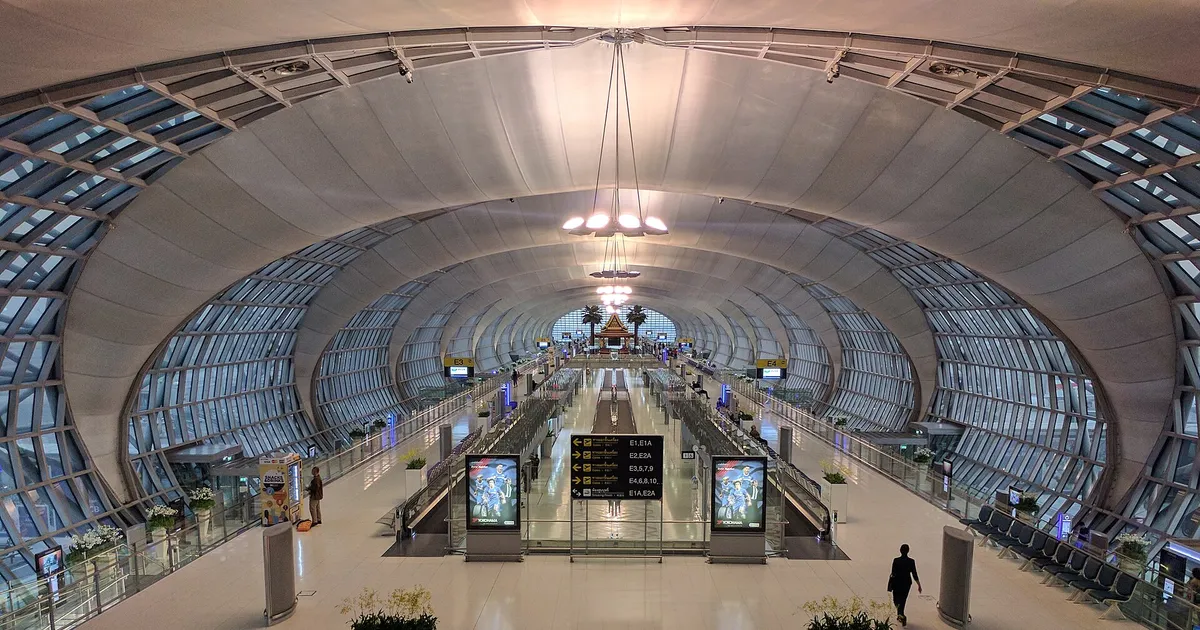
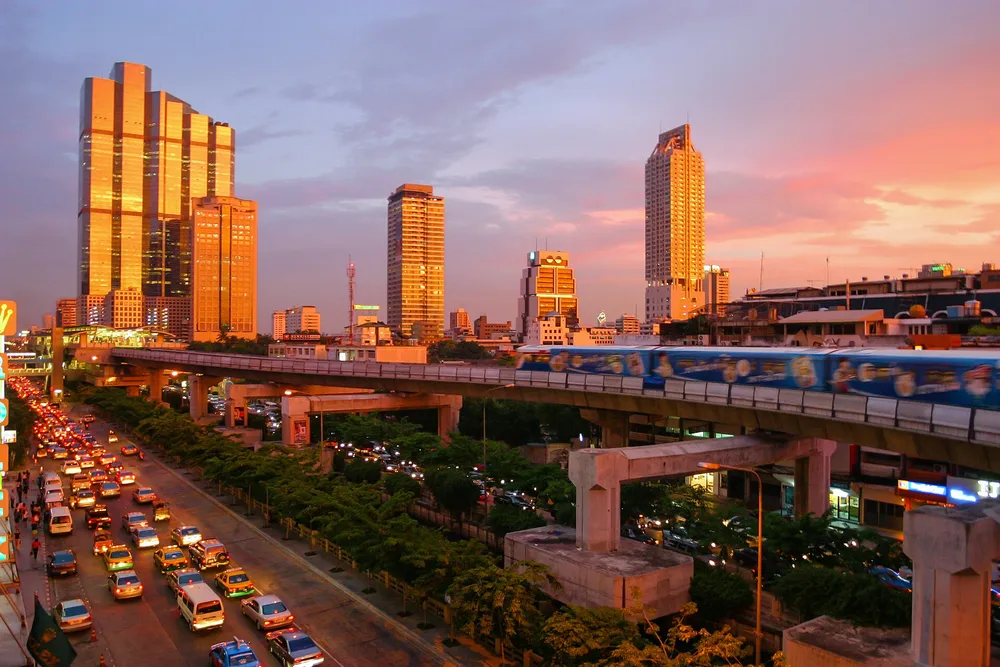 Photo: User:Diliff — CC BY-SA 3.0 (Wikimedia Commons)
The SET Index closed at 1,566.10, down 8.92 points (0.57%), on trading value of 65.44 billion baht. Bualuang Securities and Kasikorn Securities commentary carried by Kaohoon said Thailand underperformed regional peers because of domestic factors: pressure on energy shares from the government's revision of the oil price structure, a week-on-week fall in Chinese tourist arrivals, and weaker-than-expected third-quarter earnings at electronics maker DELTA. Bank shares drew buying after the rate decision and growth upgrade, partly cushioning the index.
For the coming week, the analyst expects the market to move sideways and advised investors to watch the US Federal Reserve's rate decision.
What it means for readers
- Savers and borrowers: with the policy rate unchanged, deposit and loan rates should stay broadly where they are.
- Prices: expect energy-driven upward pressure on the cost of living into early 2027, which is why inflation, not the policy rate, is the number to watch.
- Travel and tourism: higher oil prices make long-haul trips costlier, which is why the central bank expects fewer foreign visitors.
- Imports and overseas spending: a weaker baht raises the cost of imports and foreign travel for Thais.
Figures as of October 28, 2026. For related coverage, see Thailand's domestic tour subsidy and the 450-baht tourist fee; gold and oil prices are tracked in our oil price tool.
Sources
Frequently asked questions
- What did the Bank of Thailand decide on October 28, 2026?
- Its Monetary Policy Committee voted unanimously to keep the policy rate at 1.00%, in line with what economists expected.
- What does a steady rate mean for ordinary households?
- Rates on deposits and loans are unlikely to move because of this decision. The bank’s bigger warning is about prices: inflation is expected to rise into early 2027 on energy costs and El Niño.
Related news
 Thailand
IMF–World Bank Meetings in Bangkok: Thailand Hosts for First Time in 35 Years
Bangkok hosts the IMF–World Bank Annual Meetings Oct 12–18 with 15,000+ delegates from 191 countries. AI, fraud resilience and investment top the agenda.
 Thailand
 Greenlights 450-Baht Tourist Fee, Air Entry First in Early 2027
Thailand’s tourism ministry says 80% backed a 450-baht foreign tourist fee in public hearings. Funds go to traveler insurance and attraction upgrades, raising over 8 billion baht a year.
 Thailand
US Imposes 12.5% Tariff on Thai Goods, Thailand Races to Negotiate It Down to 10%
The US began charging a 12.5% tariff on most Thai goods on July 24, 2026, citing forced-labour concerns. 2,120 product lines are exempt as Thailand pushes for a trade deal to match neighbours' 10% rate.