Thailand Greenlights 450-Baht Tourist Fee, Air Entry First in Early 2027
Thailand's Ministry of Tourism and Sports announced on October 6, 2026, that after a 35-day public hearing, more than 80% of respondents support charging foreign visitors a 450-baht "land-entry fee" (ค่าเหยียบแผ่นดิน). The result clears the way for Cabinet approval, with collection expected to start on air arrivals within the first quarter of 2027.
The measure has been delayed repeatedly over the past decade. Once in force, it will put Thailand alongside more than 80 countries worldwide that already charge similar entry fees to international visitors.
The hearing: most respondents said yes
Permanent Secretary Natthareeya Taveewongse released the results of an online public hearing held between August 24 and September 28, 2026, which drew 5,954 respondents:
- 80.50% supported the draft regulation to charge foreign tourists a fee.
- 78.30% supported the proposed rate of 450 baht per person; some respondents suggested an even higher rate.
The ministry will now forward the results to the Tourism Development Fund policy committee before submitting the proposal to the Cabinet for approval and official publication in the Royal Gazette.
How it will be collected, and when
Tourism and Sports Minister Surasak Phancharoenworakul chaired discussions with government, private-sector and civil-society representatives on the collection method, while Deputy Prime Minister and Commerce Minister Supajee Suthammapun chairs the oversight committee.
Collection will roll out in two phases:
- Air arrivals first — within 180 days of publication in the Royal Gazette, with collection expected to start in earnest in Q1 2027.
- Land and sea entry — delayed roughly a year (about 360 days after phase one) to give border checkpoints time to prepare their systems.
Payment channels still under consideration include bundling the fee into airline tickets, or paying via app, website, or airport kiosk. The 450-baht fee covers multiple entries and exits within a 30-day period.
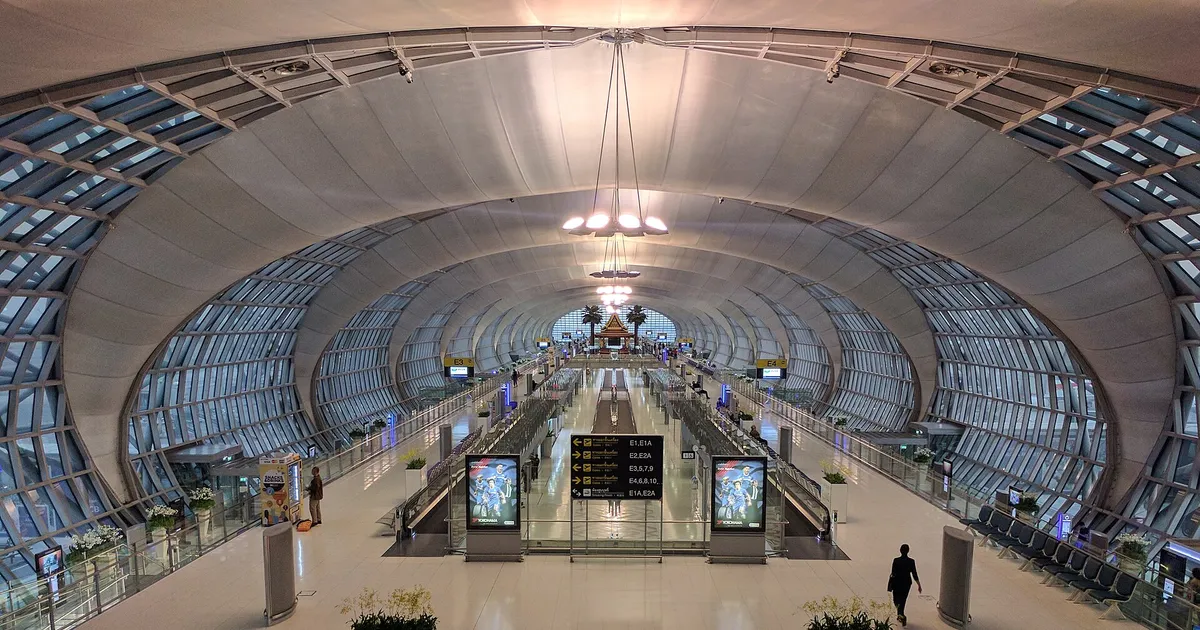
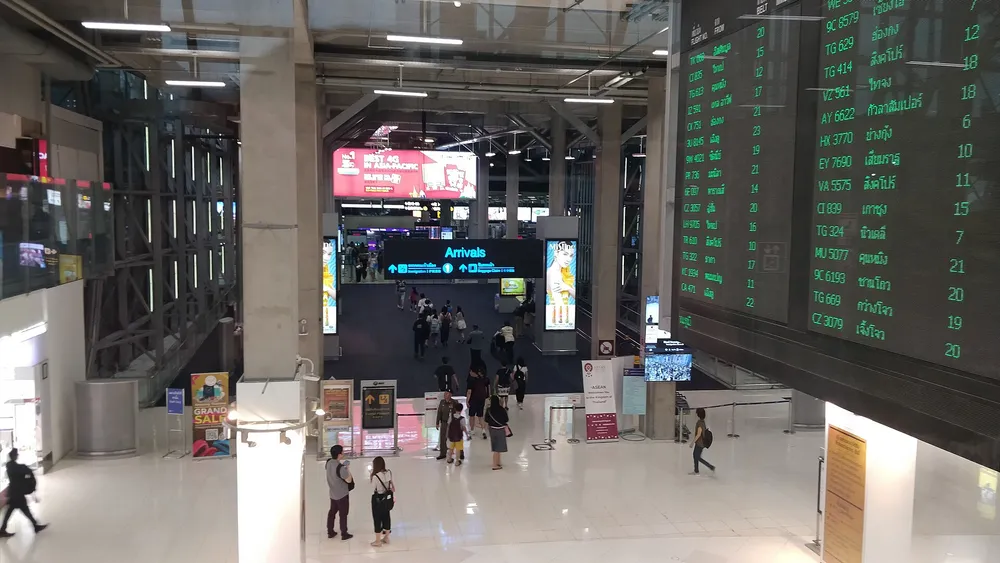 Photo: Suvarnabhumi Airport, the first checkpoint where the fee will be collected — Wikimedia Commons
Where the money goes
Revenue from the fee is projected at more than 8 billion baht a year (some officials estimate the fund could eventually exceed 10 billion baht). The money will flow into the Tourism Development Fund, an off-budget fund, to cover three main areas:
- Traveler protection — accident insurance and relief for the medical costs Thailand's public health system absorbs when foreign tourists fall ill or are injured while traveling; tourism officials have previously put that burden at roughly 7 billion baht a year.
- Safety — expanding tourist-police capacity and safety systems.
- Infrastructure and attractions — upgrading facilities, funding tourism research, conferences, and staff training.
Tourism Authority of Thailand Governor Thapanee Kiatyothibulya explained the rationale:
"Collecting this fee matters so that tourists feel their payment is worth it — both in experience and in safety."
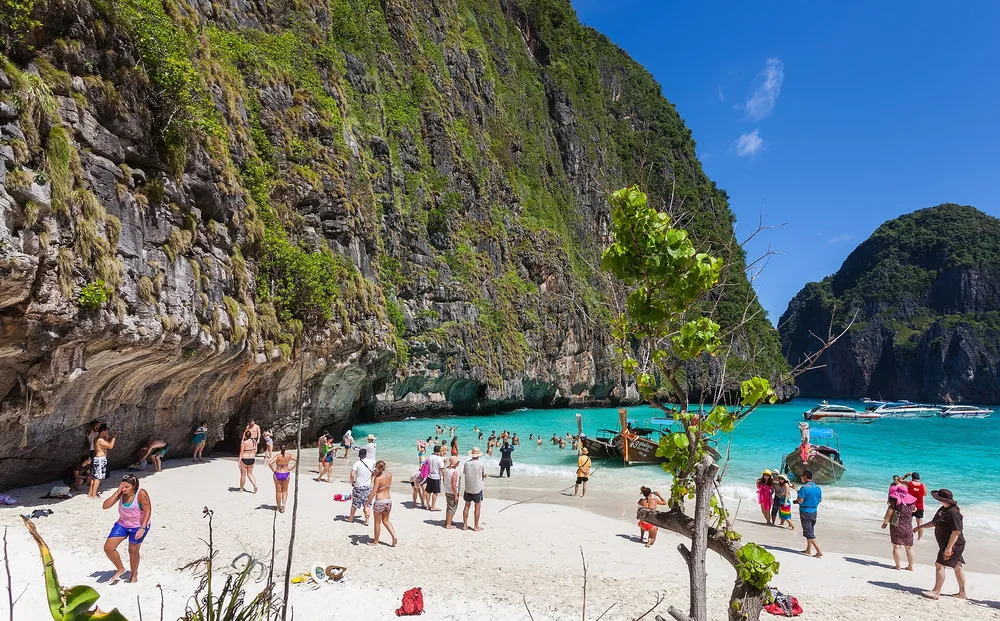 Photo: A southern Thai coastal destination, the kind of site the fund is meant to upgrade — Wikimedia Commons
Not everyone is convinced about oversight
Support wasn't unconditional. Parliament's Standing Committee on Finance, Banking and Financial Institutions warned the government to proceed carefully, arguing that routing the money into an off-budget fund — rather than the regular state treasury — carries fiscal-discipline risks and is harder to audit, which could open the door to leakage or favoritism.
Veerasak Kovsuratana, a former Tourism and Sports Minister who has advised on how the fund should be managed, acknowledged that overseeing a fund potentially worth tens of billions of baht demands exceptional transparency. He proposed giving the public a seat in fund-management discussions (without voting rights) and livestreaming the fund committee's meetings via CCTV so the public can monitor the process throughout.
"We need to open this up to broad public consultation," Veerasak said.
A tourism industry still finding its footing after floods
The measure moves forward as Thailand's tourism sector faces pressure on multiple fronts. International arrivals from January through August 2026 totaled roughly 20.9 million, down about 3% from the same period last year. Meanwhile, several northern provinces recently endured severe flooding that disrupted tourism businesses and city recovery efforts, prompting some hotel and tour operators to question the timing of adding a new cost for visitors.
Even so, the Tourism Authority of Thailand assesses that the flooding has not had a significant impact on the broader industry, particularly the international market, where arrivals from Europe, the US, and the Middle East are showing signs of recovery. The country is still targeting 2.7 trillion baht in total tourism revenue for 2026.
The traveler protection this fund is meant to provide is broadly similar to the travel insurance policies Thai travelers already buy for trips abroad — except here, the state is bundling baseline coverage into the entry fee itself.
What to watch next
The next step is Cabinet approval of the formal regulation. If it passes, the 180-day countdown to air-arrival collection begins immediately. Foreign visitors planning trips to Thailand in early 2027 should watch for the official announcement and payment-channel details closer to launch. Thai citizens traveling domestically are not affected by the fee in any way.
Sources
Frequently asked questions
- What is the 450-baht tourist fee and who has to pay it?
- It is a new entry fee the Thai government plans to charge foreign tourists arriving in Thailand, set at 450 baht per person. It will first apply to air arrivals and does not apply to Thai citizens.
- When will the tourist fee start?
- Air-arrival collection is expected to begin within the first quarter of 2027, once the Cabinet approves the measure and it is published in the Royal Gazette. Land and sea entry points will start collecting roughly a year after that.
Related news
 Thailand
US Imposes 12.5% Tariff on Thai Goods, Thailand Races to Negotiate It Down to 10%
The US began charging a 12.5% tariff on most Thai goods on July 24, 2026, citing forced-labour concerns. 2,120 product lines are exempt as Thailand pushes for a trade deal to match neighbours' 10% rate.
 Thailand
Thailand's Smart Durian Era: 10,000+ Farmers Embrace Tech to Defend the King of Fruit
depa's OTOD Digital Durian project brings over 10,000 Thai durian farmers onto traceability apps, expected to add up to 11.7 billion baht in value.
 Thailand
Thai Exports Hit Record High: April 2026 Jumps 23.1% for a 22nd Straight Month, Led by Electronics and Fruit
Thai exports grew a 22nd straight month, hitting US$31.58 billion in April 2026, up 23.1%, after a record March — led by AI-linked electronics and fruit.