Home Insurance Thailand 2026: Fire vs Full Coverage, Explained
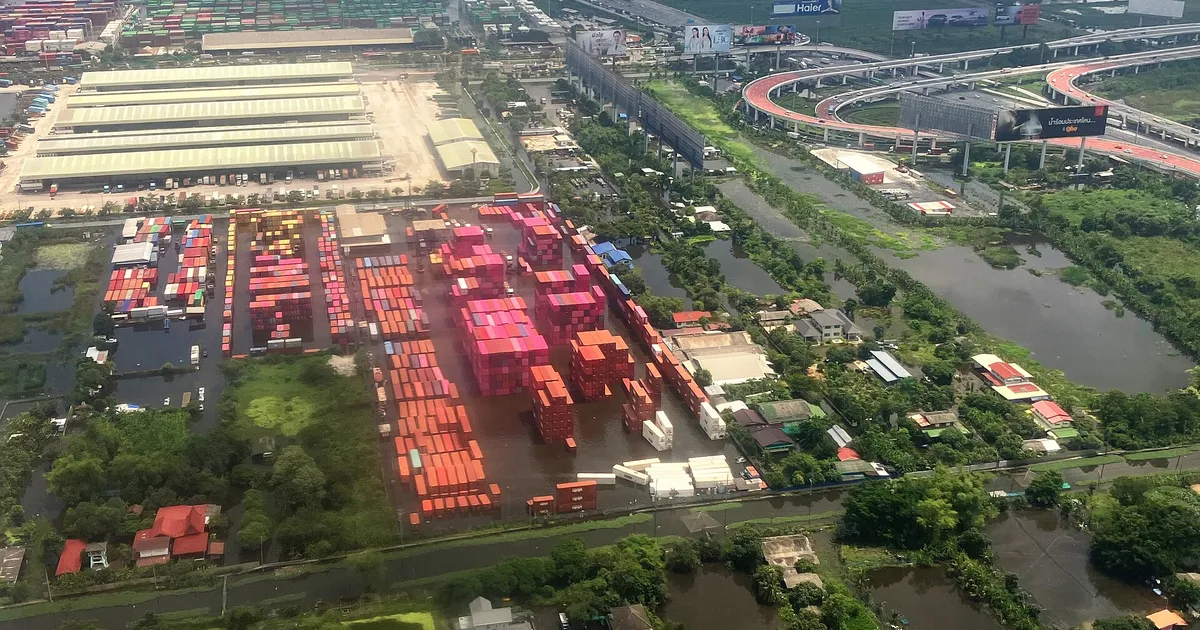
On the morning of 8 October 2026, as this article was being written, 21 provinces across Thailand, including Bangkok, 110 districts and 6,928 villages were still under floodwater, and the cumulative number of people affected in this round had climbed past 3.16 million. With flood news breaking almost daily, many people are asking the same question: "Is my home insured, and if it's damaged or flooded, how much would I actually get back?" and "Is the free 'National Disaster Insurance' the government rolled out on 1 October enough, or do I still need to buy more?"
The short answer: the government scheme covers only the "structure" of your home, up to 100,000 baht — not a single baht toward your furniture, appliances, or personal belongings. And the fire insurance your bank required when you took out your mortgage often doesn't cover flooding either, despite what many people assume. This article explains exactly what fire insurance and home insurance each cover, how to set a sum insured that won't get cut down by the "average clause" when you file a claim, and gives you real market prices to compare. Read to the end and you shouldn't need to look anything else up.
This article draws on announcements from the Department of Disaster Prevention and Mitigation (DDPM), the Office of Insurance Commission (OIC), product documents from several insurers, and credible news reports as of 9 October 2026 — premiums and terms vary by insurer and over time, so always confirm against the actual policy before buying.
Why this matters right now, and why so many people get it wrong
Major flooding in Thailand is not a one-off event. The Chao Phraya river basin in particular floods almost every year. The photo below is from the 2006 Nakhon Sawan floods, when farmland and an entire town sat underwater for weeks — twenty years later, the same scene repeats in the same provinces almost every rainy season.
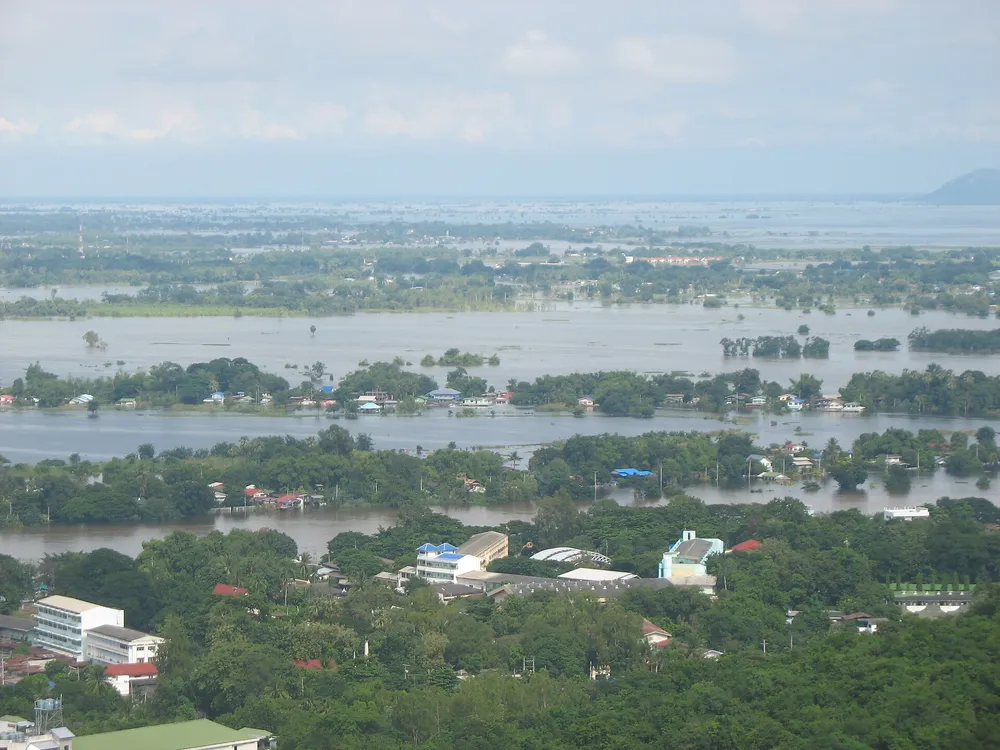 NakhonSawanInFlood by Matnhouse — Public domain via Wikimedia Commons
The problem is that a lot of Thai homeowners carry three layers of misunderstanding at once:
- Assuming "I already have fire insurance (because the bank required it for my mortgage), so everything is covered" — when the basic policy usually excludes flood.
- Assuming "I'm covered by the free National Disaster Insurance now, so I don't need private insurance" — when the government scheme covers only the structure, with a cap far below real damages.
- Never updating the sum insured to match the home's current value — bought once at mortgage signing and never touched again, even as construction costs have climbed significantly over the past decade.
Clearing up these three misunderstandings, one layer at a time, is exactly what this article does.
What fire insurance actually covers
Fire insurance is the most basic residential policy, and it's the one almost every bank requires borrowers to carry for the life of a home loan — the bank needs assurance that the collateral (your house) retains enough value to cover the outstanding debt if disaster strikes.
A standard residential fire policy covers six core perils:
- Fire (from any cause)
- Lightning
- Gas explosion (residential use, not commercial)
- Vehicle impact (a car crashing into the house)
- Aircraft impact
- Water damage (such as a burst household water pipe — not flooding from outside)
Notice that flood, storm, earthquake and other natural disasters are not part of the base coverage. They must be purchased as an additional rider, and some policies cap the natural-disaster payout at just 20,000 baht a year — far below the main sum insured. This is the detail most people never read closely before assuming they're fully covered.
 Thailand Fire engine by Dickelbers — CC BY-SA 4.0 via Wikimedia Commons
Standard fire insurance premiums run about 0.09–0.1% of the sum insured per year — roughly 1,000 baht a year for every 1 million baht of coverage. That's remarkably cheap against the potential loss, and multi-year terms carry a discount: for example, an annual premium of 1,100 baht becomes 2,750 baht for a 3-year term (550 baht cheaper than paying the annual rate three times over).
How home insurance differs from fire insurance
Home insurance builds on top of fire insurance as its base, then adds several layers:
- Bundled natural disasters — flood, windstorm, hail, earthquake, usually at a higher cap than a basic fire-policy rider
- Forced-entry theft — items stolen when a burglar breaks in
- Electrical short-circuit damage — typically capped at 10% of the sum insured, up to 200,000 baht a year
- Temporary accommodation costs — if the home becomes uninhabitable, some plans pay 1,000 baht a day, up to 50,000 baht a year
- Third-party liability — e.g., something falling and injuring a passer-by, or a leak from your home damaging a neighbour's property
- Personal accident cover for the homeowner — compensation if the owner dies in an accident on their own property
Real prices on the market today: Muang Thai Insurance's "Yu Dee Mee Suk" plan starts at 900 baht a year, covering fire, flood, theft and natural disasters in full. A plan sold through an online broker starts at 999 baht a year, covering fire, flood, water seepage, and forced-entry theft. Cheaper than most people assume — a few hundred baht a year buying coverage into the millions is exactly the selling point of this kind of property insurance.
Three layers of coverage: free government scheme vs fire vs full home insurance
This table shows how each layer helps, and why they don't overlap — you can claim from every layer that genuinely covers the same incident, at the same time.
| Coverage | National Disaster Insurance (free) | Basic fire insurance | Full home insurance |
|---|---|---|---|
| Sign-up / pay the premium | Not needed (government pays for every home) | Must buy it (bank requires it for mortgages) | Must buy it (optional) |
| Structure (fire) | Not covered (only the 3 perils below) | Covered | Covered |
| Flood | Covered (initial 10,000, up to 100,000 baht) | Not covered unless rider added | Covered (usually a higher cap than a fire-policy rider) |
| Windstorm / earthquake | Covered (initial 5,000, up to 100,000 baht) | Mostly not covered | Covered as a bundle |
| Furniture / appliances | Not covered at all | Not covered unless added | Covered |
| Theft | Not covered | Mostly not covered | Covered (requires forced entry) |
| Third-party liability | Not covered | Not covered | Covered |
| Payout cap | 100,000 baht/incident/household | As set by your sum insured | As set by your sum insured |
| Approximate premium | 0 baht | ~0.1% of sum insured/year | From ~900 baht/year |
For the full detail on the National Disaster Insurance — who qualifies, how to claim, and how it differs from the older flood relief cash payments — read National Disaster Insurance 2026. If you're still waiting on relief payments from this flood round, check the eligibility and registration steps in Flood Relief Payment 2026.
How to set the right sum insured — where most people get it wrong
This is the single most important section in this article, because it's the number-one reason people file a claim and get "less money than they expected" despite having a valid policy.
Rule one: exclude land value entirely
Fire insurance's sum insured is based on "replacement construction cost" alone, never the market price of the whole property — because land cannot burn down or be destroyed by fire. The formula is:
Sum insured = construction cost per square metre × total usable floor area
Example: a two-storey house with 200 square metres of usable space, at a standard construction cost of 15,000 baht per square metre, should carry a sum insured of 200 × 15,000 = 3,000,000 baht — even if the land it sits on is worth 5 million baht on the open market. Don't fold the land value in.
If you also want furniture and belongings covered, add their appraised value as a separate figure, not blended into the structural sum insured.
Rule two: under-insuring means a proportional payout, not a full one
This is called the Average Clause, and it's standard in almost every fire insurance policy. A concrete example:
- Actual property value (replacement cost): 2,000,000 baht
- Sum insured chosen (below actual value): 1,000,000 baht (50% of actual value)
- Fire damage occurs, totalling: 500,000 baht
- Actual insurer payout: 500,000 × 50% = 250,000 baht only
- Out-of-pocket shortfall for the homeowner: 250,000 baht
This is why real cases keep happening where a house burns down completely, but the sum insured was set over a decade ago at mortgage signing and never adjusted for rising construction costs — leaving the owner with far less than expected. The fix is to review your sum insured every time your policy renews (every 1, 3 or 5 years depending on the term), not leave the original figure untouched for the life of the house.
Real market premium comparison
| Plan / insurer | Starting premium | Main coverage | Highlight |
|---|---|---|---|
| Standard fire insurance (general) | ~1,000 baht/year per 1M baht sum insured (~0.1%) | Fire, lightning, explosion, in-house water damage | Accepted by most banks; can be bought separately from the lender |
| Muang Thai Insurance "Yu Dee Mee Suk" | 900 baht/year | Fire, flood, theft, natural disasters | Electrical short-circuit cover up to 200,000 baht/year; temporary housing 1,000 baht/day |
| Online home insurance plan (broker) | 999 baht/year | Fire, flood, water seepage, forced-entry theft | Apply online, fast approval, suits condos/townhouses |
| 3-year fire insurance (paid upfront) | 2,750 baht/3 years (1M baht sum insured) | Same as the annual plan | 550 baht cheaper than paying the annual rate three times (1,100×3=3,300) |
The prices and terms above are market examples at the time of writing. Each insurer offers multiple plan tiers with different fine print — get quotes from at least 2–3 providers before deciding.
Who needs it, and which kind suits your situation
Still paying off a mortgage — fire insurance is mandatory. The bank requires a fire insurance policy covering the loan balance for the life of the mortgage, but does not require you to buy it from the bank itself — most people buy through the bank in year one purely for convenience at loan closing, but on renewal you're free to compare prices with other insurers or brokers, as long as the bank is correctly named as loss payee for the remaining balance.
Bought your home in cash, no mortgage — not mandatory, but strongly advisable. No law requires it, but the risk of fire or flood doesn't disappear just because there's no debt attached. A premium in the hundreds to low thousands of baht a year against potential losses in the millions is worth having.
Renting a house or condo — consider insurance for your belongings and liability. Most condo buildings already carry fire insurance through the juristic person, but it covers only the shared building structure — not the furniture, appliances, or fittings inside your own unit, whether you own or rent it. And if water leaks from your unit down into the unit below, you're personally liable for that damage. Affordable renter/condo home insurance exists specifically to cover these two blind spots.
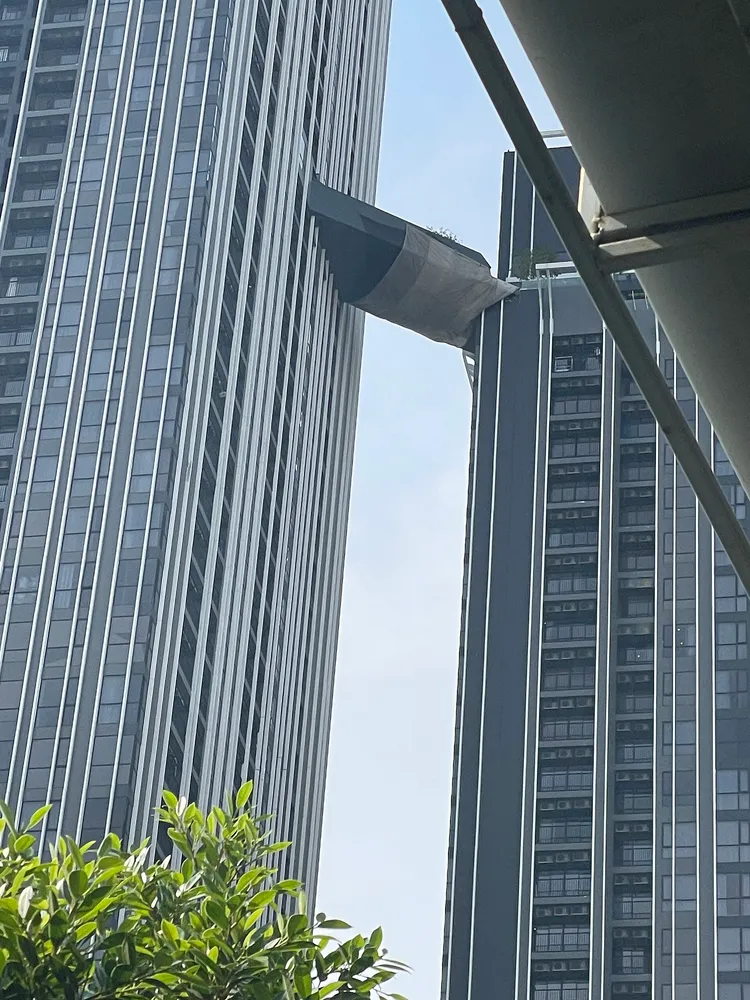 Park Origin Thonglor's skybridge after the 2025 earthquake by Chainwit — CC BY 4.0 via Wikimedia Commons
The photo above shows real damage to a skybridge at a condominium in Bangkok's Thong Lo area, caused by the March 2025 earthquake whose tremors reached Bangkok and damaged several high-rises across the city — a clear reminder that "natural disaster" isn't limited to flooding, and tall buildings in the middle of the city aren't automatically safe from this risk either.
Is it tax-deductible? A common misconception
The straight answer is no. Property insurance such as fire insurance or home insurance is not on the list of deductible insurance premiums for Thai personal income tax under the Revenue Code, unlike life and health insurance, which qualify under specific conditions.
What people often confuse this with is MRTA (mortgage reducing term assurance), which banks commonly offer alongside a home loan. MRTA is a life insurance product, not property insurance, and it genuinely is deductible — up to 100,000 baht as actually paid. However, that cap is shared with your general life and health insurance allowance, not a separate one, and the policy must run at least 10 years with a Thai-licensed insurer to qualify.
Want to know whether you've already used your life/health insurance allowance in full, and what other deductions you have left? Try our personal income tax calculator, or read the full rundown of deductions in Thailand Personal Income Tax 2026.
Step-by-step: filing a home insurance claim
- Report the incident immediately through your insurer's hotline or the agent/broker who sold you the policy — the faster you report, the faster a surveyor can assess the damage.
- Photograph or video the damage before moving anything, as evidence for the assessment. If you must move items for safety, photograph everything first.
- File a police report as evidence, especially for theft or incidents requiring a cause investigation (such as a fire of unknown origin).
- Wait for a surveyor to assess the damage. For serious losses — a total fire or structural collapse — this step can take several days.
- Prepare your documents — the policy, ID card, house registration document, damage photos, and the police report if applicable.
- Negotiate the settlement and receive payment, usually transferred to your bank account once the figures are finalised.
The most common mistakes
- Setting the sum insured once at mortgage signing and never updating it — construction costs rise every year, and a sum that was adequate a decade ago may now be badly under-insured, triggering the Average Clause at claim time.
- Assuming a basic fire policy automatically covers flooding — check whether a natural-disaster rider has been added, and whether its payout cap (usually far lower than the main sum insured) is actually enough.
- Renewing with the same bank every year without comparing prices elsewhere — you can buy from another insurer or broker as long as the bank is correctly named as loss payee. Comparing 2–3 quotes can save hundreds to low thousands of baht a year.
- Condo owners assuming the juristic person covers everything inside their unit — it only covers the shared building structure; the contents of your unit are your own responsibility.
- Believing the free National Disaster Insurance covers everything — it covers only the home's structure, up to 100,000 baht, and nothing inside it.
Summary: what fits your situation
- Still paying a mortgage → you already have basic fire insurance under the bank's terms, but check whether the sum insured matches today's construction cost, and consider adding a natural-disaster rider if you're in a flood-prone area.
- Bought in cash, no debt → not required, but full home insurance starting under 1,000 baht a year is well worth it against the potential losses.
- Renting a house or condo → consider affordable insurance covering your personal belongings and third-party liability, since the building's juristic person won't cover what's inside your unit.
- Everyone → review your sum insured at every renewal, and remember the free National Disaster Insurance is only a "first safety net," not complete coverage on its own.
Sources
- Department of Disaster Prevention and Mitigation (DDPM) — 2026 flood situation reports
- thansettakij.com — flood situation report, 3 October 2026
- noon.in.th — comparison of fire insurance vs homeowner insurance
- ttib.co.th — FAQ on fire insurance and home loan requirements
- allianz.co.th — how to calculate sum insured for homes and condos
- muangthaiinsurance.com — "Yu Dee Mee Suk" home insurance plan details
- tqm.co.th — fire/home insurance for renters and non-owners
- blog.ghbank.co.th — MRTA tax deduction conditions
Frequently asked questions
- I'm already covered by the free National Disaster Insurance — do I still need private home insurance?
- In most cases, yes. The National Disaster Insurance covers only the structure of your home — walls, floor, roof — up to 100,000 baht per incident, and pays based on actual assessed damage, which can be far less than that cap. It does not cover furniture, appliances, personal belongings, or theft. If your home holds anything of value, or you're still paying off a mortgage (which already requires fire insurance on the loan balance), private coverage remains a necessary layer, not a duplicate.
- Does the fire insurance my bank required for my mortgage cover flood damage?
- Not automatically — check your own policy's coverage table. Most standard residential fire policies cover fire, lightning, explosion, and some in-house water damage (like a burst pipe), but exclude flood from the base coverage. You need to buy an additional natural-disaster rider, which usually carries a much lower payout cap than the main sum insured (sometimes as low as 20,000 baht a year). Read your policy's coverage schedule or call the insurer to confirm before flood season, not during it.
- Do I have to buy fire insurance from the same bank that gave me my mortgage?
- No. The law doesn't require you to buy from your lending bank — the bank only requires that a fire insurance policy cover the outstanding loan balance for the life of the mortgage, with the bank named as a loss payee. Most people buy through the bank in year one for convenience at loan closing, but on renewal you're free to shop around and buy from another insurer or broker, as long as the bank is correctly listed as the beneficiary for the remaining balance.
- I rent my home or condo — do I need my own insurance even though I don't own the building?
- You should consider it. Even as a tenant, you can buy insurance covering your personal belongings and liability to others. The key gap: a condo building's juristic-person fire insurance covers only the shared structure, not the furniture, appliances, or fittings inside your own unit — whether you own or rent it. And if water leaks from your unit and damages the unit below, you're personally liable for that. Affordable renter/condo home insurance exists specifically to cover these two blind spots.
- Is home or fire insurance tax-deductible in Thailand?
- No. Property insurance like fire insurance or home insurance is not on the list of deductible insurance premiums under the Revenue Code, unlike life and health insurance. What people often confuse it with is MRTA (mortgage reducing term assurance) — a life insurance product, not property insurance — which is genuinely deductible, up to 100,000 baht paid as actually spent. That cap, however, is shared with your general life and health insurance allowance, not a separate one. You can check whether you've used that allowance in full with our personal income tax calculator.
- How do I set the right sum insured for my home, and should I include the land value?
- No, exclude land — land cannot burn down or be destroyed by fire. The correct sum insured is based on 'replacement construction cost': the cost per square metre to rebuild (depending on materials and quality, typically 12,000–20,000 baht/sqm) multiplied by total usable floor area. For example, a 200-sqm house at a 15,000-baht/sqm build cost should carry a 3,000,000-baht sum insured — regardless of what the land underneath is worth on the open market. Add the value of furniture and belongings separately if you want those covered too. Under-insuring the structure is the number-one reason people end up with a smaller-than-expected payout when they finally file a claim.
Related articles
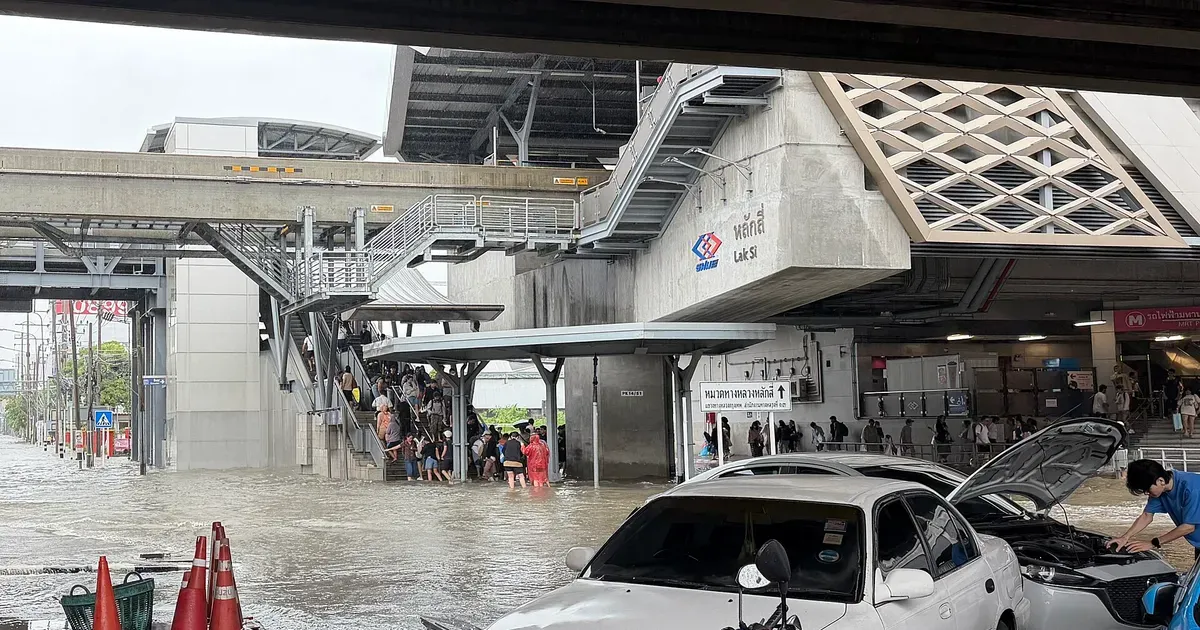
National Disaster Insurance Thailand 2026: Free Cover, 30M Homes
Thailand's new National Disaster Insurance covers 30M homes free from Oct 1, 2026: flood, storm, earthquake, up to ฿100,000. Eligibility, claims explained.
Thailand Home Loan Guide 2026: Rates, Approval, Affordability
2026 Thailand home loan guide: compare bank rates, check DSR affordability, LTV rules, transfer/mortgage fees, and the mortgage interest tax deduction.

Thai Chuay Thai Plus 60/40 Extra Round: Who Qualifies, How to Register
Thai Chuay Thai Plus (60/40) extra round starts Oct 1, 2026. Who qualifies, how to register via the Pao Tang app, the 60/40 subsidy math, what you can buy, and scam warnings.