National Disaster Insurance Thailand 2026: Free Cover, 30M Homes
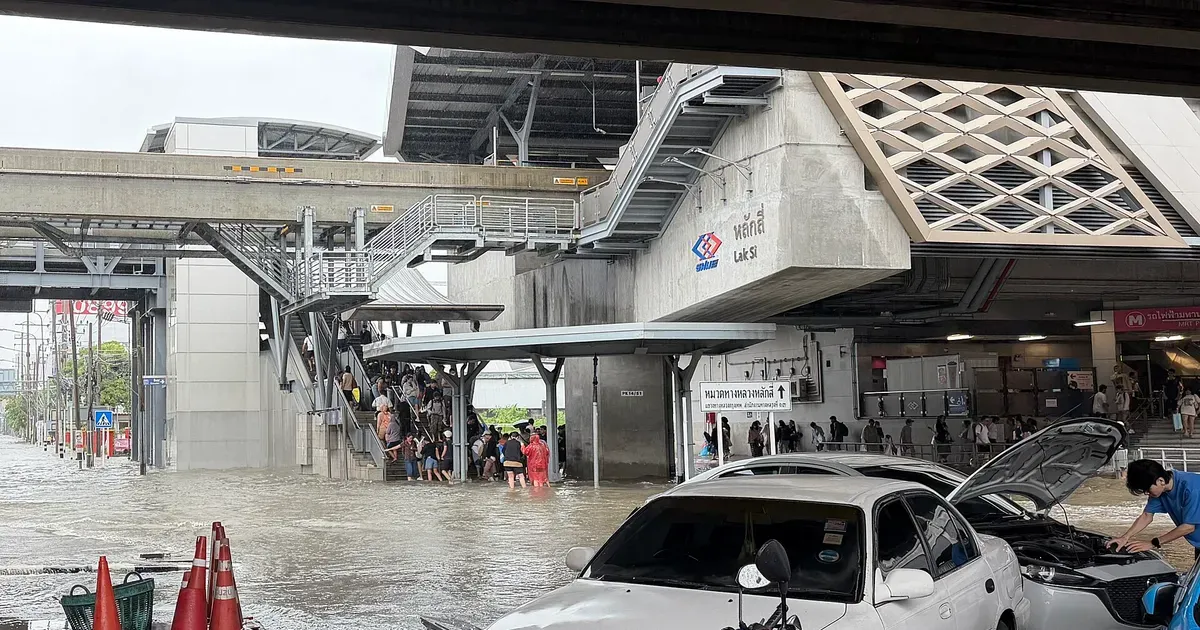
On the morning of October 1, 2026, while residents of at least 31 provinces were still wading through flooding that had dragged on since mid-September, Thailand's Cabinet approved "National Disaster Insurance" to take effect — covering over 30 million homes nationwide free of charge, with no application and no premium for homeowners to pay. It's a big deal that most people still haven't heard of, and plenty are confused about how it differs from the flood relief payments they're already familiar with.
This article covers everything you need to know in one place: what the coverage actually includes, the real payout you'll get (it's not always 100,000 baht), who qualifies, what to do before and after a disaster, and how it stacks against the private insurance many households already carry. Read to the end and you won't need to look anywhere else.
This article is based on Cabinet resolutions, announcements from the Department of Disaster Prevention and Mitigation (DDPM) and the Office of Insurance Commission (OIC), and reporting from credible media as of October 2, 2026. Rules may still be refined in the early stage of this program — verify the latest official announcement before acting, especially on points this article flags as unclear.
What's happening, and why this matters right now
Heavy, continuous rain since mid-September 2026 has caused major flooding across more than 31 provinces, affecting roughly 3 million people, with some areas still not fully recovered nearly two weeks later.
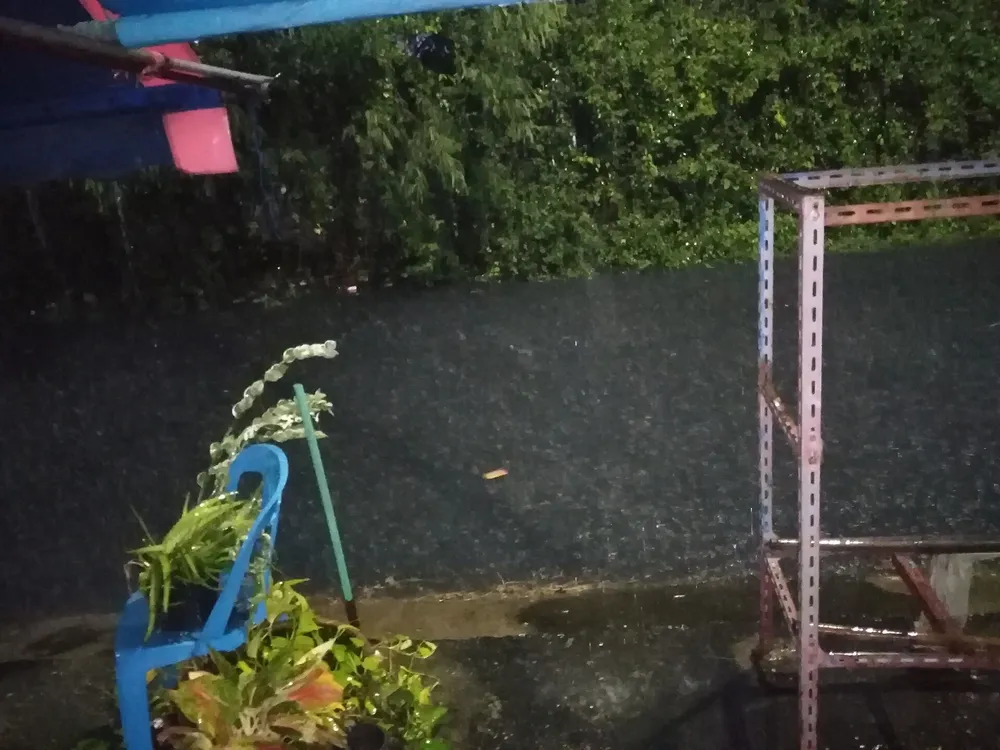 Photo: Philsacor — CC0 (Wikimedia Commons)
Against that backdrop, the government is running two parallel measures that people frequently mix up:
- The 9,000-baht flood relief payment — a one-off measure the Cabinet must approve per event, for disasters that have already happened (full details in our flood relief payment article)
- National Disaster Insurance — a brand-new standing system, just effective October 1, 2026, covering every disaster from here on without needing fresh Cabinet approval each time
The key difference is timing: the old relief payment applies to flooding that's already occurred, while National Disaster Insurance applies only to disasters occurring from October 1 onward. Anyone currently suffering from the ongoing flooding still relies on mechanism #1 — but for the next disaster (and this rainy season isn't over yet, while storms and earthquakes can strike any time of year), every home will already carry this baseline coverage automatically.
What National Disaster Insurance is, and when it started
The full program is called "National Disaster Insurance" (ประกันภัยพิบัติแห่งชาติ), operating under the Emergency Decree on the Disaster Insurance Promotion Fund. The Cabinet just approved it to take effect immediately from October 1, 2026, with the government buying a group policy directly for every eligible household — this isn't insurance sold to individuals to purchase themselves.
The Department of Disaster Prevention and Mitigation (DDPM) is the agency overseeing the overall budget, while the Thai General Insurance Association leads the participating private insurers in covering total claims up to 75,000 million baht; if nationwide damage exceeds that, the government covers the excess. In short: the government pays the premium for every household, but the claims-assessment machinery runs on the expertise of an insurance industry that already does this for a living, with a pre-agreed cap on liability like any ordinary insurance arrangement.
This isn't an entirely new idea — after the catastrophic 2011 floods, Thailand had a similarly-named Disaster Insurance Promotion Fund before. This time, though, the scope has been expanded to permanently cover every household nationwide, rather than being a temporary crisis-only program.
What's covered, and how much
The program covers 3 main perils, each with two payment tiers: an upfront relief payment (paid fast, on a parametric basis — a fixed automatic payout once a measurable trigger is hit, such as water reaching a set depth, with no per-house damage survey needed) and an additional payment (based on actual assessed damage, capped at a combined maximum):
| Peril covered | Upfront relief payment | Additional payment (assessed) | Combined max/household/event |
|---|---|---|---|
| Flood (incl. mudslide) | 10,000 baht | Up to 90,000 baht | 100,000 baht |
| Windstorm (incl. lightning) | 5,000 baht | Up to 95,000 baht | 100,000 baht |
| Earthquake (incl. volcano/tsunami) | 5,000 baht | Up to 95,000 baht | 100,000 baht |
The upfront payment arrives within 15 days of the area being declared a disaster zone. ⚠️ The exact trigger is reported inconsistently across sources — some say the threshold is "floodwater reaching 50 centimeters," others cite "flooding continuously for over 7 days," and some cite a 20-centimeter depth — possibly because several conditions can each qualify (depth or duration), or because the details were still being refined. The safe assumption is that meeting any one of the reported conditions should qualify, and you should confirm the exact figure via thainatcat.org or hotline 02-012-5555 when an actual event occurs.
Beyond structural damage, there's also life and disability coverage for anyone killed or permanently disabled directly by the disaster:
- Death from the disaster: 2,000,000 baht per person
- Total permanent disability: 200,000 baht per person
The single most important limitation people overlook: this coverage applies only to the house's structure — walls, floors, roof, permanently fixed doors and windows — not to the contents inside it. Furniture, refrigerators, TVs, washing machines, or any personal belongings are not covered, and the program doesn't extend to commercial buildings, shops, or factories either — this is strictly a residential-dwelling program.
Who qualifies, and do you need to register
The best part of this program is that there's no application, no pre-registration, and no premium to pay yourself — it automatically covers every legally registered home nationwide, as well as certain dwellings without a formal house number that have been certified as permanently occupied structures.
The system is pre-linked to databases at the Department of Provincial Administration and the DDPM. Whenever an area is officially "declared a disaster zone," the system pulls up the list of households in that area automatically — residents don't need to file anything to request eligibility in advance.
 Photo: Adirach Toumlamoon — Public domain (Wikimedia Commons)
The one point that isn't 100% clear, with media reports disagreeing, is renters: some sources say coverage is tied strictly to home ownership; others say a long-term renter qualifies too. To be sure, renters should call the 02-012-5555 hotline or check thainatcat.org in advance, before a disaster occurs — and whichever the answer turns out to be, renters should remember this coverage is about the "house" itself, which is the owner's property, not the renter's own furniture or belongings.
How to claim: steps and contact channels
Once an area has been declared a disaster zone, the main steps are:
- Photograph or video the damage immediately — cover every damaged point on the house, including water level marks and stains. The more detailed the documentation, the faster and more accurate the assessment.
- Wait for the upfront relief payment — the system transfers 10,000 baht (flood) or 5,000 baht (storm/earthquake) within 15 days of the area being declared a disaster zone, without waiting for a detailed assessment first.
- Prepare documents for the full damage assessment — a copy of your ID card, proof of ownership of the residence (house registration / land title), damage photos, and a PromptPay account linked to your 13-digit citizen ID (for a direct bank transfer).
- An assessor evaluates the real damage and pays any additional amount — based on actual verified damage, up to the 100,000-baht cap per event.
Four channels to check eligibility and file a claim:
- Website thainatcat.org
- LINE Official Account @ThaiNATCAT
- Hotline 02-012-5555
- Local disaster reporting points (sub-district or municipal offices)
Keep this clearly separate from the general OIC hotline many people already know — hotline 1186 and LINE @OICCONNECT — which handles questions about private insurance policies in general (e.g. checking what your own home or car policy covers). That's not the dedicated channel for National Disaster Insurance. Save both numbers separately, since they serve different purposes.
How it differs from the old flood relief payment
This is where confusion runs highest, because the figures look similar (9,000 baht vs. 10,000 baht) and both involve the DDPM. Here's a direct comparison:
| Old flood relief payment | National Disaster Insurance (new) | |
|---|---|---|
| Status | One-off measure, approved per event | Standing, permanent system |
| Needs fresh Cabinet approval each time? | Yes, a new Cabinet resolution each round | No, automatically covered once a disaster zone is declared |
| Amount | 9,000 baht/household (paid once) | 10,000/5,000 baht upfront + up to 100,000 baht total |
| Perils covered | Only what that specific Cabinet resolution names (this round: flooding) | Flood, windstorm, earthquake (every round) |
| How to register | Register via the "ThangRat" app or file at local offices | No registration — the system pulls data automatically |
| When coverage starts | Disasters already occurred (retroactive) | Only disasters from Oct 1, 2026 onward |
In short, the old relief payment is "assistance restarted from scratch every time," while National Disaster Insurance is "a standing insurance system that's always there." The advantage of the latter is not waiting for a political budget debate every time disaster strikes — the downside is the per-household cap may not be as generous as people hope, and it's still limited to the house's structure alone.
If a household that received the 9,000-baht relief payment for the September–October 2026 flooding asks whether they can also get money from National Disaster Insurance for that same event — the straightforward answer is no, because that event happened before October 1. But if a new round of flooding hits after that date, the same household qualifies for National Disaster Insurance immediately, with no need to wait for a fresh Cabinet approval.
National Disaster Insurance vs. private home insurance vs. class 1 car insurance
The most common question right now is "I already have National Disaster Insurance — do I still need to buy fire insurance or car insurance?" The answer is these three cover entirely different kinds of property, can overlap without conflict, and most households should carry all three:
| National Disaster Insurance | Fire + 4-peril natural disaster insurance (private) | Class 1 car insurance | |
|---|---|---|---|
| Who pays the premium | The government (free) | The homeowner | The car owner |
| What it covers | House structure only | Structure + furniture/appliances (if specified) | The vehicle |
| Payout cap | 100,000 baht/event | Full sum insured (e.g. 1–5 million baht) | Full sum insured on the car |
| Perils covered | Flood, windstorm, earthquake | Fire + 4 natural perils (flood, windstorm, earthquake, hail) | Everything incl. flood (if class 1) |
| Approximate premium | ฿0 | ~2,200 baht/year (1 million baht sum insured) | Tens of thousands of baht/year (depends on model) |
Residential fire insurance with the 4-peril natural disaster add-on is a policy many Thai households already carry without realizing it, because banks typically require it as a condition of a home loan (see our home loan guide for details). Premiums start at just a few hundred to a few thousand baht a year for a 1,000,000-baht sum insured, and it covers far more than National Disaster Insurance both in payout cap and in the scope of property covered (including furniture and appliances, if specified in the policy). Anyone without a home loan — and who has never bought this kind of policy before — should consider adding it, especially in a repeat-flood-risk area.
Class 1 car insurance is an entirely separate matter, since National Disaster Insurance doesn't cover vehicles at all. A flooded car is compensated only through a class 1 policy (classes 2+ and 3+ require an optional add-on for natural disaster coverage). The OIC grades flood damage to vehicles into 5 levels:
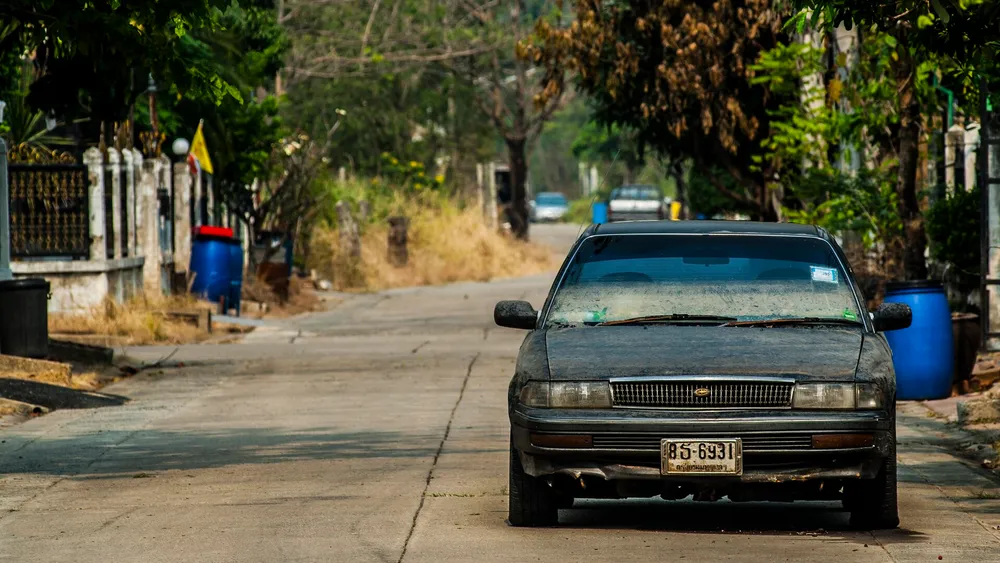 Photo: M.rJirapat — CC BY-SA 4.0 (Wikimedia Commons)
| Level | Water reached | Approximate repair cost |
|---|---|---|
| A | Floor mats | 8,000–10,000 baht |
| B | Seats | 15,000–20,000 baht |
| C | Lower dashboard | 25,000–30,000 baht |
| D | Upper dashboard | 30,000+ baht |
| E | Fully submerged | Assessed per policy terms (often a negotiated repair or full payout) |
Read more about deciding whether to claim on your car insurance and the effect on your no-claim discount in our class 1 car insurance article.
A worked example: a flooded house, where does the money come from
Let's walk through a realistic scenario: a house in a province declared a disaster zone sits in floodwater for 10 days (over 7 days), damaging parts of the walls, warping the parquet flooring throughout one room, ruining the refrigerator and sofa, and flooding a sedan parked at the house up to the lower dashboard (level C). Assume this household already carries both fire insurance with the 4-peril add-on (1-million-baht sum insured) and class 1 car insurance:
| Source of funds | Condition | Approximate amount |
|---|---|---|
| Old flood relief payment | Flooded over 7 days, automatically qualifies | 9,000 baht (if the event happened before Oct 1) |
| National Disaster Insurance | Partial structural damage (if the event happened after Oct 1) | 10,000 baht upfront + more based on assessment (up to 100,000 baht combined) |
| Private fire insurance | Walls, floor, fridge, sofa, per the policy's listed items | Based on actual damage, up to the 1,000,000-baht sum insured |
| Class 1 car insurance | Level C vehicle damage | Roughly 25,000–30,000 baht |
The key point is that each source can be claimed independently — you don't have to pick just one. This household could receive assistance from several sources at once, depending on which policies they hold and exactly when the event occurred relative to October 1, 2026 — which is why this article keeps emphasizing "the timing switch" from the start. It determines which programs you can actually qualify for.
Common mistakes, and what to prepare in advance
Based on past disaster-insurance claim experience and the questions people are asking right now, here are the recurring mistakes worth avoiding:
- Assuming furniture and appliances are covered too — they're not. National Disaster Insurance covers only the house structure; if you want your belongings covered, you need separate private fire insurance.
- Thinking the current flooding (before Oct 1) qualifies under this program — it doesn't. Events that already happened still rely on the old relief payment mechanism.
- Not keeping "before" photos for comparison — having photos of the house/car's condition before a disaster (even ones you took for other reasons earlier) makes damage assessment much faster and more accurate. Photograph your home and key belongings periodically, even before anything happens.
- Not linking PromptPay to your citizen ID — most government relief payments transfer via PromptPay linked to your 13-digit citizen ID, not a phone number. Verify and link it correctly in advance; an incorrect or missing link means the transfer simply fails.
- Falling for fake SMS/LINE messages claiming to be officials — disaster periods are exactly when scammers send the most fake links. No genuine government agency ever charges a "fee" before paying out relief money. Check eligibility only through thainatcat.org or official apps.
- Not keeping emergency savings for the waiting period — while the upfront payment arrives within 15 days, the additional assessed amount can take longer. Having an emergency fund set aside in advance means you won't need to borrow from informal lenders while waiting for relief money to arrive.
Verdict: do you still need more insurance
National Disaster Insurance is a genuinely great step for every Thai household, because it's baseline coverage that's "free, with nothing to do" — something that's never existed before. But the 100,000-baht-per-event cap and the structure-only scope mean it's a first layer of protection, not the only one.
Recommendations by situation:
- Households with no fire insurance at all, especially in a repeat-flood-risk area, should consider adding the 4-peril fire policy. Premiums start at just a few thousand baht a year for a million-baht sum insured — excellent value against the damage it can prevent.
- Households still paying off a home loan usually already carry fire insurance as a loan condition — check whether that policy includes the 4-peril natural disaster add-on, since some only cover fire.
- Car owners in flood-risk areas should verify their car insurance is class 1, or that they've added the natural disaster option, since National Disaster Insurance doesn't cover vehicles at all.
- Every household should save 02-012-5555 and follow LINE @ThaiNATCAT in advance, and make sure PromptPay is correctly linked to their citizen ID before anything happens.
Disasters don't pick their timing, but preparation can. Right now is the best time to check whether you're covered at every layer you actually need.
Sources
- Thailand Cabinet resolution on National Disaster Insurance (October 1, 2026)
- Money & Banking Magazine — "National Disaster Insurance details: covering 30 million households"
- Matichon Online — "Effective today: Disaster Insurance covering flood, storm, earthquake"
- Post Today — "Cabinet approves National Disaster Insurance covering 30 million households"
- Dailynews — "10 FAQs on National Disaster Insurance" and "OIC's 4-step claim guide for home and car flood damage"
- PPTV HD 36 — "How to check and claim flood insurance for homes and cars"
- Thai PBS — "Coverage starts today, Oct 1: Disaster insurance covers 30 million households" and "Relief criteria: disaster insurance pays 10,000 baht for flooding"
- The Active (Thai PBS) — "D-day Oct 1: PM explains National Disaster Insurance conditions" and reporting on flooding across 31 provinces, September–October 2026
- Bangkok Biz News — "Thai General Insurance Association leads industry rollout of National Disaster Insurance, covering ฿75 billion"
- Government Housing Bank (GHB) and the Thai General Insurance Association — on residential fire insurance and the 4-peril natural disaster add-on
Frequently asked questions
- Do I need to apply or pay a premium for National Disaster Insurance?
- No. The government buys this group policy for every eligible household automatically, funded through the Disaster Insurance Promotion Fund administered by the Department of Disaster Prevention and Mitigation (DDPM). There is no application process or paperwork to file in advance — the system pulls household data from civil registration automatically once an area is officially declared a disaster zone.
- Are renters covered, or only homeowners?
- Sources disagree on this point. Some reports say coverage is tied strictly to ownership of the dwelling; others say a long-term renter also qualifies. To be certain, renters should call the 02-012-5555 hotline or check thainatcat.org before a disaster happens. Either way, remember the coverage is for the house's structure, which belongs to the owner — not for a renter's own furniture or belongings, which still need separate property insurance.
- Does the flooding happening right now (before Oct 1, 2026) qualify?
- No. The rules explicitly exclude damage that occurred before October 1, 2026, and damage from floodwater that was already sitting on a property before that date. Anyone affected by the September–October 2026 flooding still needs to go through the older one-off relief payment, which the Cabinet approves in separate rounds. Only a new disaster occurring from October 1 onward qualifies under this program.
- If I already received the 9,000-baht flood relief payment, can I also get money from this new program?
- The two programs draw on separate mechanisms and separate budgets. The 9,000-baht payment is a one-off measure the Cabinet approves per event for disasters that already happened; National Disaster Insurance is a standing program for new disasters from October 1, 2026 onward. In practice the two should not both apply to the exact same event, but no official ruling has clarified every edge case yet — check with both agencies if your situation is unclear.
- I already have home fire insurance or class 1 car insurance. Which do I claim first?
- You don't need to choose — claim against every policy that genuinely covers the loss, since each covers a different kind of property with its own separate cap. National Disaster Insurance pays up to 100,000 baht for structural damage; a private home policy (if you have one) pays up to its full sum insured and typically covers contents too; class 1 car insurance covers only the vehicle. All three can be claimed independently.
- Do I actually get the full 100,000 baht?
- Not necessarily. 100,000 baht is the maximum cap per household per event, not a flat payout everyone receives. A household first gets the upfront relief amount (10,000 baht for flood, or 5,000 baht for storm/earthquake) within 15 days of the disaster-zone declaration, then an assessor evaluates the real damage to determine any additional payment — which may land well below or, in the worst case, up to the cap.
Related articles

Thai Chuay Thai Plus 60/40 Extra Round: Who Qualifies, How to Register
Thai Chuay Thai Plus (60/40) extra round starts Oct 1, 2026. Who qualifies, how to register via the Pao Tang app, the 60/40 subsidy math, what you can buy, and scam warnings.
Thailand Home Loan Guide 2026: Rates, Approval, Affordability
2026 Thailand home loan guide: compare bank rates, check DSR affordability, LTV rules, transfer/mortgage fees, and the mortgage interest tax deduction.

Crypto for Beginners 2026: Start Smart and Stay Safe
Beginner's crypto guide 2026 — what crypto is, the real risks, Thai SEC-licensed exchanges, the 2025–2029 tax exemption, and scams to avoid.