Class 1 car insurance in Thailand 2026: a small claim can cost more than not claiming

The usual question about car insurance is "who is cheapest?" But the question that saves more money is "should I claim this, or pay for it myself?"
Because the biggest discount on a Thai motor premium does not come from any company's promotion. It comes from your own claim-free record, it reaches 50%, and it can disappear in a single day.
 Photo: TomaszSwatowski — CC BY-SA 4.0 (Wikimedia Commons)
Class 1, 2+ and 3+ — where they actually differ
The real difference is when the insurer pays for damage to your own car. Third-party cover is the same across all classes.
| Cover for your own car | Class 1 | Class 2+ | Class 3+ |
|---|---|---|---|
| Collision with another land vehicle, third party identified | ✅ | ✅ | ✅ |
| When you are at fault | ✅ | ✅ | ✅ |
| Hitting a post, kerb or tree (no third party) | ✅ | ❌ | ❌ |
| Scraped in a car park by someone who left | ✅ | ❌ | ❌ |
| Theft | ✅ | ✅ | ❌ |
| Fire | ✅ | ✅ | ❌ |
| Flood | ✅ | ❌ | ❌ |
| Premium | Highest | Middle | Lowest |
The four bold rows are what decide it, because those are the situations that happen most in Thailand and only class 1 covers them — reversing into a kerb, being scraped in a car park by a driver who left, and flooding, which is an annual risk in much of the country. See our car flooding article.
⚠️ Compulsory insurance is not car insurance. Thailand's compulsory cover pays only for injury to people, up to limited amounts, and repairs no vehicle at all — not yours and not the other party's. Anyone holding only that has no car insurance.
The no-claim discount — the biggest one you control
The no-claim bonus rewards a year with no at-fault claim, rising in steps to a maximum of 50%, and staying there as long as you make no at-fault claims.
On a 20,000 baht base premium, each step is worth:
| No-claim discount | Premium actually paid | Saved against base |
|---|---|---|
| 0% | 20,000 baht | — |
| 20% | 16,000 baht | 4,000 baht |
| 30% | 14,000 baht | 6,000 baht |
| 40% | 12,000 baht | 8,000 baht |
| 50% | 10,000 baht | 10,000 baht |
A 50% discount halves your premium — often a bigger difference than the gap between the cheapest and dearest insurer. Which is why protecting the record matters more than shopping around every year.
Is a small claim worth it? The arithmetic
 Photo: Snake Head 1995 — CC BY-SA 3.0 (Wikimedia Commons)
This is the part that saves real money and almost nobody works out.
Suppose you are at 50% on a 20,000 baht base premium, make one claim, and drop to 30% (how far you drop varies by policy), then climb back a step a year:
| Year | Discount | Premium paid | Extra versus before |
|---|---|---|---|
| Year 1 after the claim | 30% | 14,000 baht | +4,000 baht |
| Year 2 | 40% | 12,000 baht | +2,000 baht |
| Year 3 | 50% | 10,000 baht | +0 |
| Total | +6,000 baht |
So one claim carries a hidden cost of roughly 6,000 baht. Which means:
- Damage under about 6,000 baht → usually cheaper to pay yourself
- Damage well above it → clearly worth claiming
- If you also have a deductible → add that too, pushing the threshold higher still
⚠️ But if you are not at fault and the third party is identified, claiming does not affect the discount — it is only lost on at-fault claims or claims with no third party. This is why a dashcam is worth more than people think: it is the evidence that you were not at fault, which protects the discount.
These figures assume a 20,000 baht base and a two-step drop. Your premium and your policy's step-down rule will differ, so ask your agent "if I claim this, what will next year's premium be?" before deciding — a question worth asking every time the damage is minor.
The deductible lowers the premium, but it is not free
The deductible is what you pay before the insurer covers the rest. Higher means a cheaper premium.
There is one rule for choosing: pick an amount you could hand over immediately without difficulty, not the highest figure available. Because:
- It is payable every time you claim at fault or with no third party.
- Set it so high that you avoid claiming, and you are paying for insurance you do not use.
- Combined with the no-claim cost above, the "claim or pay" threshold moves higher still.
What sum insured to set
The sum insured is the maximum payable if the car is written off or stolen. Set it close to current market value.
- Above real value = a higher premium for cover you cannot claim, since a payout will not exceed market value anyway.
- Too low = a cheaper premium, but not enough to replace the car when it is stolen or written off.
⚠️ The sum insured should fall each year with the car's age. A car bought for 800,000 baht five years ago may be worth 400,000 today; renewing at 800,000 every year means overpaying throughout.
Comparing premiums fairly
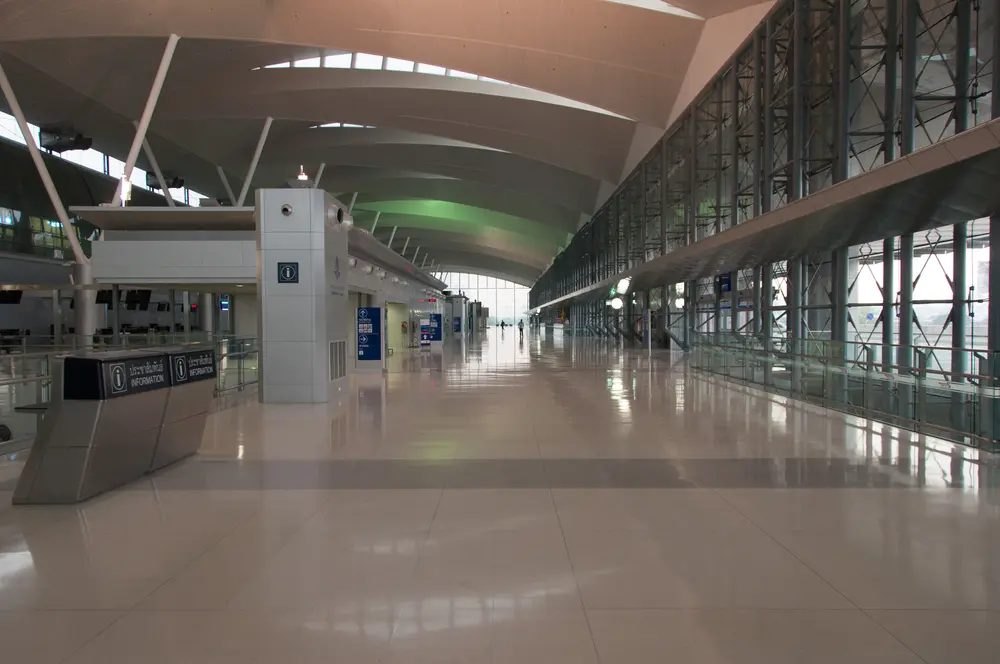 Photo: Christophe95 — CC BY-SA 4.0 (Wikimedia Commons)
The most common mistake is comparing the premium figure without checking the terms match. Before comparing, fix these five the same across every quote:
- Sum insured — otherwise you are comparing different things.
- Dealer repair or approved garage — a large premium difference.
- Deductible — one quote at 5,000 and another at 0 are not comparable.
- Driver and passenger cover — personal accident and medical limits.
- Named drivers or not — naming one or two drivers reduces the premium, but an unnamed driver in an accident triggers an extra deductible.
Dealer repair versus approved garage is the biggest single lever:
- Dealer repair uses genuine parts and protects resale value. Suits newer cars, cars on finance, and cars under manufacturer warranty.
- Garage repair is clearly cheaper, with quality depending on the insurer's network. Suits older cars where genuine parts matter less.
What to do after an accident, in order
The order matters, because doing it wrong makes claiming harder or weakens your position on fault.
- Stop, hazard lights on, check whether anyone is hurt. If there are injuries, call 1669 before anything else.
- Do not move the car unless you must. Vehicle position is key evidence for fault. If you must move it for traffic, photograph the original position fully first.
- Photograph everything — a wide shot showing both cars and the road, close-ups of the damage, both number plates, and the signs or road markings nearby.
- Call your insurer, give the policy number and location, and wait for the assessor.
- Exchange details — name, phone, plate and the other party's insurer.
- Wait for the claim document. Do not agree a cash settlement before the assessor arrives.
⚠️ Point 2 is where people slip most. Feeling pressured by traffic behind, many move immediately and then argue endlessly about fault — which is exactly why a dashcam is worth having, since it already recorded the moment.
⚠️ Taking cash from the other party and going your separate ways feels efficient, but if further damage turns up later — structure, or electrical systems — you have no way to claim anything.
Renewing without losing entitlements
- Always renew before expiry. A lapse is a period with no cover at all, and restarting can affect how the no-claim discount is calculated.
- Get your claims record if you switch insurers, so the discount transfers rather than resetting.
- Review the sum insured every year against the car's falling value.
- Reconsider dealer repair — for a car over five to seven years old and no longer on finance, switching to garage repair often cuts the premium meaningfully.
- Check for discounts you are not using — dashcam, named driver, or bundling with another policy.
Does an EV insure differently?
In two material ways, even though the 1/2+/3+ structure is the same:
- Repairs cost more on average, because high-voltage components and sensors are expensive and fewer workshops can handle them, so premiums usually run higher than a petrol car at a similar price.
- Read the battery terms carefully — which battery damage the policy covers, especially in flooding, an issue specific to EVs.
If you are weighing an EV against a petrol car, include the premium difference in the sums — our EV vs petrol article already covers fuel and maintenance.
Common mistakes
Believing compulsory cover is insurance. It repairs no car at all.
Claiming for every scratch. See the table — a repair costing a few thousand can cost several thousand in lost discount over two years.
Not adjusting the sum insured. Overpaying quietly, every year.
Choosing a high deductible for a cheap premium, then never claiming. That is paying for cover you do not use.
Not fitting a dashcam. It is the evidence that you were not at fault, which is what protects the discount — and some insurers discount for it directly.
Letting the policy lapse. No cover during the gap, and it can affect the discount calculation.
Not checking whether flood is covered. In flood-prone areas this alone can be the reason class 1 beats 2+.
Summary
- Class 1 differs from 2+/3+ in four situations: no third party, single-vehicle damage, theft, fire and flood.
- The no-claim discount is the biggest one you control — up to 50% of the premium.
- Before claiming minor damage, ask what next year's premium becomes. One claim can carry a hidden cost of about 6,000 baht.
- Set the sum insured to current market value, and lower it each year.
- Compare quotes on identical terms across all five points, or you are comparing different products.
For the full picture of annual car costs, see our car maintenance article; if you are buying your first car, the first-car guide.
Sources
- TQM — what the no-claim discount is and how high it goes
- Thanachart Insurance — ways to reduce your motor premium
- InsuranceThai — the no-claim bonus explained
- Prakunrod — what motor insurance discounts exist
The premium and discount figures here are worked examples on an assumed 20,000 baht base premium to show the mechanism, not quotes. Real premiums vary by model, vehicle age, driver age, record and insurer, and the step-down applied to the no-claim discount after a claim varies by policy — always ask your insurer before claiming. This is general information, not advice on a specific policy.
Frequently asked questions
- How does class 1 differ from 2+ and 3+?
- Class 1 covers damage to your own car in every case, including when you are at fault, when there is no third party, plus theft, fire and flood. Classes 2+ and 3+ cover your car only in collisions with another land vehicle where a third party is identified; 2+ adds theft and fire, 3+ does not.
- Should I claim for small damage?
- Not necessarily. Claiming costs you the no-claim discount. Dropping from 50% to 30% on a 20,000 baht base premium costs about 6,000 baht across the two years it takes to climb back, so damage below that is usually cheaper to pay for yourself.
- What is the no-claim discount and how high does it go?
- It is a premium discount for going a year without an at-fault claim. It rises in steps to a maximum of 50% under the standard framework, and stays there as long as you make no at-fault claims.
- How should I choose the deductible?
- Higher means a cheaper premium, but you pay it every time you claim at fault or with no third party. Choose an amount you could hand over immediately without difficulty — not the highest figure to get the cheapest premium.
- What sum insured should I set?
- Close to the car's current market value. Setting it above real value means paying a higher premium for cover you cannot claim anyway; setting it too low leaves you short of replacing the car after a theft or write-off.
- Dealer repair or approved garage?
- Dealer repair uses genuine parts and tends to protect resale value, but costs noticeably more in premium. Garage repair is cheaper, with quality depending on the insurer's approved network. Newer cars still on finance or under manufacturer warranty usually justify dealer repair.
Related articles

First Car Buying Guide 2026: Budget, Financing, Hidden Costs & Insurance
First car buying guide for Thailand 2026: set a budget from income, down payment, financing rates, new vs used, hidden costs and insurance.
10 Best Electric Cars Under 1 Million Baht in Thailand (2026)
10 best-value EVs under 1 million baht in Thailand for 2026 — price, real-world range, battery specs, and home-charging cost, plus how to pick by budget.

Car Flood Emergency Guide: What to Do First + Does Car Insurance Cover It? (2026)
Car flood guide for Thailand: which insurance covers flood damage, repair costs by level, why you must never restart the engine, and how to claim.