10 Best Electric Cars Under 1 Million Baht in Thailand (2026)
Watch more: 4 แสนเดือด! 8 EV เล็กแข่งเดือด ระอุ ใครคุ้มสุด? (budget EV comparison, Thai)
Two years ago, an electric car in Thailand was still an expensive toy for people with money to spare. That's changed fast. The Thai EV market now has more than ten brands selling under 1 million baht — from tiny city cars priced under 400,000 baht to fully-loaded electric SUVs that can travel over 500 kilometers on a single charge.
The question most shoppers ask isn't "which is cheapest" — it's "which one is actually worth it." That means weighing real-world range, home-charging cost, maintenance, after-sales service, and government subsidies that can shave anywhere from tens of thousands to over ฿100,000 baht off the effective price. We pulled data from dealerships and reputable Thai auto media to rank the 10 best-value EVs under 1 million baht for 2026, and who each one actually suits.
⚠️ Prices below are as of August 2026. Thailand's EV market runs frequent promotions — some models change price 3–4 times in a single year — so always confirm the current price with the dealership before committing.
How we ranked these
This isn't simply cheapest-to-priciest. We weighed factors that actually affect ownership:
- Price against what you actually get — same price, but some trims pack a bigger battery, longer range, or more safety features
- Real-world range, not just the advertised number — manufacturer NEDC figures usually overstate what you'll see in Thai driving conditions with the aircon running
- Service network and parts availability — a brand with more centers and easier-to-find parts carries less long-term risk
- DC fast-charging speed — matters most on longer trips where you'll need to top up along the way
- Battery warranty — mostly 8 years or 160,000–180,000 km, a good proxy for how confident the manufacturer is
- Body size for the use case — a small city car parks easily; an SUV seats a family more comfortably
#1: BYD Dolphin — Best Overall Value
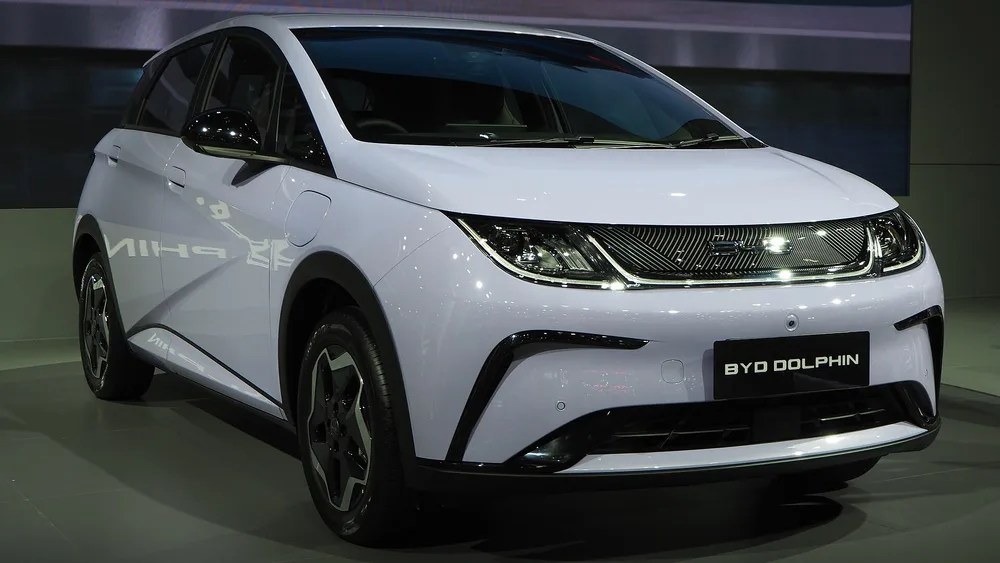 Photo: Chanokchon — CC BY-SA 4.0 (Wikimedia Commons)
Price: ฿599,900–699,900 (Standard Range / Extended Range)
The BYD Dolphin is one of the best-selling electric hatchbacks in this price band, and for good reason — it balances price, range, and brand reliability better than almost anything else here. The Standard Range trim comes with a 95 hp motor and a 50.25 kWh BYD Blade LFP battery, good for up to 435 km per charge (NEDC). The Extended Range trim upgrades to a 204 hp motor and a 60.48 kWh battery, reaching 490 km and 0-100 km/h in 7 seconds.
Pros: BYD now has showrooms and service centers covering nearly every province. Its LFP Blade Battery is known for durability and safety (far less prone to thermal runaway than NMC cells). Cabin space beats most rivals in the same size class.
Cons: The Standard Range trim isn't quick off the line (12.3 seconds 0-100) — better suited to city driving than spirited driving.
Best for: Someone buying their first EV who wants the safest overall bet — strong after-sales network and resale value.
#2: AION UT — Longest Range Under ฿670,000
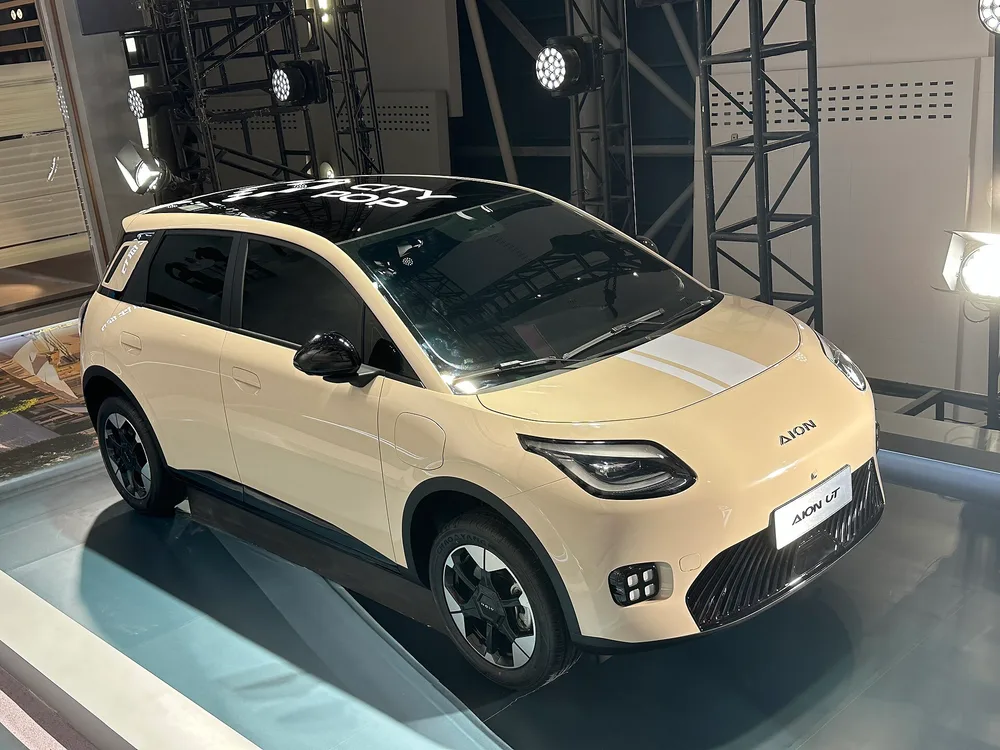 Photo: JustAnotherCarDesigner — CC0 (Wikimedia Commons)
Price: ฿519,900–669,900 (UT420 Standard / UT500 Premium)
The AION UT's headline feature is its 500 km NEDC range on the top trim — the longest of any model under ฿700,000. It runs a 50 kWh battery and a 136 hp (100 kW) motor, 0-100 km/h in 12 seconds, top speed 150 km/h. At 4,270 mm long, 1,850 mm wide, with a 2,750 mm wheelbase, cabin space is bigger than the exterior suggests.
Pros: Best range-per-baht in this group. Modern interior with a large center screen and a full set of basic driver-assist features.
Cons: AION is a fairly new brand in Thailand, and its service network is still concentrated in major cities — check for a center in your own province before buying.
Best for: Frequent long-distance drivers on a limited budget who want maximum range without paying up to the SUV tier.
#3: GWM ORA 5 EV — Best Value Crossover
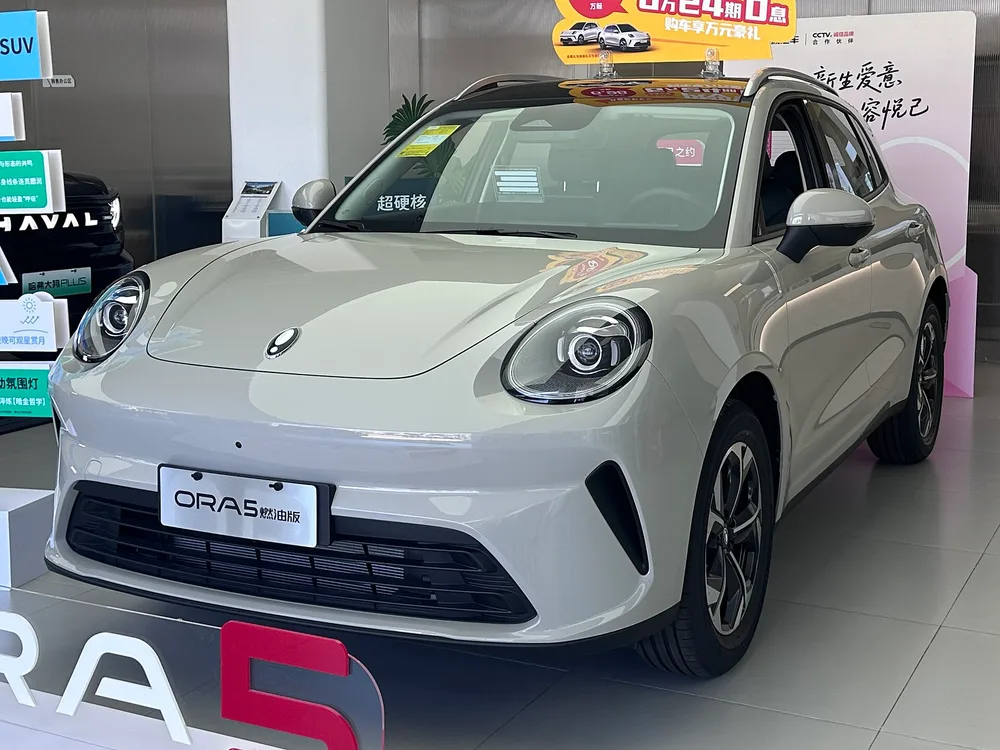 Photo: JustAnotherCarDesigner — CC0 (Wikimedia Commons)
Price: ฿629,000–699,000 (Pro / Ultra)
After GWM discontinued the ORA Good Cat in Thailand in early 2026, the ORA 5 SUV took its place at Motor Show 2026 — and it's also the longest-range crossover in this price segment. Its 58.3 kWh LFP Short Blade Battery delivers up to 520 km NEDC, while the 204 hp motor (260 Nm torque) hits 0-100 km/h in 7.5 seconds, the quickest SUV in this list. DC fast charging peaks at 120 kW, taking just 20 minutes for a 30-80% top-up.
Pros: Higher ride height than a hatchback for easier entry/exit and more cargo space; quickest acceleration in this SUV price tier.
Cons: Very new to the Thai market (launched March 2026) — no long-term track record yet on reliability or resale value.
Best for: Buyers who want SUV height on a budget under ฿700,000, and who prioritize acceleration and range.
#4: MG4 Electric — Widest After-Sales Network
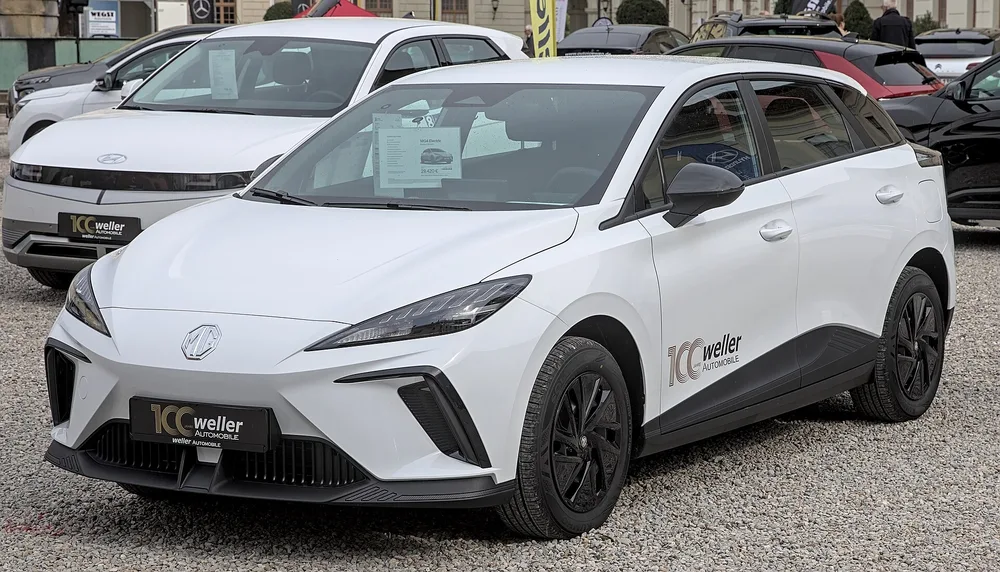 Photo: Alexander Migl — CC BY-SA 4.0 (Wikimedia Commons)
Price: ฿599,900–709,900 (D Standard / X Long Range)
MG is one of the longest-established EV brands in Thailand, so the MG4 benefits from a service and parts network familiar with electric drivetrains spread across nearly every province — something newer Chinese rivals haven't caught up to yet. The D Standard trim runs a 50 kWh CATL battery and a 170 hp motor for 450 km per charge; the X Long Range upgrades to a 62.2 kWh battery and 245 hp motor, reaching 540 km NEDC — the longest range of any model in this list. Warranty covers the vehicle for 4 years/120,000 km, with the motor and high-voltage battery covered for the vehicle's lifetime.
Pros: Widest service network in this group. The X Long Range trim goes furthest of all 10 models here. Battery warranty has no year cap.
Cons: The D Standard trim is priced close to rivals without standing out on spec — you need the X trim to get real value on range.
Best for: Buyers most concerned about after-sales service, who want confidence in finding parts and technicians no matter which province they live in.
#5: BYD Atto 3 — Family SUV, Fully Loaded
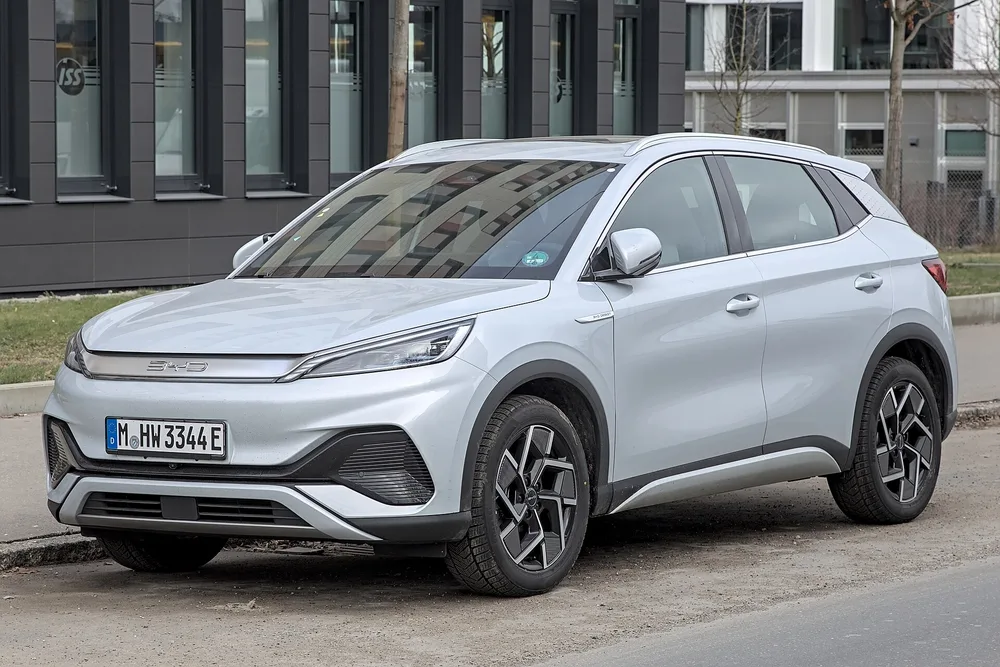 Photo: Alexander Migl — CC BY-SA 4.0 (Wikimedia Commons)
Price: ฿669,900–769,900 (Premium / Extended, Motor Show 2026 promotional pricing)
The BYD Atto 3 is noticeably bigger than the BYD Dolphin — 4,455 mm long, 1,875 mm wide, with a 2,720 mm wheelbase, giving it more cabin and cargo room for families who need to haul more. The Extended trim runs a 60.48 kWh BYD Blade Battery for up to 480 km NEDC, with an 8-year/160,000 km battery warranty.
Pros: Biggest body in this price segment. Full suite of safety options (multiple ADAS functions). Shares BYD Dolphin's service network, so parts and technicians are easy to find.
Cons: The top trim edges close to ฿800,000 — worth comparing carefully against the Deepal S05 before deciding which is the better value.
Best for: Families who want the biggest electric SUV they can get for under ฿800,000.
#6: Deepal S05 (Lite trim) — Quickest and Fastest-Charging in the Group
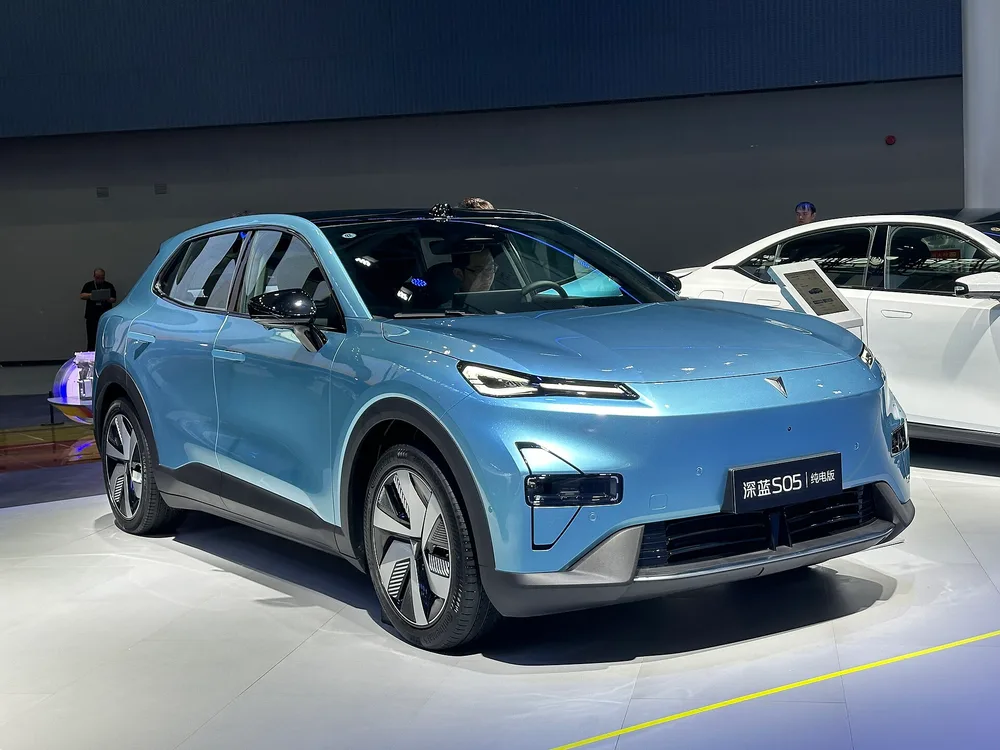 Photo: JustAnotherCarDesigner — CC0 (Wikimedia Commons)
Price: ฿799,000 (Lite trim)
Deepal (a Changan sub-brand) packs the most aggressive specs of any SUV under ฿800,000. Its 56.12 kWh CATL LFP battery pairs with a 238 hp motor (320 Nm torque), hitting 0-100 km/h in 7.3 seconds and around 470 km NEDC range. DC fast charging peaks at 150 kW — the fastest of all 10 models here, meaning noticeably shorter stops on a long road trip than any rival.
Pros: Strongest acceleration and motor output in this price band. Fastest DC charging of the group. Well suited to frequent long drives.
Cons: Priced right at the ~฿800,000 ceiling even at the entry trim, and Deepal is a very new brand in Thailand with a still-limited service network.
Best for: Buyers whose budget stretches to ฿800,000 and who weight acceleration and charging speed above everything else.
#7: Neta V-II — Cheapest Option That Still Has ADAS
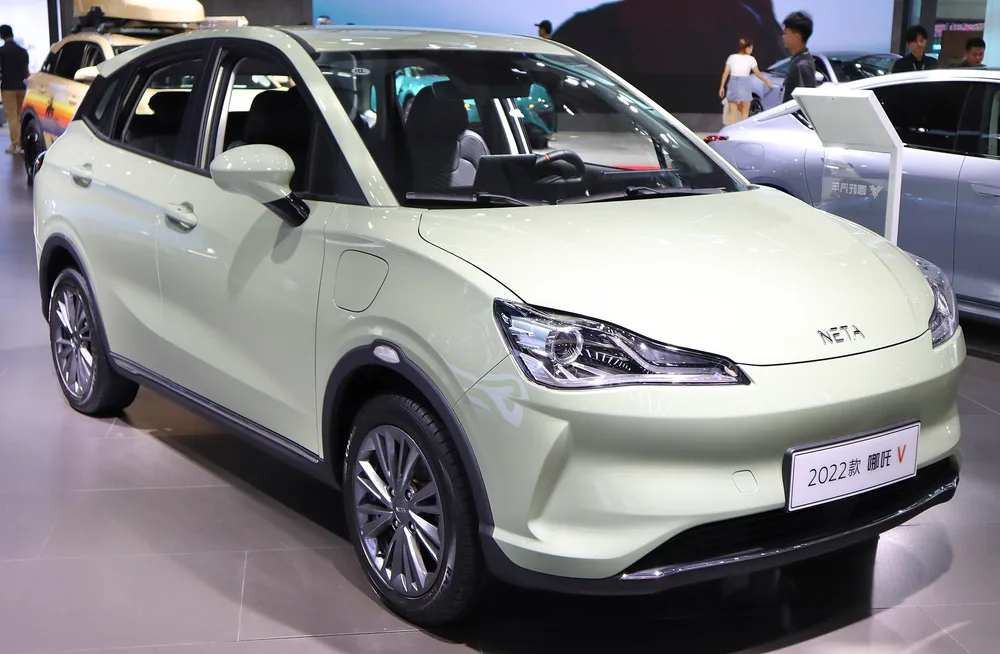 Photo: User3204 — CC BY-SA 4.0 (Wikimedia Commons)
Price: ฿389,000–549,000 (after a major 2026 price cut)
The Neta V-II is a small electric hatchback that got a steep price cut in 2026, making it one of the cheapest EVs that still offers Adaptive Cruise Control on its top trim. Its 36.1 kWh LFP battery delivers up to 382 km NEDC on the top trim; the standard trim manages around 301 km.
Pros: Very low starting price for the spec you get. Driver-assist features on the top trim that are hard to find from other brands at this price.
Cons: Shorter range than similarly-priced rivals — better suited to city use than long trips.
Best for: Buyers on a genuinely tight budget who don't want to give up basic safety features.
#8: Wuling Binguo EV — The Best-Balanced City Car
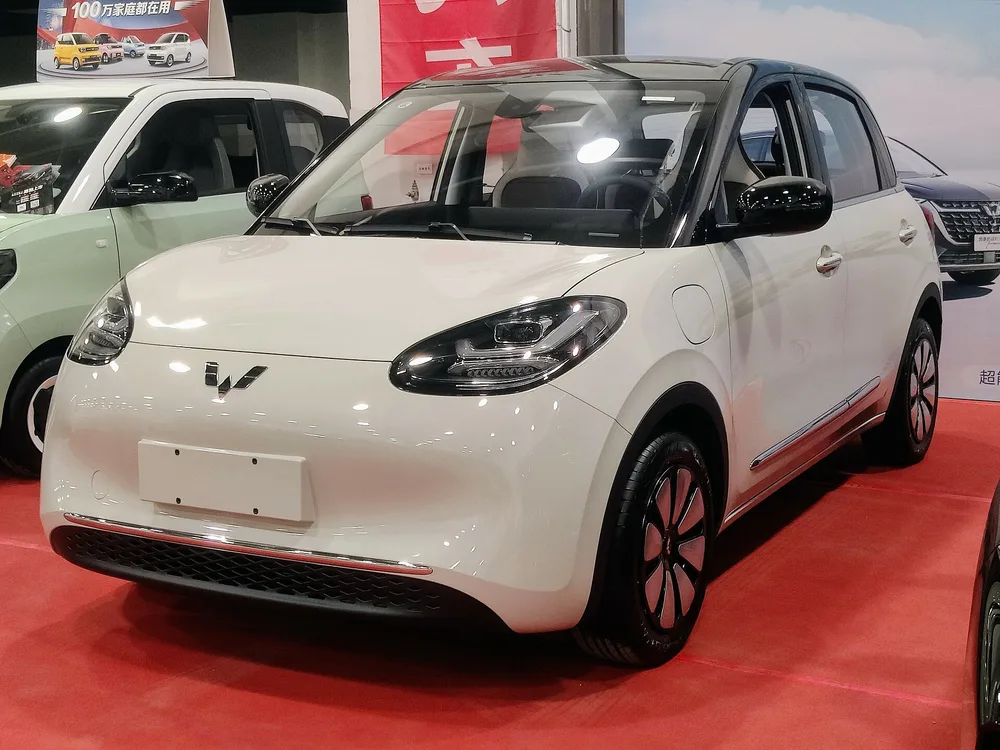 Photo: Zotyefan — CC BY-SA 4.0 (Wikimedia Commons)
Price: ฿399,000–429,000
The Wuling Binguo EV is a small 4-seat electric car purpose-built for city driving. At just 3,950 mm long, it parks easily in tight spots. Its 31.9 kWh battery and 68 hp motor deliver up to 333 km NEDC range, with a 30-80% fast charge taking about 35 minutes.
Pros: Affordable, small and easy to maneuver, park, and drive — a good fit for new drivers.
Cons: Top speed capped at 120 km/h — not suited to high-speed highway trips.
Best for: Drivers whose main use is commuting and errands around town, rarely leaving the province.
#9: Changan Lumin — The Cheapest EV on the Market
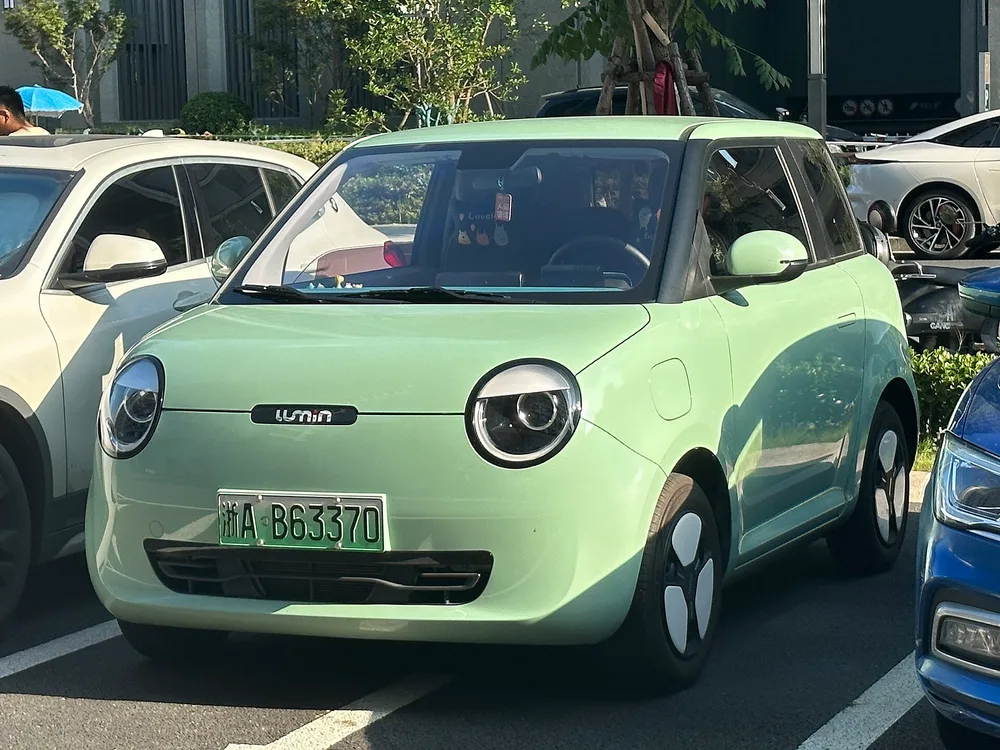 Photo: Quzhouliulian — CC BY-SA 4.0 (Wikimedia Commons)
Price: ฿349,000–409,000 (promotions vary)
If budget is genuinely the deciding factor, the Changan Lumin is currently the cheapest brand-new EV sold in Thailand. It's a mini 4-seat hatchback at just 3,270 mm long, with a 27.98 kWh CATL LFP battery and a 48 hp motor, delivering up to 301 km NEDC range.
Pros: Lowest price of any brand-new EV in this group, with a correspondingly tiny monthly installment. Makes a good second car for a household.
Cons: Very small body — comfortably fits one or two people rather than a full four adults. Shortest range of any four-wheeled model in this list.
Best for: Buyers who want their first EV at the lowest possible budget, mainly for driving around the neighborhood.
#10: FOMM ONE — Thailand's Tiny EV With a 5-Minute Battery Swap
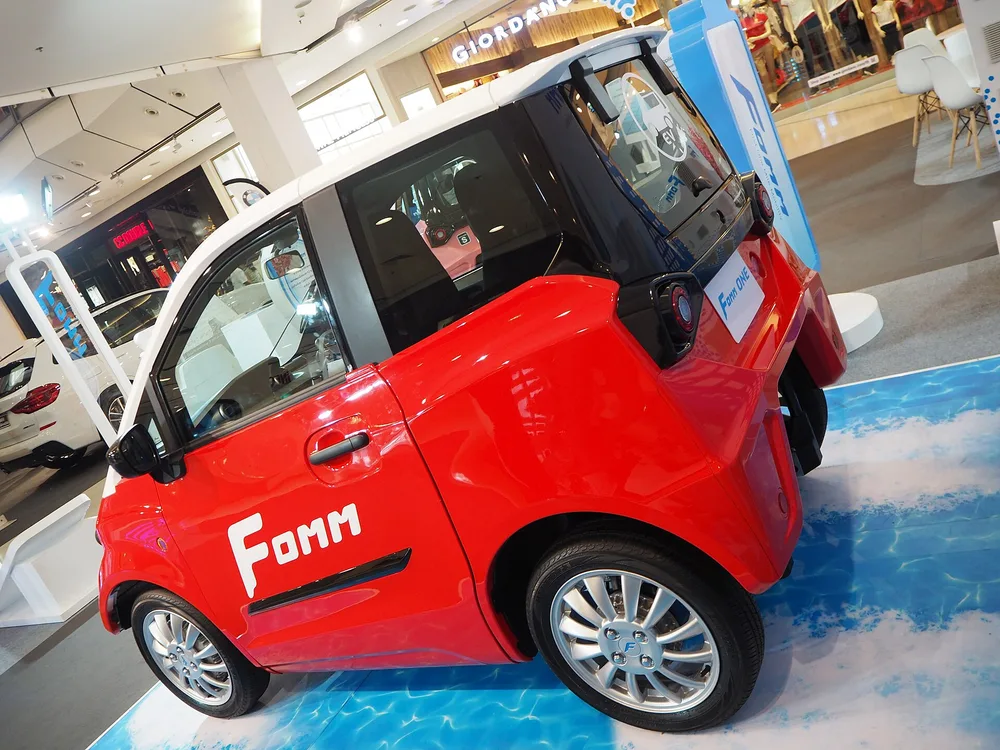 Photo: Chanokchon — CC BY-SA 4.0 (Wikimedia Commons)
Price: ฿481,500–599,900 (promotions vary)
The FOMM ONE is a tiny EV manufactured in Thailand by a Japanese-Thai engineering team. Its standout feature, unmatched by anything else on this list, is a swappable lithium-ion battery — when it runs low, you can swap it for a fresh one at a service point in about 5 minutes, no waiting for a charge. The car is compact at just 2,585 mm long, tops out at 90 km/h, and covers up to 160 km per full charge (WLTC). It also has a genuinely unusual party trick: it can float in a sudden flood.
Pros: Battery swap is far faster than any form of charging. Well suited to industrial estates, university campuses, or gated communities with a swap station. Made in Thailand, so basic parts are easy to source.
Cons: Shortest range in the entire list, and a very limited top speed — not suited to long drives or highways. Swap stations are still limited to specific areas.
Best for: Very short-range use in an area with a FOMM swap station nearby, or buyers specifically drawn to the flood-resistant party trick.
Full comparison table
| Rank | Model | Price (THB) | Battery | NEDC range | Motor output |
|---|---|---|---|---|---|
| 1 | BYD Dolphin | 599,900–699,900 | 50.25–60.48 kWh | 435–490 km | 95–204 hp |
| 2 | AION UT | 519,900–669,900 | 50 kWh | up to 500 km | 136 hp |
| 3 | GWM ORA 5 EV | 629,000–699,000 | 58.3 kWh | 520 km | 204 hp |
| 4 | MG4 Electric | 599,900–709,900 | 50–62.2 kWh | 450–540 km | 170–245 hp |
| 5 | BYD Atto 3 | 669,900–769,900 | 50.25–60.48 kWh | up to 480 km | 95–204 hp |
| 6 | Deepal S05 (Lite) | 799,000 | 56.12 kWh | ~470 km | 238 hp |
| 7 | Neta V-II | 389,000–549,000 | 36.1 kWh | 301–382 km | ~95 hp |
| 8 | Wuling Binguo EV | 399,000–429,000 | 31.9 kWh | 333 km | 68 hp |
| 9 | Changan Lumin | 349,000–409,000 | 27.98 kWh | 301 km | 48 hp |
| 10 | FOMM ONE | 481,500–599,900 | ~12 kWh (swappable) | 160 km (WLTC) | 13.4 hp |
Prices and range figures are from manufacturer data as of August 2026. Real-world range is always lower than the stated NEDC figure.
Picking by budget and use case
- Under ฿450,000, mostly driven around the neighborhood: Changan Lumin or Wuling Binguo EV — small, easy to park, lowest monthly installment.
- ฿500,000–650,000, want a balanced pick: BYD Dolphin (Standard Range), AION UT, or Neta V-II — enough range for short out-of-province trips, and starting to pack full safety features.
- ฿650,000–800,000, need an SUV or drive long distances often: MG4 Electric (X Long Range), GWM ORA 5, BYD Atto 3, or Deepal S05 — bigger body, longer range, faster charging — a good fit for families or frequent long-distance drivers.
- Specialized use (industrial estates, flood-prone areas): the FOMM ONE's fast battery swap and flood resistance make it a niche pick that solves a different problem than a regular car.
If you're still deciding between an EV and keeping your current petrol car, our detailed breakdown of cost-per-km and maintenance in EV vs. Petrol Car 2026: Which Is Actually Worth It For You covers that comparison in depth.
The real cost: home charging vs. public charging vs. petrol
The prices above are just the purchase price — the cost that actually differs long-term is energy cost per kilometer:
- Home charging overnight (off-peak): electricity runs about ฿2.6–4.2 per unit (kWh), depending on a standard meter or an EV-specific time-of-use meter. For example, a BYD Dolphin Standard Range with a 50.25 kWh battery costs roughly ฿130–210 for a full charge, covering 435 km — about ฿0.3–0.5 per kilometer.
- DC fast charging at a public station: on-peak electricity (09:00–22:00) runs about ฿5.8–8.2 per unit, nearly double the home rate, pushing the cost up to roughly ฿0.7–0.9 per kilometer.
- Petrol car (gasohol 95 at around ฿36.8/liter as of August 2026): a typical car covers 12–15 km/liter, working out to roughly ฿2.5–3.1 per kilometer.
In plain terms, charging at home overnight is roughly 5–8x cheaper per kilometer than running on petrol. Driving 1,500 km a month, a petrol car spends about ฿3,750–4,650 on fuel, while an EV charged at home spends only around ฿450–750 — savings in the thousands of baht every month, and the more you drive, the more it adds up.
Another variable that can shrink the effective price further is the government's EV 3.5 scheme (in effect 2024–2027): electric cars priced up to 2 million baht with a 50 kWh+ battery (BYD Dolphin, AION UT, MG4, GWM ORA 5, BYD Atto 3, and Deepal S05 in this list all qualify) are eligible for up to ฿50,000–100,000 per car, while models under 50 kWh (Neta V-II, Wuling Binguo, Changan Lumin) qualify for ฿20,000–50,000. Only the specific trim the manufacturer has registered for the scheme is eligible, so confirm with the dealer exactly how much subsidy applies before putting down a deposit — some listed prices already reflect the subsidy, others don't.
For a precise cost estimate on the specific model you're considering, try our EV charging cost calculator and EV vs. petrol cost comparison tools, or if you're planning a home charger, our home charger payback calculator can help you work out whether it's worth it for how you actually drive.
Common mistakes first-time EV buyers make
- Looking only at the sticker price, not the EV 3.5 subsidy — the net price for the same model can differ by up to ฿100,000 depending on eligibility. Ask before putting down a deposit.
- Taking the NEDC range at face value — real-world driving in Thailand with the aircon on and sustained highway speeds typically returns only 70–80% of the stated figure. Always budget a margin below your actual need.
- Not checking your home's electrical meter first — most standalone houses with a 15(45)A meter are fine for a standard EV charger, but if the house already runs heavy loads (multiple aircon units, a water heater), consult the electricity authority or an electrician before installing a wall charger.
- Some condos and housing estates ban installing your own charger — check with the building's juristic person before buying the car, not after you discover you can't charge at home.
- Overlooking service coverage outside Bangkok — newer brands (AION, Deepal, GWM ORA 5) still concentrate their service centers in Bangkok and major cities. If you live elsewhere, check the distance to the nearest center before buying.
- Not comparing resale value — some Chinese EV brands depreciate faster than petrol cars because new models launch frequently and battery technology keeps improving fast. If you plan to sell within 3-4 years, favor a brand with an established customer base, like BYD or MG.
Verdict: which one to buy
If you want the safest answer with no conditions, the BYD Dolphin is it — it balances price, range, after-sales service, and resale value better than anything else here. It's the right choice for a first-time EV buyer who doesn't want to gamble on a brand with no track record in Thailand.
If your budget is genuinely tight, under ฿450,000, the Changan Lumin or Wuling Binguo EV suits pure city driving. If you want the longest range for under ฿700,000, the AION UT and GWM ORA 5 EV are the two options that hit 500+ km, which is rare at this price. And if you need a fully-loaded family SUV under ฿800,000, compare the BYD Atto 3 (biggest body) against the Deepal S05 (quickest and fastest-charging) based on whether cabin space or performance matters more to you.
Whichever model you pick, confirm your EV 3.5 subsidy eligibility and sort out car insurance before taking delivery — EV insurance has some meaningful differences from a petrol policy (battery repair costs run higher than a typical engine part, for one). Read more in Comparing Class 1 Car Insurance 2026.
Sources
- BYD Dolphin starting price ฿599,900 - Checkraka
- BYD ATTO 3 Motor Show 2026 promotional pricing - Autolifethailand.tv
- AION UT official pricing - HeadLight Magazine
- GWM ORA 5 EV price, spec, range - EVCompareHub
- MG4 MY2026 official pricing - HeadLight Magazine
- Wuling Binguo EV 2026 price - ZigWheels
- Changan Lumin 2026 price - Checkraka
- Neta V-II 2026 price cut - Superbikemag
- Electric Vehicles in Thailand: Complete Guide 2026 - Green Energy Thailand
- FOMM One price and installments - Chobrod
- EV 3.5 subsidy scheme approved by the Cabinet - RYT9
- EV charging electricity rates January-April 2026 - Autospinn
- Fuel prices today, 15 August 2026 - Thairath
Frequently asked questions
- Are electric cars under 1 million baht actually cheaper to run than a petrol car?
- Yes, if you drive mostly around town and can charge at home — cost per km runs 3–5x lower than petrol, and maintenance is cheaper with no engine oil, filters, or belts to replace. If you regularly drive long distances with no reliable charging along the way, a petrol or hybrid car may still suit you better.
- Does the advertised NEDC range actually happen in real driving?
- No — NEDC is a lab test figure. Real-world driving in Thailand with the aircon running constantly and sustained highway speeds typically returns about 70–80% of the stated number. A car rated at 400 km will usually deliver closer to 280–320 km in practice.
- Do I need to install a home charger to buy an EV under 1 million baht?
- Not required, but strongly recommended — home charging is the cheapest and most convenient option. Most standalone houses already have a 15(45)A or 30(100)A meter, which is enough for a typical wall charger. Some condos and housing estates restrict charger installation, so check with the juristic person before you buy.
- How do Chinese EV brands compare to Japanese/European ones for after-sales service?
- Brands that entered Thailand earlier — MG and BYD — have the widest service center and parts network in this price segment. Newer brands like Neta, AION, and GWM still have fewer centers outside Bangkok. Check how many service centers exist in your own province before deciding, not just in the capital.
- Is the EV 3.5 subsidy still available in 2026?
- Yes — the EV 3.5 scheme (2024–2027) subsidizes electric cars priced up to 2 million baht. Models with a 50 kWh+ battery qualify for up to ฿100,000 per car, and those under 50 kWh qualify for ฿20,000–50,000. Only trims the manufacturer has registered for the scheme are eligible, so ask the dealer exactly how much subsidy applies to the specific trim before signing a deposit.
- How fast does an EV battery degrade — will I need to replace it soon?
- Modern lithium batteries (mostly LFP in this price segment) degrade slowly and gradually. Most manufacturers warranty the battery for 8 years or 160,000–180,000 km, which covers typical ownership. A full battery replacement during a normal loan term is not something to worry about.
Related articles

EV vs petrol in Thailand 2026: costed on today's real prices
Cost per kilometre worked out from Thailand's actual September 2026 pump and charging prices — and why the gap depends on your parking space far more than on the car.

First Car Buying Guide 2026: Budget, Financing, Hidden Costs & Insurance
First car buying guide for Thailand 2026: set a budget from income, down payment, financing rates, new vs used, hidden costs and insurance.
How to Save Fuel in Thailand 2026: Real Tips as Gas Prices Rise
Thailand fuel prices rose Sep 2026. Proven ways to cut fuel costs, a real cost-impact table, and whether switching to an EV finally pays off.