iPhone vs Android 2026: Apple's update advantage is gone

Comparing iPhone and Android usually ends in personal preference, because both have done everything ordinary people need for years.
But in 2026 one fact changed that genuinely changes the answer — the "iPhones get updates for longer" advantage, which people have repeated for a decade, is no longer true at the flagship level.
Support windows: the numbers that changed
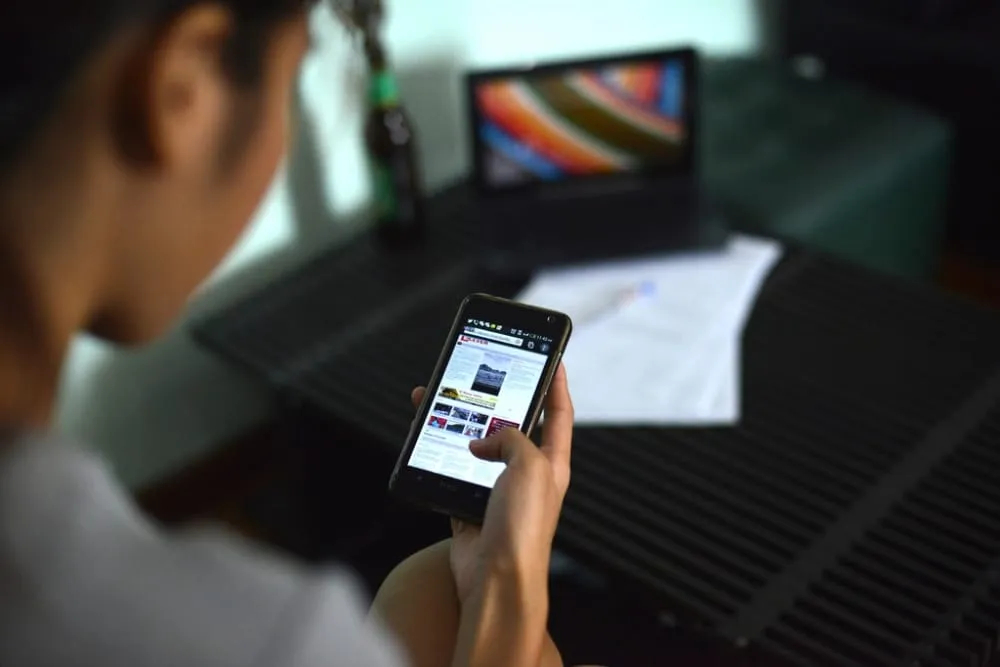 Photo: Hannerdy — CC BY-SA 4.0 (Wikimedia Commons)
| Brand / range | OS updates | Security patches |
|---|---|---|
| Apple iPhone | guaranteed 5 years (in practice 6–8) | 7 years |
| Samsung Galaxy S24 onwards | 7 years | 7 years (monthly for at least the first 4) |
| Google Pixel 8 onwards | 7 years | 7 years |
| Google Pixel 6–7 | 5 years | 5 years |
| Mid-range / budget Android | often 2–4 years | often 4 years |
⚠️ This is the most significant change in the phone market in years. The strongest reason to choose an iPhone used to be "it lasts longer because it gets updates longer". Now Samsung and Google guarantee seven years of both, matching or exceeding Apple's published commitment.
⚠️ But read it fully: the seven-year figure applies to flagships only — Galaxy S24 onwards and Pixel 8 onwards, not every Android phone. Many cheaper Android phones still get two years of OS updates, and some brands publish no support window at all, which means you cannot know.
In practice Apple usually exceeds its guarantee — the iPhone 11, released in September 2019, is expected to receive iOS 28 in 2027, which would be eight years of major updates. Apple's five-year promise is a floor, not a ceiling.
Why security patches matter more than new features
Most people read a "years of updates" table and think about new features, which is reading the wrong column.
Major OS updates mean new features — which you can live without; the phone keeps working.
Security patches close discovered vulnerabilities — and losing them matters, because once a vulnerability is publicly disclosed (which always happens after the maker ships a patch for supported models), an unpatched phone has a known hole that will never be closed.
⚠️ And your phone holds everything that matters most — banking apps, the email account that resets every other password, OTP codes, identity documents, every photo. A phone that has stopped receiving security patches is not merely "a bit old"; it is one that should stop being used for transactions.
That is why the right-hand column of the table above matters more than the left, and it is the first number to ask about before buying any phone.
Compare properly: cost per supported year
 Photo: 可恩Ke En — CC BY 3.0 (Wikimedia Commons)
This is the calculation that changes how people choose phones, and almost nobody does it.
The formula: price ÷ years of security support = cost per year of safe use.
| Example | Price | Support | Per year |
|---|---|---|---|
| Cheap phone with no published window | 8,000 | 2 years | 4,000 baht |
| Mid-range with 4-year support | 15,000 | 4 years | 3,750 baht |
| Galaxy S / Pixel flagship | 30,000 | 7 years | 4,286 baht |
| Standard iPhone | 30,000 | ~6 years | 5,000 baht |
| iPhone Pro | 45,000 | ~6 years | 7,500 baht |
⚠️ The counterintuitive result: an 8,000-baht phone is not as much cheaper than a 30,000-baht flagship as it looks. Per year of safe use, 4,000 and 4,286 baht are nearly identical — you simply pay more often, and migrate your data every two years.
⚠️ And the best value in the table is the mid-range phone with a clearly published four-year window — neither the cheapest nor the most expensive.
⚠️ The prices are illustrative, not market prices — substitute the real price of the model you are considering and divide by the window the maker publishes on its own website. If you cannot find that window, that is itself the answer.
What genuinely differs, and what the advertising exaggerates
Genuine differences that may decide it:
| Aspect | iPhone | Android |
|---|---|---|
| Ecosystem integration | Calls on the Mac, shared clipboard, AirDrop — only fully within Apple | Integrates better with Windows and Google services |
| Apple Watch | Works only with iPhone | Does not work at all |
| Range of choice | A few models a year | From a few thousand baht upwards, every size and form |
| Customisation | Limited but simple | Far deeper |
| Resale value | Generally holds value better | Falls faster, except some flagships |
| Memory card slot | None | On some models |
| Service centres and parts in Thailand | Authorised centres nationwide | Varies enormously; small brands are hard to service out of warranty |
⚠️ The first row carries the most weight. If you already use a MacBook and an iPad, staying in one ecosystem is a stronger reason than any line-by-line spec comparison — and conversely, if you live in Windows and Google services, Android fits more smoothly.
⚠️ The most underrated row is the last one — a brand with no service centre in your province means one cracked screen can end the phone.
Far smaller than the advertising suggests:
- Camera — at the same price, the difference is colour processing taste more than quality. Look at real sample photos from the exact model, not megapixels.
- Speed — every mid-range or better phone in 2026 is more than fast enough for anything ordinary people do; benchmark scores no longer translate into how it feels.
- Battery — determined by cell size and tuning more than by operating system.
- AI features — broadly similar on both sides, and mostly things people try twice and stop using.
Who should choose what
| If you | Choose |
|---|---|
| Already use a MacBook / iPad / Apple Watch | iPhone |
| Live in Windows and Google services | Android |
| Want the longest support regardless of brand | A Galaxy S / Pixel flagship (7 years) or an iPhone |
| Have a limited budget but want to keep it long | A mid-range Android with a published 4+ year window |
| Replace your phone every two years anyway | Whatever is best value on the day |
| Live outside a major city and worry about repairs | A brand with a service centre nearby |
| Are buying for an older relative | Whatever the rest of the household uses, so someone can teach them |
Common mistakes
Not checking the support window before buying — it determines the phone's real lifespan and is published on the maker's own site.
Comparing sticker prices only — see the per-year table again.
Buying for a higher-megapixel camera — pixel count barely correlates with image quality on a phone; sensor size and processing matter far more.
Buying a brand with no service presence in Thailand because the specs-per-baht look good — until it needs repair.
Forgetting the cost of switching ecosystems — purchased apps must be bought again, and an Apple Watch cannot come with you.
Buying the smallest storage to save money — most phones cannot be expanded later, and photos and video grow faster than expected. Paying up for storage is cheaper than replacing a full phone.
Summary
- Apple's update advantage is gone at the flagship level — Galaxy S24 onwards and Pixel 8 onwards both give seven years of OS and security updates.
- But the gap remains against mid-range and budget Android, much of which gets two years, with some brands publishing nothing.
- The real 2026 divide is "publishes a support window" versus "does not", not iOS versus Android.
- Security patches matter more than new features, because your phone holds your banking apps and OTP codes.
- Compare price ÷ years of support — an 8,000-baht phone with two years is not the bargain it appears.
- If you are already in an ecosystem, staying is usually the better value, because cross-device integration is what a spec sheet never shows.
- Check for a service centre near you before deciding, especially outside major cities.
Sources
- TechRadar — support windows for Apple, Samsung, Google and Motorola devices
- 9to5Google — Galaxy S25 series supports 7 years of Android OS and security updates
- Android Authority — every Samsung device eligible for 7 major Android updates
- Macworld — how long does Apple support iPhones with updates
- Engadget — these popular smartphones are in their last year of software support
Prices in the table illustrate the method and are not market prices for any particular model — substitute the real price of what you are considering. Manufacturers' update policies change and vary by model and market; check the maker's own site before deciding.
Frequently asked questions
- Does the iPhone still get updates for longer in 2026?
- Not at the flagship level. Samsung Galaxy S24 onwards and Google Pixel 8 onwards get seven years of OS and security updates, while Apple guarantees five years of OS updates and seven of security patches. The gap that used to favour Apple has closed at the top, though it remains against mid-range and budget Android.
- How should I compare prices?
- Compare price ÷ years of security support, not the sticker price. An 8,000-baht phone with two years of updates works out at 4,000 baht a year, which is not meaningfully cheaper than a 30,000-baht flagship with seven years at 4,286.
- Why do security patches matter more than new features?
- Because a phone that no longer receives patches has publicly known vulnerabilities that will never be closed — and your phone holds your banking apps, your email and every verification code you receive.
- Is switching from iPhone to Android difficult?
- Less than it used to be. Both sides provide migration tools for contacts, photos, calendars and messages. What genuinely does not transfer is purchased apps (you buy them again) and accessories tied to one ecosystem, such as an Apple Watch, which will not work with Android at all.
- Which has the better camera?
- At the same price point, far less than the advertising suggests, and mostly a matter of colour processing taste rather than quality — some brands favour saturated, high-contrast images and others aim closer to what the eye sees. Look at real sample photos from the exact model, not the megapixel count.
- I already use a MacBook and iPad — should I get an iPhone?
- There is a good case for it. Cross-device features like answering calls on the Mac, shared clipboard and AirDrop only work fully inside one ecosystem, and that is a stronger reason than any line-by-line spec comparison.
Related articles

How to Choose a Tablet in 2026 — A Simple Buying Guide by Use and Budget
A jargon-free 2026 tablet buying guide: pick by real use, with spec explainers, comparison tables and Thai baht prices for iPad, Samsung, Xiaomi and Huawei.
OPPO Reno16 vs Reno16 Pro vs Reno16 F: Which to Buy in 2026
Compare specs, price, cameras and battery of OPPO Reno16, Reno16 Pro and Reno16 F in Thailand 2026, with real pros/cons and which model is worth the upgrade.
Samsung Galaxy A27 5G Review: Full Specs, Worth It Under 11,000 Baht?
In-depth Samsung Galaxy A27 5G review — specs, camera, battery, Snapdragon 6 Gen 3, Thai pricing, and a real comparison against budget 5G rivals in 2026.