Samsung Galaxy A27 5G Review: Full Specs, Worth It Under 11,000 Baht?
Watch more: Samsung Galaxy A27 Review by YugaTech
If you're shopping for a 10,000-baht 5G phone in Thailand right now, the Samsung Galaxy A27 5G is probably showing up in every online store — Samsung's newest A-series phone, launched in Thailand in late June 2026 at a promotional price of 9,999 THB (regular price 10,999 THB).
The question everyone's asking: is it really a better buy than the cheaper Redmi Note 15 5G, vivo Y31 5G, or realme C85 5G? And why did Samsung quietly cut back one spec that its predecessor had?
This review breaks down every spec of the Galaxy A27 5G — display, chipset, camera, battery — including the one thing Samsung downgraded from the previous generation, plus a direct price comparison against rivals in the same budget tier, so you can decide whether it's actually right for you. All figures are sourced from Samsung Thailand's official specs and multiple real-world reviews as of August 2026.
What is the Samsung Galaxy A27 5G, and who is it for?
The Galaxy A27 5G sits in the lower-mid tier of Samsung's A-series, positioned above the Galaxy A17 5G (more budget-focused) but below the Galaxy A36/A56 5G (better specs, higher price). Its clear pitch: bring upper-mid-tier features — a 120Hz Super AMOLED display and LPDDR5X RAM — down into the sub-11,000-baht bracket, where they're normally missing.
Buy it if you: already use Samsung and are comfortable with One UI, care about long software support (planning to keep the phone 4–5 years), want a service center you can find anywhere in the country, or shoot photos often and want a camera with OIS at this price.
Skip it if you: care most about raw spec-per-baht (rivals offer bigger batteries and faster charging for less), or you work outdoors/ride a motorcycle in the rain often and need genuine submersion-level water resistance.
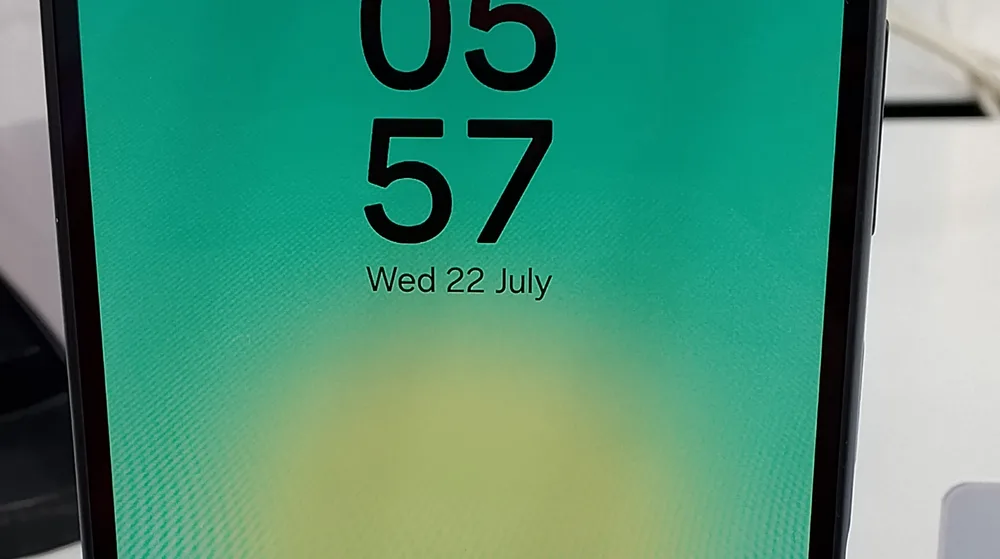 Photo: JGBlue1509 — CC BY 4.0 (Wikimedia Commons)
Full specs: Samsung Galaxy A27 5G
| Category | Details |
|---|---|
| Display | 6.7" Super AMOLED, FHD+ 1080×2340, 120Hz, 800 nits, Infinity-O punch-hole |
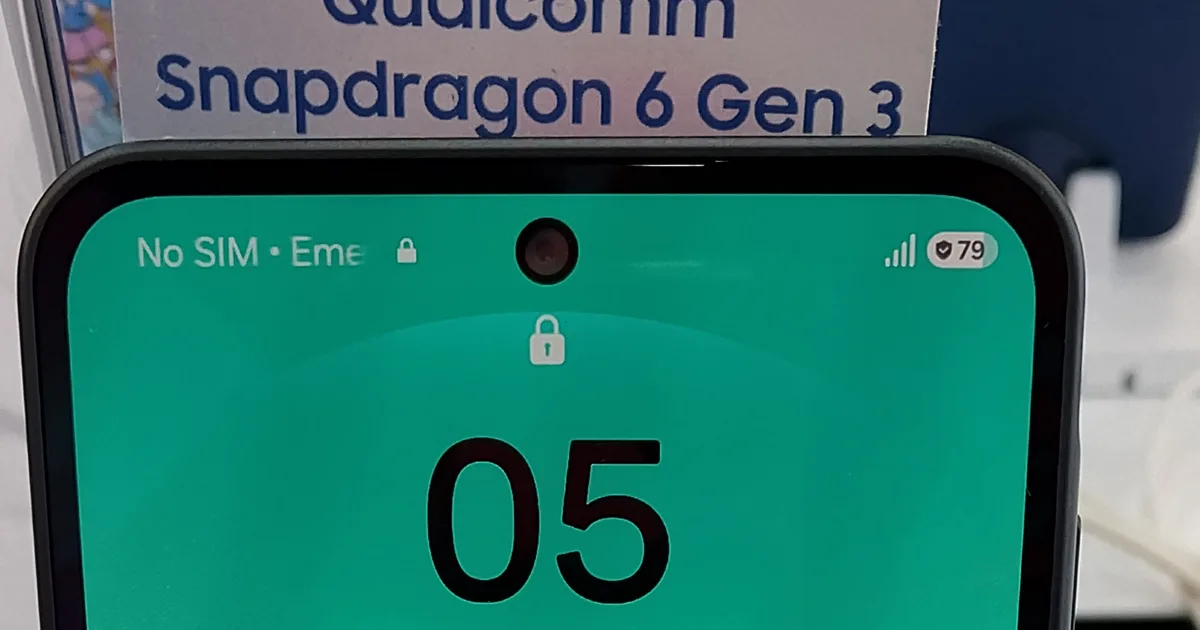
| Chipset | Qualcomm Snapdragon 6 Gen 3 (octa-core, 2.4GHz) + Adreno 710 GPU |
| RAM/storage | 8GB LPDDR5X + 128GB (single config), microSD up to 2TB |
| Rear cameras | 50MP main (f/1.8, OIS) + 5MP ultrawide + 2MP macro, LED flash |
| Front camera | 12MP (f/2.2) |
| Video | 4K @ 30fps (rear), Full HD @ 30fps (front) |
| Battery | 5,000mAh, 25W bypass charging |
| Software | One UI 8.5 on Android 16 (6 major OS updates + 6 years of security patches) |
| Build | Corning Gorilla Glass Victus+ front, plastic back, IP64 |
| Dimensions/weight | 162.4 × 78.2 × 7.8mm, 200g |
| Connectivity | Dual-SIM 5G, Wi-Fi 802.11ac, Bluetooth 5.1, USB-C 2.0, GPS |
| Colors | Black, Light Pink (Thailand launch) — green/blue also sold globally |
| Price | 10,999 THB (9,999 THB launch promo through July 5, 2026) |
Display — the standout feature of this phone
The 6.7-inch Super AMOLED panel is what most reviewers single out as the best thing about this phone at its price. Peak brightness of 800 nits keeps it legible outdoors (not flagship-level 1,000+ nits, but well ahead of the LCD panels rivals use at this price). The 120Hz refresh rate makes scrolling and menu navigation noticeably smoother than the 60Hz screens some competitors still ship.
Samsung also shaved 2.1mm off the bottom bezel compared to the Galaxy A26 5G, giving it a more modern screen-to-body ratio. The small punch-hole selfie camera (Infinity-O) stays out of the way during video playback.
AMOLED colors carry richer saturation and contrast — anyone who watches YouTube, Netflix, or scrolls social media a lot will notice the difference from an LCD screen the moment they turn it on.
Snapdragon 6 Gen 3 chipset and real-world performance
The Snapdragon 6 Gen 3 is a lower-mid-tier chip built for a balance of processing power and battery efficiency rather than heavy gaming. Reported AnTuTu scores land around 833,548 points — about 18% better than the previous generation's chip — enough for everyday use, multitasking, and mainstream mobile games like ROV, PUBG Mobile, and Free Fire at medium-to-high graphics settings.
The more interesting spec is the LPDDR5X RAM — the first time Samsung has used it in this tier of the A-series. It's faster and more power-efficient than the LPDDR4X still used by several rivals, so app-switching and multitasking feel smoother than the raw numbers suggest.
Game Booster helps allocate resources during gameplay for more consistent frame rates in long sessions, paired with bypass charging: while gaming with the charger plugged in, power routes directly to the motherboard instead of through the battery first, cutting heat buildup by roughly 1–2°C and extending long-term battery life — a feature rarely found on 10,000-baht phones.
That said, against the Redmi Note 15 5G, which uses the exact same Snapdragon 6 Gen 3, real-world performance is very close — the meaningful differences come down to each brand's software tuning rather than raw power.
Camera — sharp by day, usable at night
The 50MP main camera (f/1.8) comes with OIS (optical image stabilization) — a genuinely good inclusion at this price, since several cheaper rivals cut this feature to save cost. OIS helps keep low-light photos sharper and video steadier while walking.
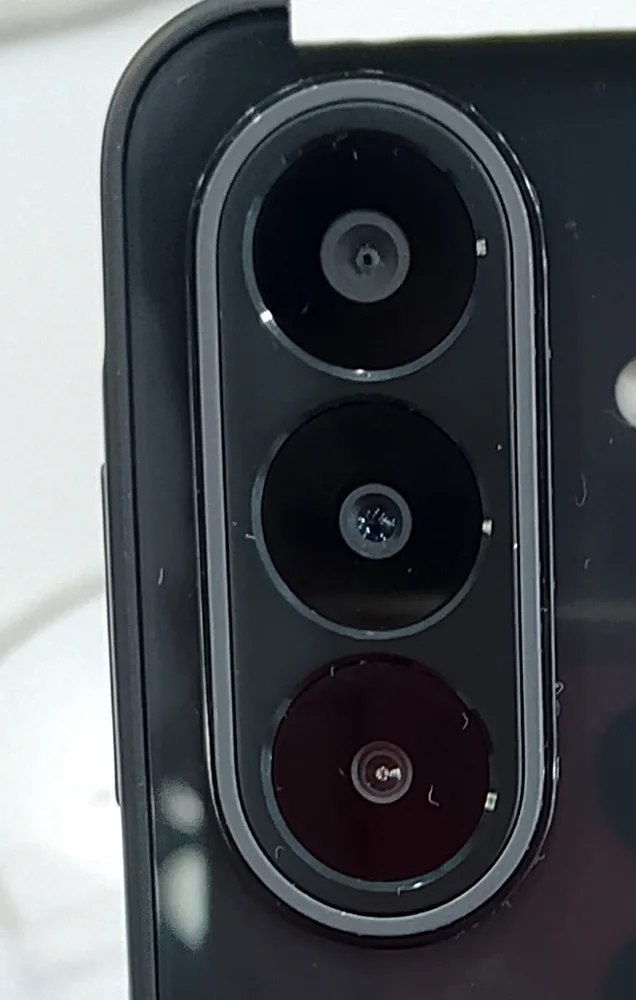 Photo: JGBlue1509 — CC BY 4.0 (Wikimedia Commons)
Real-world reviews report Night Mode holding onto building detail and neon lighting reasonably well without excessive blur — solid for this price tier, though not at the noise-handling level of flagship cameras in very dark scenes. The 5MP ultrawide handles wide shots, and the 2MP macro lens is a basic close-up tool rather than a high-quality sensor (typical of macro cameras at this price across every brand).
The 12MP (f/2.2) front camera renders natural skin tones with balanced light/shadow — fine for selfies and video calls.
Video tops out at 4K at 30fps on the rear camera, enough for typical social content, though it lacks the 4K/60fps mode some mid-to-upper-tier rivals are starting to offer.
Battery and charging
The 5,000mAh battery is standard for phones at this price in 2026 — good for roughly 1 to 1.5 days of typical use (social apps, chat, mixed video), dropping to half a day to a day under heavy gaming or frequent 4K recording.
25W fast charging is noticeably slower than same-price rivals — the realme C85 5G offers 45W and the vivo Y31 5G offers 44W, both charging full at least 30–40% faster than the A27 5G, despite having bigger batteries (6,500–7,000mAh) to begin with. Samsung is clearly prioritizing charging stability and long-term battery health over raw speed, via the bypass-charging tech described above.
Design and build quality
The front uses Corning Gorilla Glass Victus+ (better scratch and drop resistance than standard glass), while the back is good-quality plastic. At just 200g, it's comfortable to hold for a 6.7-inch phone. Real-world reviews describe the glossy finish as feeling more premium than the price suggests, though — like any glossy glass/plastic phone — it picks up fingerprints easily. A case or an anti-fingerprint screen protector is worth adding.
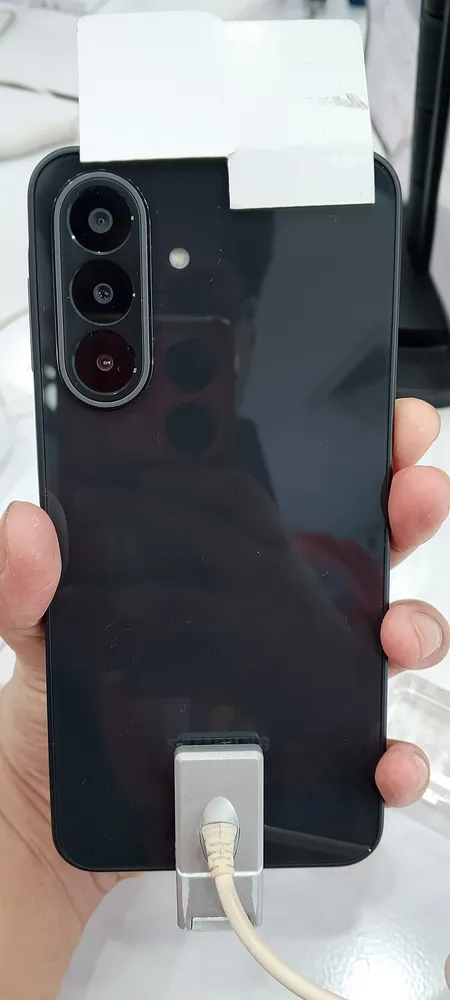 Photo: JGBlue1509 — CC BY 4.0 (Wikimedia Commons)
Software: One UI 8.5 and how long it will be supported
The A27 5G ships with One UI 8.5 on Android 16 — Samsung's newest interface version at launch. It comes with the standard suite Samsung includes on every phone: Samsung Wallet (payments/card storage), Samsung Health (step counting/basic health tracking), Good Lock (deep UI customization), and Knox security, which sandboxes sensitive data away from regular apps.
The number that actually matters most for this phone is Samsung's policy of 6 major Android version updates plus 6 years of security patches — well beyond what most Chinese rivals offer, which typically top out around 2–3 years of OS updates and 3–4 years of security patches. If you plan to keep this phone for 4–5 years without upgrading, that gap is bigger than it sounds: it's the difference between still getting security patches in year five versus a phone that stopped receiving them back in year three.
Common buying mistakes to avoid
1. Confusing it with the previous Galaxy A26 5G — the model names are easy to mix up, and some online stores still have A26 5G stock listed at a similar or even lower price. Always double-check the exact model name before checking out.
2. Assuming it's submersion-proof like a flagship — as covered above, if you expect this Samsung phone to survive being dropped in water the way a flagship might, you'll be disappointed the first time it happens.
3. Buying from an unauthorized reseller — a unit bought outside official channels may be a grey-market import with no Samsung Thailand warranty, which means no local repairs or warranty claims. Buy only from the Samsung Official Store or a clearly identified authorized dealer.
4. Expecting max-settings performance in every game — the Snapdragon 6 Gen 3 is a lower-mid-tier chip, good for mainstream games at medium-to-high settings, not a chip built to sustain the heaviest 3D titles at maximum graphics indefinitely.
⚠️ Watch out: the IP rating dropped from the previous generation
This is the single most important thing to know before buying — the Galaxy A27 5G is rated IP64, compared to IP67 on the previous Galaxy A26 5G.
- IP64 = fully dust-tight + splash/rain resistant, but not rated for submersion
- IP67 = fully dust-tight + submersible to 1 meter for up to 30 minutes
In plain terms: the A27 5G can handle a rainstorm, but if it goes into water (dropped in a toilet, sink, or pool) the risk of damage is much higher than its predecessor — despite launching at a similar or higher price. Samsung didn't make much noise about this downgrade at launch. If you work outdoors, ride a motorcycle through rain regularly, or have young kids around who might drop a phone in water, weigh this carefully before buying.
How it compares to rivals under 11,000 baht
| Model | Price (THB) | Chipset | Battery/charging | IP rating | Standout feature |
|---|---|---|---|---|---|
| Samsung Galaxy A27 5G | 10,999 | Snapdragon 6 Gen 3 | 5,000mAh / 25W | IP64 | 6 years of software updates, 120Hz AMOLED |
| Redmi Note 15 5G | 8,499 | Snapdragon 6 Gen 3 | 5,520mAh / — | IP66 | 108MP camera, ~2,500 THB cheaper |
| realme C85 5G | 6,999 | Dimensity 6300 | 7,000mAh / 45W | IP69 Pro | Biggest battery in the group, fastest charging |
| vivo Y31 5G | 7,999 | Snapdragon 4 Gen 2 | 6,500mAh / 44W | IP68/IP69 | Best water resistance in the group, long battery life |
The table makes it clear: the A27 5G is the most expensive phone here, yet it has the smallest battery, the slowest charging, and the weakest water resistance. What Samsung is selling instead is the brand, familiar One UI software, the longest software-support window of any phone in this table, and a Samsung service center network available nationwide. If those things don't matter much to you, every rival in this table offers better raw spec-per-baht.
Pros and cons
Pros:
- 120Hz Super AMOLED display at 800 nits, sharp and vivid colors
- First-in-series LPDDR5X RAM makes multitasking feel smoother than the specs suggest
- 6 years of Android version updates + 6 years of security patches — longer than any Chinese rival here
- 50MP rear camera with OIS at this price (several rivals cut this feature)
- Bypass charging genuinely reduces heat when gaming while plugged in
- Nationwide Samsung service center coverage
Cons:
- IP rating dropped from IP67 (previous gen) to IP64 — less water protection
- 25W charging is slower than rivals offering 44–45W at a lower price
- 5,000mAh battery is smaller than rivals offering 6,500–7,000mAh for less money
- Only one storage configuration (8GB/128GB), no higher-capacity option
- Costs about 2,500 THB more than the similarly-specced Redmi Note 15 5G
Who should buy it
Buy it if you:
- already use Samsung and are comfortable with One UI
- value long software support (planning to keep the phone 4–5 years)
- want a nationwide service center you can trust
- shoot photos often and want OIS at this price
Look elsewhere if you:
- want maximum raw spec-per-baht — see 10 best budget phones of 2026, which covers the realme C85 5G and vivo Y31 5G in this same price range
- can stretch your budget to 15,000–20,000 THB for meaningfully better specs — see 10 best mid-range phones of 2026
- work outdoors or ride a motorcycle in the rain often and need genuine water resistance — the vivo Y31 5G (IP68/69) or realme C85 5G (IP69 Pro) protect much better
- can stretch to flagship level and want the best camera/chip available — compare iPhone 17 vs Samsung Galaxy S26 before deciding
Verdict
The Samsung Galaxy A27 5G does what Samsung's A-series has always done — it isn't the phone with the best raw spec-per-baht in this price bracket, but it wins on long-term confidence: the longest software support window in the group, an AMOLED screen that outshines rivals' LCD panels, and a service network you can find anywhere in the country.
But cutting the water resistance from IP67 to IP64 while charging slower and costing more than its rivals makes this a phone best suited to buyers who value the brand and the software more than the raw numbers. If that's you, the Galaxy A27 5G delivers well. If you want maximum value per baht, weigh the Redmi Note 15 5G or realme C85 5G before deciding.
Overall score: 4.2/5 — points deducted mainly for the IP rating downgrade and charging speed lagging same-price rivals.
Sources
- Samsung Galaxy A27 5G Light Pink — Samsung Thailand
- Samsung Galaxy A27 5G full specs — Siamphone.com
- Samsung Galaxy A27 5G review — Siamphone.com
- Samsung Galaxy A27 5G Thailand pricing — DroidSans
- Redmi Note 15 Series Thailand pricing — DroidSans
- realme C85 5G Thailand pricing — DroidSans
- vivo Y31 5G specs and pricing — Siamphone.com
- Samsung Galaxy A26 5G IP67 rating — Samsung/Amazon listing
Frequently asked questions
- How much does the Samsung Galaxy A27 5G cost in Thailand?
- It launched at 10,999 THB (8GB/128GB), with an introductory promo price of 9,999 THB through July 5, 2026. Shopee/Lazada prices can run lower during 11.11/12.12 campaigns, so compare before buying.
- How water-resistant is the Galaxy A27 5G — can it survive being dropped in water?
- Only IP64 — dust-tight and splash/rain resistant, but NOT rated for submersion. This is a downgrade from the Galaxy A26 5G, which carried IP67 (submersible to 1m for 30 minutes). Do not drop it in a pool, sink, or toilet.
- Galaxy A27 5G vs Galaxy A26 5G — which should I buy?
- The A27 5G has a faster Snapdragon 6 Gen 3 chip, first-in-series LPDDR5X RAM, and a 2.1mm slimmer bottom bezel — but its IP rating dropped from IP67 to IP64. If water resistance matters (motorcycle commuting, outdoor work), the A26 5G is still the safer pick. If you want the newest chip and don't need submersion protection, the A27 5G is the better buy.
- Can the Galaxy A27 5G handle mobile gaming well?
- Yes for mainstream titles like ROV, PUBG Mobile, and Free Fire at medium-to-high graphics settings, scoring roughly 833,548 in AnTuTu — about 18% better than its predecessor. It is not a dedicated gaming phone and won't sustain 60fps on the heaviest 3D titles.
- Should I get 128GB storage or add a microSD card?
- 128GB is fine for general use, social apps, and moderate photos, but if you shoot a lot of 4K video or install many games, add a microSD card (supported up to 2TB) — this model only comes in one 8GB/128GB configuration with no higher-capacity option.
- Is it safe to buy the Galaxy A27 5G on Shopee or Lazada?
- Yes, as long as you buy from the Samsung Official Store or an authorized reseller. Confirm the box carries a genuine Samsung Thailand warranty card (not a shop-issued warranty) and check the serial number matches the box before accepting delivery.
Related articles

Best Mid-Range Smartphones (THB 10,000–20,000) to Buy in 2026
The 10 best mid-range Android phones under THB 20,000 in Thailand for 2026 — with real Thai prices, detailed specs, honest pros and cons, and a clear recommendation for every use case.

OPPO Reno16 vs Reno16 Pro vs Reno16 F: Which to Buy in 2026
Compare specs, price, cameras and battery of OPPO Reno16, Reno16 Pro and Reno16 F in Thailand 2026, with real pros/cons and which model is worth the upgrade.

10 Best Budget Smartphones to Buy in 2026: Smooth Screens, Big Batteries, Best Value
The 10 best budget smartphones of 2026 ranked by real value — from under 4,000 to 8,000 THB. Full specs, prices, pros and cons, and how to choose by budget.