Japan Travel Guide for Thai Tourists 2026 — Visa, Budget & Complete Trip Planner

Watch: Everything You Need to Know Before Visiting Japan by Kirarista
Japan has been Thailand's most popular international destination for years — and the reasons are obvious: just a 6.5-hour flight, visa-free entry for Thai nationals, incredible food at every price point, world-class public transport, and exceptional safety. Whether you're a solo traveler, a couple, or a family, Japan delivers an experience unlike anywhere else.
In 2026, a few things have changed that you need to know before booking: the visa-free window has been extended to mid-2027, the Mount Fuji climbing fee jumped to ¥4,000, the tax-free refund process now happens at the airport (not in-store), and the departure tax increased to ¥3,000. This guide covers everything — visa rules, flights, real costs in Thai baht, a 7-day itinerary, and the etiquette rules that will make your trip smoother.
Japan Visa for Thai Nationals in 2026 — Still Free, With Conditions
Good news: Japan officially extended the visa exemption for Thai nationals until June 30, 2027 (2570 BE).
Key conditions you must meet:
- e-Passport only — your passport must have an electronic chip (look for the camera/chip icon on the cover). Old passports without a chip are not eligible; you'd need to apply for a regular tourist visa
- Maximum 15-day stay per entry — overstaying even one day is a serious violation
- Tourism purposes only — no working or studying during your stay
- Immigration officers may ask to see your return ticket, hotel bookings, financial proof, and itinerary — keep these ready
For stays longer than 15 days: Apply for a tourist visa at the Embassy of Japan in Bangkok or through VFS Global Thailand. No fee for Thai nationals (reciprocal arrangement); processing takes about 5 business days.
JESTA (Japan Electronic Travel Authorization): Japan passed this law in 2026, but it won't be required until 2029 — no action needed for any trip you're planning now.
Flights and Airlines
Exchange rate reference: ¥100 = ฿20.43 (July 2026)
Bangkok → Tokyo (NRT or HND)
| Airline | Type | Approx. Round-Trip Fare |
|---|---|---|
| Thai AirAsia X | LCC | ฿13,000–18,000 |
| ZIPAIR (JAL LCC) | LCC | ฿13,000–17,000 |
| Thai VietJet Air | LCC | ฿14,000–19,000 |
| Scoot | LCC | ฿15,000–20,000 |
| Thai Airways | Full-service | ฿25,000–45,000 |
| ANA / JAL | Full-service | ฿28,000–50,000 |
Flight time: approximately 6.5 hours from Suvarnabhumi to Narita
Key tip: Haneda Airport (HND) is dramatically closer to central Tokyo than Narita (NRT). Getting from Haneda to central Tokyo costs just ¥330 (฿70) by Keikyu train, while Narita requires the Narita Express at ¥3,070 (฿625). If your airline lands at Haneda, that alone saves significant time and money.
Bangkok → Osaka (KIX)
Similar pricing to Tokyo — LCC round-trip ฿12,000–18,000 Main carriers: Peach Aviation, ZIPAIR, Thai AirAsia X
Most expensive periods: March–April (cherry blossom season) and July–August (Japanese summer holidays). Book 2–4 months in advance for significantly better fares.
Best Time to Visit
| Month | Tokyo / Osaka / Kyoto | Hokkaido | Highlights |
|---|---|---|---|
| Mar–Apr | 10–18°C, comfortable | Still cold | Sakura — late March to early April |
| May–Jun | 20–27°C, pleasant | 15–20°C | Pre-rainy season, fewer crowds |
| Jul–Aug | 30–35°C, humid | 20–25°C, ideal | Matsuri festivals, fireworks, Hokkaido lavender |
| Sep–Oct | 20–25°C, excellent | Getting cool | Fall foliage (Koyo) |
| Nov–Dec | 10–15°C | Cold | City illuminations, New Year shopping |
| Jan–Feb | 3–8°C, cold | Snow/ice | Snow Festival in Sapporo |
Visiting in July–August (Right Now)
Why it's still worth it:
- Summer matsuri festivals — Gion Matsuri in Kyoto (all of July, main parades July 17 & 24), Tenjin Matsuri in Osaka (July 24–25, one of Japan's top 3 festivals), over 100 fireworks festivals nationwide
- Hokkaido is a completely different experience: 20–25°C, no rainy season, and Farm Tomita's lavender peaks around July 15–25
- Long daylight hours and lively atmosphere
Challenges to prepare for:
- Tokyo, Osaka, and Kyoto are intensely hot and humid (feels like 38–40°C) — pack cooling towels and a portable fan
- The Obon period (~August 13–16) brings heavy domestic travel crowds and higher accommodation prices
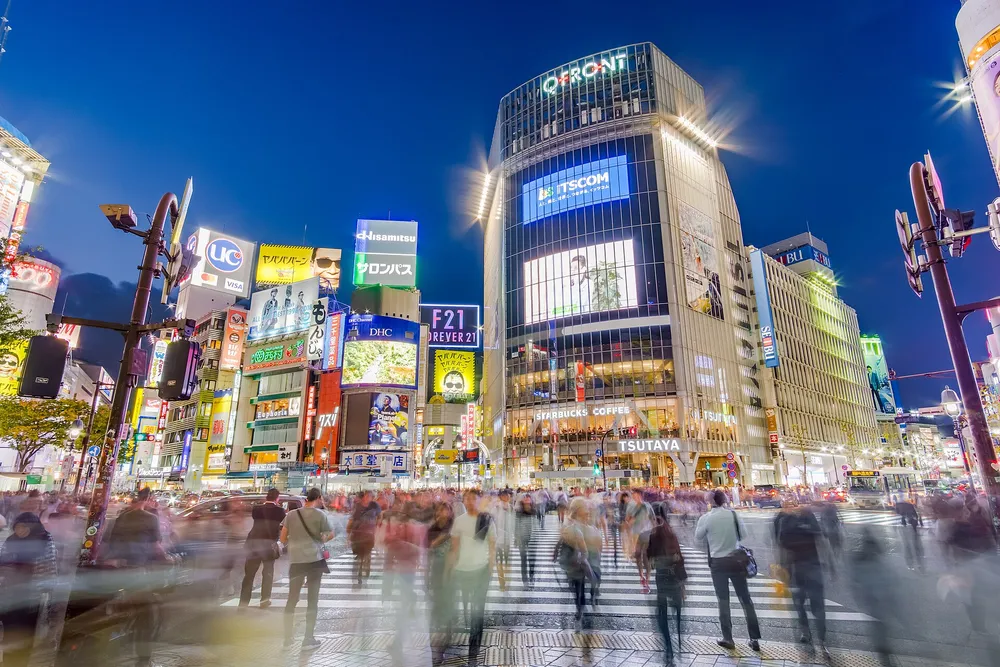 Shibuya Scramble Crossing — the world's busiest pedestrian intersection, at the heart of modern Tokyo
5 Key Destinations for Thai Travelers
1. Tokyo — The City That Never Disappoints
Tokyo is where most Thai visitors go first, for good reason: world-class shopping, more Michelin-starred restaurants than any city on Earth (surpassing Paris), an unmatched anime and pop-culture scene, and peaceful gardens hidden within the urban sprawl.
Must-visit spots:
- Shibuya: The Scramble Crossing where 2,500 people cross simultaneously + Shibuya Sky rooftop observation deck (¥3,200 = ฿655) for panoramic city views
- Asakusa: Senso-ji Temple (free, Tokyo's oldest) + Nakamise shopping street for snacks and traditional souvenirs
- Akihabara: Anime, manga, electronics, and maid cafés — the global home of otaku culture
- Harajuku: Takeshita Street for youth fashion + serene Meiji Jingu Shrine nearby
- teamLab Planets (Toyosu): Immersive digital art wildly popular with Thai visitors — ¥3,200 (฿655). Book online in advance — often sold out weeks ahead
- Mount Fuji day trip: Highway bus from Shinjuku ~฿450–600 one-way; ¥4,000 (฿820) climbing fee (reservation required online in 2026). Chureito Pagoda viewpoint is free and stunning
2. Kyoto — The Heart of Traditional Japan
Former imperial capital for over 1,000 years, with more than 1,600 temples and shrines. Kyoto feels completely different from Tokyo — this is the Japan you've always imagined.
Must-visit spots:
- Fushimi Inari: Thousands of vermilion torii gates winding up a mountain — free entry, open 24 hours. Full hike takes ~4 hours. Go at 5–6am to beat the crowds
- Kinkaku-ji (Golden Pavilion): Gold-leaf temple reflected in a mirror pond — ¥500 (฿100). Most beautiful in morning light
- Arashiyama: Bamboo Grove (free, but crowded after 9am — go at sunrise) + Tenryu-ji garden ¥500 + Togetsukyo bridge river views
- Kiyomizu-dera: The iconic wooden stage platform overlooking lush valley — ¥500 + Ninenzaka/Sannenzaka cobblestone streets for shopping
- Gion District: Geisha quarter — spot maiko and geiko on Hanamikoji Street in the evening. ⚠️ 2026 update: ¥10,000 fine for entering private alleys off the main street
- Nishiki Market: 400-year-old covered arcade of 130 shops — Kyoto pickles, tofu, matcha sweets; free to browse
3. Osaka — Japan's Kitchen
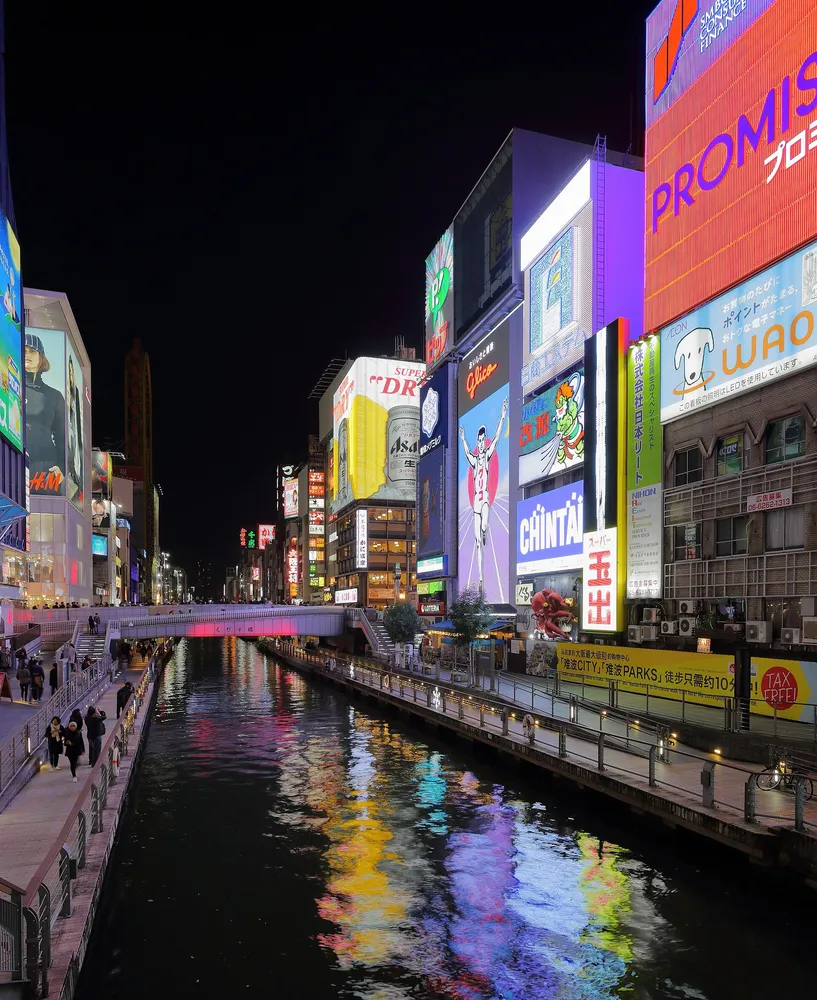 Dotonbori, Osaka — the city's most vibrant entertainment district, famous for its neon canal reflections, takoyaki, and street food culture
Osaka is known for the friendliest locals in Japan, living costs 20–30% lower than Tokyo, and "Kuidaore" — the local philosophy of eating and drinking until your wallet's empty.
Must-visit spots:
- Dotonbori: The neon-lit canal district — try takoyaki (¥600–800), okonomiyaki, kushikatsu, and pose by the famous Glico Running Man sign
- Universal Studios Japan (USJ): The new Donkey Kong Country zone opened in 2026! Plus Harry Potter, Minions. Entry ¥9,400–11,800 (฿1,920–2,410); Express Pass recommended to skip long queues
- Osaka Castle: Free park grounds; castle museum ¥600; new multimedia historical exhibition in 2026
- Shinsaibashi / Namba: Shopping, Don Quijote duty-free, restaurants, and nightlife
- Kuromon Market: Osaka's "kitchen" — 130-stall fresh market with live seafood, wagyu skewers, and local bites
4. Hokkaido — Japan's Northern Island, Perfect in Summer
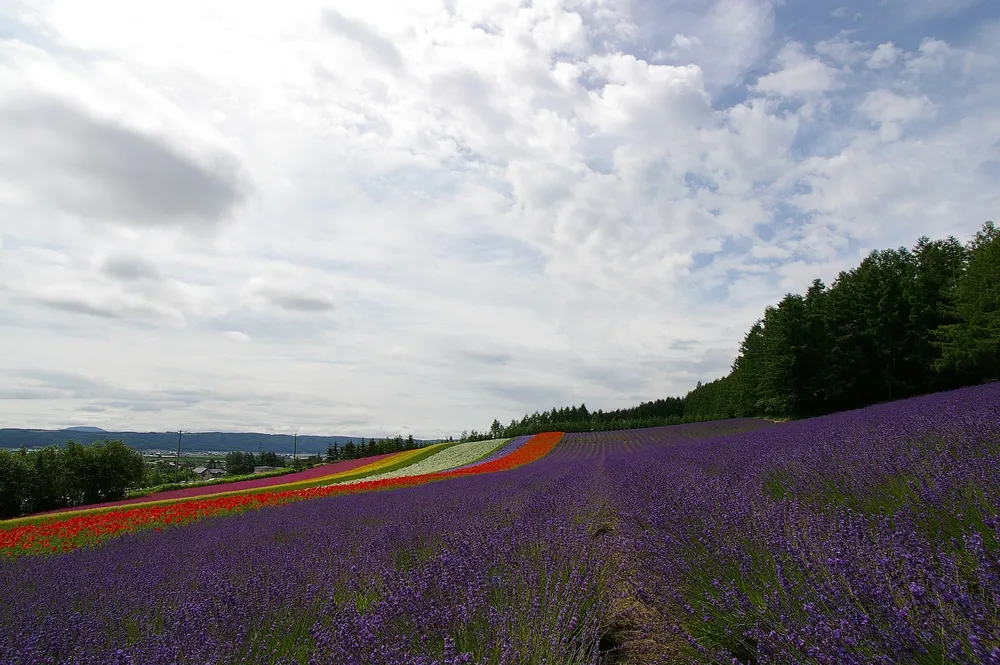 Farm Tomita, Furano — Japan's most famous lavender farm. Peak bloom falls around July 15–25 every year
If you're traveling in July or August, Hokkaido belongs at the top of your list. At 20–25°C with no rainy season and lavender fields in full bloom, it's a completely different Japan from humid Tokyo.
- Furano Lavender: Farm Tomita peaks around July 15–25 — the most photographed landscape in Japan during summer. Also visit Biei's Blue Pond (free, turquoise from mineral-rich underground water) and the colorful Patchwork Road flower fields
- Sapporo: Odori Park outdoor Beer Garden (10,000+ seats, July–August) + Sapporo Beer Museum + Nijo Market for fresh seafood
- Asahiyama Zoo: Japan's most creatively designed zoo, with polar bears swimming overhead and penguin parades — ¥1,000
- Otaru: Historic port city with a charming canal, old stone warehouses, seafood, and fresh gelato
Getting there: Fly domestically from Tokyo (Haneda/Narita) to Sapporo (CTS) at ¥8,000–15,000 (฿1,630–3,060), or take the Hokkaido Shinkansen (~4 hours, covered by JR Pass).
⚠️ Book Hokkaido accommodation during July 15–25 at least 3–6 months in advance — it sells out extremely fast.
5. Nara — Free-Roaming Deer and the World's Largest Buddha
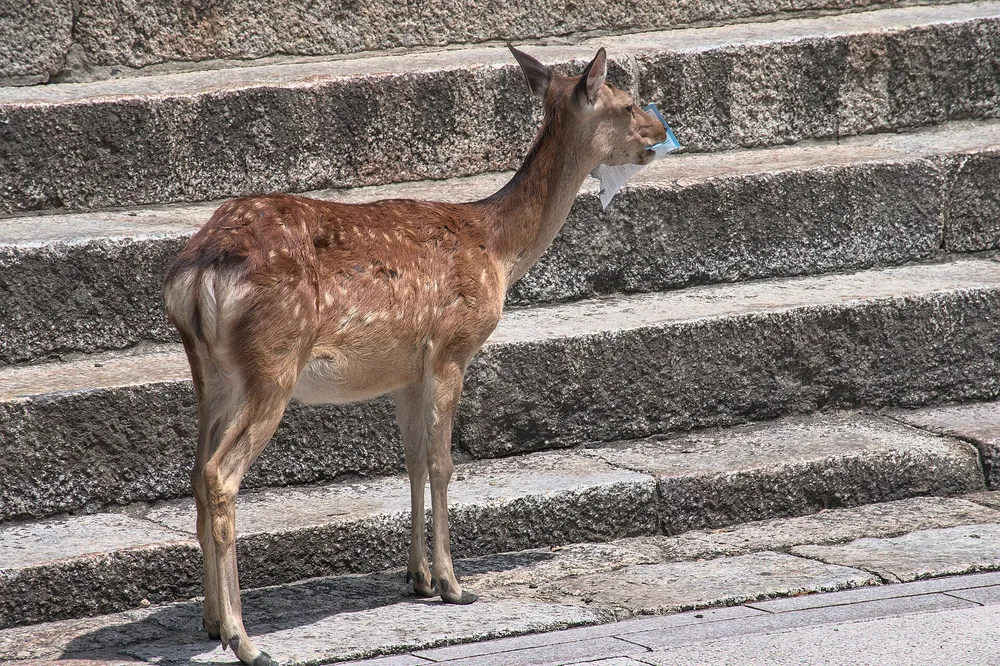 Nara's 1,200 sacred sika deer roam freely through the park, bowing back at visitors who bow to them
Nara makes an excellent day trip from Kyoto (45 min, ¥720 = ฿145) or Osaka (45 min, ¥680 = ฿140).
- Nara Park: 1,200 free-roaming deer; buy shika senbei (deer crackers) for ¥200 (฿40) per pack — the deer actually bow when you bow to them. Perfect for photos and kids
- Todai-ji: The world's largest wooden building housing Japan's largest bronze Buddha (Daibutsu) — ¥800 (฿165) entry
- Kasuga Taisha Shrine: Ancient forest path lined with hundreds of bronze and stone lanterns, serene and atmospheric
Real Costs in Thai Baht
Exchange rate: ¥100 = ฿20.43 (July 2026)
Accommodation (per room, per night)
| Type | Yen/night | Baht/night |
|---|---|---|
| Hostel dorm bed | ¥2,500–5,000 | ฿510–1,020 |
| Capsule hotel | ¥3,000–5,500 | ฿610–1,120 |
| Budget business hotel (single) | ¥6,000–9,000 | ฿1,220–1,840 |
| Standard business hotel | ¥10,000–15,000 | ฿2,040–3,060 |
| Mid-range hotel (double/twin) | ¥15,000–25,000 | ฿3,060–5,100 |
| Ryokan (includes 2 meals) | ¥20,000–50,000 | ฿4,080–10,200 |
⚠️ Kyoto now charges a lodging tax from March 2026: ¥200–10,000 per person per night depending on room rate — it appears as a separate line on your hotel bill.
Food (per person, per day)
| Level | Baht/day | Examples |
|---|---|---|
| Budget (convenience stores) | ฿410–610 | Onigiri, gyudon, vending drinks |
| Mid-range | ฿710–1,120 | Ramen, lunch sets, kaiten sushi |
| Comfortable | ฿1,020–1,630 | Sit-down restaurants 2–3 meals |
Reference prices per dish:
- Gyudon (Yoshinoya/Matsuya): ¥600–900 = ฿125–185
- Ramen bowl: ¥900–1,500 = ฿185–310
- Conveyor belt sushi: ¥1,000–2,500 = ฿205–510
- Takoyaki (8 pieces): ¥600–800 = ฿125–165
- 7-Eleven onigiri + drink: ¥500–800 = ฿100–165
- Restaurant dinner: ¥2,500–6,000 = ฿510–1,220
Transport Costs
JR Pass (2026 prices):
| JR Pass | Yen | Baht |
|---|---|---|
| 7-day | ¥50,000 | ฿10,200 |
| 14-day | ¥80,000 | ฿16,340 |
| 21-day | ¥100,000 | ฿20,430 |
⚠️ Price increases again from October 2026 (7-day → ¥53,000). Buy before then if traveling in October or later.
Shinkansen one-way, no Pass:
- Tokyo → Kyoto: ¥13,500–14,500 = ฿2,760–2,960
- Tokyo → Osaka: ¥14,000 = ฿2,860
- Kyoto → Nara: ¥720 = ฿145
- Kyoto → Osaka: ¥570 = ฿115
City transport per day:
- Tokyo subway: ¥800–1,500 = ฿165–310/day
Airport transfers:
- Narita → Tokyo (N'EX): ¥3,070 = ฿625
- Haneda → Tokyo (Keikyu): ¥330 = ฿70 — dramatically cheaper!
- KIX → Osaka (Nankai Rapi:t): ¥1,430 = ฿290
Major Attraction Entry Fees
| Attraction | Yen | Baht |
|---|---|---|
| Senso-ji / Fushimi Inari | Free | Free |
| Kinkaku-ji / Kiyomizu-dera / Osaka Castle | ¥500–600 | ฿100–125 |
| Todai-ji Nara | ¥800 | ฿165 |
| Tokyo Skytree (top deck) | ¥4,400 | ฿900 |
| teamLab Planets | ¥3,200 | ฿655 |
| Shibuya Sky | ¥3,200 | ฿655 |
| Tokyo Disneyland / DisneySea | ¥9,400–11,800 | ฿1,920–2,410 |
| Universal Studios Japan | ¥9,400–11,800 | ฿1,920–2,410 |
| Mount Fuji climbing fee (2026) | ¥4,000 | ฿820 |
| Peace Memorial Museum Hiroshima | ¥200 | ฿40 |
Total 7-Day Budget (Per Person)
| Level | Total (฿) |
|---|---|
| Budget (hostel + convenience stores) | ฿28,000–38,000 |
| Mid-range (business hotel + restaurants) | ฿45,000–65,000 |
| Comfortable (good hotels + varied dining) | ฿65,000–90,000 |
| Luxury (5-star + ryokan + Michelin) | ฿100,000+ |
Sample mid-range 7-day Golden Route breakdown:
- LCC round-trip flights: ฿15,000–18,000
- Accommodation 6 nights (~฿2,500–3,500/night): ฿15,000–21,000
- Food (~฿1,000/day): ฿7,000
- JR Pass 7-day + local trains: ฿13,200
- Attraction entry + 1 theme park: ฿5,000–8,000
- Shopping / souvenirs: ฿5,000–15,000
- Total: ~฿60,000–82,000 per person
Is the JR Pass Worth It?
Answered directly based on your actual itinerary:
✅ Worth it if:
- You're doing the Golden Route (Tokyo–Kyoto–Osaka): Shinkansen round-trip alone costs ¥27,000–29,000 (฿5,500–5,900). Add JR local trains between cities and the 7-day Pass often breaks even or saves money
- Your trip includes Hokkaido or Hiroshima — clearly worth it
- You have a 14–21 day multi-city trip
❌ Not worth it if:
- You're staying only in Tokyo — use IC Card and Metro Day Pass instead, saving ฿5,000–8,000
- You're only doing Osaka + Kyoto — the Shinkansen between them costs just ¥570 (฿115)
- Your trip is 3–4 days
How to calculate: List every JR train you plan to take, add up individual ticket prices, and compare to the Pass price — if your individual total exceeds the Pass, buy it.
Internet and Payments
eSIM vs Pocket WiFi
| eSIM | Pocket WiFi | |
|---|---|---|
| 7-day cost | ฿350–530 | ฿700–1,300 |
| Convenience | ⭐⭐⭐⭐⭐ | ⭐⭐⭐ |
| Best for | Solo / couples | Groups (2+ people, multiple devices) |
| Recommended | Airalo, Saily | Sakura Mobile |
Recommendation: Buy an eSIM before departure via Airalo or Saily — select Docomo network for Japan. Activate the moment you land with no need to queue at any counter.
IC Cards (Suica / ICOCA)
An IC card works on all trains, buses, subways, and pays for purchases at convenience stores nationwide.
- Welcome Suica (tourist card): Buy at JR East counters at Narita or Haneda airport; valid 28 days
- ICOCA (JR West): Ideal if flying into Kansai Airport — now can be added directly to Apple Wallet or Google Pay
- Load ¥3,000–5,000 to start; top up at any station vending machine or convenience store
Cash Is Still King in Japan
Japan remains heavily cash-based in 2026. Many temples, traditional izakaya, small food stalls, and matsuri vendors accept cash only.
Recommendations:
- Carry ¥50,000–80,000 (฿10,200–16,340) cash for a 7-day trip
- Exchange at Superrich in Bangkok before departure — rates are 3–5% better than at Japanese airports
- 7-Eleven ATMs in Japan accept foreign Visa/Mastercard — lower fees than airport exchange booths
Recommended Itineraries
7-Day Golden Route (Tokyo + Kyoto + Osaka)
| Day | Destination | Highlights |
|---|---|---|
| 1 | Bangkok → Tokyo (evening) | Check in near Shinjuku, explore Omoide Yokocho |
| 2 | Tokyo | Asakusa (Senso-ji) → Akihabara → Shibuya at night |
| 3 | Tokyo / Fuji | Mount Fuji day trip or teamLab Planets |
| 4 | → Kyoto | Shinkansen (2h15m) → Fushimi Inari → Gion evening |
| 5 | Kyoto | Arashiyama (sunrise) → Kinkaku-ji → Nishiki Market → Kiyomizu-dera |
| 6 | Nara + Osaka | Deer park + Todai-ji → Train to Osaka → Dotonbori night out |
| 7 | Osaka | USJ / Osaka Castle → Shinsaibashi shopping → KIX departure |
Estimated cost (mid-range): ฿60,000–82,000 per person
5-Day Tokyo-Only
| Day | Highlights |
|---|---|
| 1 | Arrive → Shinjuku (Omoide Yokocho evening) |
| 2 | Asakusa → Akihabara → Ueno Ameyoko market |
| 3 | Harajuku → Meiji Jingu → Shibuya Sky at sunset → teamLab |
| 4 | Mount Fuji / Hakone day trip or Tokyo Disneyland |
| 5 | Odaiba (Gundam) → final shopping → airport |
Estimated cost (mid-range): ฿35,000–55,000 per person
Food Guide and Halal Options
Japanese Food You Must Try
- Ramen — regional styles: Tokyo (soy-based), Sapporo (miso), Fukuoka (rich pork bone tonkotsu). Cost: ¥900–1,500 (฿185–310)
- Kaiten sushi (Kura Sushi, Sushiro) — order by tablet at the table, surprisingly high quality for the price. ¥1,000–2,500
- Takoyaki — Osaka's octopus ball snack, 8 pieces ¥600–800
- Gyudon — beef rice bowl at Yoshinoya/Matsuya chains; filling and budget-friendly at ¥600–900
- Convenience store food — Japan's 7-Eleven and FamilyMart genuinely rival sit-down restaurants: fresh onigiri ¥130–200, hot counter foods, quality bento ¥400–800
Halal Options for Muslim Thai Travelers
Tokyo 2026 has over 300 halal-certified or Muslim-friendly restaurants — the most in East Asia.
- Asakusa: Multiple halal ramen shops + Asakusa Sushi-Ken (Japan's first halal sushi restaurant; lunch sets ¥1,200–2,200)
- Shinjuku: Halal Wagyu Ramen SHINJUKU-TEI (¥3,500+)
- Osaka: Namba and Umeda areas have both Middle Eastern/Indian restaurants and Japanese halal options
Useful apps: Halal Navi, Halal Gourmet Japan — find certified restaurants near you instantly.
Prayer rooms: Available at Narita and Kansai airports, and at several major shopping malls in Tokyo and Osaka.
Common Mistakes Thai Travelers Make
- Not booking teamLab in advance — it sells out weeks ahead, especially during holidays. Book online immediately after deciding to visit
- Skipping the USJ Express Pass — Donkey Kong Country opened in 2026 creating 2–3 hour queues for popular rides
- Exchanging currency at Japanese airports — rates are 3–5% worse than Superrich Bangkok; on ¥80,000 the difference can exceed ฿800
- Buying a JR Pass for a Tokyo-only trip — Metro/IC card is much better value, saving ฿5,000–8,000
- Going to Arashiyama after 9am — the bamboo grove becomes extremely crowded; go at 5–5:30am for a peaceful experience and dramatic photos
- Not carrying enough cash — many traditional izakaya, temples, and street food stalls still don't accept cards, even in major cities
Japan Etiquette — Essential Rules
| Rule | Details |
|---|---|
| No tipping | Tipping is not part of Japanese culture — staff may find it confusing or even offensive |
| Quiet on trains | No phone calls; speak softly; always vacate priority seats for elderly/pregnant/disabled passengers |
| Remove shoes | When entering homes, some traditional restaurants, and ryokan — look for a raised entryway (genkan) |
| No eating while walking | Especially in Kyoto — eat standing at the stall or at a designated area |
| Garbage | Almost no public trash cans — carry a small bag for wrappers, dispose at convenience stores |
| Escalators | Stand left, walk right (Tokyo) — reversed in Osaka: stand right, walk left |
| Onsen | Most ban tattoos; always wash thoroughly before entering the communal bath; no swimwear |
| Smoking | Only in designated areas; fines of ¥1,000–2,000 for smoking elsewhere |
Pre-Departure Checklist and Travel Insurance
Before you fly:
- ✅ e-Passport (electronic chip — check the cover icon)
- ✅ Flights + accommodation + teamLab/Disneyland/USJ tickets (book in advance)
- ✅ Buy eSIM (Airalo/Saily) — activate on arrival
- ✅ Exchange ¥50,000–80,000 cash at Superrich Bangkok
- ✅ Download Google Maps offline for your destinations
Travel insurance — more important than you might think:
Medical costs in Japan for foreign nationals are very high. A single emergency room visit for food poisoning can cost ¥30,000–100,000+ (฿6,100–20,400), not including medication or overnight stays. Travel insurance with at least ฿1,000,000 medical coverage gives you peace of mind without a large premium — especially essential if you're traveling with family or planning active excursions.
For a detailed comparison of international travel insurance plans, see International Travel Insurance 2026 — covers what's included, common exclusions, and how to choose the right plan.
Final Verdict — Is Japan Worth It in 2026?
Absolutely yes. Japan consistently delivers one of the best value-for-experience travel packages for Thai tourists — everything runs on time, it's safe, food is exceptional at every price point, and the range of experiences is unmatched.
Best fit by traveler type:
- First-time visitor, tight budget: 5 days Tokyo, ~฿30,000–45,000 — see all the key highlights
- Mid-range 7-day: Golden Route (Tokyo–Kyoto–Osaka), ~฿60,000–82,000 — the classic, best overall experience
- Summer + nature lover: Hokkaido in July, cool 20–25°C + lavender fields in bloom
- Family with kids: Tokyo + Disneyland + Nara deer — kids love it
Japan isn't a destination you visit once. Most travelers return multiple times and still discover new things. Start with the Golden Route, then explore Hokkaido, Hiroshima, Kyushu, or rural Japan on the next trip.
Sources
- Embassy of Japan in Thailand (th.emb-japan.go.jp) — visa exemption policy 2026
- Japan National Tourism Organization (JNTO) — jnto.go.jp
- JR Pass official pricing — jrpass.com / jreast.co.jp
- Airalo — airalo.com (Japan eSIM pricing)
- Farm Tomita, Furano — farm-tomita.co.jp (lavender season dates)
- Universal Studios Japan — usj.co.jp
- teamLab Planets Tokyo — planets.teamlab.art
- Halal Navi Japan — halalnavi.com
Frequently asked questions
- Do Thai tourists need a visa for Japan in 2026?
- No — Japan's visa exemption for Thai nationals runs until June 30, 2027. You can stay up to 15 days per entry for tourism purposes. The key requirement is an e-Passport with an electronic chip (look for the camera icon on the cover).
- Is the JR Pass worth it for a 7-day Tokyo–Kyoto–Osaka trip?
- It's borderline — a Tokyo–Kyoto Shinkansen round-trip alone costs ¥27,000–29,000 (฿5,500–5,900). The 7-day JR Pass at ¥50,000 (฿10,200) becomes worthwhile when you add other JR local trains along the route. But for Tokyo-only trips, skip the Pass entirely.
- Is Japan worth visiting in July–August?
- Yes, depending on your destination. Tokyo, Osaka, and Kyoto are hot and humid (30–35°C), but spectacular summer matsuri festivals and fireworks make it worthwhile. Hokkaido, however, is 20–25°C with no rainy season — ideal for summer.
- What is the total budget for a 7-day Japan trip?
- Mid-range 7 days costs roughly ฿45,000–65,000 per person: LCC flights ฿15,000–18,000, accommodation 6 nights ฿15,000–21,000, food ฿7,000, JR Pass + local trains ฿13,000, attractions ฿5,000–8,000, and shopping ฿5,000–15,000.
- How much Japanese yen should I bring in cash?
- Carry ¥50,000–80,000 (฿10,200–16,340) for a 7-day trip. Many temples, traditional izakaya, and small local restaurants only accept cash. Exchange at a currency exchange in Bangkok (like Superrich) before you go — the rate is 3–5% better than at Japanese airports.
- Which eSIM is best for Japan?
- Airalo (on Docomo's network) and Saily are the most popular among Thai travelers. A 7-day data plan costs just ฿350–530. Buy before departure and activate the moment you land — no queuing at the airport.
Related articles

Krabi Travel Guide 2026 — Top Attractions, Costs & 3-Day Itinerary
Complete Krabi travel guide for 2026 covering every highlight: Railay Beach, Tiger Cave Temple, 4 Islands tour, Emerald Pool, real costs, transport, accommodation, and tips for the rainy season

Phuket Travel Guide 2026: Beaches, Attractions, Costs & Rainy Season Tips
Complete Phuket travel guide for 2026 covering every beach, top attractions, real costs, transportation, best areas to stay, and essential rainy season tips for a safe, budget-friendly trip.
Pai, Mae Hong Son Travel Guide 2026: Sights, Stays & 3-Day Plan
Complete 2026 guide to Pai, Thailand: the 762-curve drive, must-see sights, stays for every budget, real costs, and a working 3-day itinerary.