Phuket Travel Guide 2026: Beaches, Attractions, Costs & Rainy Season Tips

Phuket Travel Guide 2026 (ULTIMATE) — full trip planning walkthrough
When Thais and international travelers think of a beach holiday in Thailand, Phuket is almost always the first answer — and for good reason. Thailand's largest island packs world-class beaches, rich Sino-Portuguese heritage, exceptional street food, and the country's widest selection of island day trips into a single destination. But two questions come up constantly: "Can you visit in rainy season?" and "How much does it actually cost?" This guide answers both thoroughly.
Why Phuket Still Delivers in 2026
Phuket welcomes over 10 million visitors annually. That's not hype — it's because the island genuinely offers more than any other Thai beach destination:
- Scale and variety: Over 30 km of western coastline with 15+ distinct beaches, from lively nightlife strips to secluded honeymoon coves
- Exceptional day trips: Phi Phi Islands, Phang Nga Bay (James Bond Island), Coral Island, and the Racha Islands are all accessible in a single day
- Strong infrastructure: International airport, world-class hospitals, Grab running everywhere, fast mobile internet, 24-hour convenience stores
- Phuket Old Town: A block of 19th-century Sino-Portuguese shophouses on Thalang Road with Michelin-guide restaurants, independent cafés, and street art — completely unlike any Thai beach town
For July 2026 specifically, the numbers make a compelling case: a mid-range hotel in Patong that costs ~THB 4,400/night in January drops to ~THB 1,450/night this month. That's a 67% price cut for the same bed.
When to Go: High Season vs. Rainy Season
The honest breakdown:
| Period | Weather | Sea | Prices | Best for |
|---|---|---|---|---|
| Nov–Apr (high season) | Dry, sunny | Calm, clear | Highest | Everyone, especially swimming/diving |
| Dec–Feb (best months) | Cool, breezy | Perfect | Peak | First-timers, families |
| May–Oct (low season) | Afternoon rain | Rough west coast | 30–70% cheaper | Budget travelers, culture, town activities |
| July (now) | 32°C, rain PM | Red flags on most west beaches | Lowest of the year | Sightseeing, Old Town, tours |
July reality check: Rainfall averages 258 mm/month but mostly arrives in a 2–3 hour afternoon shower. Mornings and evenings are frequently clear. Sea temperature is 29°C — lovely if it's calm enough to enter. The problem is wave height: the monsoon-driven west coast gets regular red flags meaning no swimming, no exceptions — rip currents kill several tourists every year in Phuket.
July upsides you shouldn't dismiss:
- Lowest hotel rates of the year, often with free upgrades
- Crowds are a fraction of January's — you can photograph Big Buddha without strangers in every frame
- Lush green landscapes after weeks of rain
- Maya Bay open until July 31 — closes seasonally August 1 – September 30
Traveling in early-to-mid October? That's exactly when the Phuket Vegetarian Festival 2026 runs (October 10-18) — Maya Bay has just reopened for the season and the island's biggest processions are happening at the same time. Book accommodation early, though: rooms fill up faster than usual during the festival.
Which Beach Is Right for You?
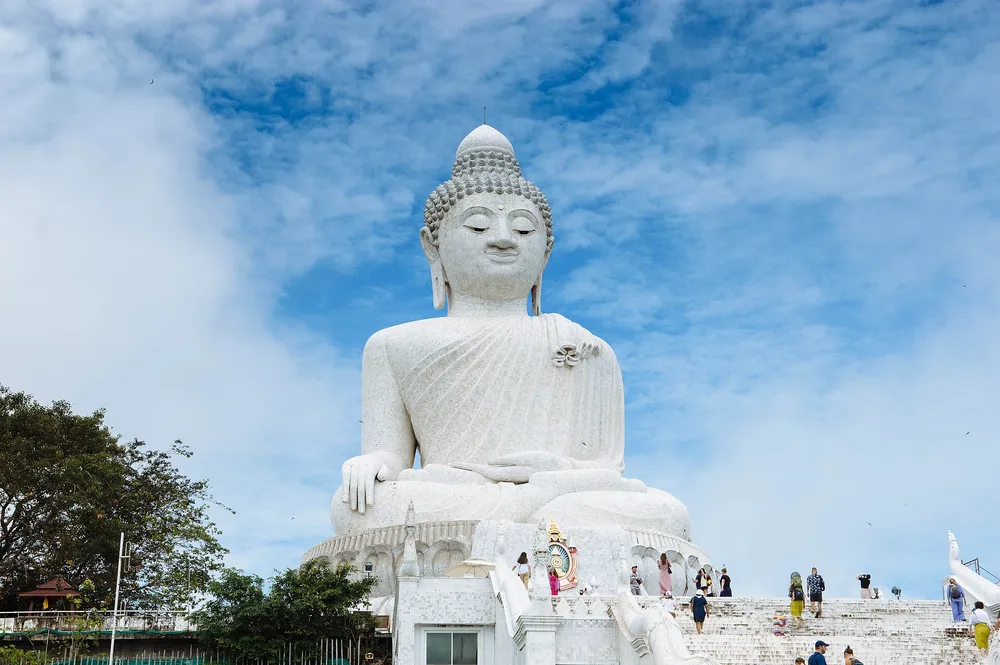 Photo: Big Buddha Phuket — CC BY-SA (Wikimedia Commons)
Phuket's beaches have very different personalities. Matching the right beach to your trip avoids disappointment:
| Beach | Character | Best for | Note |
|---|---|---|---|
| Patong | Lively 2.5 km strip, full nightlife | Party groups | Most crowded |
| Kata | Crescent bay, family-friendly, surf in low season | Families, first-timers, surfers | Best overall balance |
| Karon | 3 km beach, quieter than Patong, fine sand | Families avoiding chaos | Karon Viewpoint is stunning |
| Surin | Clear blue water, upscale restaurants | Couples, relaxed crowd | Pricier food |
| Bang Tao | 5 km wide, 5-star resorts | Luxury travelers | Few beach facilities |
| Nai Han | Natural, uncrowded | Budget travelers, local vibe | Winding road to get here |
| Freedom Beach | Whitest sand, emerald water — Phuket's most beautiful | Adventurous hikers | THB 200 entry, steep trail |
| Kata Noi | Small, scenic, quiet | Romantic couples, photographers | Limited amenities |
Rainy season tip: West coast beaches (Patong, Kata, Karon) often fly red flags in July. You can still sit, walk, and eat on the beach — just no swimming. East coast beaches (Ao Yon, Laem Haad) are sheltered from the monsoon and often swimmable on good days.
Must-See Attractions
Big Buddha — Phuket's most recognizable landmark: a 45-meter white marble Buddha statue atop Nakkerd Hill, visible from beaches across the south of the island. Free entry, open 9 AM–6 PM. Reopened March 3, 2026 after restoration. Dress modestly (free sarongs available at the entrance). Best visited 4–5:30 PM for golden-hour light and sea views toward Kata and Karon.
Wat Chalong — Phuket's most important and revered temple, featuring a 60-meter pagoda said to contain a hair of the Buddha. Free entry, open 7 AM–5 PM. Dress respectfully — this is an active place of worship, not a photo backdrop.
Phuket Old Town — The cultural and culinary soul of the island. Thalang Road and the narrow Soi Romanee are lined with 130-year-old pastel Sino-Portuguese shophouses now occupied by indie cafés, Michelin-guide restaurants, and street murals. Every Sunday evening, Thalang Road closes to traffic for a night market with local food, live music, and handicrafts.
Phang Nga Bay — The most popular day trip from Phuket by far. Boats weave through vertical limestone karsts rising from emerald water, past James Bond Island (Ko Tapu, featured in The Man with the Golden Gun), the floating village of Ban Ko Panyi, and kayaking through pitch-dark sea caves. Tours cost THB 1,400–1,900/person including lunch and guide.
Phi Phi Islands + Maya Bay — Maya Bay, backdrop to the film The Beach, is currently open but closes seasonally August 1 – September 30 every year. Book a fast-boat tour now if you want it in 2026. Fast-boat tours: THB 1,500–2,200 including snorkeling, Monkey Beach, and Pileh Lagoon.
Promthep Cape — The southernmost tip of Phuket, with Thailand's most famous sunset viewpoint. Free. Arrive 60 minutes before sunset to secure a good spot; the 360° sea view is worth the early start.
Karon Viewpoint — Three bays visible in a single frame (Kata Noi, Kata, Karon). Classic Phuket postcard shot. Free. Best at 4–5 PM.
Getting There from Bangkok
By air (strongly recommended)
Bangkok to Phuket is 840 km — 1 hour 25 minutes by plane versus 12–13 hours by car. For anyone with less than a week, it's the only practical option:
| Airline | Starting price (booked in advance) | Airport |
|---|---|---|
| Thai AirAsia, Lion Air, Nok Air | THB 800–1,500/one-way | Don Mueang (DMK) |
| Thai Vietjet | THB 900–1,800/one-way | Don Mueang (DMK) |
| Thai Airways, Bangkok Airways | THB 2,700–5,000/one-way | Suvarnabhumi (BKK) |
Book 3–4 weeks out for best prices. Weekday flights are usually cheaper than weekends. Don Mueang is typically cheaper than Suvarnabhumi for low-cost carriers.
By bus (budget option) 13–16 hours, THB 684–1,200 from Southern Bus Terminal (Makkasan) or Mo Chit. Good if you have extra time and a tight budget.
By car ~860 km, 12–13 hours without stops. Fuel + tolls roughly THB 2,500–3,500 one-way. Excellent value if you're traveling with 4–5 people. For tips on driving in heavy rain, see our guide to rainy season car safety.
Where to Stay: Choosing Your Base
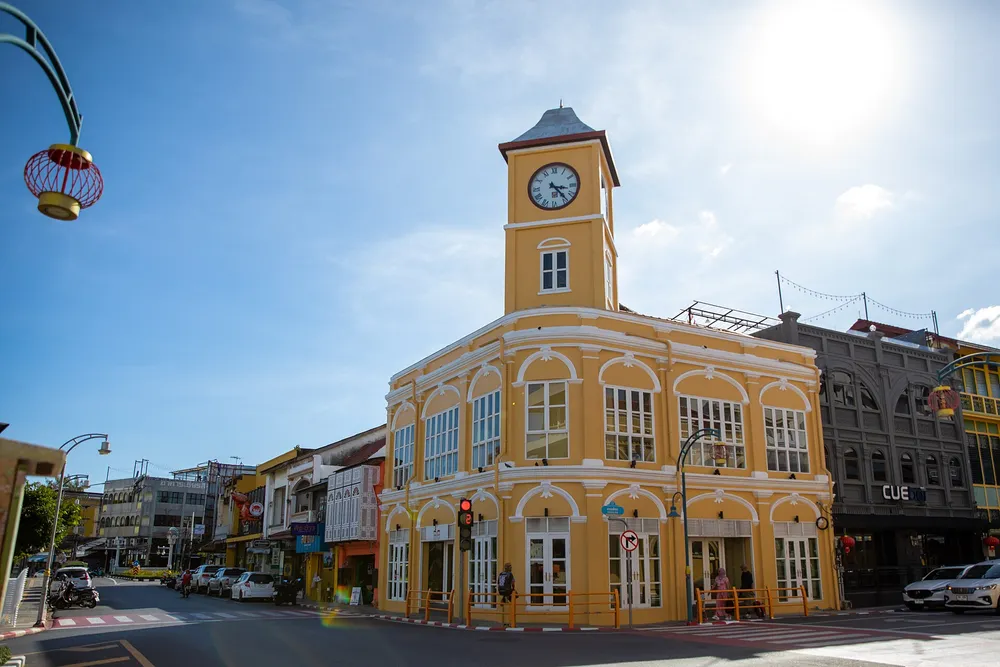 Photo: Phuket Old Town — CC (Wikimedia Commons)
Each area of Phuket has a distinct character. Getting this decision right matters more than the specific hotel:
Patong — The entertainment and shopping hub. Everything you could want within walking distance: Jungceylon Mall, Beach Road, restaurants, bars, clubs, and the beach itself. Also the most chaotic. July prices: THB 900–5,000/night. Best for: nightlife-oriented groups and solo travelers. Avoid if: you're traveling with young children.
Kata–Karon — The best all-around base for most travelers. Beautiful beaches, variety of restaurants, noticeably quieter than Patong. Best for first-timers and families. July prices: THB 1,000–6,000/night.
Bang Tao–Surin — The upscale northwestern corridor. Amanpuri, Banyan Tree, and the Laguna complex are here. Quiet, spacious, mostly 5-star. July prices: THB 3,000–20,000+/night. Best for: honeymoons and luxury travelers.
Rawai–Nai Han — The most local-feeling area of Phuket. The Rawai seafood market is the island's best; fishing boats still depart at dawn. Close to Promthep Cape. July prices: THB 700–4,000/night. Best for: long-stay travelers and anyone who wants to live like a local.
Phuket Old Town — No beach access but the most culturally rich base on the island. Michelin-guide food at street prices, Sino-Portuguese heritage buildings as your backdrop, Sunday night market a short walk away. July prices: THB 500–3,000/night. Best for: foodies, photographers, culture lovers.
Real Costs: 3-Night Trip Budget
These are July 2026 (low season) figures — considerably cheaper than December–January:
Budget traveler (per person)
| Item | Cost (THB) |
|---|---|
| Flights Bangkok–Phuket return (low-cost) | 1,600–3,000 |
| Accommodation 2 nights (hostel/budget hotel) | 1,200–3,000 |
| Meals × 8–9 (markets and local restaurants) | 1,200–1,800 |
| Phang Nga Bay day tour | 1,400–1,900 |
| Local transport (Smart Bus + Grab) | 400–600 |
| Attractions (Big Buddha and Wat Chalong are free) | 0–400 |
| Total | ~THB 6,000–10,500 |
Mid-range traveler (per person)
| Item | Cost (THB) |
|---|---|
| Flights return (booked ahead) | 2,000–4,000 |
| Accommodation 2 nights (3–4-star hotel) | 3,000–8,000 |
| Meals × 8–9 (mix of restaurants) | 2,400–4,500 |
| Phang Nga Bay + Phi Phi tours | 2,600–4,100 |
| Transport + motorbike rental 1 day | 700–1,200 |
| Activities (spa, snorkeling, shopping) | 1,000–2,000 |
| Total | ~THB 12,000–24,000 |
vs. peak season: Overall budget in July is 40–60% lower than December–January, with the biggest savings on accommodation.
Rainy Season Activities: What Works in July
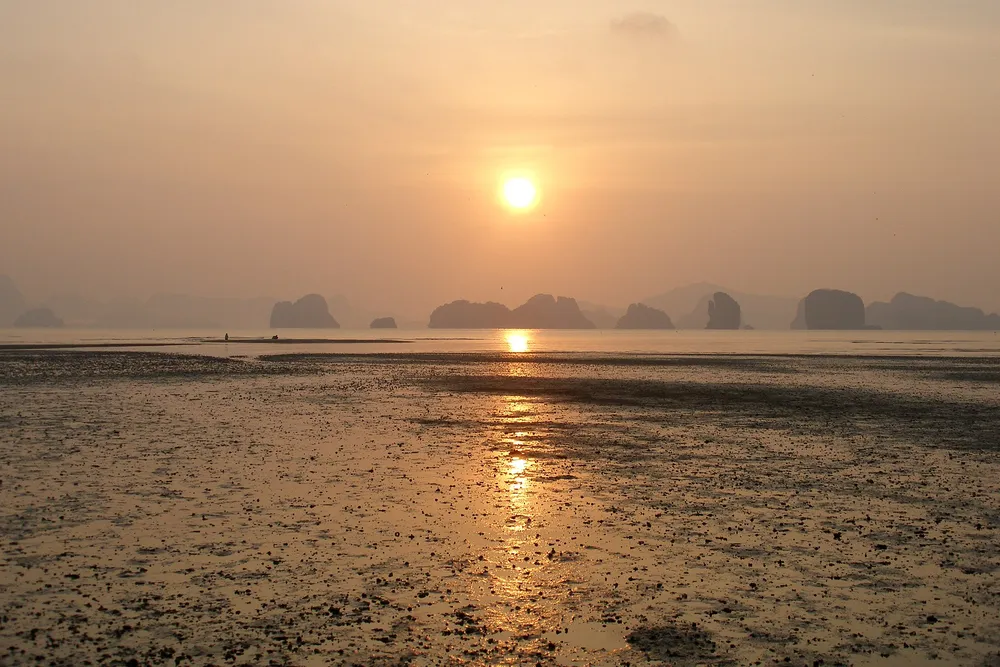 Photo: Phang Nga Bay — CC BY-SA (Wikimedia Commons)
July in Phuket is far more manageable than most people expect. The key is timing your outdoor activities for mornings:
What works well:
- Phuket Old Town — Covered arcades along Thalang Road keep you dry. Best all-weather activity on the island.
- Phang Nga Bay tour — Depart 8 AM, return by 3–4 PM before the afternoon rain. The bay is actually more dramatic in monsoon season — deeper greens, moody skies, almost no crowds.
- Phi Phi Islands + Maya Bay — Book a fast-boat departing 7:30–8 AM. Maya Bay is open until July 31 only — book immediately.
- Wat Chalong + Big Buddha — A brief shower doesn't spoil a temple visit. Pack an umbrella.
- Thai cooking class — Great half-day option on a heavy rain day. THB 1,500–2,500 including market visit.
- Spa and Thai massage — Prices are lower in low season. A 2-hour Thai massage around THB 500–700.
- Andamanda Water Park — Phuket's largest water park, stays open in rainy season, and is actually more fun without 40°C heat. ~THB 900/person.
- Surfing at Kata or Surin — July is the best surf month in Phuket, with consistent swells. Board rental + lesson THB 500–1,500.
What requires weather checking:
- Diving at Racha Islands — fine on calm days, rough on stormy ones. THB 2,500–3,500 for a 3-dive trip.
- Island hopping by longtail — skip if waves are over 1 meter.
Phuket Food: Local Dishes and Where to Eat
Phuket has its own culinary identity distinct from mainland Thai food — rooted in Hokkien Chinese immigrant cooking that arrived with the tin miners two centuries ago:
Must-try local dishes:
- Moo Hong (หมูฮ้อง) — Hokkien-style braised pork belly in dark soy sauce, five-spice and palm sugar. Rich, fragrant, served with rice. THB 60–100/plate.
- Hokkien Noodles (ก๋วยเตี๋ยวโฮกเกี้ยน) — Thick yellow noodles stir-fried with seafood in a thick dark sauce. THB 80–120.
- O-Aew (โอเอ๊วะ) — Phuket's own dessert: cendol-like ice with grass jelly, red beans, and sweet syrup. A 100-year-old tradition. THB 30–50.
- Kanom Jeen Nam Ya (ขนมจีนน้ำยา) — Rice noodles with crab curry sauce. Best at breakfast. THB 60–80.
- Roti Gaeng (โรตีแกง) — Crispy flatbread with spiced beef curry, sold by Muslim vendors from early morning. THB 30–50.
Michelin-recognized restaurants (accessible prices):
- Go Benz — Decades-old rice porridge and noodle shop, Michelin Bib Gourmand for multiple years. Phuket Town. Very cheap.
- One Chun — Crab curry, moo hong, Phuket-style food in a heritage house. Phuket Town. Moderate.
- Raya Restaurant — Classic Phuket cuisine in a Sino-Portuguese building since 1994. Phuket Town. Moderate.
Best budget eating spots:
- Rawai Seafood Market — Choose your own live seafood by weight, have it cooked to order. Arrive before 6 PM for freshest selection.
- Thalang Road Sunday Walking Street — Street food, live music, handicrafts. THB 200–350/person.
- Night market near Patong or Phuket Town — Moo ping, pad thai, roti banana. THB 200–300/person.
Common Mistakes and How to Avoid Them
The mistakes that ruin Phuket trips:
- Swimming under red flags — This is the single most dangerous thing visitors do. Red flag = no swimming, period. Rip currents along Phuket's west coast have killed visitors every monsoon season for decades. Don't test it.
- Taking tuk-tuks at face value — Phuket tuk-tuks charge 2–3× what Grab charges for the same journey. Always check Grab first. For airport arrivals, use the official fixed-price counter or Grab — never follow someone who approaches you.
- Not checking sea conditions before boat tours — Always verify conditions the morning of departure. A reputable tour company will cancel for your safety; walk away from any operator who insists on going in dangerous conditions.
- Booking accommodation in Patong without reading reviews carefully — Patong has everything from excellent to dreadful. Use Booking.com or Agoda reviews dated within the past 12 months.
- Skipping travel insurance — Water sports, motorbike riding on winding mountain roads, and boat tours all carry real risk. Domestic travel insurance (see the insurance CTA below) covers emergency medical treatment, lost belongings, and trip cancellation.
Getting around Phuket:
| Method | Price | Notes |
|---|---|---|
| Grab/Bolt | THB 100–200 (short trips), 500–600 (airport–Patong) | Most reliable, price-transparent |
| Smart Bus Route 1 | THB 100 (entire route: airport–Rawai via all west beaches) | Cheapest way to see the whole island |
| Smart Bus Route 2 | THB 50 (Phuket Town–Patong) | Useful for town-to-Patong connection |
| Motorbike rental | THB 200–300/day | Freedom, but only if you're an experienced rider |
| Car rental | THB 800–1,500/day | Best value for groups of 4+ |
Pack for July: compact umbrella or rain jacket, non-slip sandals or water-resistant shoes, waterproof phone bag, SPF 50+ sunscreen (UV is intense even under clouds), mosquito repellent (evening).
Before any trip to Phuket in rainy season — especially with water activities on the itinerary — consider domestic travel insurance that covers emergency medical care, accidental injury, and unexpected trip changes.
Sample 3-Day Itinerary
| Day | Morning | Midday | Afternoon | Evening |
|---|---|---|---|---|
| Day 1 | Fly in, Smart Bus to hotel, check in | Lunch at local market near your base | Explore Phuket Old Town: Soi Romanee, Thalang Road cafés | Sunday Walking Street (if Sunday), or Old Town night market |
| Day 2 | Phi Phi Islands + Maya Bay fast-boat tour (depart 7:30–8 AM) | Lunch on Phi Phi | Return by 4 PM, rest | Promthep Cape for sunset; dinner at Rawai Seafood Market |
| Day 3 | Phang Nga Bay tour (James Bond Island + kayaking, depart 8 AM) | Lunch included in tour | Wat Chalong and/or Big Buddha (head there at 4 PM for best light) | Karon Viewpoint; last dinner, souvenir shopping before departure |
For more islands in Southern Thailand: Koh Samui Complete Travel Guide 2026 or plan your route with our Thailand road trip guide.
Verdict — Is Phuket Worth It?
Score: 4.5/5. Phuket earns its world-famous reputation. No other Thai island combines this many beaches, this much cultural depth, this wide a range of day trips, and this level of infrastructure in one place. July's rainy season subtracts some beach time but adds significant value for the budget-conscious: 30–70% cheaper accommodation, empty beaches for photography, and a lush green landscape that rivals the dry season for beauty.
Ideal for:
- ✅ Families who want everything in one place
- ✅ Couples looking for great food, beach, and culture
- ✅ Groups who want beach + activities + nightlife
- ✅ Budget travelers visiting in low season
- ⚠️ Not ideal for travelers whose primary goal is swimming — come back November–April for calm seas
Weighing Phuket against the province next door? The complete Krabi travel guide 2026 covers the comparison in full — Krabi is quieter, more nature-focused, and often cheaper on accommodation.
Sources
- Tourism Authority of Thailand (TAT) — Phuket destination guide 2026
- Phuket Info — Big Buddha reopening March 3, 2026
- Accuweather / Windy — daily Phuket wave and weather data
- Booking.com / Agoda — low-season hotel rate data, July 2026
- Phuket Smart Bus — route and fare information 2026
- Phuket Elephant Sanctuary — ethical sanctuary tour pricing 2026
- Maya Bay National Park — seasonal opening and closing schedule 2026
Frequently asked questions
- Is Phuket worth visiting in the rainy season?
- Yes. Rain in July mostly falls in the afternoon (2–5 PM); mornings and evenings are usually clear. Phuket Old Town, temples, Phang Nga Bay tours, and cooking classes are great rainy-day activities. Just never swim under a red flag.
- How many days do you need in Phuket?
- 3 days covers the highlights; 4–5 days if you want Phi Phi Islands and Phang Nga Bay; 7 days to explore every area and hidden beach at a relaxed pace.
- What is the daily budget for Phuket?
- Budget: THB 1,000–1,500/day (hostel + street food + Smart Bus). Mid-range: THB 3,000–5,000/day. Excluding flights from Bangkok.
- Which area of Phuket is best to stay in?
- Kata/Karon for families and first-timers; Patong for nightlife; Phuket Town for culture and food; Rawai for a local, relaxed vibe.
- Do I need travel insurance for Phuket?
- Strongly recommended, especially in rainy season. Rough waves, motorbike accidents on winding roads, and water sports injuries happen frequently. Domestic travel insurance covers emergency medical, lost items, and trip cancellation.
- How does Phuket compare to Koh Samui?
- Phuket is much larger with more variety — multiple beach styles, Phuket Old Town, and far more day-trip options. Koh Samui is quieter, more intimate, and often preferred for honeymoons.
Related articles

Krabi Travel Guide 2026 — Top Attractions, Costs & 3-Day Itinerary
Complete Krabi travel guide for 2026 covering every highlight: Railay Beach, Tiger Cave Temple, 4 Islands tour, Emerald Pool, real costs, transport, accommodation, and tips for the rainy season

Kanchanaburi Travel Guide 2026: Complete 3-Day Itinerary — Erawan Falls, River Kwai Bridge & Real Costs
Complete Kanchanaburi travel guide for 2026 — Erawan National Park's 7-tier waterfall, Bridge on the River Kwai, Hellfire Pass, how to get there, accommodation for every budget, real costs, and a practical 3-day itinerary

Koh Samui Travel Guide 2026: Complete 3-Day Itinerary, Real Costs & Tips
Koh Samui travel guide 2026 — why July is the best month to visit, getting there from Bangkok, real costs, where to stay, and a 3-day itinerary.