PM2.5 Masks: N95 vs KN95 vs KF94 — Which Actually Blocks Dust
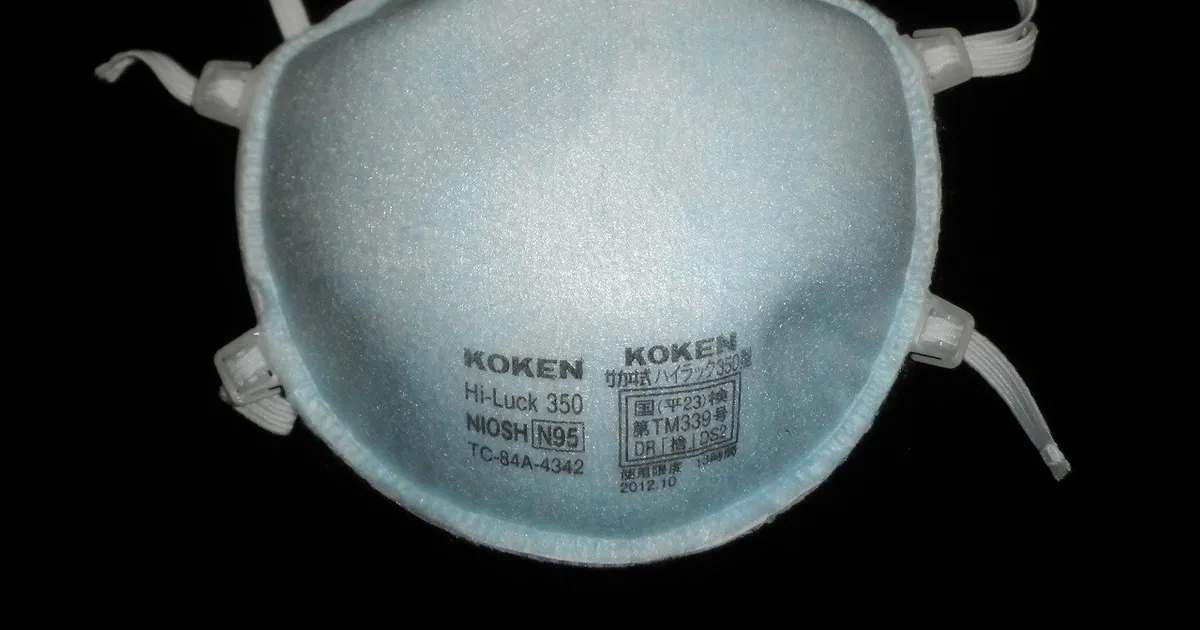
Every year when the cool season arrives, the most common question isn't "is the dust here yet" but "which mask actually works". The shelf holds N95, KN95, KF94, FFP2 and the cheap blue surgical mask — the letters look alike enough that it's hard to tell what is real protection and what is just a label.
This article answers it in one place: what each abbreviation means, how much each filters, why people who bought an N95 still breathe dust because it doesn't seal, how long to reuse one, who should avoid them, and how to spot a fake. Every figure traces to the sources listed at the end. We deliberately give no baht prices: we couldn't find a verifiable reference price, and prices change store to store every week — but there is a cost-per-day formula you can plug your own price into.
Before you choose: when do you actually need a mask
A mask is the last line of defence when you step outside, not something for every day of the year. Check the PM2.5 level first (the same bands we use in our air purifier guide).
| PM2.5 (µg/m³) | Level | Suitable mask |
|---|---|---|
| 0–25 | Very good–good | Not needed; at-risk people carry one |
| 25.1–37.5 | Moderate | At-risk groups (children, elderly, lung/heart conditions) when outdoors for long |
| 37.5–75 | Starting to affect health | N95/KN95/KF94 outdoors, especially on a motorbike |
| Over 75 | Affects health | Well-sealed N95 every time you go out; cut outdoor activity |
Check your province live on the PM2.5 by province page or dust near me before deciding. Long-term PM2.5 exposure, per the Thai sources, is linked to emphysema and lung cancer, and can trigger allergic rhinitis, asthma and chronic heart and vascular disease flare-ups.
N95, KN95, KF94, FFP2: what they are
All are "particulate respirators", each region setting its own standard. The number is the minimum filtration when tested on ~0.3 micron particles, the hardest size to catch; PM2.5 (under 2.5 microns) includes everything larger.
| Name | Standard / region | Min. filtration | Notes |
|---|---|---|---|
| N95 | NIOSH, US (42 CFR Part 84) | 95% | The only type that can pass an occupational fit test |
| KN95 | GB2626, China | 95% | Not NIOSH-approved; some imports have tested under 95% |
| KF94 | Korea | 94% | 3D folded shape, comfortable for city use |
| FFP2 / P2 | Europe / Australia–NZ | 94% | Thai source says it can substitute for N95 in efficiency |
| N99 / FFP3 / P3 | US / Europe | 99% | For heavy dust or industrial work; harder to breathe through |
| Surgical mask | Medical use | No dust-grade rating | Built to stop droplets, not dust |
For ordinary people, genuine N95 versus genuine KN95/KF94 that seals well makes almost no practical difference. Overseas sources we checked agree: N95 remains the pick for healthcare and workplaces, where individual fit testing is required.
What about a plain surgical mask?
The blue-green surgical mask was designed to stop droplets in an operating room, not fine dust. There are two problems: the filter layer catches fewer small particles, and — more important — it is loose. Air takes the path of least resistance through gaps at the cheeks and nose, not through the filter.
The figures: a Thai source cites tests putting plain-mask filters at roughly 60–70% for PM2.5; an overseas comparison we read found a tie-on surgical mask filtering about 71.5% of very small particles versus 98% for an N95 (another source gives 60–80%). Methods differ, but the conclusion matches: clearly worse than N95, but better than nothing.
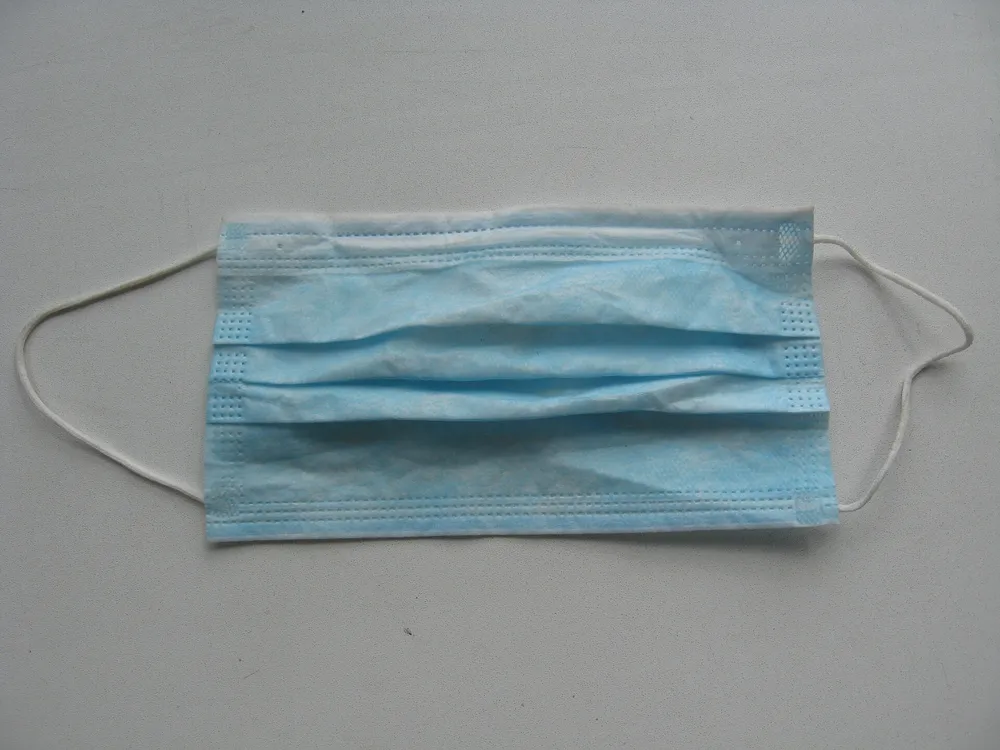 Photo: AlexChirkin — CC0 (Wikimedia Commons)
If a surgical mask is all you have
One Thai source suggests layering two plain masks, or slipping 2–3 tissues inside, and claims about 90% filtration. That comes from a single source and depends on fit, so treat it as a fallback when you can't get an N95 — and if layering makes breathing so hard you pull it below your nose, it helps no one.
Fit matters more than the number on the box
A loose N95 can protect less than a KF94 that fits snugly, because 95% is the filter material tested in a sealed lab rig, not the whole mask on a real face. Check in this order:
- Straps: per what we read, head-strap (two-band) styles seal better than ear loops because they pull the edge tighter. For long rides or motorbikes, choose head straps.
- Nose wire: press the aluminium strip to your nose shape with two fingers, not one pinch.
- Shape: cup styles are rigid and snug but stuffy and can't fold; 2-panel flat-folds are light but gap if loose; V-flex moulds to the face but transfers makeup; 3-panel styles usually have back straps that are slightly harder to put on.
- Exhalation valve: reduces heat and moisture and stops glasses fogging — good for long wear — but unfiltered breath goes out, so it isn't suited where you need to protect others.
- Home check: breathe in sharply — the mask should pull slightly toward your face; breathe out — you shouldn't feel air leaking at the nose or cheeks. Fogging glasses means leaks at the nose bridge.
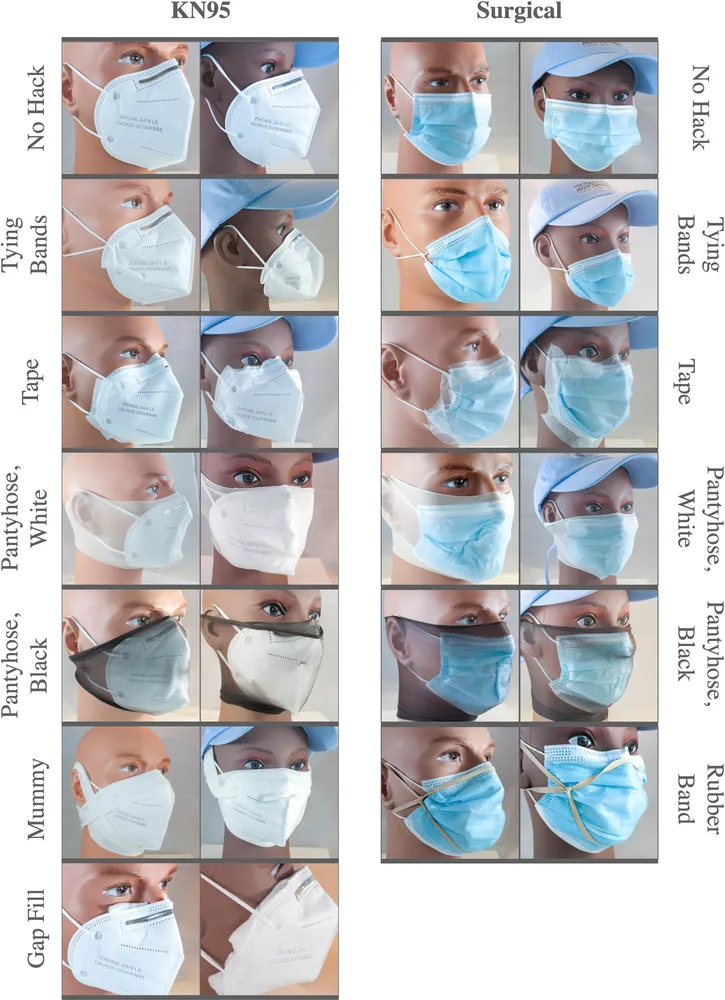 Photo: O’Kelly et al., PLoS ONE 2022 — CC BY 4.0 (Wikimedia Commons)
A note on beards: facial hair at the mask edge creates leaks, which is why occupational-health workers must be clean-shaven.
How long can you wear it, can you reuse it
The Thai guidance: replace every day. If you must reuse, no more than 3 days, and replace at once when a white mask turns grey, when you cough or sneeze a lot, after heavy dust, when breathing gets harder, or when the straps loosen.
- Don't wash it or spray alcohol on it — that can degrade the filter's electrostatic charge.
- Store in a paper bag or breathable box, not a sealed plastic bag that traps moisture.
- Rotate several masks on alternate days so each dries fully.
Cost-per-day formula (use the price you actually find)
Cost per day = box price ÷ pieces per box ÷ days reused. An illustration only (not real prices): a 100-baht box of 10 = 10 baht each; one day costs 10 baht, three days works out to 3.33 baht a day. Over a dust season of roughly four months (December–April, when dust tends to peak), if you wear one only on days above 37.5 µg/m³ — say 40 days — you'd use about 14–40 masks. Multiply by the price you find; next to a lung check-up it is cheap.
Who should not wear N95, or should be careful
- Asthma, lung disease, pregnancy — N95 makes breathing harder; ask a doctor first and try short periods somewhere safe.
- Children — masks are designed for adults, so they don't seal on a child and young children shouldn't wear one unsupervised. Use a model specifically sized for children and reduce outdoor time instead.
- Symptoms — dizziness, chest tightness, breathlessness: take it off and get to clean air.
A mask is not the answer for someone who is in dust 24 hours a day. At home and at work, use a closed room and an air purifier with enough CADR for the space.
Avoiding fakes: is it genuine
Counterfeits and over-claimed labels are a known problem worldwide.
- Look for the N95 marking and certification text on the pack.
- Buy from a trusted pharmacy or store; avoid suspiciously cheap lots.
- For 3M, check the Secure Code and Lot Code on the box on 3M's validation page.
- For an N95 claiming NIOSH approval, check the approval number against CDC's list.
- Masks marked P2 or FFP2 are considered equivalent in efficiency, per the sources we read.
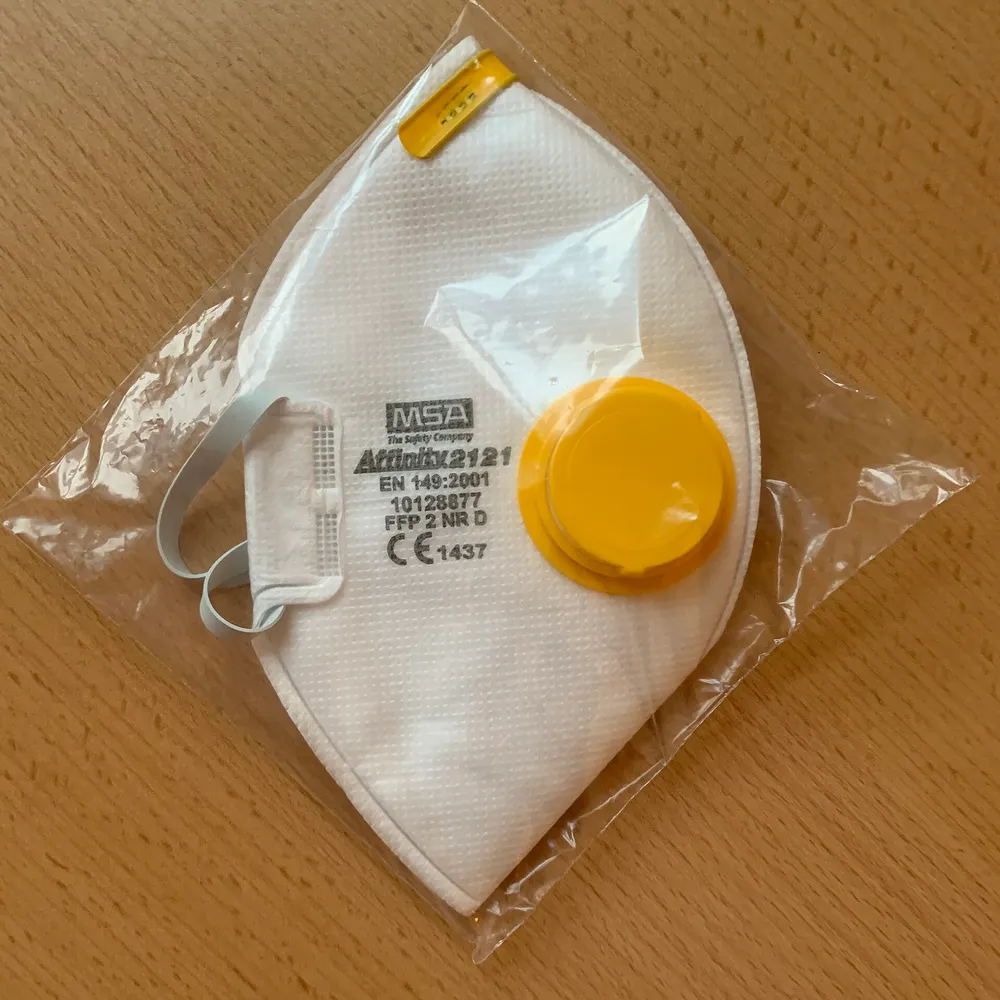 Photo: KarleHorn — CC BY-SA 4.0 (Wikimedia Commons)
Common mistakes
- Wearing the N95 under the nose, or pulling it down to talk on the phone — dust goes straight in.
- Buying on price, ignoring the standard — stylish black or fabric masks with no filtration rating often stop very little PM2.5.
- Reusing until grey — the filter is saturated; breathing gets harder while protection drops.
- Skipping the nose-wire adjustment — the most common leak.
- Thinking a mask replaces an air purifier — it doesn't; the room's air needs handling too.
Pick by situation
| Situation | Choose | Why |
|---|---|---|
| Daily motorbike commute | N95/KN95 with head straps | Seals best against airflow |
| Long city days | Folding KF94, or valved N95 | More comfortable, less heat |
| Budget option on moderate days | Two layered surgical masks | Better than none, not first choice |
| Lung disease / pregnancy | Ask a doctor first | N95 can make breathing hard |
Verdict
Choose a genuine N95 / KN95 / KF94 / FFP2 and seal it to your face — that is the only way the 94–95% on the box happens on your actual face. A plain surgical mask is a fallback. Wear it correctly, replace it on schedule, and check the dust level on the PM2.5 page before you leave.
Information as of November 2026 — standards and advice can change; check with the Department of Health and your own doctor if you are in an at-risk group.
Sources
Frequently asked questions
- What is the difference between N95 and KN95?
- The certifying standard. N95 is tested under the US NIOSH standard (42 CFR Part 84); KN95 under China's GB2626. Both require at least 95% filtration of ~0.3 micron particles, but some non-NIOSH KN95 imports have tested below 95%, so buy from reputable sellers.
- Can an ordinary surgical mask block PM2.5?
- Partly. Thai sources cite tests of roughly 60–70%, and one study found a tie-on surgical mask filtering about 71.5% of very small particles versus 98% for an N95. Figures vary by test method, but all point to clearly less than N95.
- How many days can I reuse an N95?
- Replace it daily if you can. If you must reuse it, no more than 3 days, and sooner if it turns grey, breathing gets harder, the straps loosen or you were in very dusty air. Do not wash it or spray it with alcohol, which can damage the filter.
- Who should not wear an N95?
- People with asthma or lung disease and pregnant women should check with a doctor first because N95 makes breathing harder. Small children should not use adult-size masks as they will not seal. If you feel dizzy or tight-chested, take it off and move to clean air.
- No N95 available — will two surgical masks do?
- Better than one. A Thai source says two plain masks, or one with 2–3 tissues inside, filter about 90%, but that comes from a single source and depends heavily on fit. Treat it as a backup, not a first choice.
- How do I know my N95 is genuine?
- Look for the N95 marking and certification text on the pack, buy from a trusted pharmacy or store, and for 3M check the Secure Code and Lot Code on the box on 3M's validation page. For NIOSH-approved N95s, check the approval number against the CDC list.
Related articles

Intermittent Fasting (IF) Done Right in 2026: A Plain-English Guide
How to do intermittent fasting safely in 2026 — 16/8 and 5:2 methods, evidence-based benefits, foods that work, common mistakes, and who should not try IF.

Sleep Better in 2026: How to Fix Insomnia and Improve Sleep Quality
An evidence-based 2026 guide to sleeping better: fix insomnia, build sleep hygiene, manage caffeine, screens and room temperature, plus the 20-minute rule.

Vitamins & Supplements 2026: How to Choose What's Worth It and Safe
An evidence-based 2026 guide to vitamins and supplements — who really needs them, which are worth it, how to check the Thai FDA number, and safe doses.