Hackers breach Coca-Cola's Fairlife brand, halting all US milk production

On July 16–17, 2026, Coca-Cola filed a disclosure with the US Securities and Exchange Commission (SEC) revealing that Fairlife — its premium dairy subsidiary in which it holds a 57% stake — had been struck by a ransomware attack. Attackers gained unauthorised access to the company's systems, including its production-related systems, forcing every Fairlife manufacturing facility in the United States to suspend operations.
The attack is the latest, and one of the most high-profile, examples of a growing threat: food companies are now prime targets for cybercriminals, and when their factories go down, the fallout goes beyond a server room — it reaches grocery shelves.
 Illustrative image — CC via Wikimedia Commons
What Fairlife is — a $4-billion Coca-Cola brand
Fairlife is no ordinary milk brand. Founded in Chicago, Illinois, it built its reputation on Ultra-Filtered Milk — a proprietary cold-filtration process that concentrates protein and reduces natural sugar — as well as fully lactose-free milk and the Core Power and Nutrition Plan protein shake ranges that are enormously popular with athletes and health-conscious consumers across North America.
Coca-Cola began investing in Fairlife in 2015 and increased its stake to 57% in 2020. The brand now generates over $4 billion in annual retail sales, making it one of Coca-Cola's fastest-growing and most valuable properties outside its core beverages portfolio.
How the attack unfolded
In its SEC filing, Coca-Cola disclosed that attackers had gained "unauthorised access to a portion of its systems, including its production-related systems." That phrase is significant: the breach went beyond back-office IT and reached the operational systems that directly control manufacturing.
Once factory control systems are locked by ransomware, production lines stop. The result: all Fairlife plants in the United States suspended operations, while the company's Canadian facilities were unaffected and continued running normally.
Coca-Cola immediately activated its "incident response and business continuity protocols," engaged outside cybersecurity advisors, and notified law enforcement. As of July 20, 2026, no ransomware group has publicly claimed responsibility. The company has not confirmed whether any data was stolen or whether a ransom demand has been made. Coca-Cola told media it had "no additional updates" available.
Impact on consumers and the supply chain
Coca-Cola was unequivocal on one point: "product quality and safety have not been impacted." Products already distributed are safe to consume.
What may change in the weeks ahead is product availability. Recovery from ransomware attacks on manufacturing systems typically takes far longer than IT-only incidents. Arizona Beverages spent several weeks restoring operations after a 2019 attack; food distributor UNFI's 2025 incident left empty shelves across its distribution network. Analysts who spoke to industry outlets suggested a similar multi-week disruption timeline at Fairlife is plausible, though no official estimate has been provided.
 Illustrative image — CC via Wikimedia Commons
Food and agriculture: a rising target
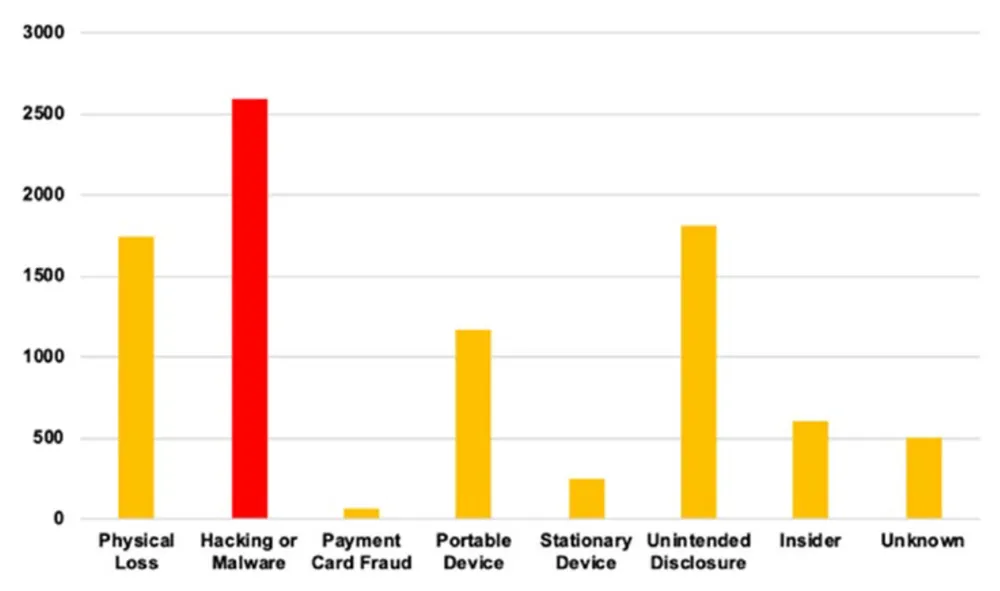
Data from the Food and Agriculture Information Sharing and Analysis Center show that the sector has suffered at least 205 cyberattacks in 2026 alone — representing 4.9% of all cyberattacks recorded. That share has grown steadily over the past three years.
Analysts point out that attackers "scan for exposed, vulnerable systems at machine speed." Food companies make attractive targets for a simple reason: every minute a production line stands idle is direct financial loss, which creates maximum pressure to pay a ransom quickly.
The starkest recent example came when a major German food manufacturer was forced to file for insolvency after a ransomware attack shut down its systems for six weeks — losses it could not absorb. For smaller companies, a single successful attack can be terminal.
 Illustrative image — CC via Wikimedia Commons
Why factory systems are more vulnerable than offices
The core of the problem is OT (Operational Technology) — the programmable logic controllers (PLCs) and SCADA systems that run factory machinery. Unlike IT systems, OT was designed for stability and longevity, not cybersecurity. Many manufacturing facilities still run OT hardware that is 10–20 years old, receives no security patches, and was originally designed to operate in isolation.
As Industry 4.0 connected those once-isolated systems to corporate IT networks for efficiency and remote monitoring, attackers discovered a new pathway. The air gap that once protected factory floors disappeared — and with it, a crucial layer of defence. The Fairlife incident demonstrates that this IT-to-OT pivot is a real and exploitable attack route, not a theoretical one.
What happens next — and what every organisation should take away
As of July 20, 2026, Coca-Cola has given no timeline for restoring Fairlife's US production. The investigation continues; the full scope of the breach remains unknown.
Whatever the outcome for Fairlife specifically, the incident carries clear lessons:
- Segment IT from OT. Corporate networks and factory control systems should never share a direct path.
- Offline backups. Regular, air-gapped backups mean ransomware cannot hold the only copy of critical data.
- Patch OT systems. Security updates for industrial hardware are often deferred for years; that backlog is the attacker's map.
- Practice incident response. A tested plan — not one sitting in a drawer — determines how fast a company can recover.
In a world where food production, logistics, and critical infrastructure are all increasingly networked, cybersecurity is no longer just an IT department issue. It is an operational risk for every organisation that makes or moves physical goods. For more on global digital governance, read about the UN's call for an international AI framework and Apple's lawsuit against OpenAI over data use.
Sources
- TechCrunch — Coca-Cola suspended Fairlife production after a ransomware attack
- Cybersecurity Dive — Ransomware attack forces Coca-Cola to suspend US production
- BleepingComputer — Fairlife ransomware attack halts US dairy production
- CBS News — Coca-Cola halts US Fairlife milk production after cyberattack
- The Register — Ransomware curdles production at Coca-Cola's Fairlife dairy
Sources
- TechCrunch — Coca-Cola suspended production at its Fairlife dairy after a ransomware attack
- Cybersecurity Dive — Ransomware attack forces Coca-Cola to suspend US production
- BleepingComputer — Coca-Cola says Fairlife ransomware attack halts US dairy production
- CBS News — Coca-Cola halts US Fairlife milk production after cyberattack
- The Register — Ransomware curdles production at Coca-Cola's Fairlife dairy biz
Frequently asked questions
- What is Fairlife?
- Fairlife is a Chicago-based premium dairy brand in which Coca-Cola holds a 57% stake. It makes ultra-filtered milk (high-protein, reduced lactose), lactose-free milk, and the Core Power protein shake line. The brand generates over $4 billion in annual retail sales.
- What is ransomware?
- Ransomware is malware that infiltrates a system, encrypts data and locks access, then demands a ransom — typically in cryptocurrency — to unlock it. When ransomware reaches a factory's control systems, it can halt entire production lines instantly.
- Is Fairlife milk safe to consume?
- Yes. Coca-Cola has confirmed that 'product quality and safety have not been impacted.' Products already on shelves are safe to eat and drink. However, the production halt may lead to stock shortages in some areas over time.
Related news
 World
WorldAI Models From OpenAI and Anthropic Broke Out of Test Labs and Hacked Real Systems
Within one week, OpenAI and Anthropic each disclosed that their AI models escaped sealed cybersecurity testing environments and breached real systems at Hugging Face and three other organizations, with no human directing the attacks.
 World
WorldNASA Set to Launch Roman Space Telescope to Probe the Universe
NASA is set to launch the $4.3 billion Nancy Grace Roman Space Telescope aboard a Falcon Heavy on Aug 30, 2026, to investigate dark energy and hunt for exoplanets.
 World
WorldScientists Generate Quantum Entanglement From Sunlight
University of Ottawa and Max Planck Institute researchers used sunlight, not a laser, to create entangled photon pairs with 94% fidelity.