NASA Set to Launch Roman Space Telescope to Probe the Universe
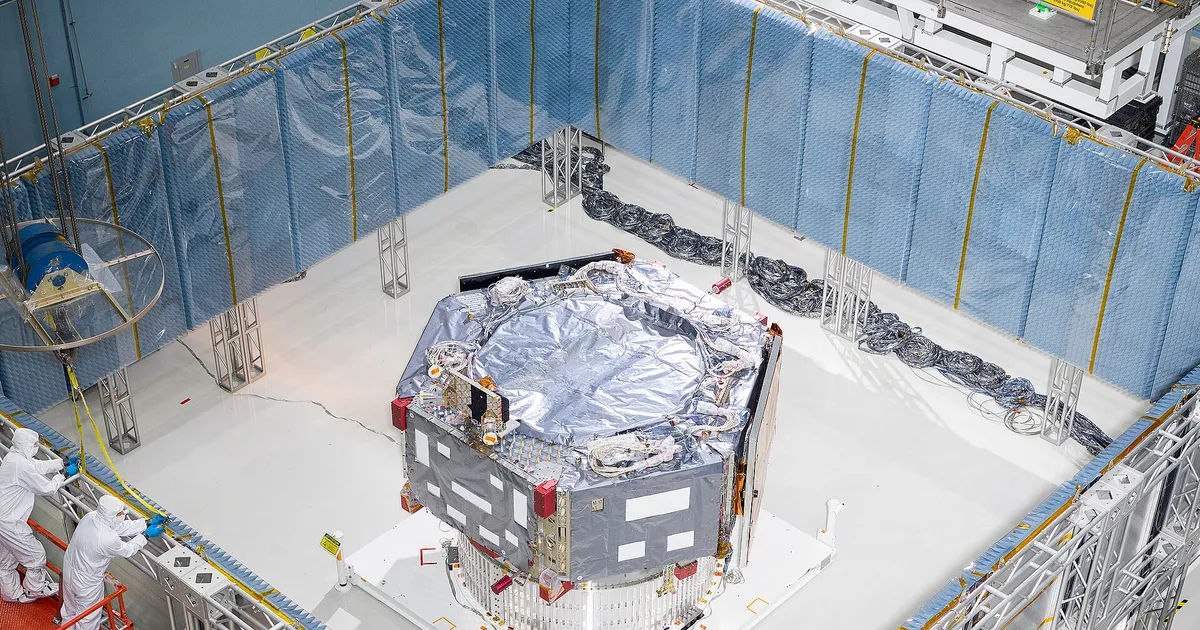
Watch more: “NASAs Roman Space Telescope: A New Perspective on the Cosmos” (Official Trailer) by NASA
NASA is set to launch the Nancy Grace Roman Space Telescope aboard a SpaceX Falcon Heavy rocket at 7:26 a.m. EDT (about 6:26 p.m. Thailand time) on Sunday, August 30, 2026, from Launch Complex 39A at Kennedy Space Center, Florida, after NASA and SpaceX completed a final launch readiness review confirming the rocket, spacecraft and weather are go for liftoff — capping nearly two decades of development and a total cost of $4.3 billion.
A telescope with 100 times Hubble's field of view
Roman is a next-generation space observatory with a 2.4-meter primary mirror — the same size as the Hubble Space Telescope's — but with one crucial difference: a field of view at least 100 times wider than Hubble's. That means a single survey can capture a huge swath of sky without stitching together thousands of separate exposures, the way Hubble has to. The observatory carries a 300-megapixel infrared camera and will beam back more than a terabyte of data to Earth every day — a vastly larger volume than previous space telescope missions.
Julie McEnery, Roman's senior project scientist at NASA's Goddard Space Flight Center, told reporters the mission "will impact every area of astronomy." Roman's surveys will cover more than 2 billion galaxies, letting scientists study how cosmic structures grew and evolved over the universe's history.
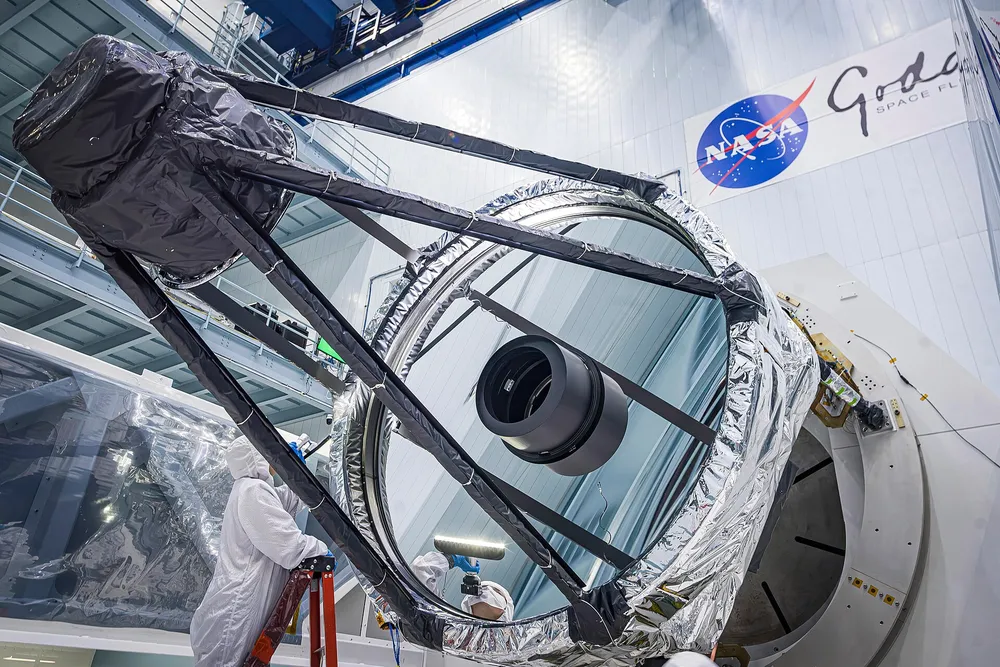 Photo: NASA/Chris Gunn — Public domain (Wikimedia Commons)
Three core science goals: dark energy, dark matter, and exoplanets
Roman's mission centers on three main scientific objectives:
- Dark energy and dark matter — measuring how the universe's expansion rate has changed throughout cosmic history, to help explain why that expansion keeps accelerating.
- Exoplanets — using an onboard coronagraph to block a star's light so planets around it become visible, a capability at least 100 times more powerful than any existing facility, according to Asa Stahl, science editor at The Planetary Society.
- Large-scale statistical surveys — mapping thousands of planetary systems across the Milky Way and systematically finding rare, unusual phenomena, which McEnery says will let astronomers "find the weird, the rare and the unusual."
A bumpy road: budget overruns and repeated cancellation attempts
The project began life as WFIRST, originally estimated at $1.6 billion with a 2020 launch target. Technical challenges around the 2.4-meter mirror and the coronagraph drove costs up, and NASA approved a revised $3.9 billion estimate in 2020 (including five years of operations); pandemic-related delays added roughly $400 million more. Along the way, the mission was repeatedly proposed for cancellation in multiple budget cycles, but Congress rejected those proposals every time and kept the project fully funded through completion.
Notably, Roman is set to launch nine months ahead of its formal May 2027 readiness date. Shawn Domagal-Goldman, a senior NASA official, praised the team for delivering "nine months early" despite the mission's complexity.
The woman behind the telescope's name
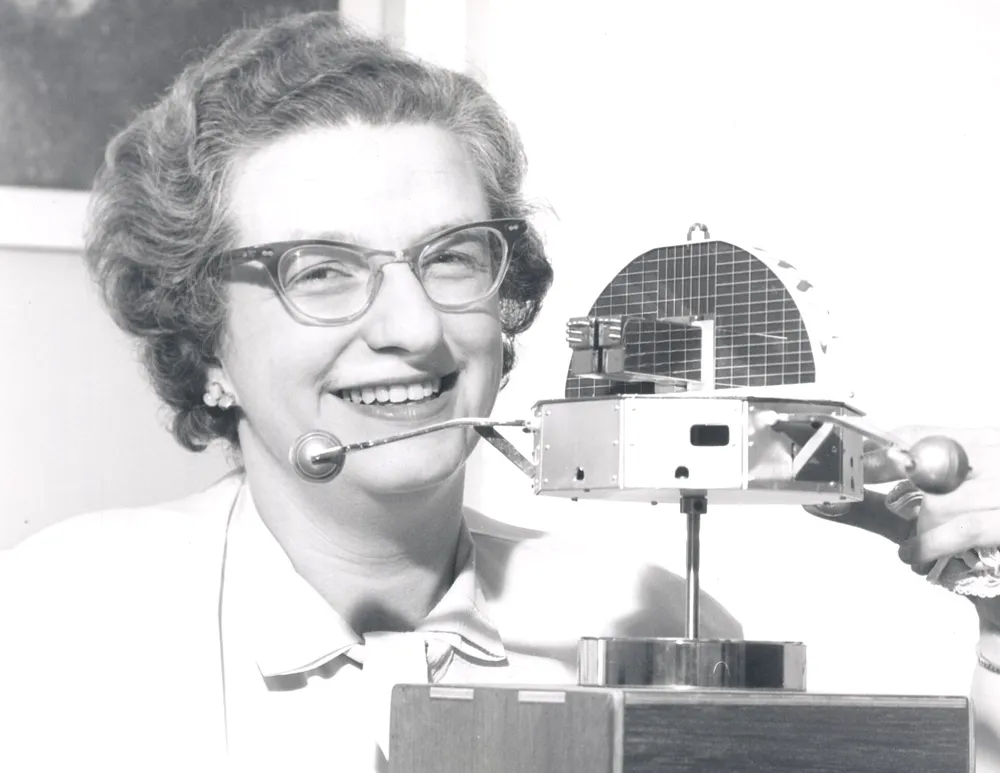 Photo: NASA — Public domain (Wikimedia Commons)
The telescope is named in honor of Nancy Grace Roman (1925–2018), NASA's first chief astronomer, who created NASA's space astronomy program in 1959 — just a year after the agency was founded — and in 1961 became the first woman to hold an executive position there. In the 1960s, she set up a committee of astronomers and engineers to envision the most powerful space telescope of its era and convinced NASA and Congress to make it a priority — the project that became the Hubble Space Telescope. Ed Weiler, Hubble's chief scientist until 1998, called her "the mother of the Hubble Space Telescope."
What happens next
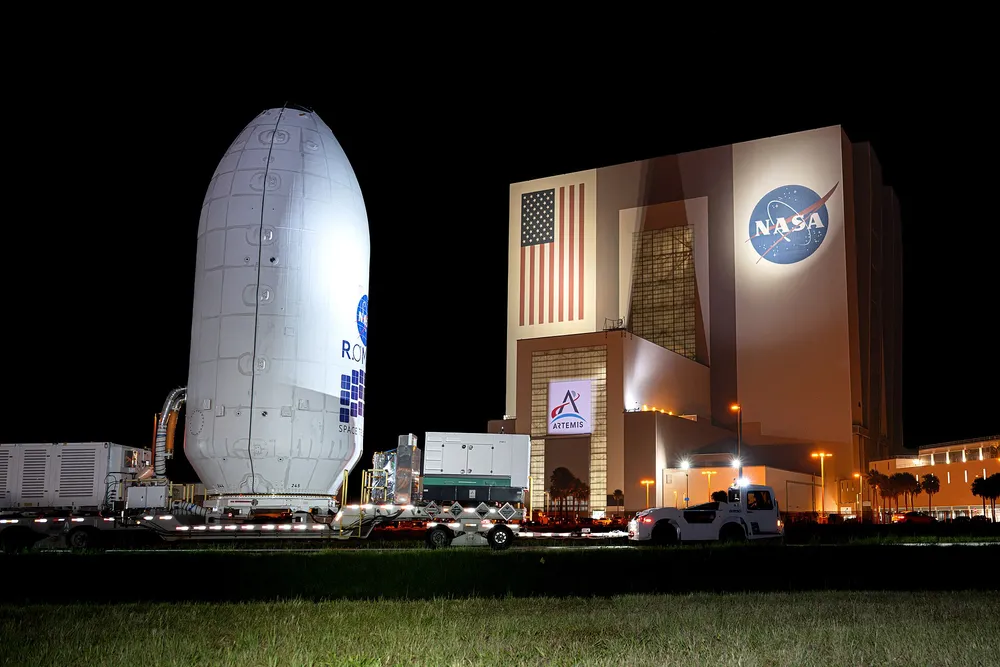 Photo: NASA/Sydney Rohde — Public domain (Wikimedia Commons)
After separating from the Falcon Heavy, Roman will unfold its solar panels and sunshade within the first few hours, then spend about 100 days traveling to the second Sun-Earth Lagrange point (L2), roughly 1.5 million kilometers from Earth in the direction away from the Sun — the same region where the James Webb Space Telescope operates. The team will then test and calibrate every instrument before full science operations begin. The prime mission is planned to run five years, with a possible five-year extension if the hardware remains healthy.
If weather or a technical issue delays the August 30 attempt, a backup launch window opens Monday, August 31 at 7:22 a.m. EDT.
Why it matters for Thai readers
Although Roman is a NASA mission, its science data will be made public for researchers worldwide to use — including Thai astronomers and students interested in cosmology research. It arrives alongside Thailand's own growing space activity, from the Thai-built TSC-1 research satellite to Thai students winning a silver medal at the International Biology Olympiad. A mission of this scale is a reminder for Thai students interested in science and space that classroom fundamentals can lead to genuinely unlocking the universe's biggest mysteries.
As of August 30, 2026: the mission is proceeding toward its planned launch time with no reported delays. If weather or a technical issue pushes the attempt back, the backup window is Monday, August 31. Live coverage and updates are available through NASA's official website.
Sources and further reading are listed below.
Sources
- NASA Science — NASA's Roman Space Telescope 'Go' for Launch
- NPR — NASA's Nancy Grace Roman Space Telescope launches on an eye opening mission
- SpaceNews — Roman Space Telescope ready for Aug. 30 launch
- Space.com — SpaceX Falcon Heavy rocket launching NASA's Roman Space Telescope on Aug. 30: how to watch it live
Frequently asked questions
- How is the Roman Space Telescope different from Hubble and James Webb?
- Roman has a primary mirror the same size as Hubble's (2.4 meters), but a field of view at least 100 times wider, letting it survey huge areas of sky far faster. Unlike James Webb, which captures extremely detailed images of specific targets, Roman is built for large statistical surveys — mapping billions of galaxies and finding huge numbers of exoplanets in a single campaign.
- What is dark energy, and why do scientists want to study it?
- Dark energy is a mysterious force believed to be causing the universe's expansion to accelerate. Scientists still don't know what it is, yet it's thought to make up roughly 68% of all the energy in the universe. Understanding it is key to answering how the universe formed and what its ultimate fate will be.
Related news
 World
WorldStanford Physicists Capture the First-Ever "Quantum Jump" of Sound in Real Time
Stanford physicists observed a quantum jump of a "phonon" — the smallest unit of sound — in real time for the first time, opening a path to quantum-error correction using sound.
 World
WorldScientists Generate Quantum Entanglement From Sunlight
University of Ottawa and Max Planck Institute researchers used sunlight, not a laser, to create entangled photon pairs with 94% fidelity.
 World
WorldUN Opens Historic AI Governance Dialogue: Scientists Warn No Guarantee Advanced AI Will Follow Orders
The UN launched its first Global Dialogue on AI Governance in Geneva on July 6–7, 2026, as a 40-scientist panel warned AI may not follow human instructions.