Coffee machines 2026: the break-even in cups, and how to avoid buying a shelf ornament

A coffee machine is something people buy with good intentions, and a great many end up in a corner of the kitchen unused.
This article answers the two questions that decide which group you land in: does it actually pay for itself, and when, and what should the budget go on first — where the answer is not the machine.
The break-even, in cups
Start with the number that makes it clearest.
One 60-baht coffee a day is 21,900 baht a year — more than a good home setup costs outright.
Cost per cup at home (a latte, 18g of coffee plus 150ml of milk):
| Component | Retail beans (220 baht/250g) | Beans by the kilo (290 baht/kg) |
|---|---|---|
| 18g of coffee | 15.8 baht | 5.2 baht |
| 150ml milk | 7.5 baht | 7.5 baht |
| Electricity | ~0.5 baht | ~0.5 baht |
| Total per cup | ~23.8 baht | ~13.2 baht |
(An americano with no milk comes to about 16.3 baht, or 5.7 respectively.)
Break-even against a 60-baht shop coffee (saving ~36 baht a cup):
| Total setup budget (machine + grinder) | Break-even | At one cup a day |
|---|---|---|
| 5,000 baht | 139 cups | ~4.6 months |
| 10,000 baht | 277 cups | ~9 months |
| 20,000 baht | 554 cups | ~1.5 years |
| 35,000 baht | 968 cups | ~2.7 years |
⚠️ These figures flatter you if you drink irregularly. Every other day doubles the break-even, and if you still stop at a café on the way to work, the machine at home never pays for itself at all — so the question before buying is not "which model" but "how many cups will I genuinely brew per week?"
⚠️ And one cost is not in the table: time. Brewing, steaming milk and cleaning up takes five to ten minutes a cup, which many people abandon on a rushed morning. That, not machine quality, is the real reason machines end up unused.
The types, and where to start
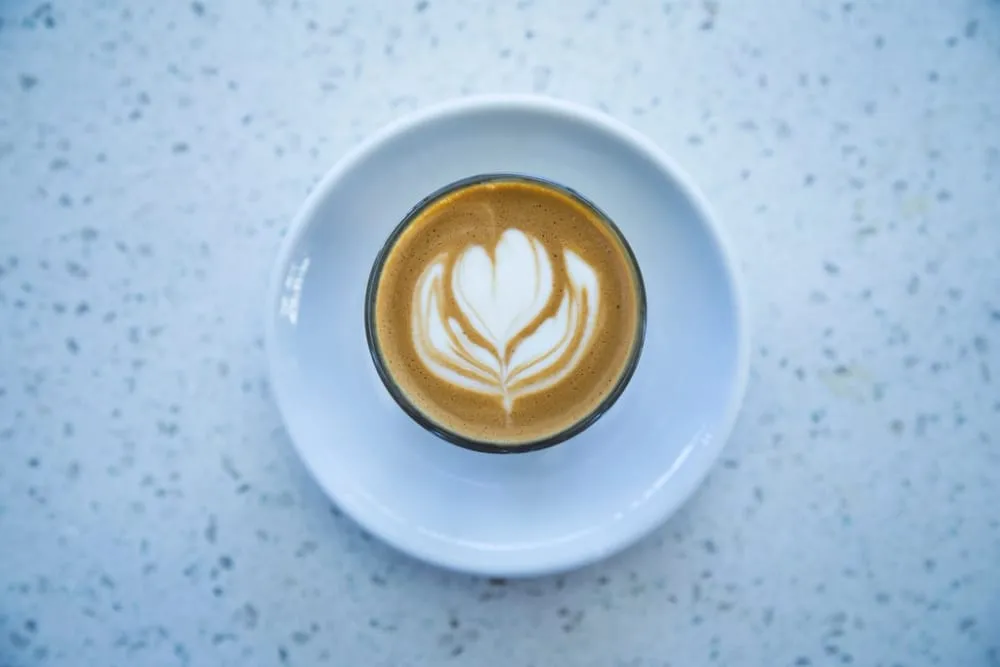 Photo: Herr Andrax — CC BY-SA 3.0 (Wikimedia Commons)
| Type | Rough price | What it makes | Effort |
|---|---|---|---|
| Pour-over / V60 / French press | Hundreds | Black coffee | Low, but manual control |
| Moka pot | Hundreds | Strong, espresso-like coffee | Low |
| Automatic drip | 1,500–5,000 | Black coffee, several cups at once | Very low |
| Capsule | 3,000–10,000 | Espresso, lattes on some models | Very low |
| Manual / semi-automatic espresso | 5,000–40,000+ | Everything, with a steam wand | High, a learning curve |
| Fully automatic espresso | 20,000–60,000+ | Everything, one button | Low, but more cleaning |
⚠️ Most beginners should start from "what do I actually drink", not from a budget:
- Mainly black coffee or americano → a pour-over or moka pot, at a few hundred to a couple of thousand baht, and it tastes far better than a cheap espresso machine.
- Mainly lattes or cappuccinos → you need an espresso machine with a steam wand. There is no shortcut; a drip machine cannot make a latte.
- One cup a day, speed above all → capsules. The cost per cup is higher, but if the alternative is not brewing at all, it still beats the café.
⚠️ The grinder matters more than the machine — and here is the mechanism
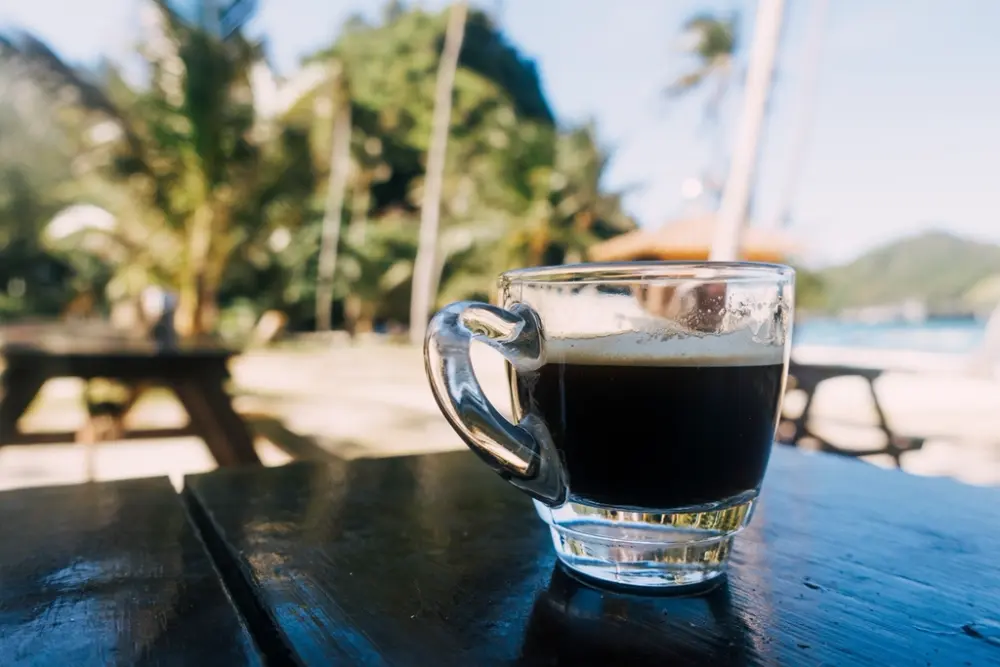 Photo: Kim Sanso — CC0 (Wikimedia Commons)
This is the single piece of advice with the biggest effect on flavour for a beginner, and almost no shop mentions it.
Brewing is hot water dissolving compounds out of ground coffee, and the rate depends on particle size. Small particles extract fast, large ones slowly.
- A blade grinder smashes beans at random, producing both fine dust and coarse chunks. In the same cup, the dust over-extracts into bitterness and astringency while the chunks under-extract into sourness and thinness, simultaneously.
- A burr grinder grinds through a set gap, so the particles come out a consistent size and extract as one flavour.
⚠️ An expensive brewer cannot fix this, because the problem exists before water ever touches the coffee. On a limited budget, fund the burr grinder first and take a step down on the brewer — an 8,000-baht machine with a 5,000-baht burr grinder makes distinctly better coffee than a 13,000-baht machine with a 500-baht blade grinder.
⚠️ And do not use pre-ground coffee in an espresso machine. Pre-ground is usually a medium grind so it works in several methods, which is far too coarse for espresso: water rushes through and you get thin, weak coffee that no amount of tamping harder will fix.
What people overlook and later regret
 Photo: Coyau — CC BY-SA 3.0 (Wikimedia Commons)
How hard it is to clean — the single best predictor of whether a machine keeps being used. One that needs six parts dismantled every morning will not be used past month three. Watch a real cleaning video for that model before buying, not only flavour reviews.
Water quality — tap water in much of Thailand is mineral-rich, which scales up boilers and eventually blocks the machine. Use filtered water and descale on the manual's schedule; scale is among the leading causes of premature espresso machine failure.
Actual clearance — espresso machines need space above them to fill the tank and hopper, which people forget to measure when planning to put one under a wall cabinet.
Grinder noise — louder than expected, and a genuine problem if you grind early in a condo.
Bean freshness — coffee is best about one to four weeks after roasting and deteriorates fast once ground. Buy small bags often, and store them in an airtight opaque container at room temperature, not in the fridge, where moisture condenses on the beans every time you take them out.
The hidden cost of capsules — a cheap machine with expensive, brand-locked capsules. Multiply cost per cup by cups per year before deciding, rather than looking at the machine price.
Common mistakes
Buying an espresso machine without a grinder — then wondering why the coffee is not as good as the café's.
Buying beyond your own level of interest — semi-automatics need grind adjustment, weighing and timing. If you do not want to do those things, an automatic or a capsule machine will get you drinking more actual coffee.
Storing beans in the fridge — moisture and food odours ruin them.
Not cleaning coffee oils — old residue turns rancid in a way no bean quality can mask.
Running tap water through a boiler machine — scale builds until it fails.
Assuming it will pay back without accounting for your own habits — if you still buy a coffee every morning, the machine at home is an added expense, not a saving.
Summary
- One 60-baht coffee a day is 21,900 baht a year, against about 23.8 baht a cup at home.
- A 10,000-baht setup breaks even at about 277 cups, roughly nine months at one a day.
- Your consistency decides it, not the model.
- Start from what you actually drink — black coffee starts with pour-over or moka; lattes need espresso.
- A burr grinder matters more than the brewer, because uneven grounds give you bitter and sour in the same cup.
- Ease of cleaning is the best predictor of whether the machine keeps being used.
- Use filtered water and descale on schedule — scale is a leading cause of early failure.
Sources
- TOPS Online — roasted coffee bean prices, 250g
- Coffee Indy — roasted beans for cafés from 290 baht/kg
- TrueID Food — One to Two café menu prices
- Salehere — Cafe Amazon menu prices, 2026
Cost per cup assumes 18g of coffee, 150ml of milk at 50 baht per litre, and an estimate for electricity. Bean and café prices vary widely by brand, area and quality — substitute what you actually pay to find your own break-even. Machine prices are approximate ranges as of 2026.
Frequently asked questions
- Is brewing at home really cheaper than buying out?
- Yes, by a lot. A 60-baht shop coffee every day is 21,900 baht a year, while brewing at home with retail beans costs about 23.8 baht a cup, or 8,687 baht a year — a difference of over 13,000 baht.
- What should a beginner start with?
- If you drink mainly black coffee or americano, start with a pour-over or a moka pot for a few hundred to a couple of thousand baht. If you want proper lattes or cappuccinos you need an espresso machine with a steam wand, and should budget for a grinder too.
- Why does the grinder matter more than the machine?
- Because extraction depends on particle size. A blade grinder produces a mix of dust and chunks, so within one cup the fines over-extract into bitterness while the chunks under-extract into sourness. No amount of money spent on the brewer fixes that.
- Are capsules worth it?
- For convenience and consistency, yes. But the cost per cup is much higher than beans and you are locked to one brand's capsules. They suit someone drinking one or two a day who values speed over flavour or cost.
- How fresh do beans need to be?
- Coffee is at its best roughly one to four weeks after roasting, and deteriorates very quickly once ground — so buy whole beans and grind before each brew. If you buy pre-ground, buy small bags and use them fast.
- How often does it need cleaning?
- Rinse the group head and drip tray every day you use it, and backflush or descale on the schedule in the manual. Old coffee oils turn rancid in a way no quality of bean can mask, and are the number one reason people stop using their machine.
Related articles

How to choose a microwave 2026: solo vs grill vs convection, capacity & wattage
The complete 2026 microwave buying guide — how solo, grill and convection differ, how many litres and watts you need, running costs, and prices in Thailand.

Dehumidifiers in Thailand 2026: what size, and the real running cost
How to size a dehumidifier to your room, compressor versus desiccant, and the monthly electricity cost — the number almost no review mentions and the one that changes the decision.
Top 10 Electric Heaters for Cool Season 2026 — Thailand Buying Guide
Compare 10 electric heaters for 2026, every budget ฿277-4,413, with heater types explained, real electricity cost under Thailand's new tariff, and safety tips.