How to choose a microwave 2026: solo vs grill vs convection, capacity & wattage

Almost every home has a microwave, yet buying a new one can be surprisingly confusing — how do solo and grill differ? What is convection? How many litres do you need? How many watts to reheat fast? And the big worry: does it cost a lot to run? This guide settles all of it in one place, with real numbers, 2026 prices in Thailand, comparison tables, and the mistakes buyers make most — so you get it right the first time and never regret the purchase.
How a microwave works — and why it matters before you choose
The heart of a microwave is a part called the magnetron, which fires microwaves into the cooking cavity. Those waves make water molecules in the food vibrate and rub together, generating heat from the inside out. That's why watery food (rice, curry) heats fast while dry food is slower — and why a microwave is great at "reheating" but can't crisp a surface on its own.
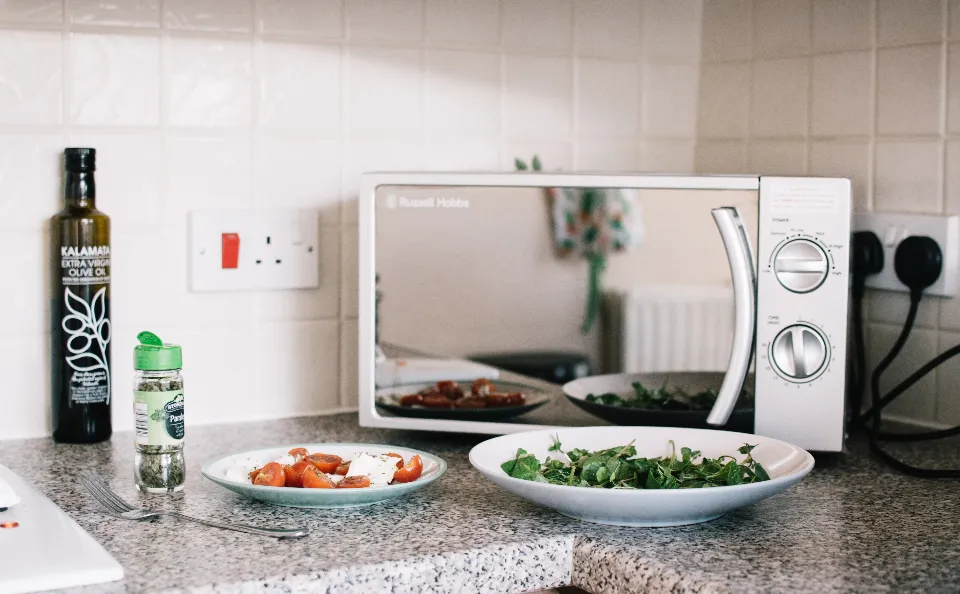 Photo: Openverse — Creative Commons license
Because the waves heat from within the food, a basic (solo) microwave can never crisp chicken skin or brown cheese. That's why makers add a heating element (grill) and a hot-air fan (convection) to provide those abilities. Grasp this one idea and you can already answer which microwave you need — if your main job is reheating, solo is enough; if you also want to grill or bake, step up to grill or convection.
Solo vs grill vs convection: pick the type first
This is the single most important decision and the biggest driver of price. Settle it before you look at litres or watts.
Solo microwave — uses microwaves only. It reheats, defrosts, and handles simple dishes. It's the cheapest and most durable (fewest parts). Ideal for students, condo dwellers, small families, or anyone whose main task is "just reheat food." Price in Thailand in 2026: roughly 1,790–3,990 THB.
Grill microwave — adds a heating element for grilling. It does everything a solo does, plus grilling vegetables and meat, making sandwiches, toasting bread, and crisping surfaces. It still can't "bake" properly because the heat isn't circulated like an oven. Best for people who like grilled snacks. Price around 3,000–5,500 THB.
Convection microwave (fan-forced hot air) — has microwaves, a heating element, and a fan that circulates hot air, so it works as an "oven + microwave" in one. It bakes cakes, bread and cookies, roasts a whole chicken, lets you set a temperature in degrees, and heats evenly. Best for home bakers and families who want one machine that does it all. The priciest option, around 4,500–9,000+ THB, and usually a larger unit.
| Type | Can do | Can't do | Best for | Thai price (2026) |
|---|---|---|---|---|
| Solo | Reheat, defrost, simple dishes | Grill, bake, crisp | Solo/condo/just reheating | 1,790–3,990 THB |
| Grill | Everything solo + grill/toast/crisp | Bake cakes | Grilled snack lovers | 3,000–5,500 THB |
| Convection | Everything + bake cakes/bread/roast chicken | (Does almost all) | Bakers / one-machine households | 4,500–9,000+ THB |
Prices as of June 2026; may change with promotions.
Tip: Don't pay extra for a function you'll never use. If you never bake at home, buying a near-10,000-baht convection just to reheat rice is overpaying. Conversely, if you love baking but buy a cheap solo, you'll be frustrated it can only reheat.
Choosing capacity (litres) to fit your home
Capacity is measured in litres and tells you how big the cavity is. More litres means you can fit a bigger dish or several items, but it takes more counter space and costs more. The simple rule: match it to your household size and cooking habits.
- 20–23L — living alone or as a couple, reheating a single plate or a ready meal. Plenty and the most economical. Ideal for condos and dorms where space is tight.
- 23–30L — a family of 3–4. Big plates and large bowls fit easily. This is the most popular range because it "just fits" a typical home.
- 30L and up — large families, batch cooks, or anyone using the baking function (a whole-chicken tray needs room). Most convection models live here.
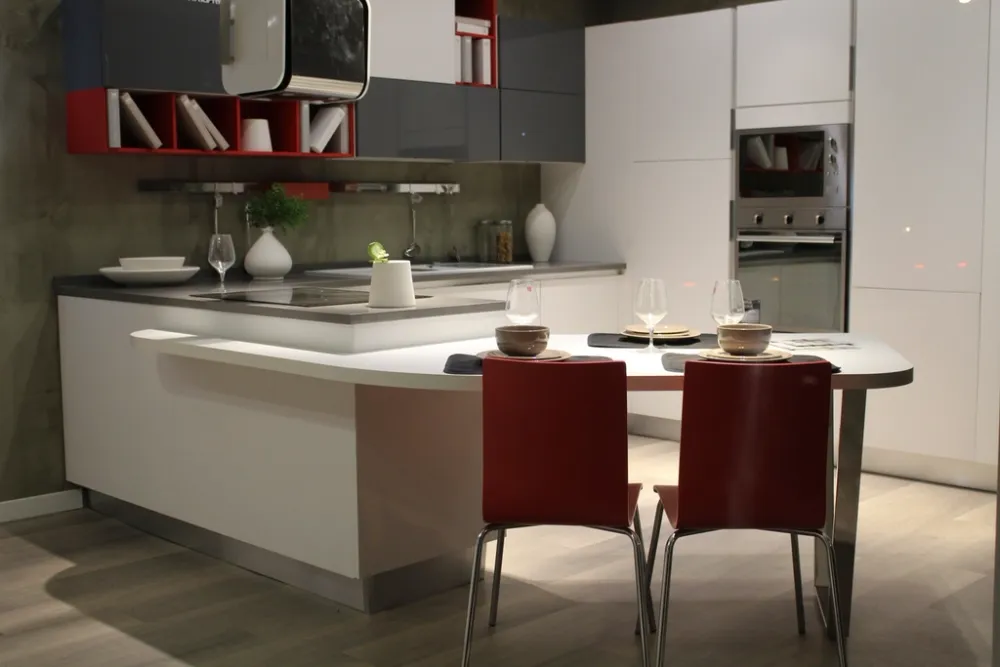 Photo: Openverse — Creative Commons license
What people overlook is the internal turntable size, not just the litre figure. Some 25L models have a small turntable that won't take your deep dishes. Before buying, measure the dish you use most and compare it with the turntable diameter spec (usually around 24.5–31.5 cm). And leave at least 10–15 cm of ventilation clearance on every side so the unit doesn't overheat.
Wattage: higher heats faster — but it isn't everything
A microwave's wattage tells you how fast it heats. Higher watts means faster, more even heating. The common range in Thailand is 700–1,350W.
- 700–800W — entry models. They reheat fine but slower. Good for light reheating and tight budgets.
- 900–1,000W — the "sweet spot" for most people. Fast enough, without a big price jump.
- 1,100–1,350W — heats quickly and handles larger quantities fast. Best for large families or heavy daily use.
Worth knowing: package instructions on ready meals usually assume around 800–1,000W. If your unit is lower, add time; if higher, trim it slightly so nothing burns. And don't confuse "microwave power" with "grill/bake power" — the figure to watch for reheating speed is the microwave wattage; the grill/convection figures are separate.
What it actually costs to run — and inverter explained
Here's the good news: microwaves use far less power than most people think, because even though the wattage looks high, the run time is very short. Let's do the real maths (Thai electricity is about 4 THB/unit):
| Task | Power | Time | Energy | Cost/use |
|---|---|---|---|---|
| Reheat one plate of rice | 1,000W | 3 min | 0.05 units | ~0.20 THB |
| Reheat a bowl of curry | 800W | 4 min | 0.053 units | ~0.21 THB |
| Defrost meat | 700W | 8 min | 0.093 units | ~0.37 THB |
| Bake a cake (convection) | 1,400W | 40 min | 0.93 units | ~3.7 THB |
Costs at 4 THB/unit; data as of June 2026.
Clearly, ordinary reheating costs mere satang per use — even daily use all month is only a few tens of baht. The parts that actually use power are the grill and convection functions, which run continuous heat for tens of minutes. Only worry about that if you bake often. To save even more, see how to cut your home electricity bill in 2026, which rounds up all the techniques.
Inverter is the technology to know. On an ordinary microwave, when you set "70%" it actually runs full 100% and switches on and off, so delicate food cooks unevenly (hard edges, cold centre). An inverter delivers a true continuous 70%, so heat is gentler and more even, defrosting smoothly without cooking the edges. If you reheat a variety of foods or cook delicate items often, the inverter premium is worth it; if you just want hot rice, a standard model is fine. To convert watts, litres and degrees easily, try our free unit converter tool.
Features worth having vs ones you overpay for
Brochures list dozens of features, but only a few get used every day.
Worth having:
- Dial vs digital/touch — dials are cheap, tough and rarely fail (great for older users); digital is more precise with timing and offers auto programs.
- Auto menus — preset buttons like reheat rice, defrost, warm milk — one press and done. Genuinely handy for repeat tasks.
- Child lock — a must if you have kids; stops curious button-pressing.
- Anti-stain interior coating / easy-clean removable tray — pays off in long-term cleaning.
- Energy label 5 rating — reassurance on efficiency.
Usually overpaid for:
- Dozens of fancy cooking programs you'll never press.
- A large pretty display that adds no real usefulness.
- Convection in a home that never bakes.
 Photo: Openverse — Creative Commons license
Common mistakes when buying and using a microwave
People make the same avoidable errors and end up regretting it or paying to repair. Here are the ones to dodge.
- Buying convection when you never bake — paying thousands more for a function that sits idle. If reheating is the main job, solo is far better value.
- Choosing litres on the number alone, ignoring the turntable — some high-litre models have a small turntable that won't take your deep dishes.
- Placing the unit too close to the wall — microwaves need ventilation clearance; cramming it in causes overheating and a shorter life.
- Using metal or gold-rimmed dishes — they cause sparking, damage the unit, and are dangerous. Use only Microwave Safe containers.
- Overheating liquids — plain water heated too long can "superheat" and erupt, scalding you. Stir or add a wooden spoon first.
- Boiling whole eggs / heating in foam or thin plastic bags — eggs can explode and foam can melt into the food.
- Not checking after-sales service and warranty — pick a brand with service centres in Thailand. The unit warranty is usually 1 year, while some brands cover the magnetron 3–5 years; ask before you buy.
- Not cleaning regularly — food residue builds up causing odours and uneven heating. Wipe after each use to extend the unit's life.
Choosing by budget and use (real-world picks)
- ~2,000 THB, living alone/condo → solo 20–23L, 700–800W, dial. Done — tough and great value.
- ~3,000–3,500 THB, small family, just reheating → solo 23–25L, 900–1,000W, digital with auto menus.
- ~4,000–5,500 THB, love grilled snacks → grill 23–25L for crisping and browning.
- 5,000 THB and up, baker / one-machine household → convection 28–32L for cakes, bread and roast chicken; an inverter is even better.
- Home with kids/elderly → prioritise child lock and an easy dial; skip complex menus.
If your kitchen already has an air fryer, also read the air fryer buying guide 2026 to compare — the two complement each other well: the microwave excels at fast reheating, the air fryer at crisp surfaces.
Verdict: get the right microwave in 3 steps
- Pick the type first based on what you'll actually do — solo to reheat, grill to grill, convection to bake. Don't overpay for unused functions.
- Match capacity to people — solo 20–23L for one, 23–30L for a family, 30L+ for a big household/baker — and check the turntable size.
- 900–1,000W is the value sweet spot for most people; and don't worry about running cost — ordinary reheating is just satang per use.
For most people who "just reheat food," a solo 23–25L at 900–1,000W, around 2,500–3,500 THB, is the best value. If you bake seriously, invest in a 28–32L inverter convection and get one machine that does it all. Whichever you pick, choose by "what you actually use," not "features that sound good," and you'll get the best value for sure.
Sources
- mybest Thailand — popular microwaves and specs for 2026 (th.my-best.com)
- Krungsri Card — energy-saving microwave recommendations, prices and how to choose 2026 (krungsricard.com)
- Sharp — Convection vs Grill vs Solo Microwave Ovens (in.sharp)
- Kapook Home — best microwave brands 2026 (home.kapook.com)
Frequently asked questions
- Does a microwave use a lot of electricity? What does one use cost?
- A typical microwave draws 700–1,350W but runs very briefly. Reheating rice for 3 minutes at 1,000W is just 0.05 units, or about 0.20 THB. Even daily use is only a few tens of baht a month. The real power-hungry parts are the grill and convection functions that run for much longer.
- What capacity (litres) should I get?
- Living alone or as a couple, 20–23L is plenty; a family of 3–4 wants 23–30L; a large family or keen home baker should look at 30L and up. Also check the turntable size to make sure your biggest dish fits.
- What's the difference between solo, grill and convection — which should I buy?
- Solo only reheats and defrosts (cheap and durable); grill adds browning/crisping; convection (fan-forced hot air) does everything plus bakes cakes and bread like a real oven. If you only reheat, solo is enough; if you love baking, choose convection.
- Is an inverter microwave better — is it worth paying extra?
- An inverter delivers a steady low power level (e.g. a true 40% the whole time) instead of switching full-on and off. That defrosts and reheats delicate food more evenly — no hard edges with a cold centre. Worth it if you reheat a variety of foods often; for plain rice, a standard model is fine.
- What containers are microwave-safe and what must I never put in?
- Use glass, ceramic and plastics marked Microwave Safe. Never use metal, gold/silver-rimmed dishes, foil or foam boxes, and don't boil whole eggs or overheat liquids until they erupt — they can explode.
- Are microwaves bad for your health or do they destroy nutrients?
- No. Microwaves make water molecules vibrate to create heat; they don't make food radioactive. Because cooking is short and uses little water, they actually preserve vitamins as well as or better than boiling.
Related articles

Best dehumidifier 2026: ranked by use case + how to choose
A 2026 dehumidifier ranking by use case and budget, plus how to choose — capacity (litres/day) by room size, compressor vs desiccant — ideal for Thailand's rainy season.

How to Choose a Mattress in 2026: Spring, Pocket Spring, Latex & Memory Foam
2026 mattress buying guide — spring, pocket spring, latex and memory foam compared, firmness by sleeping position, Thai bed sizes, and prices.

Front-Load Washing Machines 2026: How to Choose + 8 Picks by Budget
The 2026 front-load washing machine guide: capacity, Inverter motors, real running costs, 8 picks by budget, and how to prevent rainy-season mould.