Top 10 Electric Heaters for Cool Season 2026 — Thailand Buying Guide
Thailand isn't a cold country, but every year around this time, searches for "heater" climb anyway — for a range of real reasons. Some people have just booked a stay on Doi Inthanon, where temperatures have dropped as low as 2°C. Some live in a draughty high-rise condo where the bedroom gets too cold to sleep comfortably. Some have elderly parents or young children who feel the cold more than most. And some just want their bathroom to not be freezing every morning.
The problem is Thailand's electric heater market ranges from ฿277 all the way to nearly ฿4,500, across ceramic, oil-filled, infrared, and fan types — and each type genuinely suits a different situation, not just a different brand. This article rounds up the 10 best-value heaters for 2026, explains which type suits whom, calculates the real electricity cost under the new tariff, and covers the safety precautions people commonly overlook.
All product prices reference September-October 2026 and may change with promotions and retailers.
Before you buy — know the heater TYPE first, not just the brand
The thing most people don't know: every type uses the same electricity at the same wattage
Every electric heater type — ceramic (PTC), oil-filled, infrared, and fan-based — works on the same principle of electric resistance, which converts electricity into heat at nearly 100% efficiency across the board. Put simply: a 1,500-watt heater of any brand, any technology, draws exactly the same electricity. The real differences are in how heat is distributed and what energy-saving features are included — not the technology name on the box.
4 main heater types — pros and cons you need to know
| Type | How it works | Pros | Cons | Best for |
|---|---|---|---|---|
| Ceramic/PTC | A ceramic element heats fast, with a fan blowing the heat out | Fastest to feel warm (seconds), cheap, lightweight | Fan noise, hot surface if touched directly | General bedrooms/home offices wanting quick warmth |
| Oil-filled | Electricity heats oil sealed inside metal fins, radiating heat slowly | Completely silent, no fan; safest (no exposed coil); steady heat; keeps radiating after power-off | Slow to warm up (10-15 min); heavier; harder to move | Bedrooms run all night, homes with kids/pets |
| Infrared/halogen | Radiates heat directly at objects/people, no need to warm the air first | Feels warm instantly, efficient for a single spot, quiet | Only heats where the rays reach, not the whole room; the glowing element may disturb sleep | Working at one desk, open/outdoor-style spaces that can't be fully heated |
| Fan-based | A hot element plus a fan that spreads heat around the room fast | Spreads heat fastest across a room, usually has remote/timer | Louder fan noise than ceramic; draws power continuously since the fan always runs | Living rooms/medium-large rooms wanting fast whole-room warmth |
Short version: want fast warmth → ceramic or fan-based; want the safest option to leave running overnight → oil-filled; want the most efficient for one spot → infrared.
Sizing the wattage to your room
A rule of thumb that works for Thai homes (a reasonably sealed room with some insulation): you need roughly 80-100 watts per square metre.
| Room size | Recommended wattage |
|---|---|
| 8-10 sqm (bathroom, small room) | 600-900W |
| 10-12 sqm (small bedroom) | 900-1,200W |
| 12-15 sqm (standard bedroom) | 1,200-1,600W |
| 15-18 sqm | 1,600-1,800W |
| 18-20 sqm (small living room) | 1,800-2,200W |
If the ceiling is high, the room is draughty, or it's a mountain lodge/resort room that isn't sealed like a city condo, add another 20-30% on top — heat escapes faster than in a fully enclosed room.
The 10 best-value electric heaters in 2026
#1: Haier HN2013 — PTC ceramic, best overall value
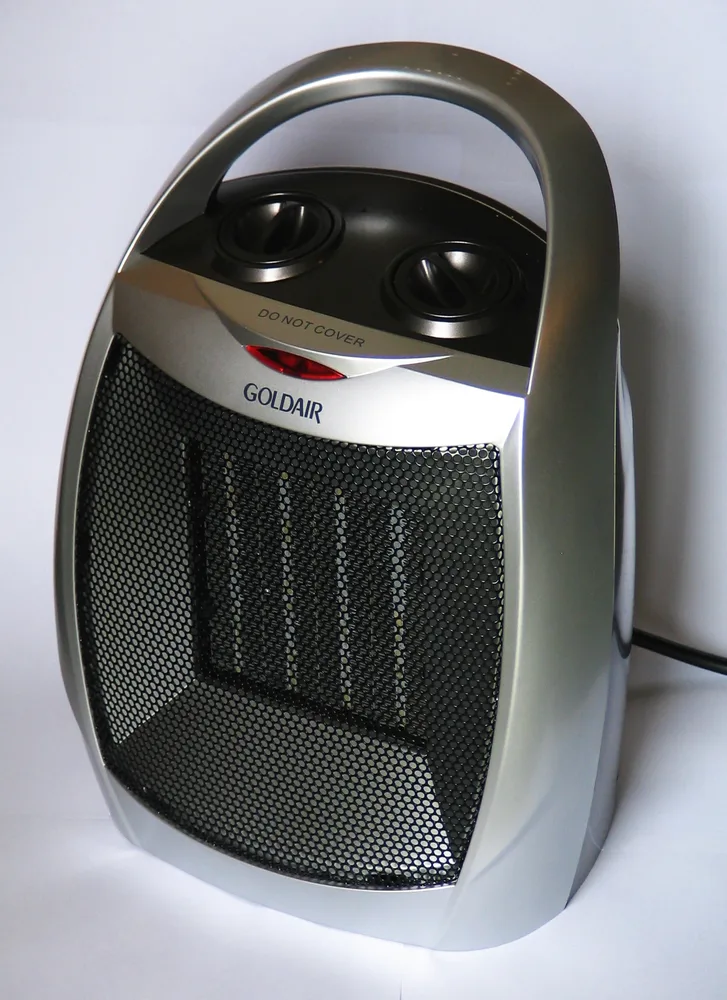 Illustrative: a PTC ceramic fan-style space heater — Benchill — CC BY-SA 3.0 (Wikimedia Commons)
The Haier HN2013 is a PTC ceramic heater that balances price, features, and fast heating better than almost anything else at this price point. It has a 2-in-1 function — heater mode and plain fan mode — so it's usable year-round.
Key features:
- PTC element heats up within seconds
- 2-in-1 function (heater + fan) usable in both hot and cool seasons
- Auto-off timer reduces the risk of forgetting to switch off
- Lower noise than a typical fan heater
| Spec | Detail |
|---|---|
| Type | PTC ceramic |
| Wattage | 2,000W |
| Price | ~฿1,865 |
| Features | Timer, fan mode, auto tip-over shutoff |
Pros: Heats fast, good value, usable year-round, has the basic safety features covered. Cons: 2,000W may be more than a room under 12 sqm needs if there's no fine temperature control — check the exact variant's spec before buying.
Best for: Someone buying their first heater who wants something simple, reliable, and the best value in the mid-range.
#2: Oil-filled Radiator — safest for running all night
An oil-filled radiator works differently from a typical heater: electricity heats oil sealed inside several metal fins (usually 7-13 of them), which then radiate heat slowly and evenly. There's no glowing hot coil the way a ceramic or infrared heater has, making it the safest heater type here for homes with young children or pets.
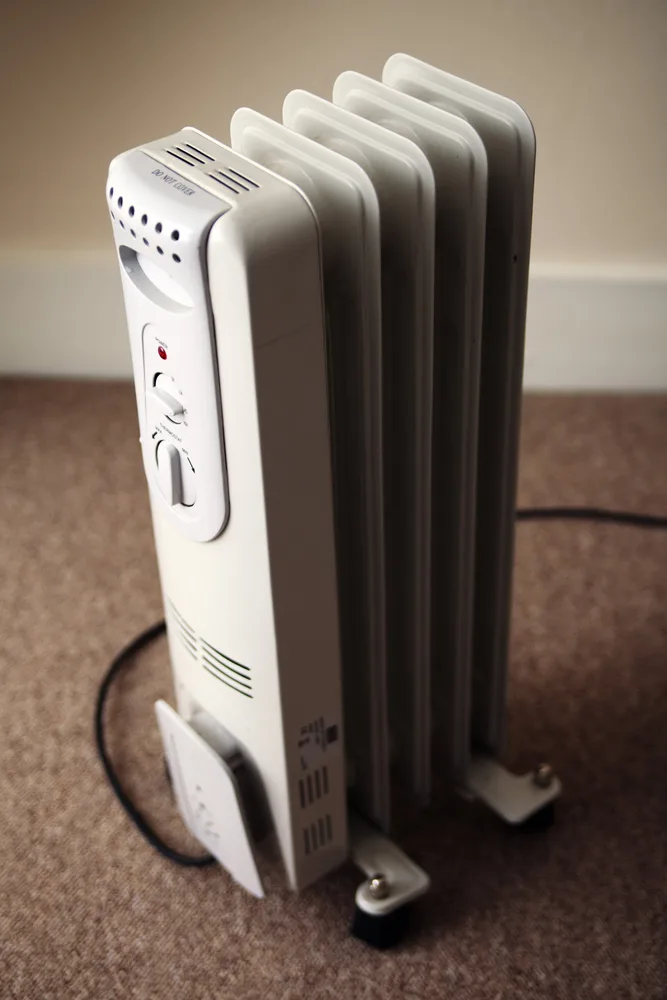 Photo: Ashley Pomeroy — CC BY 3.0 (Wikimedia Commons)
Key features:
- No exposed hot coil to touch or ignite nearby items
- Completely silent, no fan — good for running while sleeping
- Keeps radiating warmth for a while after being switched off (indirect energy saving)
- Usually has wheels and a handle for easy moving
| Spec | Detail |
|---|---|
| Type | Oil-filled radiator |
| Wattage | 1,500W (typical 11-fin unit) |
| Price | ~฿2,500-3,500 |
| Features | Adjustable thermostat, timer, wheels |
Pros: Safest for overnight use, completely silent, steady heat that doesn't feel too drying. Cons: Takes 10-15 minutes longer to warm up than ceramic; heavier and pricier than a ceramic unit of the same wattage.
Best for: A bedroom that needs heating all night, homes with young children, pets, or newborn puppies/kittens that need steady warmth without the risk of touching a scorching-hot surface directly.
#3: Philips AHR2142FD — most trusted brand
Philips is one of the appliance brands Thai consumers know and trust most. The AHR2142FD is a ceramic heater focused on ease of use and even heat distribution via its oscillation system.
Key features:
- Oscillation spreads heat across a wider area
- 3 adjustable heat levels
- Carry handle for moving between rooms
- Wide, stable base reduces tipping risk
| Spec | Detail |
|---|---|
| Type | Ceramic |
| Wattage | 2,000W |
| Price | ~฿2,280 |
| Features | Oscillation, 3 heat levels, portable |
Pros: Trusted brand, service centres nationwide, oscillation spreads heat well. Cons: No app control, slightly pricier than a generic PTC ceramic unit.
Best for: Someone who wants a brand they can trust for after-sales service and safety standards.
#4: Xiaomi Mijia Smart Space Heater — smartest, app-controlled
For anyone already on the Xiaomi Home ecosystem, this connects straight in — turn it on/off and adjust temperature from your phone even when you're not in the room. Good for someone who wants the room pre-warmed before bed without leaving it running all day.
Key features:
- Remote control via the Xiaomi Home app
- Schedule it to warm the room before you get home
- Auto cutoff if the unit tips over
- Slim design that tucks into a corner
| Spec | Detail |
|---|---|
| Type | Infrared/PTC |
| Wattage | 2,000W |
| Price | ~฿1,952 |
| Features | App control, scheduling, tip-over protection |
Pros: Genuinely useful remote control; saves power indirectly by only running when actually needed instead of left on standby. Cons: Needs WiFi and the app at home — if the internet drops, remote control stops working (the physical buttons still work fine).
Best for: A home that already has smart-home gear, or anyone who wants to save power by only running it exactly when needed.
#5: Panasonic DS-P2013CW — sleek design, remote control
The Panasonic DS-P2013CW is a fan-based heater built around a sleek design for a modern living room, with a wider 90-degree oscillation angle than most units in this list.
Key features:
- 90-degree oscillation for wide coverage
- Remote control — adjust it from the sofa without getting up
- Sleek design that fits a modern Japanese-style living room
- Quieter than a typical fan heater at this price
| Spec | Detail |
|---|---|
| Type | Fan-based |
| Wattage | 2,000W |
| Price | ~฿2,850 |
| Features | Remote, 90° oscillation, timer |
Pros: Attractive design, convenient remote, wide oscillation spreads heat across the room. Cons: The priciest of the 2,000W fan heaters here, with no smart-app feature.
Best for: A living room where looks matter as much as function, or anyone who uses it often from the sofa and wants a remote.
#6: JTL JY-CH02D — most space-saving, wall-mountable
This model's clear selling point is that it can be wall-mounted, so it doesn't take up floor space the way a standing heater does. Good for small rooms or space-constrained condos.
Key features:
- Mounts on the wall or sits on the floor — flexible to your space
- 2 heat levels to choose from
- Slim body that doesn't take up room
- Light enough to install yourself, no technician needed
| Spec | Detail |
|---|---|
| Type | Ceramic |
| Wattage | 1,600W |
| Price | ~฿1,232 |
| Features | Wall-mount or floor-standing, 2 heat levels |
Pros: The most space-saving in this list, good value, wattage is right for a medium room. Cons: Basic feature set — no remote or scheduling.
Best for: A condo or rented room with limited floor space that wants to save space.
#7: Mr.Heater DH-QN02 — widest coverage area
Despite drawing just 950W, its dual-fan design spreads heat across up to 20 square metres — more coverage than other units of similar wattage in this list.
Key features:
- Dual fans spread heat across up to 20 sqm
- Switches between plain fan mode and heating mode
- Auto oscillation
- Lower wattage than other units here but still covers a wide area, making it more efficient per square metre heated
| Spec | Detail |
|---|---|
| Type | Dual-fan heater |
| Wattage | 950W |
| Price | ~฿2,990 |
| Features | Dual fans, fan/heat mode switch, oscillation |
Pros: Uses less power relative to the area it heats, suited to medium-large living rooms. Cons: Fairly pricey relative to its wattage; slower to warm the same room than a 2,000W unit.
Best for: A living room or open-plan space of 18-20 sqm where you want to save power compared to buying a 2,000W unit.
#8: Xiaomi Smartmi 2200W IPX4 — most premium, slim, splash-proof
The most premium unit in this list, standing out with a body just 9cm thin and an IPX4 splash-proof rating — the only unit here safe to use in a bathroom (still keep it away from direct splash zones).
Key features:
- IPX4 splash-proof rating, safe for bathroom use
- Just 9cm thin, sits flush against a wall
- Auto sensor adjusts output to room temperature
- Premium design that suits a minimalist room
| Spec | Detail |
|---|---|
| Type | Slim tower fan heater |
| Wattage | 2,200W |
| Price | ~฿4,413 |
| Features | IPX4 splash-proof, auto sensor, slim design |
Pros: The only unit here properly rated for bathroom use; premium ultra-slim design; convenient auto sensor. Cons: The most expensive in this list — nearly 2.4x the price of #1.
Best for: A bathroom that's freezing in the morning, a minimalist-styled room, or anyone for whom budget isn't the main constraint.
#9: Camel Heater 3D — best value on a tight budget
At under ฿800 but still delivering 2,200W with a 3D heat-distribution system, this is the best-value option for anyone on a tight budget who doesn't want to compromise on power.
Key features:
- 3D heat distribution covers a wider angle than a typical fan heater
- Auto overheat cutoff
- High wattage at a budget price
- Lightweight and easy to carry
| Spec | Detail |
|---|---|
| Type | Fan-based |
| Wattage | 2,200W |
| Price | ~฿787 |
| Features | 3D heat spread, overheat protection |
Pros: The best price-per-watt in this list, with basic overheat protection included. Cons: Less brand recognition than the bigger names, more limited after-sales service.
Best for: Anyone on a tight budget who wants high wattage for fast warmth, or as a backup/second heater.
#10: Mini Portable Heater 600W — lowest budget
For anyone who just wants warmth in one small spot — under a desk, or beside the bed while reading — this ~600W mini unit, starting in the low hundreds of baht, does the job without the cost of a full-size unit.
Key features:
- Compact enough for a desktop or under-desk use
- Claims to heat within 2 seconds
- Auto tip-over shutoff
- Very light, the easiest in this list to carry between rooms
| Spec | Detail |
|---|---|
| Type | Small ceramic/PTC |
| Wattage | 600W |
| Price | ~฿277-410 |
| Features | Tip-over protection, compact and portable |
Pros: The cheapest, lowest power draw, good for single-spot use rather than a whole room. Cons: 600W only warms a very small area (a desk/under-desk) — not enough for a whole bedroom.
Best for: A work desk, a tiny unheated space like a small non-waterproofed bathroom (only models not rated for wet areas should avoid that use), or as a cheap backup unit.
Comparison table — all 10 models
| Rank | Model | Type | Wattage | Price | Highlight |
|---|---|---|---|---|---|
| 1 | Haier HN2013 | PTC ceramic | 2,000W | ~฿1,865 | Best overall value, 2-in-1 |
| 2 | Oil-filled Radiator | Oil-filled | 1,500W | ~฿2,500-3,500 | Safest, fine to run all night |
| 3 | Philips AHR2142FD | Ceramic | 2,000W | ~฿2,280 | Trusted brand, oscillation |
| 4 | Xiaomi Mijia Smart | Infrared/PTC | 2,000W | ~฿1,952 | App control, scheduling |
| 5 | Panasonic DS-P2013CW | Fan-based | 2,000W | ~฿2,850 | Sleek design, remote |
| 6 | JTL JY-CH02D | Ceramic | 1,600W | ~฿1,232 | Wall-mountable, space-saving |
| 7 | Mr.Heater DH-QN02 | Dual-fan | 950W | ~฿2,990 | Covers 20 sqm |
| 8 | Xiaomi Smartmi IPX4 | Slim fan heater | 2,200W | ~฿4,413 | Splash-proof, bathroom-safe |
| 9 | Camel Heater 3D | Fan-based | 2,200W | ~฿787 | Best value on a budget |
| 10 | Mini Heater 600W | Small ceramic | 600W | ~฿277-410 | Lowest budget, portable |
Prices as of September-October 2026, excluding shipping; promotional discounts may apply on Shopee/Lazada.
The real electricity cost — calculated under the new Sept-Dec 2026 tariff
What most people get wrong: a heater adds to the "last units of the bill," which are the most expensive
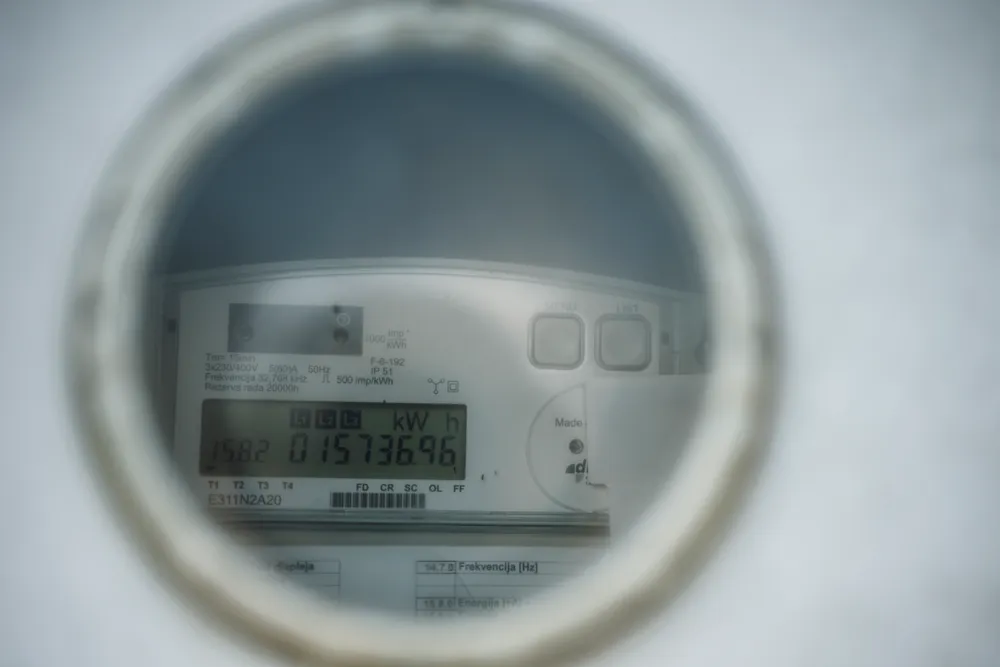
Most people calculate heater running cost using the bill's "average rate," which is wrong, because Thailand's household electricity tariff is tiered — the more you use, the more expensive the last units become. Under the ERC's revised rates effective the September 2026 billing cycle:
| Usage tier | Energy charge per unit |
|---|---|
| Units 1-15 | ฿2.3488 |
| Units 16-25 | ฿2.9882 |
| Units 26-200 | ฿3.0000 |
| Units 201-400 | ฿4.1584 |
| Units 401+ | ฿4.3583 |
Add the Ft (automatic fuel adjustment) charge for September-December 2026, another 16.23 satang/unit, plus 7% VAT, and a household already using over 200 units a month (e.g. one that runs air-con regularly) sees a marginal cost from running a heater of roughly ฿4.6-4.8 per unit — not the low-฿3 figure many people assume — because a heater adds to the bill's most expensive tier, not the cheap early units.
Real cost per hour/night/month (calculated at ฿4.7/unit)
| Wattage | Cost/hour | Cost/night (6 hrs) | Cost/month (every night, 30 days) |
|---|---|---|---|
| 600W | ~฿2.8 | ~฿17 | ~฿508 |
| 950W | ~฿4.5 | ~฿27 | ~฿804 |
| 1,200W | ~฿5.6 | ~฿34 | ~฿1,015 |
| 1,600W | ~฿7.5 | ~฿45 | ~฿1,353 |
| 2,000W | ~฿9.4 | ~฿56 | ~฿1,692 |
| 2,200W | ~฿10.3 | ~฿62 | ~฿1,861 |
This is a ceiling, for a unit running at full power the entire time. A unit with a thermostat (adjustable temperature, like an oil-filled radiator or a thermostat-equipped ceramic heater) cycles off once the room reaches the set temperature, so the real bill typically comes in 20-40% lower depending on room insulation and the temperature setting.
Real-world scenarios:
- A Bangkok home running it only on the coldest nights (roughly 15-20 nights/year, December-January), a 2,000W unit for 6 hours a night costs about ฿850-1,130 for the whole cool season.
- A mountain lodge/resort running it every night through peak season (2-3 months), a 1,500W oil-filled unit for 8 hours a night costs roughly ฿1,500-2,250 a month.
If you want to cut your overall household electricity bill at the same time, see how to save on your electricity bill.
Safety precautions (more important than people think)
A heater is one of the more common causes of house fires, because it draws high power continuously for long periods. The precautions below matter as much as which model you choose.
-
Always check for the มอก. (TISI) certification mark before buying — an uncertified unit carries a much higher risk of short-circuit and fire. Scan the QR code on the label to verify its source.
-
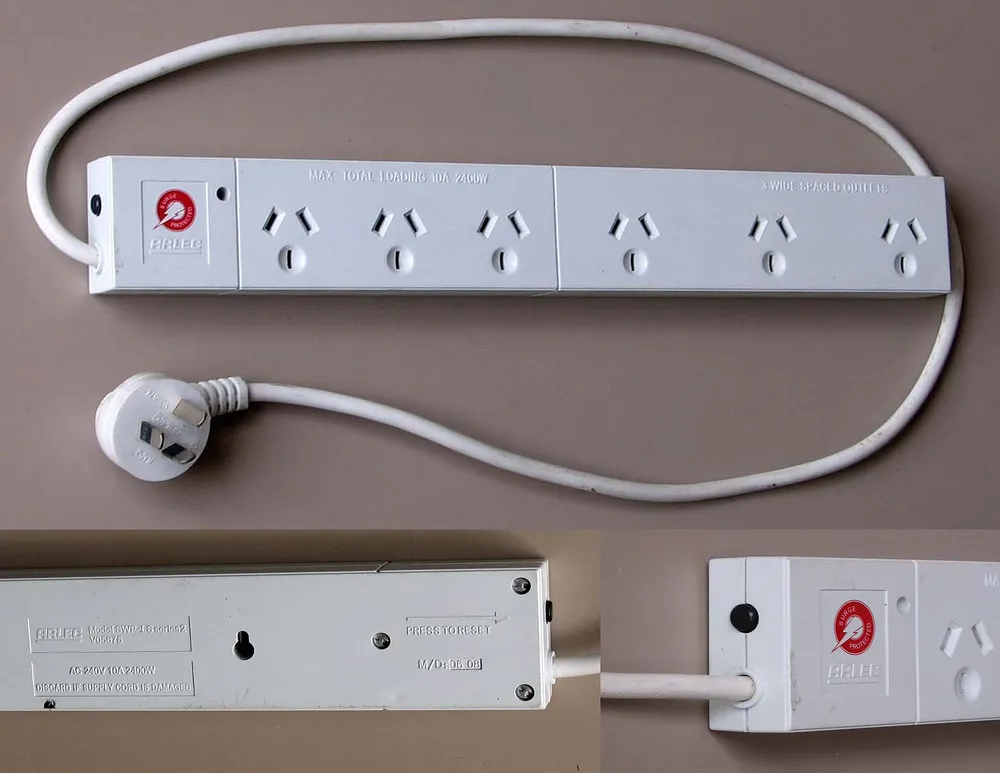
Don't overload a power strip — most ordinary power strips are rated for no more than 10A or 2,400W total. Plugging a 2,000W heater into the same strip as other appliances that push the combined load over 2,400W (an iron or a kettle, say) risks the cord overheating, melting, or catching fire. Plug a heater directly into a wall socket whenever possible.
-
Keep at least 1 metre of clearance from curtains, bedding, clothing, or anything else flammable, in every direction.
-
Never leave it running unattended for long periods. If you must run one while sleeping, choose a model with an automatic thermostat cutoff and tip-over shutoff, and pick an oil-filled unit — safer than ceramic/infrared for overnight use.
-
Never use one in a bathroom unless it's explicitly labelled IPX4 or higher (see #8), and even then keep it away from direct splash zones.
-
Don't place it on carpet or an uneven surface that could make it tip or fall over easily.
-
Switch off and unplug it before leaving the house or going to sleep if possible. The safest approach is pairing it with a timer plug, or choosing a model with a built-in auto-off timer.
Common mistakes people make buying a heater
-
Buying more wattage than needed, thinking "stronger means faster" — a small 10 sqm room doesn't need a 2,200W unit; buying beyond what you need just means a higher bill for no real benefit.
-
Choosing based on the technology name rather than actual use — infrared sounds modern, but if you want to heat a whole living room, a fan or ceramic heater is a better fit.
-
Leaving a ceramic or infrared heater running all night — switch to an oil-filled unit instead, which is far safer for prolonged continuous use.
-
Not checking the power strip's rating before plugging in — a heater is often the highest-draw appliance in the house; plugging it into a cheap, uncertified power strip risks fire.
-
Buying an ordinary heater for bathroom use — it must be explicitly rated IPX4 or higher; not every model is safe in a bathroom.
-
Not allowing warm-up time before bed — a typical ceramic/fan heater needs 10-15 minutes running before the room actually feels warm, not switched on right as you get into bed expecting instant warmth.
How to choose a heater by budget and use case
If you're planning a cool-season trip to the mountains where it gets far colder than Bangkok, see Thailand's best cool-season trips for 2026 while you plan — some mountain accommodations don't provide heating, so you may want to bring a portable mini unit yourself.
By budget:
| Budget | Recommended | Why |
|---|---|---|
| Under ฿500 | Mini Heater 600W / Camel 3D | Cheapest, still enough power for single-spot use |
| ฿1,200-2,000 | Haier HN2013 / JTL JY-CH02D / Xiaomi Mijia | Best value, covers the basic features |
| ฿2,000-3,000 | Philips AHR2142FD / Panasonic DS-P2013CW / Oil-filled Radiator | Trusted brand, safer |
| ฿3,000+ | Xiaomi Smartmi IPX4 | Premium, bathroom-safe, good design |
By use case:
| Situation | Recommended |
|---|---|
| Need to run it all night while sleeping | Oil-filled Radiator (safest) |
| Young children/pets at home | Oil-filled Radiator |
| Bathroom freezing in the morning | Xiaomi Smartmi IPX4 (the only splash-proof unit here) |
| Medium-large living room | Mr.Heater DH-QN02 or Panasonic DS-P2013CW |
| Condo/rental with limited space | JTL JY-CH02D (wall-mountable) |
| Single-spot desk use | Mini Heater 600W |
| Very tight budget, needs high wattage | Camel Heater 3D |
| Smart-home household wanting remote control | Xiaomi Mijia Smart Space Heater |
Verdict
The best-value heaters for most people in 2026:
- Best overall: Haier HN2013 — good value, heats fast, usable year-round, ~฿1,865.
- Safest: Oil-filled Radiator — for running overnight or homes with kids/pets, ~฿2,500-3,500.
- Most trusted brand: Philips AHR2142FD — ~฿2,280.
- Smartest: Xiaomi Mijia Smart Space Heater — app control, ~฿1,952.
- Best value: Camel Heater 3D — high wattage under ฿800.
What matters more than the brand: size the wattage to your room, pick the right type for how you'll use it (overnight means oil-filled), always check for the มอก. mark and your power strip's rating. Most heater fires come from misuse, not a faulty unit.
Choosing the right heater for your room size and using it safely is a few hundred to a few thousand baht of investment that makes Thailand's short cool season far more comfortable — without worrying about the electricity bill or safety.
Sources
- 10 best electric heaters/heater brands guide — ProductNation
- 10 electric heaters, which brand is best 2025 — My Best
- New Sept 2026 electricity rates — households using over 150/200 units — The Thaiger
- New electricity rates from September 2026, how to calculate — Sanook
- Oil-Filled Radiator Electricity Cost: The Oil Myth Debunked — RunWatts
- Do Infrared Heaters Use a Lot of Electricity — RealCozy
- Doi Inthanon clear skies, low of 5°C this morning — Thairath
- Doi Inthanon very cold at 2°C, tourists feel the chill — Bangkok Biznews
- Phu Kradueng summit bitterly cold, frost appears — MGR Online
- Warning: buy TISI-certified appliances to prevent shock/fire — Nation TV
Frequently asked questions
- Which type of heater uses the least electricity?
- At the same wattage, every heater type (ceramic, oil-filled, infrared, fan) draws exactly the same power, because all electric heaters convert nearly 100% of electricity into heat. What actually makes one 'more efficient' in real use is (1) a unit with a thermostat that cuts off automatically once the room reaches temperature — saving 20-40% versus one without, and (2) infrared heats people/objects directly without needing to warm the whole room's air first, so it can be switched off sooner for single-spot use. The bottom line: match the wattage to your room and pick a model with a thermostat or timer — that matters far more than the technology name.
- Is it dangerous to run a heater all night while sleeping?
- Leaving any heater running unattended carries a fire risk, but if you must run one overnight, an oil-filled radiator is the safest choice — heat comes from oil inside sealed metal fins, with no exposed glowing coil like ceramic or infrared heaters have, and it keeps radiating warmth for a while even after switching off. Pick a model with an automatic thermostat cutoff and tip-over shutoff, and always keep it at least 1 metre from curtains, bedding, or anything flammable.
- How much does a heater actually add to the electricity bill per month?
- Calculate watts ÷ 1000 × hours used × rate per unit. A 2,000W heater run 6 hours a night uses 12 units a night — at roughly ฿4.7/unit (including Ft and VAT, for a household already using over 200 units/month) that is about ฿56/night, or ฿1,690 if run every night for a month. Running it only on the coldest nights (15-20 nights/month in Bangkok) brings that down to roughly ฿850-1,130. Note this is a ceiling: a unit with a thermostat cycles off once the room is warm enough, so the real bill usually runs 20-40% lower.
- How many watts do I need for my room size?
- A workable rule of thumb is about 80-100 watts per square metre for a reasonably sealed room. A small 10-12 sqm bedroom needs 900-1,200W, a standard 12-15 sqm bedroom needs 1,200-1,600W, and an 18-20 sqm living room needs 1,800-2,200W. Add 20-30% on top if the ceiling is high or the room is draughty — a mountain-lodge room that isn't fully sealed like a city condo, for example.
- What's the difference between a space heater and a water heater — do I need both?
- They do completely different jobs. A water heater warms only the water flowing through it for showering, while a space heater warms the air in a room. If you just want a warm shower, a water heater alone is enough and far cheaper to run (see our [water heater guide](/articles/water-heater-2026)) — but if you also want your bedroom or living room warmer, especially a freezing bathroom before your morning shower, you need a separate space heater. Some households in a cold spell run both.
- Can I use a space heater in the bathroom?
- Most ordinary heaters must NOT be used in a bathroom — they lack sufficient water/moisture protection (IP rating) and risk electrical leakage or shock from steam and condensation. Only use a model explicitly rated IPX4 or higher on its label (see #8 in this list), and even then keep it away from direct splash zones — a splash-proof rating is not the same as being safe near a showerhead or submersible.
Related articles

How to choose a microwave 2026: solo vs grill vs convection, capacity & wattage
The complete 2026 microwave buying guide — how solo, grill and convection differ, how many litres and watts you need, running costs, and prices in Thailand.

Front-Load Washing Machines 2026: How to Choose + 8 Picks by Budget
The 2026 front-load washing machine guide: capacity, Inverter motors, real running costs, 8 picks by budget, and how to prevent rainy-season mould.

Coffee machines 2026: the break-even in cups, and how to avoid buying a shelf ornament
Every type of home coffee machine compared for beginners, with the real cost per cup at home, where the break-even falls, and why the grinder matters more than the machine.