Front-Load Washing Machines 2026: How to Choose + 8 Picks by Budget

A washing machine is one of the hardest-working appliances in a Thai home, yet it's a big-ticket item costing anywhere from a few thousand to tens of thousands of baht — choose wrong and you live with it for years. That bites hardest in the rainy season, when laundry won't dry and indoor drying turns musty and mouldy. A front-load washer that spins clothes nearly dry — or one with a built-in dryer — is a lifesaver. This guide covers everything: front-load vs top-load, choosing capacity, energy-saving systems, the features worth paying for, the true lifetime cost, and finally 8 recommended 2026 models grouped by budget, so you can decide in one read.
Front-Load vs Top-Load: Which to Choose
Before picking a model, answer the first question: front-load or top-load. The two differ in how they wash, not just where the door sits. Front-loaders tumble clothes through the water, washing cleaner with less water, while top-loaders spin clothes in a big pool of water, which is faster and cheaper but uses more.
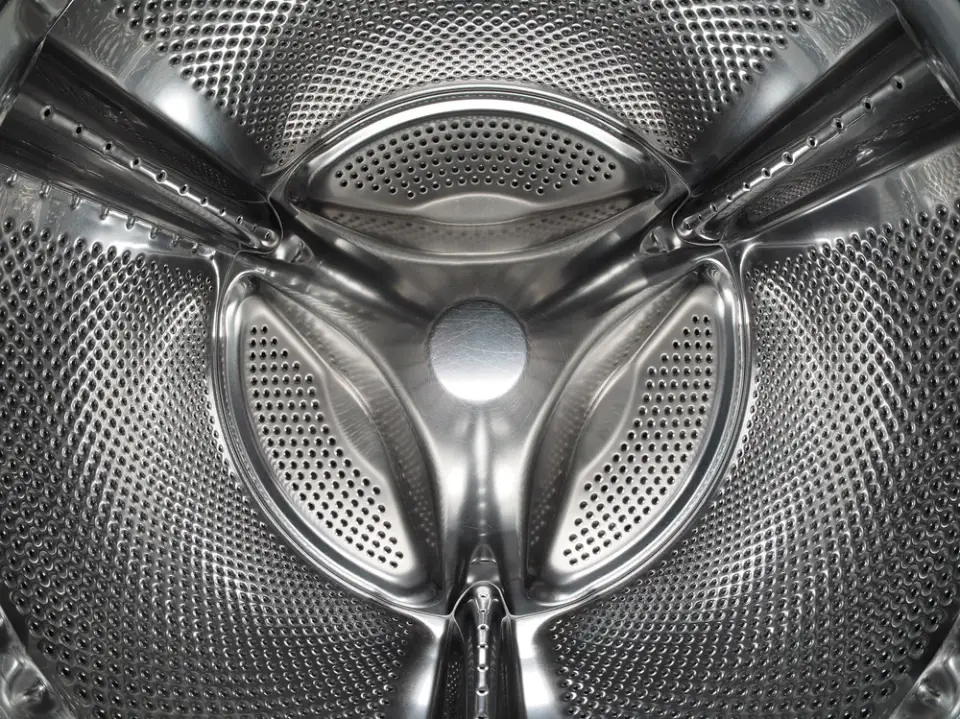 Photo: Petar Milošević — CC BY-SA (wikimedia)
| Aspect | Front Load | Top Load |
|---|---|---|
| Cleaning | Cleaner, great on deep stains | Good enough |
| Water use | ~40–50% less | Uses more water |
| Spin-dry | Drier (1,000–1,400 rpm) | Less dry |
| Fabric care | Gentler, no tangling | Tangles/stretches more |
| Starting price | Higher (~9,000 baht up) | Lower (~5,000 baht up) |
| Add items mid-cycle | Only models with Add Item | Easy on every model |
| Bending/space | Must bend; fits under counter | No bending, but taller |
In short: choose front-load if you value water savings, cleaner washes and drier spins for the long run; choose top-load if you want cheap, fast and no bending on a tight budget. This guide focuses on front-loaders because they pay off over time and suit a rainy season where you need laundry to come out as dry as possible.
Choosing the Right Capacity (kg)
Capacity is the spec people get wrong most often — buying too big "just in case" wastes water and power every cycle, or too small means running several loads. Use this as a guide.
| Wash capacity | Best for |
|---|---|
| 7–8 kg | Single / condo / a couple who washes often |
| 9–10.5 kg | A couple or family of 2–3 |
| 11–12 kg | Family of 3–4, washing 2–3 times a week |
| 14 kg+ | Large home; frequent blankets/duvets/curtains |
The rule of thumb is to size by your actual weekly laundry volume, not headcount. Homes with young kids or athletes generate more laundry and should size up one step. And if you're eyeing a washer-dryer combo, remember the dry capacity is usually only about half the wash capacity — a 10 kg washer might only dry 5–6 kg.
Inverter Motors and the Energy Label — the Deciding Factor on Bills
The heart of a modern washer is the Inverter motor (branded Digital Inverter, Smart Inverter, or Direct Drive / AI DD), which varies motor speed to the load — making it quieter, more durable, and about 30–40% more efficient than a conventional motor. Almost every model worth buying in 2026 is already Inverter; if you find a non-Inverter model at a similar price, skip it.
Also check the Energy Label No. 5 rating (more stars = more efficient). Here's what many people don't realise: most of a washer's electricity goes into heating water, not turning the drum. So washing in cold water keeps the cost per cycle very low (about 1–2 baht), while frequent warm/sanitise programs push it up several-fold. If you want to get your whole home's bill under control, see our guide on how to save electricity at home.
A higher spin speed (rpm) matters most in the rainy season — 1,200–1,400 rpm wrings more water out, so clothes come out drier, dry faster, and are less likely to turn musty.
Features Worth Having (and Ones You Don't Need)
Premium models sell on features, but not all of them are worth the money. Here are the ones worth having:
- Steam — reduces allergens and dust mites and relaxes creases; great for homes with young children or allergy sufferers.
- Built-in dryer (washer-dryer combo) — the rainy-season hero: wash then dry in one machine, ideal for condos or tight spaces (but if you dry loads very often, a separate dryer is better value — see our Heat Pump vs Condenser dryer review).
- Add Item / mid-cycle adding — a small door to drop in a forgotten sock without cancelling the cycle.
- Delay Start — finish right as you wake up, or avoid peak electricity hours.
- Auto Dosing — fill detergent once and it lasts many cycles (top models only).
Features that most people don't need: Wi-Fi/app control (rarely used in practice), or a dozen specialty programs when you'll only ever use 2–3. Don't overpay for things you won't use.
8 Recommended 2026 Models by Budget
Below are standout models available in Thailand in mid-2026, grouped by budget and use. Prices are approximate starting points and move with promotions and retailers, so compare prices on the day you buy (as of June 2026).
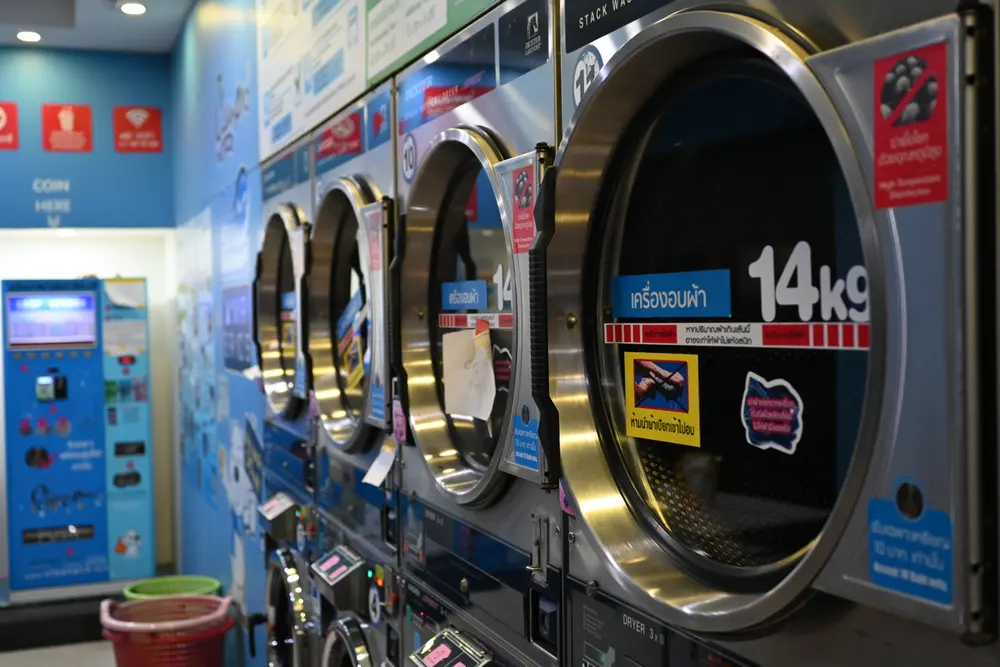 Photo: PattayaPatrol — CC BY-SA (wikimedia)
Entry / Value (under 13,000 baht)
- Haier HW80-BP12929A (8 kg) — an affordable front-load Inverter, perfect for condos/couples; quiet, efficient, with just-enough features. A great first front-loader.
- Toshiba TW-BH85S2T (7.5 kg) — a Direct Drive Inverter motor that's quiet and durable, with wave-wash tech for clean, water-saving washes; ideal for one person to a couple.
Mid-Range / Family (13,000–19,000 baht)
- Electrolux EWF9024D3WC (9 kg) — Eco Inverter with a high energy rating, Hygienic Care steam and a 1,200 rpm spin; its strength is hygiene and energy savings — great for a small, cleanliness-focused household.
- LG FV1412S2B (12 kg) — AI DD technology senses load weight/fabric and auto-adjusts the wash, with TurboWash for speed and Steam+ to cut allergens; a big capacity for families of 3–4 who want fabric care and speed.
- Beko WCV127P4DW (12 kg) — a Direct Drive motor spinning up to 1,400 rpm (the driest spin here — ideal for the rainy season), with Hygiene and Baby Care programs; great for homes with young kids or allergy sufferers.
- Samsung WW13T504DAB (13 kg) — large capacity with Wi-Fi app control and bubble tech that dissolves detergent into fabric even in cold water; suits big families with lots of laundry.
Washer-Dryer Combo / Premium (built for the rainy season)
- LG Washer Dryer (wash 10.5 / dry 7 kg) — wash and dry in one machine; ideal for condos or homes where clothes won't dry in the rainy season — no need to hang outside.
- Samsung/Electrolux Washer Dryer (wash 10–11 / dry 6–7 kg) — a premium option combining steam and built-in drying; pricier, but you get all-in-one convenience for tight spaces.
| Model | Capacity | Highlight | Approx. starting price |
|---|---|---|---|
| Haier HW80-BP12929A | 8 kg | Value, quiet, Inverter | ~10,000–12,000 baht |
| Toshiba TW-BH85S2T | 7.5 kg | Durable Direct Drive | ~11,000–13,000 baht |
| Electrolux EWF9024D3WC | 9 kg | Efficient + steam | ~15,990 baht |
| LG FV1412S2B | 12 kg | AI DD + TurboWash + Steam | ~18,140 baht |
| Beko WCV127P4DW | 12 kg | 1,400 rpm, driest spin | ~18,590 baht |
| Samsung WW13T504DAB | 13 kg | Large + Wi-Fi + bubble | ~17,000–20,000 baht |
| LG Washer Dryer | wash 10.5/dry 7 kg | Wash-dry in one | ~25,000 baht up |
| Premium washer-dryer | wash 10–11/dry 6–7 kg | Steam + all-in-one dry | ~28,000 baht up |
The True Lifetime Cost
The sticker price is just the start; the real cost is the whole picture:
- Electricity — an Inverter, label-5 machine washing cold runs about 1–2 baht per cycle. At 5 washes a week that's only about 20–40 baht a month.
- Water — front-loaders clearly use less water than top-loaders; frequent washers will see it in the water bill.
- Detergent — front-loaders need front-load (low-suds) detergent; using top-load detergent over-foams and washes poorly.
- Lifespan — a quality machine, cared for properly, lasts about 10–15 years, and Inverter/Direct Drive motors often carry a 10–20 year motor warranty (check each brand's terms).
- Service/parts — choose a brand with wide service coverage in Thailand for easy repairs and available parts.
Add it all up and a pricier Inverter front-loader is usually the better long-term value thanks to lower water/power bills and a longer life.
Install and Maintain It to "Survive the Rainy Season" Without Mould
 Photo: Ezarate — CC BY-SA (wikimedia)
The classic front-loader problem is musty smell and mould on the rubber door gasket — the sealed design traps moisture, especially in Thailand's humid rainy season. Prevent it easily:
- After every wash, leave the door open and pull out the detergent drawer to dry the inside.
- Wipe the rubber door gasket dry — water loves to pool in its folds.
- Once a month run a Tub Clean / drum-clean cycle, or use vinegar or a dedicated drum cleaner.
- Never leave wet laundry sitting in the drum overnight.
- Put the machine in a well-ventilated spot; if the laundry room is very damp, a dehumidifier helps, and if walls are starting to show damp/mould, see our guide to fixing home damp and mould.
Installation matters too: stand the machine on a level, solid floor (or it will shake and "walk" when spinning), always remove the transport bolts before first use (forgetting this is a top cause of damage), and route the drain hose at the height the manual specifies to prevent backflow.
Common Mistakes People Make Before Buying
- Oversizing the capacity "just in case" → wastes water and power every cycle and hogs space.
- Looking only at the sticker price, ignoring the energy label → cheap to buy, expensive every month.
- Forgetting to measure space and doorways → the machine won't fit through the door or into the room, a common condo problem; measure width, depth and height, and allow for the front door's swing.
- Not checking water pressure and the drain point → low-pressure homes may wash slowly or throw errors on some models.
- Buying a washer-dryer combo when you need to dry heavy loads daily → small, slow dry capacity that can't match a separate Heat Pump dryer long term.
- Using the wrong detergent (top-load formula in a front-loader) → over-foaming, poor washing, faster wear.
Verdict: Who Should Buy What
- Tight budget / condo / single or couple → Haier HW80 or Toshiba TW-BH85S2T at 7.5–8 kg — value and plenty for the job.
- Small household focused on hygiene/efficiency → Electrolux EWF9024 (9 kg, with steam and energy savings).
- Family of 3–4 wanting clean washes, fabric care and big capacity → LG FV1412S2B or Samsung WW13T504 (12–13 kg).
- Home with young kids / rainy-season need for drier laundry → Beko WCV127P4 with its 1,400 rpm spin.
- Tight space and clothes that won't dry in the rains → a washer-dryer combo, all in one machine.
The key is the right capacity + Inverter, label-5 + a high spin speed, then good maintenance — and you'll have a washer that cleans well, saves money, and lasts well over a decade, with no more musty laundry in the rainy season. The same Inverter + 5-star principle applies to choosing a refrigerator — another major appliance where the right model saves thousands of baht over 10 years.
Prices and models change quickly with promotions; compare specs and prices across several shops on the day you buy.
Sources
- Washing-machine buying guides + Thai model/price data for 2026 (productnation.co/th, my-best.com, top10.in.th)
- Model specs from manufacturers (Samsung Thailand, LG, Electrolux, Beko, Toshiba, Haier)
- Price and availability from retailers (Thai Watsadu, Global House)
Frequently asked questions
- Front-load or top-load — which should I choose in 2026?
- Front-loaders wash cleaner, use about 40–50% less water than top-loaders, spin clothes drier and are gentler on fabric — great if you want long-term water and energy savings and have space for a front door. Top-loaders are cheaper, let you add clothes mid-cycle easily and don't require bending, which suits a tighter budget and quick everyday washes.
- How much does a front-load washer cost to run per month?
- An Inverter, energy-label-5 machine washing in cold water uses about 0.2–0.5 kWh per cycle — roughly 1–2 baht per cycle. At 5 washes a week that's about 20–40 baht a month. Hot-water or sanitise programs cost several times more because they heat water (as of June 2026).
- My front-load washer smells musty and grows mould — how do I fix it?
- Leave the door and detergent drawer open to dry after every wash, wipe the rubber door gasket dry, run a Tub Clean cycle (or use vinegar/a dedicated drum cleaner) once a month, and never leave wet laundry sitting in the drum — especially in Thailand's humid rainy season.
- Is a washer-dryer combo worth it in the rainy season?
- Yes if space is tight and clothes won't dry — you get washing and drying in one machine without buying two. But the dry capacity is about half the wash capacity, drying is slower, and it uses more power than a separate Heat Pump dryer. If you need to dry loads often, a separate dryer is more cost-effective long term.
- What capacity (kg) suits my family?
- Single/condo: 7–8 kg; couple or 2–3 people: 9–10.5 kg; family of 3–4: 11–12 kg; large household or frequent blankets/duvets: 14 kg+. Pick the right size — don't oversize, as a bigger machine wastes water and power every cycle.
Related articles

Clothes dryer review 2026: Heat Pump vs Condenser — which is worth it
Clothes dryer review 2026 comparing Heat Pump, Condenser and Vented systems — energy savings, prices and capacity for Thailand's rainy season.

Best dehumidifier 2026: ranked by use case + how to choose
A 2026 dehumidifier ranking by use case and budget, plus how to choose — capacity (litres/day) by room size, compressor vs desiccant — ideal for Thailand's rainy season.

10 Best Refrigerators 2026 — Samsung, LG, Hitachi: Which Is Worth It?
Compare the 10 best Inverter refrigerators in Thailand 2026, from ฿7,000 to ฿28,000 — capacity guide, energy label tips and real electricity costs.