AIS vs True vs NT 2026: Which Thai Mobile Network Should You Pick?

If your mobile data is too slow for work, calls keep dropping at the worst moment, or you're thinking about switching carriers but don't know which one to pick, this article covers it all: how AIS, True (now including dtac) and NT actually differ, real package prices, speed and coverage, how to choose based on your own usage, and the step-by-step for switching carriers without losing your number.
Thailand's mobile market in 2026 — the overview
Now that the True–dtac merger is fully complete, Thailand's mobile market really comes down to two major carriers plus one state-owned option:
- AIS — the No. 1 carrier by subscriber count (around 45.7 million lines) and the repeat champion for speed in Ookla Speedtest awards
- True — after absorbing dtac, has the most subscribers overall (around 48.5 million lines) and the widest coverage area in the country
- NT (National Telecom) — a state enterprise formed from the merger of TOT and CAT, sold under the "my by NT" brand, focused on low prices and low-band 700MHz towers that reach remote areas well
As for dtac, in 2026 the brand name still shows up on some packages and in stores, but underneath it all runs on the same network as True now. Former dtac customers share True's towers and spectrum — when comparing network quality, think of these two brands as one and the same.
 Photo: Da Chakrapan — CC0 (wordpress)
Head-to-head comparison table: AIS vs True vs NT
| Category | AIS | True (incl. dtac) | NT (my by NT) |
|---|---|---|---|
| Subscribers | ~45.7 million lines | ~48.5 million lines | Low millions (smallest) |
| Average 5G speed | ~177 Mbps nationwide, ~100-105 Mbps in Bangkok | ~70 Mbps average | Clearly behind the big two |
| 5G coverage | 85–95% | 93%+ (widest after the dtac merger) | Focused on 4G/700MHz rural |
| Strength | Fastest, most consistent in cities | Widest coverage overall | Cheapest by 2–3x |
| Weakness | Highest package prices | Average speed trails AIS | City/high-rise signal isn't as solid |
| Best for | City dwellers, gamers, streamers who want top speed | Frequent travellers who want the widest reach | Backup/data-only SIM on a budget |
How to read this table: the speed/coverage figures are national averages from Ookla Speedtest — if your home or workplace happens to sit in a weak-signal spot for a given carrier, this average won't reflect what you'll actually experience. The more reliable method is to borrow a friend's or neighbour's SIM on the carrier you're considering and test it at your own home and workplace before committing to a permanent switch.
A closer look at each carrier
AIS — fastest, but you pay more for it
AIS holds the Best Mobile Network and Best 5G Network titles from Ookla Speedtest across multiple consecutive rounds, with an average 5G download speed of around 177 Mbps nationwide, and roughly 100-105 Mbps measured in Bangkok — plenty for multiple 4K streams at once or real-time online gaming without a hitch.
AIS's real strength is consistency — it's not just fast in a benchmark, the speed doesn't collapse during peak hours when everyone's online at once, a problem many networks hit in the evening or right after work. The trade-off is package prices that usually run higher than competitors at the same GB tier.
True (incl. dtac) — the widest coverage
After fully merging with dtac, True became the carrier with the most subscribers in the country and the widest 5G coverage area (93%+), because it combined both brands' former towers and spectrum into one network — closing many of the dead zones each brand used to have on its own.
True's average speed sits around 70 Mbps, lower than AIS, but in practice that's still enough for everyday use (HD video, social media, video calls). Where True clearly has the edge is in upcountry areas and travel routes between cities, since its towers are spread more evenly after combining both former networks.
NT (my by NT) — cheapest, at the cost of consistency
NT is the option for anyone genuinely looking for the cheapest real unlimited data. Monthly plans start at just 200 THB for unlimited data with no throttling at 15 Mbps — 2–3 times cheaper than an equivalent AIS/True plan. It's a great fit as a backup SIM, a SIM for a security camera or portable router, or for a home with no fibre internet.
The weak point is tower density in big cities and high-rises, which still can't match the big two (even with 2026's added 5G towers). But in rural areas that rely on low-band 700MHz spectrum, NT can actually reach further in some spots, since low-frequency waves punch through obstacles over a longer range.
5G coverage by region
The "85–95%" or "93%+" figures in the comparison table are national averages, but the reality varies a lot by region:
- Bangkok and its suburbs: both AIS and True cover almost 100% 5G already. The real difference is speed and tower density inside high-rises and shopping malls, where AIS tends to edge ahead slightly based on test results.
- Major regional cities (Chiang Mai, Phuket, Khon Kaen, Pattaya): both carriers cover 5G well, since these are key tourism/economic areas that get tower investment ahead of everywhere else.
- Secondary districts/rural areas: True tends to have the edge on breadth of 4G/5G signal, since it folded in dtac's former towers. NT's low-band 700MHz spectrum, while not as fast as high-band 5G, punches through forests and obstacles further, giving it signal in some spots the big two still haven't reached.
- Small islands/genuinely remote areas (small islands, deep national parks): every carrier may only offer 2G/3G or no signal at all in certain spots — check each carrier's official coverage map before travelling somewhere unfamiliar.
Tip: check signal before you travel. Both AIS and True publish coverage maps on their official websites — enter your destination's name or coordinates before heading to a remote area to get a sense of what signal level to expect.
Perks and add-ons bundled with postpaid plans
Beyond data and calls, the big carriers' postpaid plans often bundle perks with real value if you already use those services:
- True Super Netflix / Super Streaming: bundles Netflix, Viu, or Disney+ Hotstar access into the monthly plan — the streaming value on some packages exceeds the cost of subscribing separately, if you already watch regularly.
- AIS Super Combo / AIS Points: a points system redeemable for partner-store discounts, movie tickets, or extra data — real value depends on how often you use AIS's partner stores.
- AIS Super WiFi / True WiFi: free unlimited Wi-Fi at hotspots the carrier has installed (malls, BTS/MRT stations, some coffee chains) — can save a decent chunk of mobile data if you spend your day in the city.
Word of caution: don't pick a plan for the perks alone if you don't actually use that service — work backwards and check whether the price per GB still holds up once you strip out the freebie, compared with a plan that skips the bonus.
Postpaid monthly package prices, 2026
| Package | Carrier | Price/month | Data before throttle | Speed after quota | Free calls |
|---|---|---|---|---|---|
| 5G Easy Pack 399 | AIS | 399 THB | 20GB | 1 Mbps | 100 minutes |
| 5G Max Experience (mid) | AIS | 499–599 THB | Varies by plan | 4 Mbps | Varies by plan |
| 5G Super Talk 699 | True | 699 THB | 10GB | 1 Mbps | 1,000 min, all networks |
| 5G Super Talk 899 | True | 899 THB | 20GB | 1 Mbps | 1,200 min, all networks |
| my 5G เน็ตถูกใจ | NT | 200 THB | Unlimited @ 15 Mbps | No throttle | 60 min, all networks |
Worth noting: the more expensive the plan, the higher the throttled speed after you use up your quota tends to be (from 1 Mbps up to 4-6 Mbps). This matters a lot if you regularly go over quota, because 1 Mbps can barely load a high-resolution video at all, while 4-6 Mbps can still handle smooth HD playback.
Prepaid / annual SIMs worth considering
For anyone who doesn't want to commit to a monthly contract, or wants to pay one lump sum and be done for the year:
| Package | Carrier | Price | Duration | Avg./month | Data/month |
|---|---|---|---|---|---|
| Max Speed | True | 1,970 THB | 1 year | ~164 THB | 30GB full speed |
| Fast 70 | True | 1,999 THB | 1 year | ~166 THB | 100GB @ 15 Mbps |
| GOMO | AIS | 699 THB | 1 year | ~58 THB | 110GB/year full 5G speed |
| Turbo X | dtac (True) | 1,970 THB | 1 year | ~164 THB | Unlimited @ a steady 100 Mbps |
| my 5G เน็ตสุขใจ | NT | 1,590–1,890 THB | 1 year | ~133–158 THB | Unlimited 15–30 Mbps |
Why annual SIMs are cheaper: worked out as a monthly average, every carrier's annual SIM undercuts its equivalent monthly plan clearly (some by half). That's because the provider gets a lump sum upfront and passes on a discount in exchange. The downside: if you change your mind and want to switch carriers mid-year, the money you already paid usually isn't refunded.
 Photo: PattayaPatrol — CC BY-SA (wikimedia)
Does eSIM work? How do you sign up?
By 2026 all three carriers support eSIM (a digital SIM with no physical card to insert) on phones that support it (iPhone XS and later, mid-to-high-end Samsung Galaxy models from 2020 onward, Google Pixel):
- eSIM advantages: in some cases you can sign up for a new line or switch carriers straight from an app without visiting a store, it activates immediately with no waiting for a SIM to arrive by post, and phones that support dual eSIM can hold both a main and backup line without needing a dual-slot tray.
- Limitations: porting an existing number (MNP) onto an eSIM still mostly requires identity verification at a service centre or authorized dealer, just like a physical SIM (it isn't always fully doable through an app), and switching to a new phone means transferring the eSIM over again each time — unlike a physical SIM, which you can just pop out and move.
- Fees: mostly free, or a small charge of a few tens of baht to convert to eSIM, same as a physical SIM.
If your phone supports eSIM and you don't want to carry a second physical SIM, eSIM is a convenient way to run two numbers on one device.
Working out your real cost by usage pattern
The sticker price of a plan alone can't tell you who's actually the better deal — you need to factor in your own real usage pattern. Roughly split into three groups:
| User type | Approx. data/month | Behaviour | Fitting plan |
|---|---|---|---|
| Light | 5–15GB | Chat, social media, email, rarely watches video | NT's 200 THB plan, or an AIS/True entry-level plan |
| Medium | 15–40GB | Watches YouTube/TikTok regularly, frequent video calls | AIS 5G Max Experience 499–599 THB, or True Super Talk 699 |
| Heavy | 40GB+ | 4K streaming, online gaming, hotspot-sharing to other devices | A top-tier unlimited AIS/True plan, or a high-quota annual SIM |
How to figure out which group you're in: check your data usage stats over the last 3 months in your current carrier's app (or your phone's Settings → Mobile Data) and find your monthly average. If you regularly go over quota and get throttled every month, that's a clear sign to move up to a plan with a higher quota — even at a higher monthly price, since it still beats living with 1 Mbps that can barely do anything.
Choosing the right fit for your usage
- Office work in the city, frequent video calls: go with AIS — consistent speed cuts down on dropped Zoom/Teams calls and handles large file uploads quickly.
- Frequent upcountry travel, buses/trains: go with True — the widest coverage after the dtac merger reduces the odds of losing connection while travelling.
- Heavy online gaming/streaming: go with AIS on a high-speed plan — FPS/MOBA games need low ping and stable speed, where AIS scores best in test results.
- Tight budget, mostly data, rarely calling: go with NT — 200 THB/month for unlimited 15 Mbps is the best deal if you don't need top speed.
- Backup SIM/portable router/security camera: go with an NT annual or monthly plan — these devices don't need top speed, just a connection that doesn't drop.
- Living rurally/in a remote area: try NT first, since its low-band 700MHz spectrum punches through obstacles further, but if you're unsure, borrow a neighbour's SIM to test before switching permanently.
How to switch carriers and keep your number (MNP)
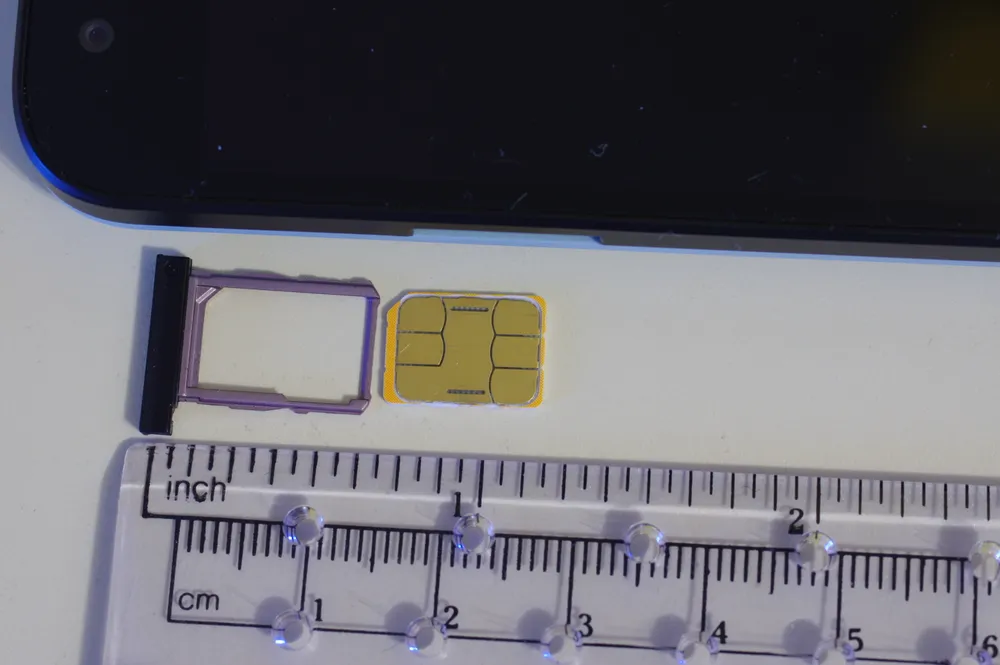 Photo: BwDraco — CC BY-SA (wikimedia)
- Check whether you're still under contract — if you're still paying off a phone or under a plan contract, there may be an early-termination fee; call your current carrier to check first.
- Bring your original ID card — needed to verify your identity at the new carrier's service centre or authorized dealer.
- Go to a service centre or authorized dealer of the carrier you're switching to, and state that you want to "port your existing number" (not request a new number).
- Get your new SIM and wait for the confirmation SMS — processing normally takes under 3 hours per NBTC regulations (occasionally up to 1-3 business days if the queue is long).
- Insert the new SIM once you get the confirmation SMS — your existing number works immediately on the new network; there's no need to tell anyone your number changed.
The new carrier charges no switching fee — it's a service NBTC requires every carrier to offer for free. The only costs that might come up are an early-termination penalty from your old carrier (if applicable) and the cost of a new SIM card (usually a few tens of baht, or free during a promotion).
Common mistakes people make when choosing or switching
- Trusting top-speed marketing without checking real coverage — "fastest" numbers are usually measured in ideal conditions, not inside a high-rise or a crowded area. Test a friend's SIM at your home/workplace before deciding.
- Buying an annual SIM then wanting to cancel partway through — the money paid usually isn't refunded in cash (some carriers may convert it to remaining credit); be sure before committing to an annual SIM.
- Forgetting to check that your phone supports the new carrier's spectrum bands — some older phones (especially ones bought overseas) may not support certain 5G bands Thai carriers use, leaving you stuck on 4G even while paying for a 5G plan.
- Not checking how often you actually go over quota — if you go over every month and end up stuck at an unusable 1 Mbps, it may actually be cheaper to move up a tier that gives a higher throttled speed after the quota runs out.
- Overlooking a backup SIM — carrying a cheap backup SIM (like NT) as a second line in a dual-SIM phone insures against dropped connections for just a few hundred baht a month — cheap insurance against losing something important to a dead connection.
Hidden costs people often forget to budget for
Beyond the monthly package price, there are costs many people forget to factor in:
- Extra data add-ons when you go over quota — if you don't want to live with 1 Mbps after your quota runs out, buying daily/monthly data top-ups can add another 50-200 THB a month, which if it happens every month may be cheaper to solve by moving to a plan with a higher quota from the start.
- Early-termination penalties — monthly plans bundled with a phone usually carry a 12-24 month contract; cancelling early comes with a penalty proportional to the time remaining.
- International roaming — if you travel often, a dedicated travel SIM like AIS SIM2Fly (from 229 THB) or True/dtac GO Travel SIM (from 399 THB) is usually far cheaper than turning on daily roaming from your main SIM.
- SIM/number-change fees — usually free or a few tens of baht, but some promotions charge a fee — ask clearly before completing anything at a service centre.
Verdict: which carrier should you pick in 2026
No single carrier is "the best" for everyone — it depends on where you use your phone and how you use it:
- Pick AIS if you're in the city and want the fastest, most consistent speed, and don't mind paying slightly more than the competition.
- Pick True if you travel often and want the widest coverage area across the whole country.
- Pick NT if your budget is genuinely tight, or you need a cheap backup/data-only SIM.
Before committing to a permanent switch, always try borrowing a friend's or relative's SIM on the carrier you're considering and test the signal at your actual home and workplace — national averages tell you the general trend, but they don't guarantee what you'll experience at the specific spot you're in every day.
If you're also switching phones alongside your carrier, see our mid-range phone buying guide 2026, or if home internet is your main connection and you're looking to boost your Wi-Fi signal, check our Wi-Fi router buying guide 2026.
Sources
Frequently asked questions
- Which network is fastest — AIS, True, or NT?
- Ookla Speedtest data for 2026 shows AIS is fastest on average (5G around 177 Mbps nationwide, roughly 100-105 Mbps in Bangkok) and has repeatedly won Best Mobile Network awards. True, after merging with dtac, covers a wider area but averages a lower ~70 Mbps. For raw city speed AIS usually wins; for frequent upcountry/rural travel, check actual coverage since national averages don't guarantee what you'll get at your specific location.
- Does dtac still exist in 2026?
- The dtac brand name still appears on some packages and in stores, but the network has fully merged into True's infrastructure (the True–dtac merger). Former dtac customers now run on True's shared towers and spectrum. When comparing network quality, treat True and dtac as the same carrier.
- Will I lose my number if I switch carriers?
- No. Mobile Number Portability (MNP) is mandated by Thailand's NBTC regulator for every carrier. Your number stays the same — only the SIM changes. Processing normally takes under 3 hours (occasionally up to 3 business days if the queue is long), and the new carrier charges no switching fee.
- Prepaid vs postpaid — which should I choose?
- Prepaid needs no contract — you pay before you use, good for people who don't want to commit or need a backup/work SIM. Postpaid requires a credit check and a 12-month-plus contract, but usually gives a lower price per GB, unlimited free calls within the same network, and more perks (store discounts, streaming bundles).
- Who is NT (my by NT) best for?
- Best for people who want cheap unlimited data as a primary or backup SIM (200 THB/month gets you unlimited 15 Mbps with no throttling), especially if you mostly use data at home/work and don't travel much. If you travel often or live somewhere NT still has few towers, its stability won't match AIS/True.
- Is running two SIMs on two networks worth it?
- Worth it if you work or live somewhere one carrier's signal is weak but another's is strong — e.g. AIS as your main number for its strong city signal, plus a cheap NT SIM as a data backup. Nearly every modern phone supports dual SIM or eSIM + physical SIM at once, adding only a few hundred baht a month while greatly cutting the risk of dropped connections.
Related articles

10 Best Budget Smartphones to Buy in 2026: Smooth Screens, Big Batteries, Best Value
The 10 best budget smartphones of 2026 ranked by real value — from under 4,000 to 8,000 THB. Full specs, prices, pros and cons, and how to choose by budget.

iPhone 18 Series 2026: Price, Specs Before Sept 9 Launch
Every leak on the iPhone 18 Pro, Pro Max, and iPhone Fold before Apple's Sept 9 event: predicted Thailand pricing, the A20 chip, and buy-now-or-wait advice

iPhone 17 vs Samsung Galaxy S26 2026: Which Flagship Is Worth It
Full comparison of the iPhone 17 lineup vs Samsung Galaxy S26 series: Thailand pricing, display, chip, camera, battery, AI, and which resells for more.