10 Best Waterproof Rain Boots 2026 in Thailand for Floods & Rainy Season
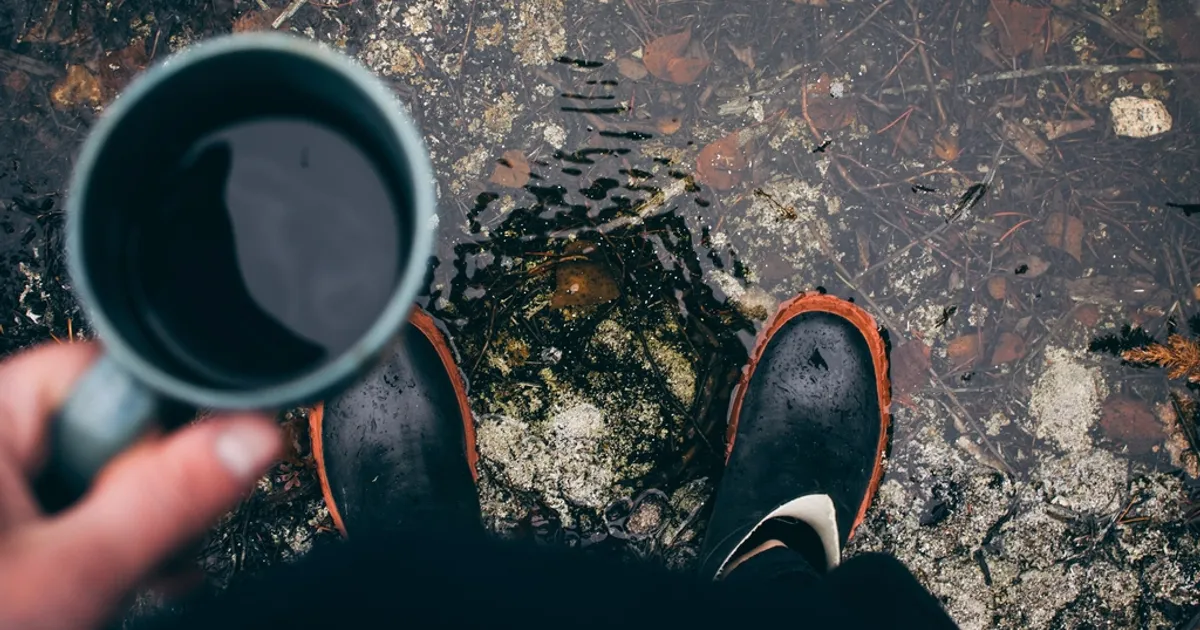
Heavy rain for days on end, standing water pooling in the soi, some streets turning into temporary canals — and the question everyone eventually asks is "what do I actually wear to wade through this without soaking my feet, slipping, or risking an infection?" Sneakers and sandals simply don't cut it. What you need is a proper pair of waterproof rain boots, matched to how you'll actually use them.
This guide rounds up the 10 best waterproof rain boots actually available in Thailand in 2026 — from light, comfortable everyday pairs starting around a hundred baht, up to internationally-certified steel-toe safety boots for heavy work. You'll get a full price/spec/height comparison table, a sizing chart, care tips, and the medical reasoning behind Thailand's yearly public health reminder to "always wear boots when wading through water." Read this once and you'll have everything you need to buy with confidence.
What to Look For in Waterproof Rain Boots
Before the rankings, here are the 5 key variables that determine which boot is actually right for your situation.
Material: PVC vs EVA Foam
PVC (Polyvinyl Chloride) is the standard material for most rubber boots on the market. It's seamlessly molded, so it's 100% waterproof, resists abrasion well, holds up reasonably against chemicals/oil, and is cheap. The downside: it's noticeably heavier and stiffer than EVA, so your legs tire faster on long walks.
EVA foam (Ethylene-vinyl acetate) is clearly lighter than PVC — some models nearly half the weight — and softer, so it's more comfortable for standing or walking all day. But it holds up worse against chemicals and abrasion, and isn't suited to heavy work or sharp debris.
Simple rule: flooding / gardening / heavy work often → choose PVC. Walking around in daily life without heavy wear → choose EVA.
Boot Height
- 6–7 inches (ankle): enough for shallow puddles, gardening, washing the car/dishes, or casual Chelsea-boot styling
- 12–13 inches (calf-high): the standard for general flood wading, farming/fishing work, comfortably handling water up to calf level
- 14–15 inches (knee-high or close to it): necessary if you need to wade through water at knee level or above, or work in constantly muddy/wet conditions
The taller the boot, the more water it keeps out — but also the heavier and bulkier it becomes. Match the height to the actual water level you regularly encounter; don't buy taller than you need.
Non-Slip Sole
A wet or muddy road surface is the #1 slip risk. Look for boots with deep, clearly patterned lug soles rather than a flat sole. Deeper, wider grooves push water/mud away from underfoot more effectively and grip more securely.
Do You Need a Steel Toe?
Steel-toe boots protect against heavy falling objects or sharp debris puncturing the sole — necessary specifically for construction, factories, warehouses, or areas with hazardous debris. If you're only using them for wading through home floodwater or walking in the rain generally, you don't need a steel-toe model — they're heavier, pricier, and more cumbersome to walk in for no added benefit in that context.
Budget
Thailand's waterproof rain boot market splits into 3 clear price tiers: 149–250 baht (basic PVC/EVA, general flood/garden use) · 250–500 baht (better quality, more durable, some starting to include steel toes) · 500–700+ baht (internationally-certified safety boots for heavy work/industrial use)
Ranking the 10 Best Waterproof Rain Boots for 2026
Ranked for general users (flood wading / home use) first, followed by specialized/industrial-use picks toward the end of the list. Prices are reference prices from online retailers as of August 2026 and may vary slightly by channel and promotion.
#1: Knee-High PVC All-Purpose Boot — Best Overall for Flood Wading
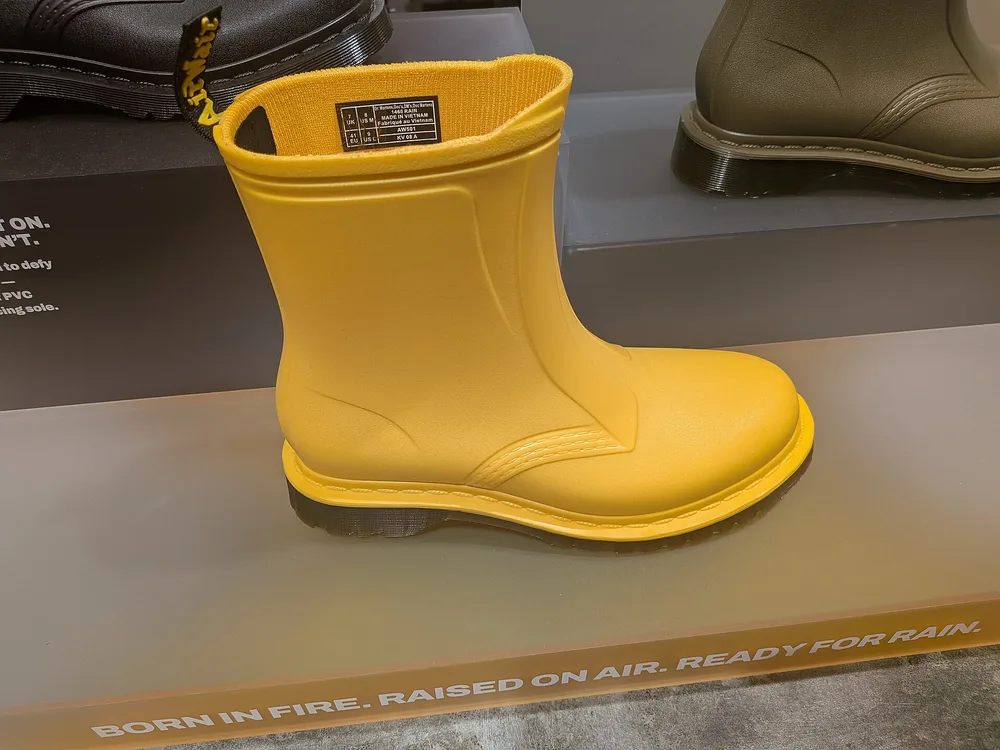 Photo: Cory Doctorow — CC BY-SA 4.0 (Wikimedia Commons)
Example model: Ohyama Farm B.002 — around 252 baht
Key specs: Thick PVC material, 12-inch height, soft inner lining, lightweight relative to material thickness, excellent water/mud protection, sizes 37.5–43.5 EU
Pros: Comfortable for all-day wear, thick durable material, waterproof across the full 12-inch height, suited to both flood wading and farm work
Cons: Available sizes are narrower than other entries on this list (37.5–43.5 EU), so people with very small or large feet may not find a good fit
Best for: Anyone who needs to wade through standing floodwater at home, walk to work in heavy rain, or garden/water plants regularly — if you're buying just one pair of rain boots to cover every situation, this is the most versatile shape.
#2: Lightweight EVA Foam Boot — Lightest on This List
Example model: Hello Polo HP8029 — around 193 baht
Key specs: Ultra-lightweight EVA foam, breathable cotton lining, thick non-slip sole, easy to clean, sizes 36–41 EU
Pros: Noticeably lighter than typical PVC boots (some models nearly half the weight), better ventilation, comfortable for all-day walking without leg fatigue, good for outdoor activities involving a lot of walking
Cons: Less durable than PVC under heavy work or rough surfaces; shorter lifespan with frequent daily use
Best for: Anyone who needs to stand or walk for long periods while wearing boots — like market vendors during rainy season, or anyone who finds PVC boots too heavy and tiring on the legs.
#3: Short Chelsea-Style Casual Boot — Stylish Enough for Work or School
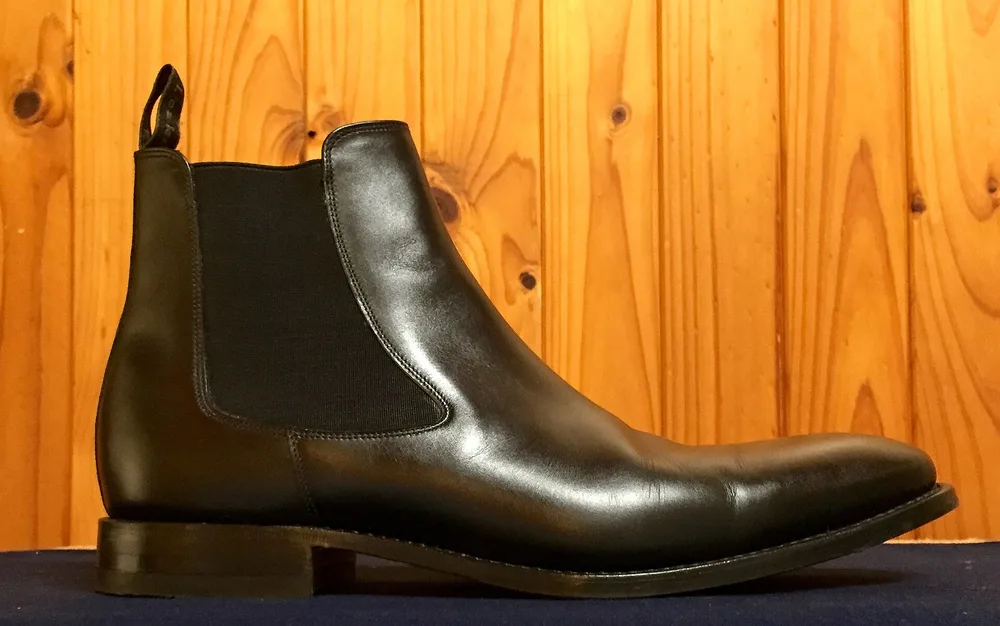 Photo: Reinthal — CC BY-SA 4.0 (Wikimedia Commons)
Example model: Marco Rocco MR8024 — around 192 baht
Key specs: EVA material, Chelsea boot shape (7-inch ankle height), elastic side panels for easy on/off, non-slip sole, sizes 36–46 EU (the widest size range among casual boots in this list)
Pros: Clean, stylish design that doesn't scream "rain boot," convenient elastic-panel on/off, budget-friendly price
Cons: Only 7 inches tall, so it only protects against shallow standing water — not suited to flood levels at calf height or above
Best for: Office workers or students who need to walk through rain to get to work/school but don't face deep standing floodwater, and want boots presentable enough to wear at their desk without changing shoes.
#4: Cheapest PVC Boot — Best Value for Basic Use
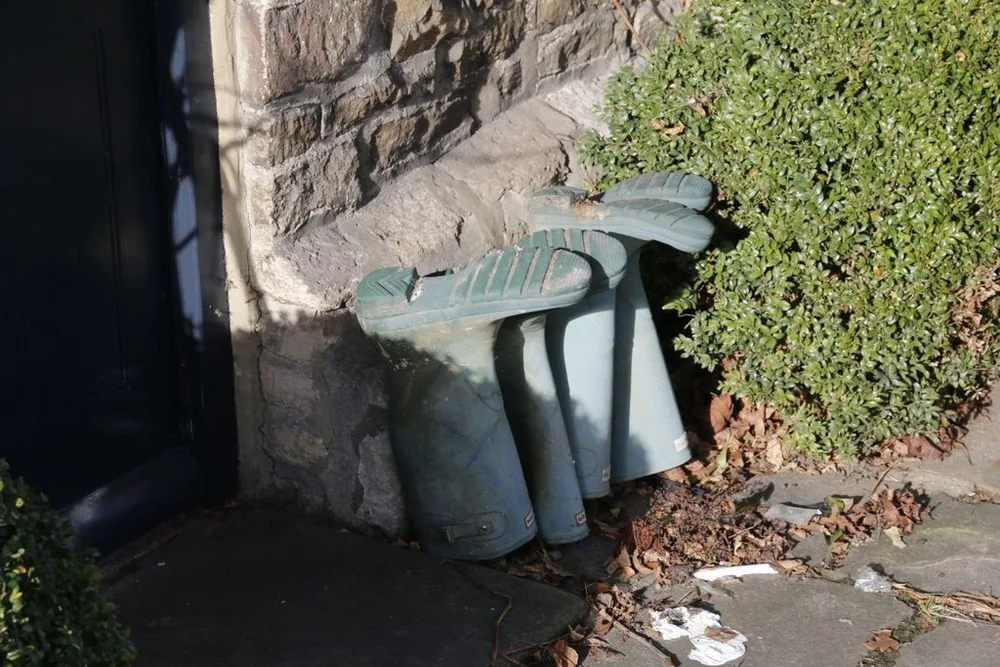 Photo: Bill Nicholls — CC BY-SA 2.0 (Wikimedia Commons)
Example model: PIPES — around 149 baht
Key specs: PVC material, 12-inch height, simple no-frills shape built for practical use, suited to general household chores and light mud/water wading
Pros: The cheapest option on this list, still 100% waterproof, good as a spare pair for every household member without feeling like a splurge for occasional use
Cons: Available sizes tend to be more limited than pricier models (always check available sizes before ordering); thinner material; shorter lifespan under heavy use
Best for: Households wanting several spare pairs on a budget, or anyone who just wants a pair on hand for emergencies without frequent use.
#5: Odor-Resistant Farm/Fishing Boot
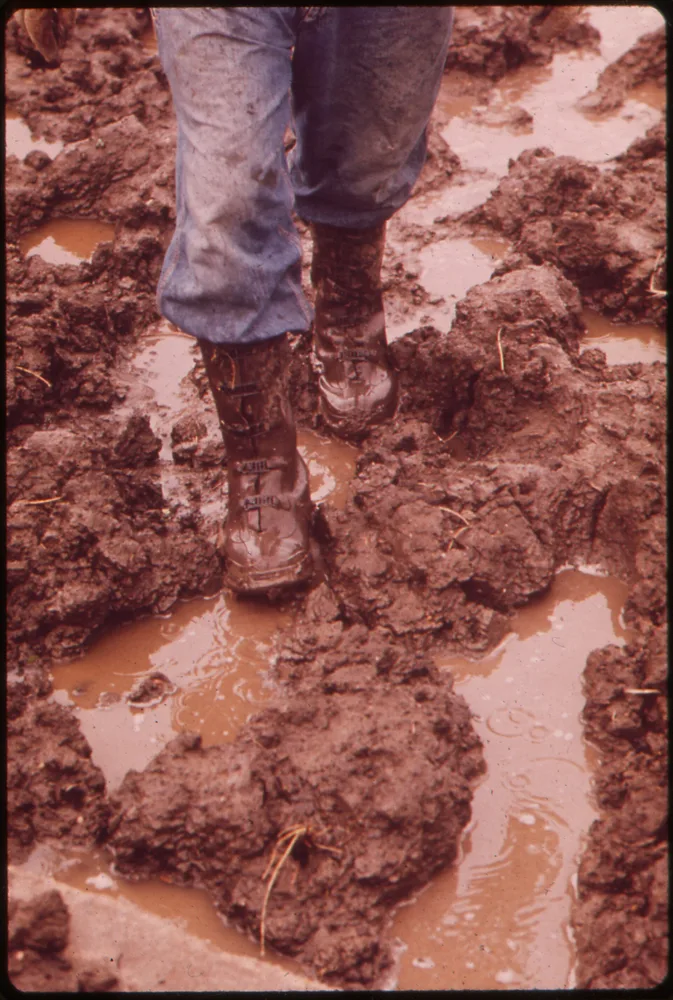 Photo: Charles O'Rear — Public domain (Wikimedia Commons)
Example model: Red Apple SK3000 — around 239 baht
Key specs: Single-piece seamless-molded PVC, 13-inch height, deep lug sole, non-absorbent material, easy to clean
Pros: Reduces built-up odor better than typical models since the material doesn't absorb moisture/smell; well-suited to work that means standing in water/mud continuously for hours
Cons: Utility-first design, not meant for casual wear outside a work setting
Best for: Farmers, fishers, or anyone who needs to stand in water/mud continuously all day and wants boots that won't come back smelling bad when stored for the next day.
#6: Chemical/Oil-Resistant Easy-Off Boot
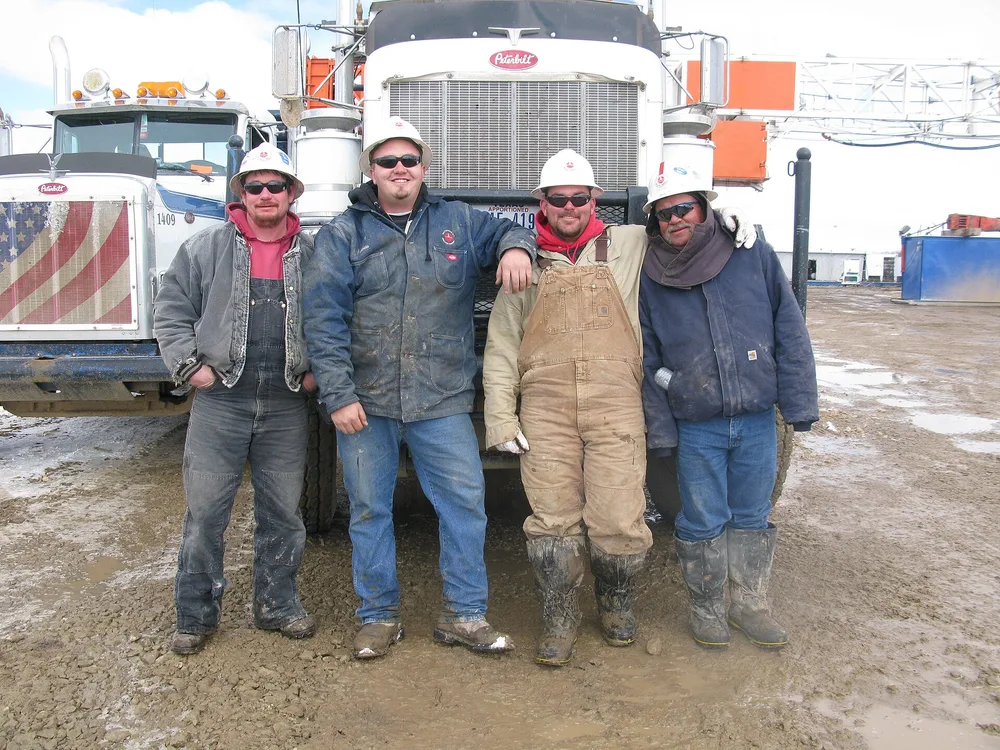 Photo: National Institute for Occupational Safety and Health (NIOSH) — Public domain (Wikimedia Commons)
Example model: Bowling B4250 — around 210 baht
Key specs: PVC material, 12-inch height, "Extra Heel Notch" design (a notch at the heel that lets you remove the boot with your other foot), basic oil/chemical resistance, insulating lining
Pros: Can be removed hands-free, convenient when your feet are wet or your hands are full; better oil and chemical resistance than basic models
Cons: The heel notch makes that part of the structure slightly thinner than the rest, so it's not ideal for work involving heavy heel impacts
Best for: Auto mechanics, car-wash workers, or anyone who takes boots on and off frequently during the day and wants this specific convenience.
#7: Entry-Level Steel-Toe Boot — Most Accessible in the Safety-Boot Group
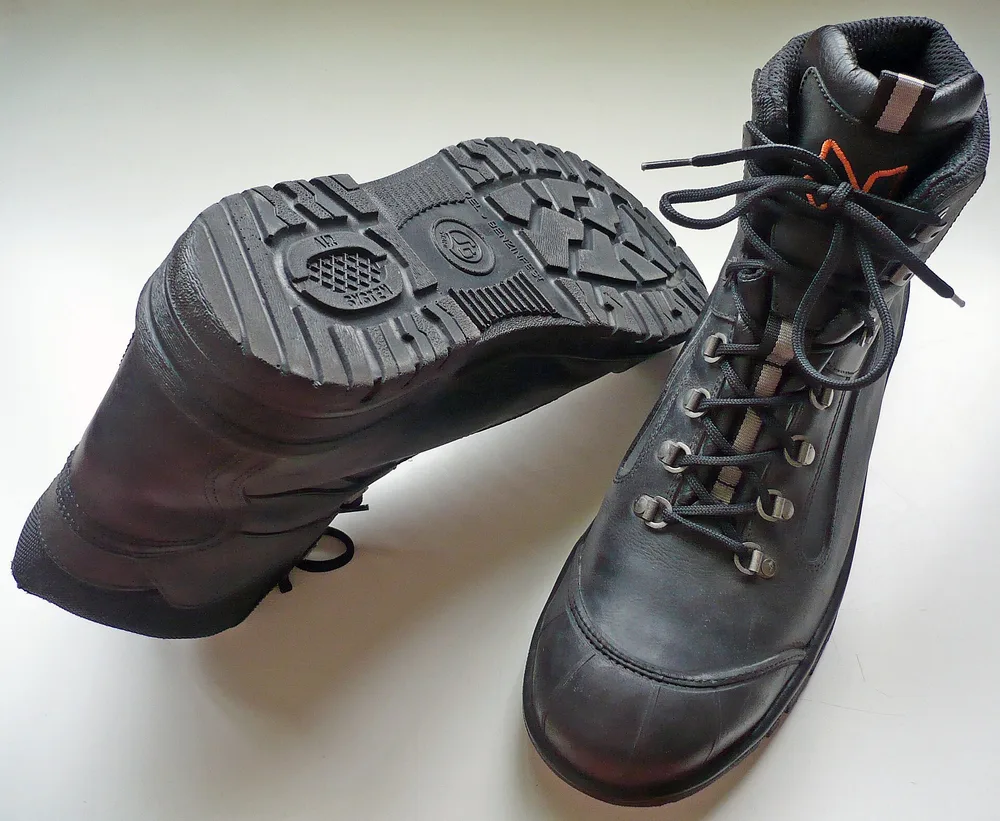 Photo: Francis Flinch — CC BY 3.0 (Wikimedia Commons)
Example model: PANGOLIN — around 499 baht
Key specs: PVC material, 14-inch height, steel toe for impact protection, thick chemical/slip-resistant sole, nylon lining, sizes 38–48 EU (the widest size range among steel-toe boots)
Pros: The most accessible price in the steel-toe group; very wide size range up to 48 EU for larger feet; added antibacterial properties
Cons: Doesn't clearly state an international safety standard (like S5/EN ISO 20345) the way pricier models do; better suited to general work than job sites requiring certified documentation
Best for: Work needing basic steel-toe protection without requiring international certification, such as general maintenance work or farm/garden work with some risk of heavy objects falling on the foot.
#8: High Chemical-Resistance Safety Boot — Reinforced Heel and Toe
Example model: Rocc by Synos — around 390 baht
Key specs: PVC + Nitrile material, 14-inch height, steel toe, extra reinforcement at heel and toe, chemical/oil-resistant patterned sole, sizes 36–47 EU
Pros: The Nitrile blend improves chemical and oil resistance over pure PVC; the reinforced heel and toe extend lifespan at the points that wear out fastest
Cons: Noticeably pricier than basic steel-toe models; best suited to work that genuinely involves chemical/oil contact rather than general use
Best for: Workers at chemical plants, gas stations, or factories who regularly walk on oil- or chemical-stained floors.
#9: Fully-Featured Safety Boot — Cold Resistance, Reflective Strip
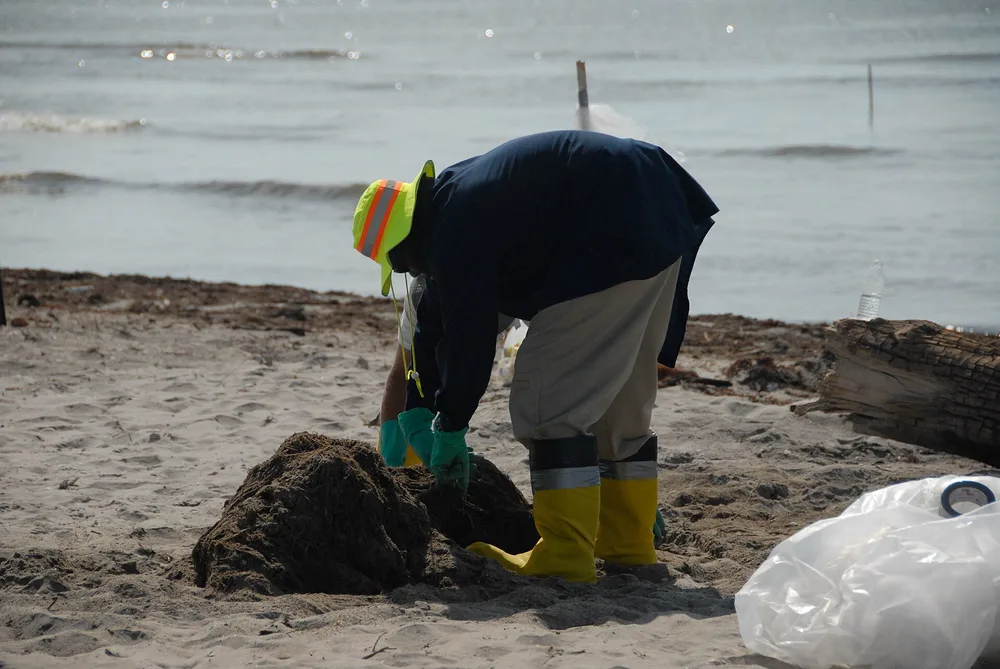 Photo: National Institute for Occupational Safety and Health (NIOSH) — Public domain (Wikimedia Commons)
Example model: YAMADA Water Guard — around 576 baht
Key specs: Seamlessly molded PVC, 14-inch height, steel toe and steel midsole, chemical/corrosion resistant, usable across a temperature range of -30 to 50°C, reflective strip for low-light safety
Pros: The most fully-featured on this list; very wide usable temperature range (also suited to cold rooms/freezers); the reflective strip adds visibility for night work or low-light conditions
Cons: Priced nearly as high as the S5 SRA standard boot, but its certification is the brand's own specialty claim rather than an international EN ISO standard
Best for: Work in cold rooms/freezers, food processing plants, or night-shift work sites that need both steel-toe protection and safety visibility.
#10: International S5 SRA Standard Safety Boot — Top of the List
Example model: Safety Jogger HERCULES — around 690 baht
Key specs: PVC sole and upper, steel toe and steel puncture-resistant plate, fabric lining, certified to the international S5 SRA standard (EN ISO 20345:2011 / ASTM F2413:2018), anti-static, impact-absorbing, slip-resistant, puncture-resistant, suited to standing water, rice paddies, and muddy ground
Pros: The only model on this list with clear international dual certification (both EN ISO and ASTM), covering every core safety feature (steel toe, puncture plate, anti-static, slip resistance) — suited to job sites requiring certified documentation
Cons: The highest price on this list; noticeably heavier than ordinary boots due to the full safety structure; not suited if you just need boots for general flood wading
Best for: Construction sites, industrial factories, or any workplace where an employer or safety regulation requires internationally-certified safety footwear with documentation.
Full Spec & Price Comparison Table
| Rank | Type | Example model | Approx. price | Material | Height | Steel toe |
|---|---|---|---|---|---|---|
| 1 | Knee-high PVC all-purpose | Ohyama Farm B.002 | 252 THB | PVC | 12 in | No |
| 2 | Lightweight EVA foam | Hello Polo HP8029 | 193 THB | EVA | ~7 in | No |
| 3 | Short Chelsea-style | Marco Rocco MR8024 | 192 THB | EVA | 7 in | No |
| 4 | Cheapest PVC | PIPES | 149 THB | PVC | 12 in | No |
| 5 | Odor-resistant farm/fishing | Red Apple SK3000 | 239 THB | PVC | 13 in | No |
| 6 | Chemical/oil-resistant | Bowling B4250 | 210 THB | PVC | 12 in | No |
| 7 | Entry-level steel toe | PANGOLIN | 499 THB | PVC | 14 in | Yes |
| 8 | High chemical resistance | Rocc by Synos | 390 THB | PVC + Nitrile | 14 in | Yes |
| 9 | Fully-featured safety | YAMADA Water Guard | 576 THB | PVC | 14 in | Yes |
| 10 | International S5 SRA | Safety Jogger HERCULES | 690 THB | PVC | ~15 in | Yes |
Choosing by Budget and Use Case
Budget 150–250 baht, home/general flood use: Pick #1 (Ohyama Farm B.002) or #4 (PIPES) — covers the basics without paying extra.
Walking to work/school in the rain, want boots that look decent: #3 (Marco Rocco MR8024), the Chelsea shape you can wear right at your desk.
Standing/walking all day in boots: #2 (Hello Polo HP8029), noticeably lighter EVA material to reduce leg fatigue.
Farmers/fishers standing in water-mud for long stretches: #5 (Red Apple SK3000), better odor resistance, holds up under continuous use.
Mechanics/anyone taking boots on and off frequently: #6 (Bowling B4250), heel-notch design for easy removal.
General construction/factory work on a modest budget: #7 (PANGOLIN), steel toe at an accessible price.
Regular exposure to chemicals/oil: #8 (Rocc by Synos).
Cold-room or night-shift work: #9 (YAMADA Water Guard), wide temperature range with a reflective strip.
Job sites requiring international certification: only #10 (Safety Jogger HERCULES) clearly carries S5 SRA / EN ISO 20345.
For more on preparing your home and commute for rainy season, see the flood preparedness checklist, and if you ride a motorcycle regularly, pair this with the motorcycle raincoat review — boots alone aren't enough if you're getting soaked head to toe.
Sizing Chart (EU-US-cm), Approximate
Most PVC/rubber boot sizing references the EU standard, but many Thai retailers also list a US size or foot length in centimeters. Use this table for a rough comparison before ordering (always double-check the specific store/brand's own size chart too, since it can be off by half a size).
| EU | US Men | US Women | Foot length (cm) |
|---|---|---|---|
| 36 | 4 | 6 | 22.5 |
| 37 | 5 | 6.5 | 23 |
| 38 | 5.5 | 7.5 | 23.5-24 |
| 39 | 6.5 | 8 | 24.5 |
| 40 | 7 | 9 | 25 |
| 41 | 8 | 9.5 | 25.5-26 |
| 42 | 8.5 | 10.5 | 26.5 |
| 43 | 9.5 | 11 | 27 |
| 44 | 10 | — | 27.5-28 |
| 45 | 11 | — | 28.5 |
| 46 | 11.5 | — | 29 |
How to measure your own foot: Stand on a sheet of A4 paper with your heel against the edge, then mark a line at the tip of your longest toe. Measure the distance from the edge to the line in centimeters and compare it to the table above. If you plan to wear thick socks or use the boots for all-day work, round up half a size.
Caring for Rain Boots So They Don't Crack Early
- Rinse immediately after use — don't let mud or dirt dry onto the boot. Rinse with clean water and a soft brush every time after use.
- Dry thoroughly before storing — crumpled newspaper inside helps absorb residual moisture. Air them out somewhere with good airflow before putting them away.
- Avoid direct sun and heat — PVC and rubber become brittle and crack much faster with direct sunlight or sustained heat exposure (e.g., stored near a water heater or in a very hot room).
- Store upright or hang them — avoid folding or compressing for long periods, since a repeated crease is always the first spot to crack.
- Keep talcum powder or baking soda inside while not in use to absorb moisture and reduce built-up odor.
- Check the sole periodically — if the tread has worn smooth and no longer grips well, replace the pair even if the rest of the material still looks fine, since the boot's core job is slip resistance, not just waterproofing.
Common Mistakes When Buying Waterproof Rain Boots
Buying the same size as your sneakers every time: PVC/rubber boots tend to run narrower and lack sneaker-like flex. If you plan to wear thick socks or use them for all-day work, consider going half a size up.
Choosing a height taller than you need: Many people buy knee-high boots when they only walk through shallow standing water at home, making walking hot and cumbersome for no reason. Match the height to the water level you actually encounter most often.
Overlooking the sole: Focusing only on waterproofing while ignoring the tread pattern. A flat or shallow-tread sole is a major slip risk on wet or mossy surfaces, especially on wet tile or concrete.
Storing boots while still wet or muddy: This builds up odor and degrades the material faster than it should.
Assuming waterproof boots = 100% disease protection: Boots significantly reduce the risk of infection through cuts on the feet, but an open wound on the leg/shin above the boot's edge is still exposed to dirty water. Always cover wounds completely before wading through water, no matter how tall your boots are.
Why Health Authorities Say to "Always Wear Boots When Wading Through Water"
Many people think of rain boots as just something to avoid getting dirty, but from a public-health standpoint they're a direct piece of disease-prevention equipment against illnesses that come with flooding/standing water. Thailand's Department of Disease Control, Ministry of Public Health, issues the same guidance every rainy/flood season: "wear boots, drink boiled water, avoid inhaling airborne soil dust." Two diseases are directly relevant here:
Leptospirosis spreads through skin wounds exposed to water or mud contaminated with animal urine (especially rats). In 2026, cumulative reported cases have already passed 2,000, with over 30 deaths (as of July 2026).
Melioidosis is contracted directly from bacteria in soil/water, and tends to be most severe in people with existing conditions aged 60 and older. From January 1 to July 8, 2026, cumulative cases reached 1,513, with 69 deaths — most of them farmers with regular direct soil/water exposure.
Both diseases are easily prevented by wearing boots every time you wade through water or mud, washing thoroughly with clean water and soap immediately after contact with water, and keeping wounds fully covered so they don't contact water directly — simple but important reasons why "waterproof boots" aren't just an optional purchase, but a genuine necessity in every household during rainy/flood season.
Verdict: Which Pair Should You Buy?
If you need just one pair for general household use, the Ohyama Farm B.002 (#1) is the most well-rounded pick — fully waterproof up to 12 inches, comfortable, and reasonably priced at 252 baht. If budget is genuinely tight, the PIPES (#4) at 149 baht still covers every core function. For anyone working on a construction site or factory that requires certified safety footwear, don't cut corners here — go with the Safety Jogger HERCULES (#10), the only model on this list with clear S5 SRA / EN ISO 20345 certification.
Whichever pair you choose, the most important thing is actually wearing it every time you wade through water — a purchase of a few hundred baht in exchange for meaningfully reducing your risk of leptospirosis and melioidosis, both of which can be fatal in severe cases, makes this one of the best-value essentials of rainy season.
Sources
Frequently asked questions
- What's the difference between a rain boot and regular waterproof shoes?
- Rain boots are made from a single piece of seamless PVC or rubber, so no water can get through even when fully submerged up to the boot's height. Regular 'waterproof' shoes (like water-resistant coated sneakers) only resist water temporarily — the coating is on fabric, so if submerged for a while or water rises above the shoe's edge, it will leak. For actual standing floodwater, only a PVC/rubber boot works.
- Do I need steel-toe boots if I'm just wading through floodwater at home?
- No. Steel-toe boots are designed to protect against heavy objects falling on your foot or sharp debris puncturing the sole in construction/factory settings. For wading through standing floodwater at home, a backyard garden, or walking to work in the rain, an ordinary PVC/EVA boot is enough — and much lighter and more comfortable. Steel toes only matter if you're walking through construction debris, nails, or working in a factory/job site.
- My feet smell bad after wearing rubber boots for a while — how do I fix it?
- The main cause is trapped moisture, since PVC/rubber doesn't breathe at all. Fixes: wear moisture-wicking socks (cotton or sweat-wicking synthetic) and change them if they get wet during the day; take the boots off and air them out immediately when you get home instead of storing them wet; keep talcum powder or baking soda inside the boots when not in use to absorb moisture and odor; and if possible, keep a spare pair to rotate so each pair fully dries before its next use.
- Should I buy my normal shoe size or go a size up?
- Go with your normal size, or up to half a size larger if you plan to wear thick socks or use the boots for all-day work. Boots that are too loose make walking unstable and cause blisters from friction, while boots that are too tight squeeze your toes and are hard to remove with wet feet. If ordering online, always check that specific store's size chart first, since EU/US sizing can vary slightly by brand.
- Are the cheapest rain boots (100–200 baht) worth it, or should I pay more?
- For occasional flood wading or home use, boots in the 150–250 baht range are enough and good value, since the core function (100% waterproof, non-slip) is the same across price points. The difference shows up in material thickness, durability under frequent use, and comfort over long wear. If you use boots for heavy daily work (farming, repair work, factory jobs), paying an extra 100–300 baht for a thicker sole, softer lining, and chemical/oil resistance pays off long-term because you won't need to replace them as often.
- How do I store PVC rubber boots so they don't crack?
- Rinse off mud/dirt with clean water after every use — don't let it dry caked on. Dry them thoroughly before storing (crumpled newspaper inside helps absorb residual moisture). Store in a shaded spot at normal room temperature — never in direct sun or near a heat source, since PVC and rubber become brittle and crack much faster with sustained heat exposure. Store upright or hang them rather than folding or compressing them for long periods, since a repeated crease is always the first place a boot cracks.
Related articles
10 Best Water Pumps for Flood Season Thailand 2026: What Not to Buy
10 best water pumps for Thailand's 2026 flood season, from ฿600 submersible pumps to ฿9,000+ petrol engines, with a price/power/flow comparison table and buying advice.
Thailand Flood Prep Checklist 2026: What to Do Before, During & After
Complete 2026 flood-preparedness checklist for Thailand: must-have gear and prices, home protection steps, emergency numbers, and whether insurance covers flood damage.

Dehumidifiers in Thailand 2026: what size, and the real running cost
How to size a dehumidifier to your room, compressor versus desiccant, and the monthly electricity cost — the number almost no review mentions and the one that changes the decision.