10 Best Water Pumps for Flood Season Thailand 2026: What Not to Buy

Heavy rain has been falling across the country for days, and the Thai Meteorological Department has been issuing flash-flood warnings almost weekly since early September 2026 — several northern and northeastern provinces have already flooded badly enough that the government is paying out relief funds. Once water starts pooling in your house or flowing down your soi, the question that follows immediately is: "how do I pump it out fastest, without the pump dying mid-job, and without risking electrocution?"
This article rounds up 10 water pumps you can actually buy in Thailand in 2026, from ฿600 submersible pumps to ฿10,000+ petrol engines, with a price/power/flow comparison table, buying advice matched to your budget and how bad your flooding gets, the electrical-safety rules you cannot skip, and how to maintain a pump so it survives for years. Finish reading and you should be able to buy with confidence — no need to look anything else up.
The situation right now (as of September 2026)
The Thai Meteorological Department issued a heavy-to-very-heavy rain warning for upper Thailand for September 6-7, 2026, with flash-flood and flash-mudslide risk along the Mekong basin, foothill areas, and low-lying land. The department's monthly outlook expects 60-80% area coverage of thunderstorms through the rest of September, meaning waterlogging and overflowing riverbanks remain a real possibility for several more rounds this month. The government has just paid flood relief of ฿9,000 per household to residents of Nan province — real damage is already happening in multiple areas.
A water pump is no longer a luxury item — it belongs in the same category as rain boots and an emergency kit. Better to have one on hand before the water arrives than to go shopping once every shop nearby is sold out because everyone rushed at once.
What to look for in a water pump
Before the ranking, here are the 5 variables that actually decide which pump is "right" for your home's flooding.
1. Electric vs petrol engine
This is the most important decision. Electric submersible pumps are cheaper, quieter, and easy to use, but completely useless if the power is cut or goes out — which almost always happens during a flood, whether from a safety shutoff by the utility or from flood-damaged lines. A petrol water pump doesn't rely on electricity at all — it works as long as it has fuel, making it far more dependable in a real crisis. The trade-off is a higher price, noise, and engine exhaust that needs good ventilation.
2. Flow rate (litres/minute), not just wattage
Many people only look at "watts" and assume more is always better, but the number that actually tells you how fast a pump clears water is the flow rate, measured in litres/minute or m³/hr. Two pumps with identical wattage from different brands can have flow rates that differ by up to 2x, depending on impeller design. If your flooding is heavy, a higher flow rate matters more than lower wattage.
3. Head (discharge distance/height)
This is the maximum distance (vertical + horizontal combined) a pump can push water. If you need to pump water over a fence or up to higher ground, choose a pump rated for enough head — the further/higher water is pushed, the more pressure drops, and the real-world flow rate will be lower than the spec sheet number measured at zero head.
4. Pipe size (inches)
1-1.5 inch is enough for a typical household electric submersible pump. Petrol engines meant for larger areas are usually 2-3 inch, moving far more water in the same amount of time.
5. How much solid debris it can handle
This is where people most often go wrong — real floodwater is rarely clean; it almost always carries mud, leaves, and plastic bags. A standard clean-water pump only tolerates solids up to 5mm — hit debris and it clogs, burning out the motor within minutes. You need a "vortex" impeller model designed to let solids pass through without jamming. If you're not sure how dirty your own floodwater gets, lean toward a vortex model to be safe.
1. 3-inch, 6.5HP petrol water pump
Best Overall — no electricity needed, moves the most water fastest
A 3-inch, 6.5HP petrol water pump (models like the HISO 80WP or D-Star WP30) is the top pick for homes that flood every year, because it keeps working even when the power is out — a situation that comes with almost every flood.
Specs: 4-stroke petrol engine · max flow rate around 1,000 L/min · max discharge distance ~26-30m · suction depth 7m · 3.6L fuel tank · price around ฿9,190-9,450
Pros: Moves water fastest and in the highest volume of any household-grade option; keeps working even when the whole neighborhood loses power; no worries about a submerged plug.
Cons: Costs several times more than an electric pump; noisy with engine exhaust; needs fuel and engine maintenance like a lawnmower or generator.
Best for: Detached houses or areas that flood every year, where you want confidence you can pump even if the entire area loses power.
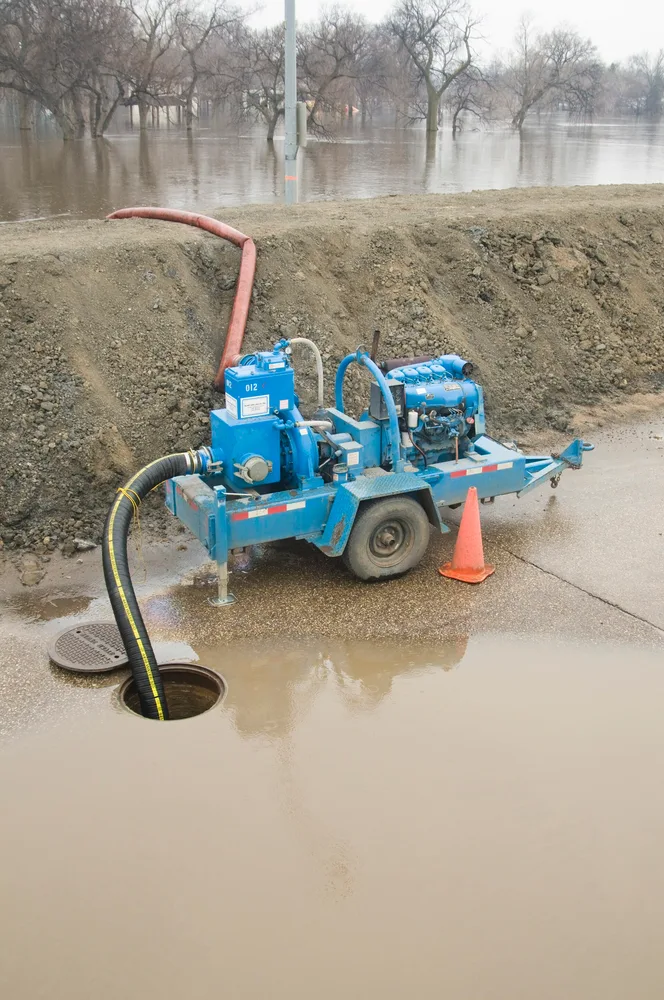 Photo: Mike Moore — Public domain (Wikimedia Commons)
2. Submersible pump with automatic float switch (250-400W)
Best Value — shuts itself off, no babysitting needed
A submersible pump fitted with a "float switch" turns itself on and off automatically based on the water level, so you don't have to stand there unplugging it all night. It's the natural first pick for a typical household where flooding isn't too severe.
Specs: 250-400W · flow rate 117-125 L/min (7,000-7,500 L/hr) · discharge 5-7m · handles solids up to 5mm · price around ฿1,140-1,200
Pros: Cheap; the float switch cuts power once the water's gone, protecting the motor from running dry and burning out; setup is as simple as dropping it in and plugging it in.
Cons: Only handles solids up to 5mm; completely useless if the power is out.
Best for: Typical homes with mild, relatively clean floodwater with little debris, where you want the convenience of not having to watch the pump.
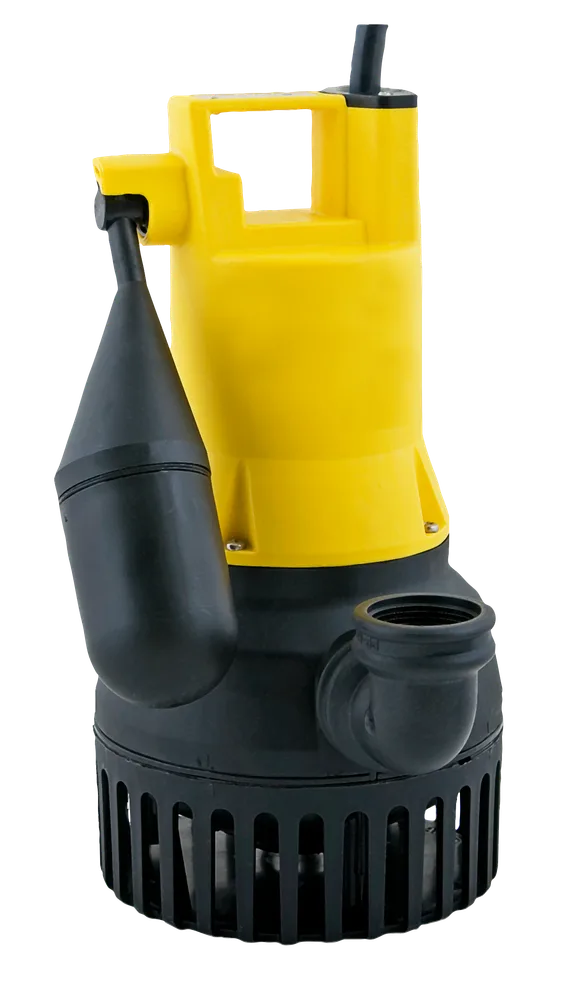 Photo: PumpExpert — CC BY-SA 4.0 (Wikimedia Commons)
3. Name-brand stainless submersible (Mitsubishi SSP series)
Best Durability — reliable for the long haul
If you want a pump that lasts for years without needing frequent replacement, a submersible pump from a name with real presence in the Thai market — like Mitsubishi's SSP series (stainless, 1/3 to 2HP) — pays off in the long run even at a higher starting price than a generic model.
Specs: Stainless, corrosion-resistant housing · 1/3-2HP (available in 220V and 380V) · price range ฿4,180-8,936 depending on model and power
Pros: Stainless housing resists corrosion far better than plastic/aluminum housings; service centers and parts are easy to find in Thailand; motor holds up better than budget models.
Cons: Costs 3-5x more than a generic pump.
Best for: Anyone who wants to buy once and use it for years, rather than replacing a pump every 1-2 years, and has a bigger budget than the basic options.
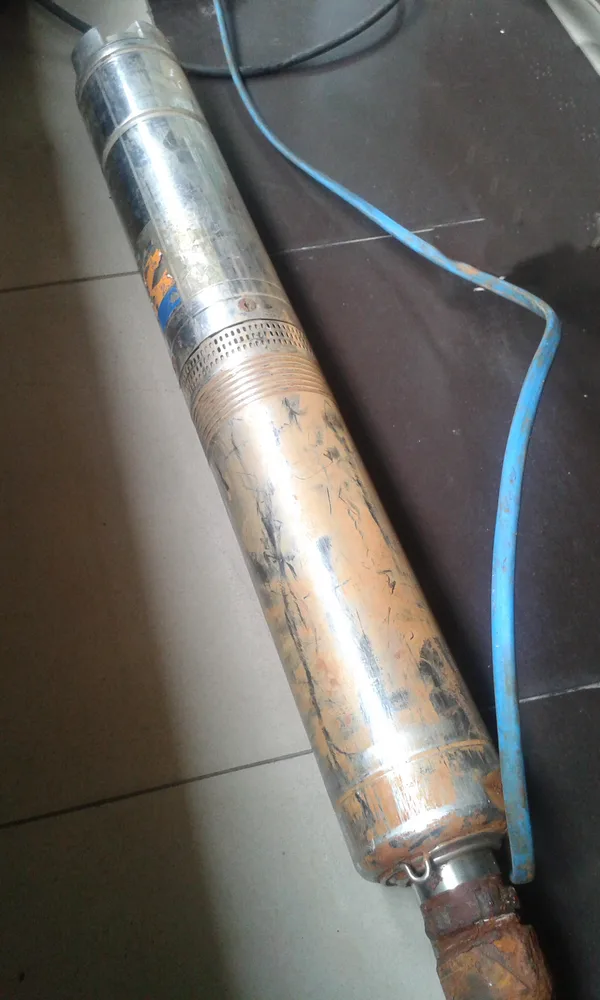 Photo: Mar11 — CC BY-SA 4.0 (Wikimedia Commons)
4. Vortex sewage/mud submersible pump
Best for muddy or debris-filled floodwater
Real floodwater is almost never clean — it usually carries mud, leaves, and plastic bags. This category uses a "vortex" impeller design that's more open than a clean-water impeller, letting solids pass straight through without jamming.
Specs: 400W and up · handles solids up to 30-35mm · large-debris intake screen · aluminum housing, stainless shaft · price around ฿4,700-13,228 depending on power and brand
Pros: Handles dirty water with mud without breaking down the way a clean-water pump would; built for hard use.
Cons: Costs 2-4x more than an equivalent clean-water pump; heavier unit.
Best for: Homes where flooding always brings thick mud, debris, or drain/septic overflow that a standard clean-water pump can't handle.
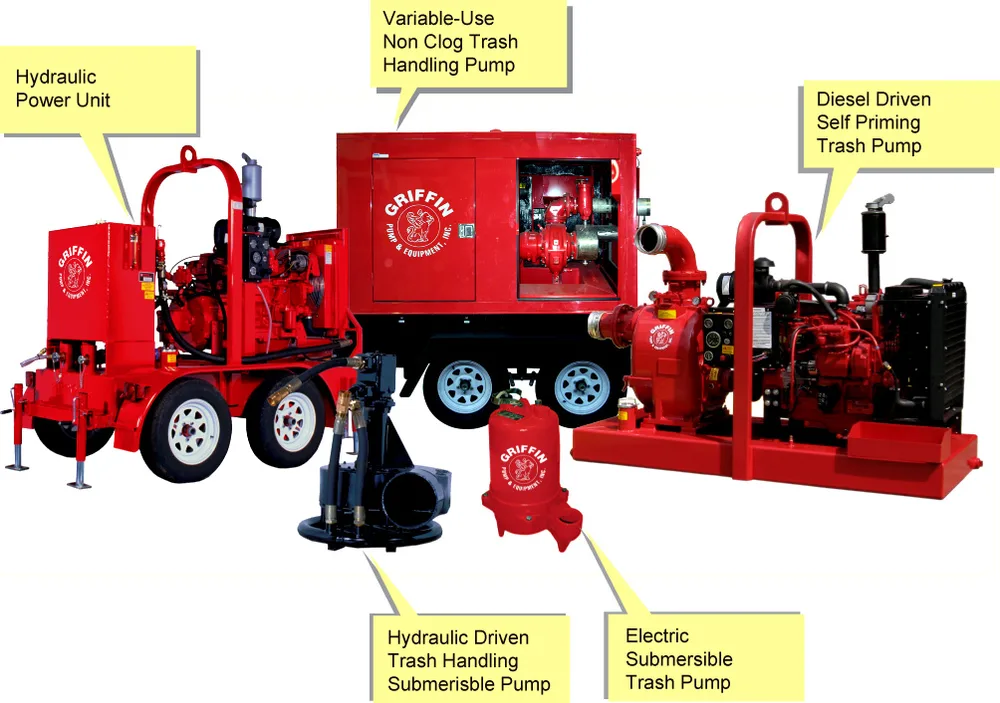 Photo: Djenane — CC BY-SA 3.0 (Wikimedia Commons)
5. Budget submersible pump (no float switch)
Best for the tightest budget
If money is genuinely tight, a basic submersible pump with no float switch (you plug and unplug it manually) still costs only a bit over a hundred baht and still clears water out of a flooded house — far better than having no pump at all during a flash flood.
Specs: 180-450W · flow rate 110-133 L/min · discharge 7-18m (varies a lot by model) · price around ฿600-2,600 depending on power and housing material
Pros: Cheapest option in the electric-pump category; still genuinely usable for mild flooding.
Cons: No automatic float switch, so you have to watch it and unplug it yourself before it runs dry and burns out; some models have all-plastic housings that are less durable than metal ones.
Best for: Anyone who wants the cheapest possible backup pump for occasional use, and is willing to keep an eye on it while it runs.
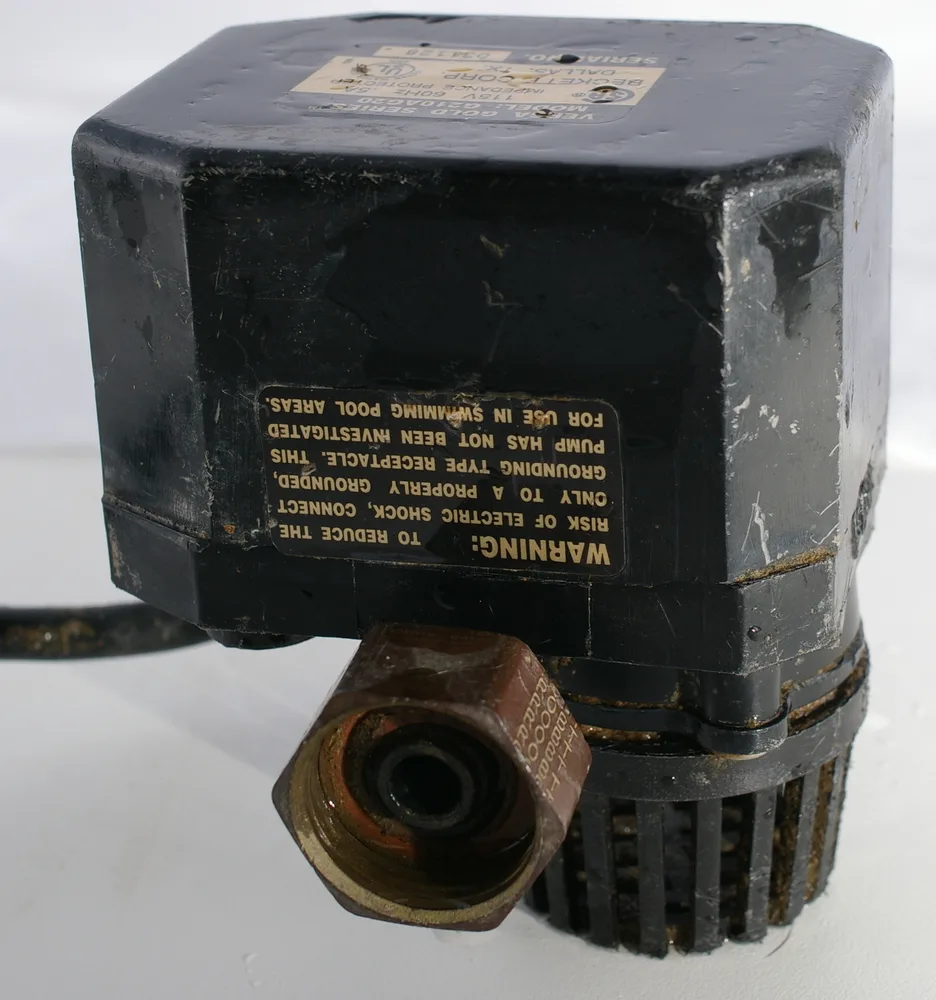 Photo: Hustvedt — CC BY-SA 3.0 (Wikimedia Commons)
6. Small 2-inch, 5HP petrol water pump
Best Mid-Size — townhouses and mid-sized homes
A middle ground between the bulkier 3-inch petrol engine and an electric pump — still not dependent on electricity, but more compact and noticeably cheaper than the 3-inch model. Good for areas that don't need the absolute maximum flow rate.
Specs: 2-inch petrol engine, 5HP (e.g. ROWEL RW-WP20Y) · flow rate around 500 L/min · suction depth 7.5m · discharge distance 34m · rated for 150+ hours of continuous use before major servicing · noticeably cheaper than the 3-inch, 6.5HP model (actual price varies a lot by brand — check the current price at the shop before buying)
Pros: Lighter and cheaper than the 3-inch model; still works even when the power is out.
Cons: Flow rate is about half that of the 3-inch model; not suited to high-volume flooding.
Best for: Townhouses or mid-sized homes that want a petrol engine without paying as much as the larger model.
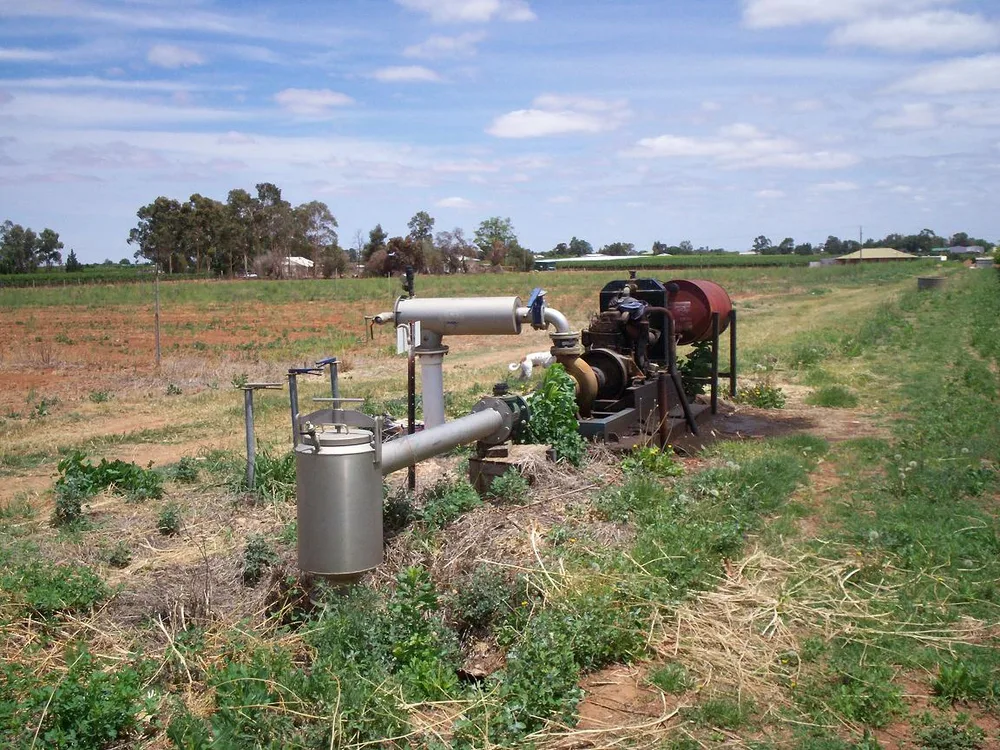 Photo: User:Longhair — CC BY 2.5 (Wikimedia Commons)
7. Portable 12V DC / solar water pump
Best when the power's out and you have no generator
A small pump that runs on 12V from a car battery or a solar panel — a solution for people without a generator who still want a pump that works during a power outage. Much lower power than a household mains pump, but portable and ready to use immediately without a long charge time.
Specs: 180W (12V supply) · lightweight at around 2.5kg · flow rate 4 m³/hr · discharge 12m · around 6 hours of continuous runtime per charge · 2.5m cable · price around ฿550
Pros: Very cheap; works during a power outage with no generator needed; lightweight and easy to carry.
Cons: Much lower power and flow rate than a mains-powered pump; not suited to high-volume flooding; you need a spare car battery or solar panel on hand.
Best for: Anyone who wants a cheap backup pump that works during outages without investing in a generator, or who's only pumping a modest amount of water.
8. Floor-standing centrifugal pump
Best if you don't want to submerge a pump in dirty water — cheapest electric option
Unlike a submersible pump that has to sit in the water, a centrifugal pump sits on dry ground next to the pooled water and draws water in through a hose. Good for anyone who doesn't want to put the pump body directly into dirty water, or is worried about electrocution risk from a pump sitting underwater.
Specs: 370W · flow rate 31 L/min · discharge distance 29m · cast-iron housing, brass impeller · price around ฿595 (higher-power models for agricultural/high-volume use, e.g. 1,500W, cost more accordingly)
Pros: Cheapest option in the electric-pump category; keeps the pump body out of dirty water directly, reducing electrocution risk from a submerged pump.
Cons: Needs to be primed with water before it can start working (self-priming); lower flow rate than an equivalent submersible pump; needs a stable dry surface to sit on.
Best for: Anyone worried about a submerged pump and electrocution risk, or who has dry ground next to the flooded area to place the unit.
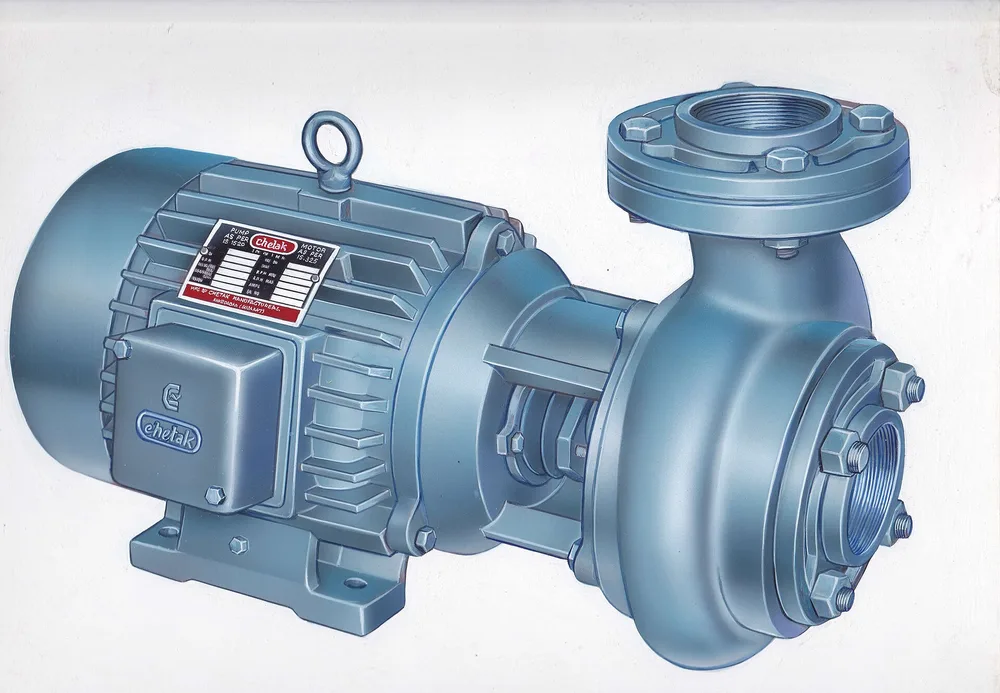 Photo: KishanMalaviyaatCHETAK ELECTRICALS — CC BY-SA 4.0 (Wikimedia Commons)
9. Renting a large water pump (instead of buying)
Best for occasional severe flooding over a large area
If severe flooding doesn't happen often (say, once a year or less), or you need to drain a very large area (a housing estate, factory, or ground-floor condo), renting a large water pump beats buying a ฿10,000+ machine that might see only 2-3 days of use per year.
Real-world pricing example: A Honda WB30, 3-inch water pump with a 6m suction hose + 10m discharge hose rents for ฿900/day · ฿4,500/7 days · ฿13,500/30 days · with a ฿7,000 deposit (larger pumps, e.g. 4-inch and up, cost more per day accordingly).
Pros: No need to buy an expensive machine used only a few days a year; delivery and setup service available from several rental shops in Bangkok and major cities; you get a more powerful pump than you'd buy for one-off use, which is more cost-effective.
Cons: Needs to be booked ahead of time during flood season, since rental shops have limited units that get booked out fast once flood news breaks; a deposit is required upfront.
Best for: Shared spaces like housing estates, condos, or factories where severe flooding is occasional and it doesn't make sense to buy a machine that sits idle all year.
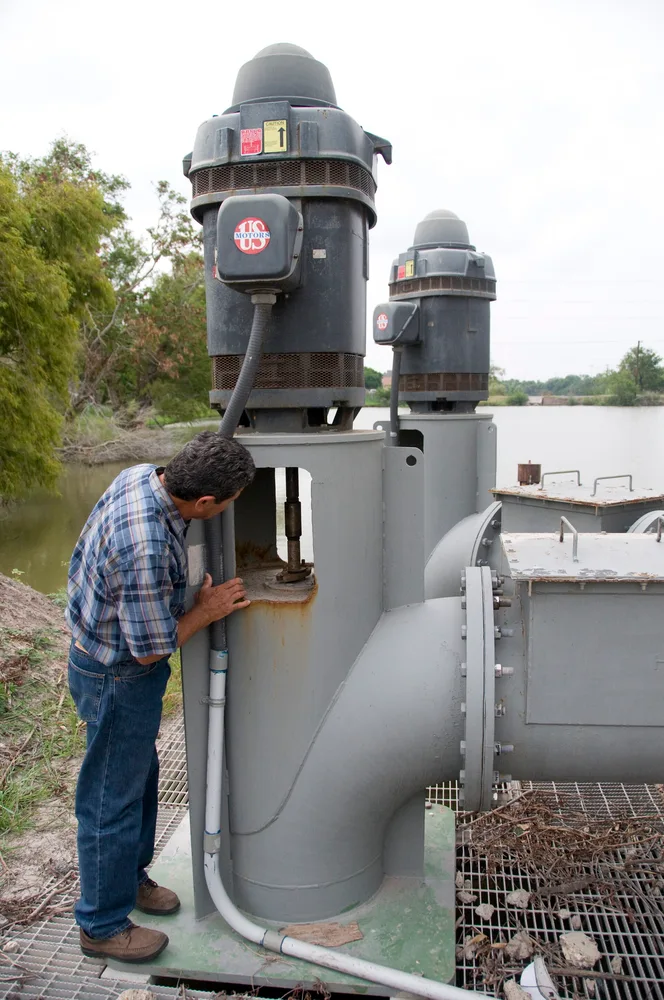 Photo: Patsy Lynch — Public domain (Wikimedia Commons)
10. High-power 2-inch submersible pump
Best for deep, high-volume flooding with long discharge distance
For unusually deep or high-volume flooding (like a field or parking area with deep standing water), a high-power electric submersible pump (750W and up, 2-inch) delivers up to 2x the flow rate of a standard submersible, while still costing far less than a petrol engine.
Specs: 550-750W · flow rate 200-250 L/min · discharge 11-16m · lightweight aluminum housing · price around ฿1,800-2,000
Pros: Much higher flow rate than a standard submersible pump; still far cheaper than a petrol engine; still as quiet and easy to use as a regular electric pump.
Cons: Still relies on electricity, useless during a power outage; draws more power than a standard-size pump.
Best for: Deep, high-volume flooding where the power is still on, or anyone wanting a stronger electric pump without paying petrol-engine prices.
Comparison table: all 10 water pumps
| Rank | Type | Power | Flow rate | Discharge | Approx. price | Power source |
|---|---|---|---|---|---|---|
| 1 | Petrol engine 3" 6.5HP | 6.5HP | ~1,000 L/min | 26-30m | ฿9,190-9,450 | Petrol |
| 2 | Submersible w/ float switch | 250-400W | 117-125 L/min | 5-7m | ฿1,140-1,200 | Electric |
| 3 | Name-brand stainless submersible | 1/3-2HP | Varies | Varies | ฿4,180-8,936 | Electric |
| 4 | Vortex submersible (mud/sewage) | 400W+ | Varies | Varies | ฿4,700-13,228 | Electric |
| 5 | Budget submersible | 180-450W | 110-133 L/min | 7-18m | ฿600-2,600 | Electric |
| 6 | Petrol engine 2" 5HP | 5HP | ~500 L/min | 34m | Lower than the 3" model (check current price) | Petrol |
| 7 | Portable DC 12V/solar | 180W | 4 m³/hr | 12m | ~฿550 | Battery |
| 8 | Floor-standing centrifugal | 370W | 31 L/min | 29m | ~฿595 | Electric |
| 9 | Rent a 3" pump | Varies | Varies | Varies | ฿900/day | Petrol |
| 10 | High-power 2" submersible | 550-750W | 200-250 L/min | 11-16m | ฿1,800-2,000 | Electric |
Which pump to choose, by budget and how your home floods
- Under ฿1,000 and mild flooding: the budget submersible pump (#5) or the floor-standing centrifugal pump (#8) — choose the latter if you're worried about submerging a pump in water.
- ฿1,000-2,000, want the convenience of not watching the pump: the float-switch submersible (#2) is the best value at this price point.
- Flooding always brings mud or debris: choose a vortex pump (#4) regardless of budget — a clean-water pump will fail fast on this kind of job.
- Home floods every year and power outages are a concern: invest in a petrol engine (#1 or #6, depending on your property size), since it works whether the power is out or not.
- High-volume flooding over a large area, but infrequent: rent a large pump (#9) instead of buying — far more cost-effective long-term.
- Want a backup for power outages without a generator: the portable DC 12V/solar pump (#7) is the cheapest option.
Electrical safety: don't let your water pump become the reason someone gets electrocuted
Every year there are news reports of people electrocuted while wading through floodwater or using electrical appliances in wet areas. Follow these rules every time you use a pump in a flood situation:
- Always switch off the main breaker for the whole house first, before connecting an electric submersible pump or walking near an outlet sitting in water. Don't wait until the water actually reaches the outlet — you can't predict exactly when moisture will reach the wiring.
- Always wear rubber boots when wading through water to install or retrieve a pump. Never stand barefoot in water while touching electrical equipment.
- Only plug a pump directly into a generator. If you need generator power, never connect the generator directly to a house outlet (back-feeding) — the power can flow backward into the utility's lines and electrocute a lineworker doing repairs nearby.
- Use grounded, waterproof-rated cords and plugs. Substandard equipment significantly raises the risk of a leak or shock.
- Never test whether an appliance that was submerged still works by plugging it in — always have an electrician or the utility company inspect it first.
If you spot a downed power line or a suspected leak, call PEA's hotline 1129 (nationwide) or MEA's hotline 1130 (Bangkok). For the full picture on preparing for a flood, see the Thailand flood-preparedness checklist, which covers everything you need before, during, and after a flood.
Common mistakes to avoid before buying
- Buying a clean-water pump for muddy water — it fails within minutes as debris clogs the impeller and overworks the motor until it burns out. If you're not sure how dirty your water gets, go vortex.
- Looking only at wattage, ignoring flow rate — a higher-wattage pump from one brand can have a lower flow rate than a lower-wattage pump from another, due to impeller design differences.
- Not sizing a generator with enough headroom — pairing a pump with a generator rated exactly at the pump's running wattage, then having the generator stall at startup because it didn't account for the motor's starting surge.
- Letting a float-less pump run dry — forgetting to unplug it once the water's gone, so the motor runs empty until it overheats and burns out.
- Storing a pump wet or muddy — rubber seals and bearings degrade far faster than normal, leaving the pump leaking or dead the next time you need it.
- Buying only after the flood arrives — shops routinely sell out and prices jump the moment flood warnings hit the news. Buy ahead of rainy season, or as soon as a warning is issued.
Verdict: which water pump should you actually buy?
For an overall pick, the submersible pump with an automatic float switch, 250-400W (#2) is the best starting point for any household that doesn't already own a pump — under ฿1,500, easy to use, and it shuts itself off without you having to watch it.
If your home floods every year and power outages are a real concern, the 3-inch, 6.5HP petrol pump (#1) is the better long-term investment. And if your floodwater always comes with mud or debris, don't hesitate to pay more for the vortex pump (#4) — a plain clean-water pump will fail fast on that kind of job.
If severe flooding is rare but hits a large shared area, renting (#9) usually beats buying an expensive machine that sits unused most of the year.
Whichever you choose, never skip the golden rule: cut the power before connecting a pump, and prepare the rest of your flood kit alongside it using the flood-preparedness checklist. If your car is also at risk, read the guide to flood-proofing your car, and don't forget a pair of waterproof rain boots for wading safely.
Sources
- Thai Meteorological Department - September 2026 monthly forecast
- Infoquest - heavy rain warning for upper Thailand, Sept 6-7
- Thaiger - ฿9,000/household flood relief in Nan province
- mybest - 10 best water pump brands 2026
- Hardman - submersible pump buying guide
- Thaiwatsadu - HISO/ROWEL petrol water pumps
- Motorsts - Mitsubishi submersible pumps
- 108Rental - Honda WB30 pump rental pricing
- safesavethai - 8 electrical safety rules during a flood
Frequently asked questions
- What's the difference between a petrol water pump and an electric submersible pump — which should I buy?
- A petrol pump needs no electricity at all, so it keeps working even when the power is cut — which happens very often during a flood — and it moves a lot more water in less time. It's the better choice for homes that flood every year or for large areas. The downsides are a higher price, noise, and engine exhaust, plus you need to refuel and maintain the engine like a lawnmower. An electric submersible pump is far cheaper, quieter, and as simple as plugging it in, but it's completely useless if the power is out — which is often exactly when you need it most. If your budget allows and flooding is a yearly problem, it's worth having both types on hand.
- How much mud or debris can a submersible pump actually handle? Can I use a clean-water pump for a flood?
- Submersible pumps fall into two groups based on their impeller design. Clean-water pumps have an enclosed impeller that only tolerates solids up to about 5mm — if you use one on floodwater full of mud, leaves, or plastic bags, it will clog and can burn out the motor within minutes. Dirty-water/vortex pumps have an open impeller designed to push solids straight through without jamming, tolerating debris up to 30-35mm. They cost roughly 2-4x more than an equivalent clean-water pump, but they're essential if your flooding always comes with mud or debris. If you're not sure how dirty your floodwater gets, choose the vortex type to be safe.
- How many watts does a flood pump use, and can I run one off a generator?
- A typical household submersible pump draws 150-750W (most commonly 250-400W), which any generator rated 800W or higher can handle comfortably — but you need to account for the motor's starting surge, which can spike to 2-3x the running wattage for a split second at startup. As a safety margin, your generator's continuous rating should be at least double the pump's wattage — a 400W pump should run off a generator rated at least 800-1,000W. Never connect a generator directly to a house outlet (back-feeding), since the power can flow backward into the utility's lines and electrocute a lineworker doing repairs — plug the pump directly into the generator instead.
- Is it dangerous to run a water pump before I've cut the power to the house?
- Yes, very — never do this. Always switch off the main breaker for the whole house first, whether you're connecting an electric submersible pump or just walking near an outlet close to standing water. If the insulation on a wire or outlet has degraded from moisture, current can leak into the water and spread over a wide area invisibly. The safe approach is to cut power to the house entirely, then run your submersible pump off a separate generator placed somewhere dry and safe. Always wear rubber boots when wading through water to install or retrieve a pump.
- How do I maintain a pump after using it so it still works next year?
- After use, run clean water through the pump for 2-3 minutes to flush out mud and silt lodged in the impeller, then dry the housing completely before storing it. Never store it wet or muddy — that corrodes the rubber seals and bearings far faster than normal, causing leaks the next time you need it. For a petrol engine, drain the fuel tank completely or add a fuel stabilizer before long-term storage, since fuel left in the carburetor for more than a few months turns gummy and the engine won't start next season. Store it somewhere dry, out of direct sun, and start it up (or run it) for a minute or two every 2-3 months to confirm it's still ready for an emergency.
- Is a used pump or an unbranded budget model, at half the price, worth buying?
- For electric submersible pumps, which are already inexpensive (a few hundred to a couple thousand baht), the real risk with an unbranded model is a motor that burns out quickly or a failed waterproof seal that causes a short circuit in the water — which can be lethal. If you're trying to save money, it's better to pick a brand that at least has some presence in the Thai market (the price difference versus no-name is small at this size) than to gamble on a used pump with unknown history. For a ฿10,000+ petrol engine, if buying used, check that it starts easily with no abnormal engine noise, and that the pump housing itself (not just the engine) has no leaks or heavy corrosion — the pump components typically fail before the engine does.
Related articles

Thailand Flood Prep Checklist 2026: What to Do Before, During & After
Complete 2026 flood-preparedness checklist for Thailand: must-have gear and prices, home protection steps, emergency numbers, and whether insurance covers flood damage.

10 Best Waterproof Rain Boots 2026 in Thailand for Floods & Rainy Season
10 best waterproof rain boots in Thailand for 2026, from 149 to 690 baht, with a spec comparison table, sizing chart, budget-by-use-case picks, and why doctors say to always wear boots in floodwater.

9.9 Shopee Lazada 2026: 10 Categories Worth Buying + How to Stack Deals
When is 9.9 Shopee-Lazada 2026, and which categories are worth buying? 10 ranked picks, coupon/coin stacking tricks, and scams to watch for.