Ebola's Fastest-Ever Outbreak: 700+ Dead in DRC as Rare Bundibugyo Strain Outpaces Response

Watch more: Ebola outbreak may be spreading faster than first thought, WHO doctor warns — BBC News
Since the World Health Organization first declared an outbreak on May 15, 2026, the Bundibugyo strain of Ebola hemorrhagic fever has carved through northeastern Democratic Republic of Congo (DRC) at a pace the global health system has never seen before. As of July 13, 2026, nearly 2,000 confirmed cases have been recorded with over 700 deaths — a case fatality rate of roughly 34%.
Africa CDC Director Wessam Mankoula did not mince words: "This is the fastest growing Ebola outbreak ever, not only among the previous Bundibugyo outbreaks, but all the different viruses causing Ebola."
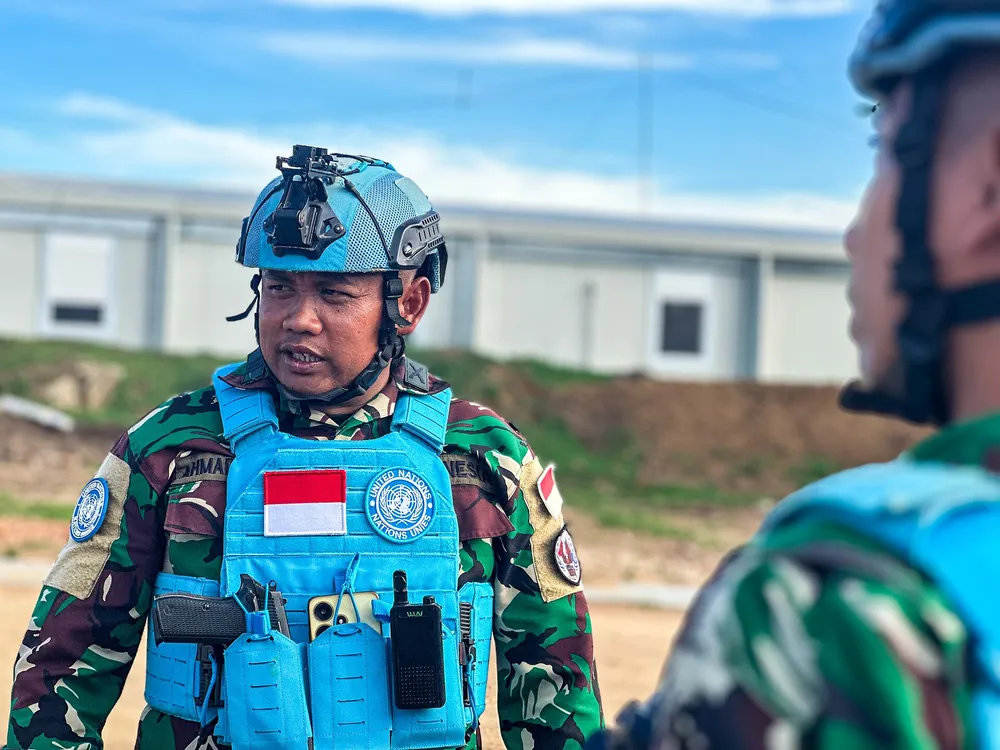 UN peacekeepers (MONUSCO) in DRC — armed conflict in Ituri Province is one of the biggest barriers to outbreak containment — MONUSCO/Wikimedia Commons
Why "Fastest Ever" Is Not Hyperbole
To understand the scale: during the 2018 North Kivu Ebola outbreak — itself the deadliest in DRC history — it took 235 days to confirm 1,000 cases. This outbreak crossed that threshold in just 40 days after formal response activation.
The outbreak began in the village of Nia-Nia in Ituri Province before spreading through mining towns Mongbwalu, Rwampara, and Bunia into neighbouring provinces. As of July 14, confirmed cases have been reported across five provinces of the DRC, with Ituri still bearing over 90% of the burden. The outbreak has also crossed borders: Uganda has confirmed 20 cases and 2 deaths from imported infections; a single case was detected in France in a medical doctor returning from DRC, with no secondary spread.
The Strain That Complicates Everything
What makes this outbreak particularly difficult to contain is the pathogen itself. This is not the Zaire ebolavirus that dominated headlines during the 2014–2016 West Africa crisis and prompted the development of approved vaccines and treatments. This is Bundibugyo ebolavirus — a rare species recorded only twice before (Uganda 2007; DRC 2012) — for which no approved vaccine or treatment exists.
The approved Ebola vaccine (Ervebo) and the treatments mAb114 and REGN-EB3 were developed specifically against the Zaire strain and are not certified for Bundibugyo. Worse, the outbreak went undetected for several weeks in its early stages because initial laboratory tests were designed for a different Ebola species — giving the virus a critical head start before any containment response began.
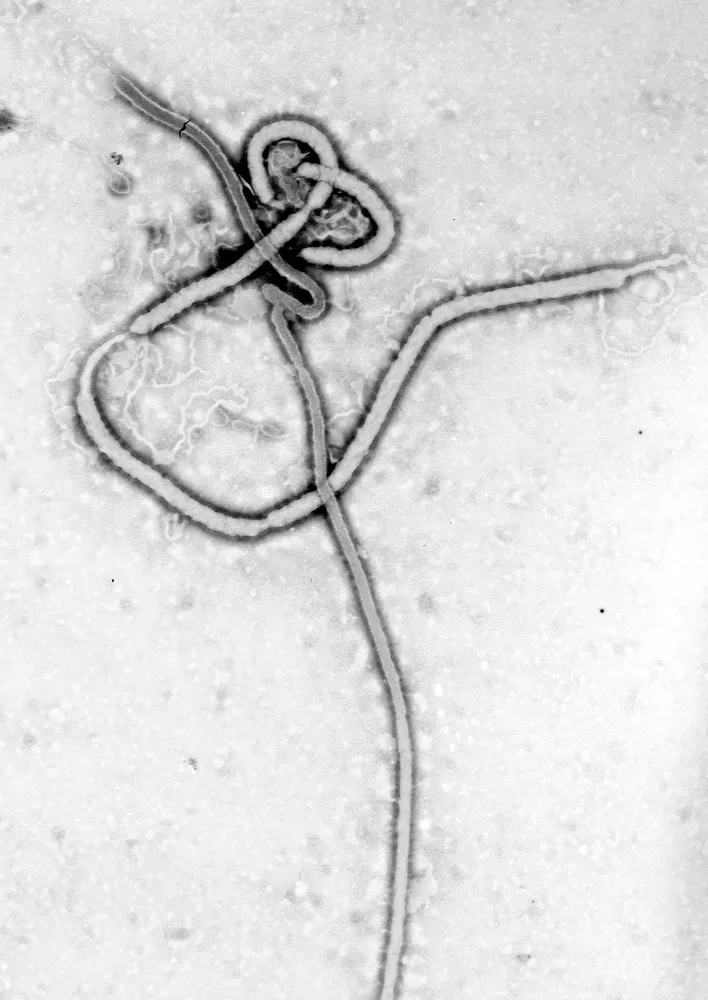 Electron microscopy: the distinctive filamentous structure of Ebola virus — Wikimedia Commons / CDC
This is the DRC's 17th Ebola outbreak — a sobering number that speaks to both the country's ongoing vulnerability and the world's incomplete readiness for viral variants outside the Zaire lineage.
A Perfect Storm: Conflict, Displacement, and Mistrust
WHO official Anne Ancia framed the challenge starkly: "Population movements, persistent insecurity, and the fragility of the health system continue to complicate containment efforts."
The outbreak is centred in Ituri Province, one of DRC's most conflict-affected regions, where armed groups remain active. The practical consequences are severe:
- Contact tracing is running at 82% — well below the 95% threshold needed to interrupt transmission. Over 10,800 contacts are currently under monitoring.
- Setting up treatment centres in certain zones carries physical danger for health workers.
- Misinformation — including claims that the virus is fabricated — has spread alongside the disease in affected communities.
- Traditional burial practices involving direct contact with the deceased have caused community anger when restricted, complicating community engagement.
Unpaid Workers Walk Out
On July 13, health workers at an Ebola treatment centre in Ituri Province went on strike over unpaid wages — a direct product of the funding crisis. Dr. Biensi Kano, representing the striking workers, stated: "Since the Ebola virus disease outbreak was declared, we've been demanding payment for our work."
Workers reported going without wages or bonuses since the May 15 declaration, operating with limited protective equipment, and facing what they described as unfair treatment.
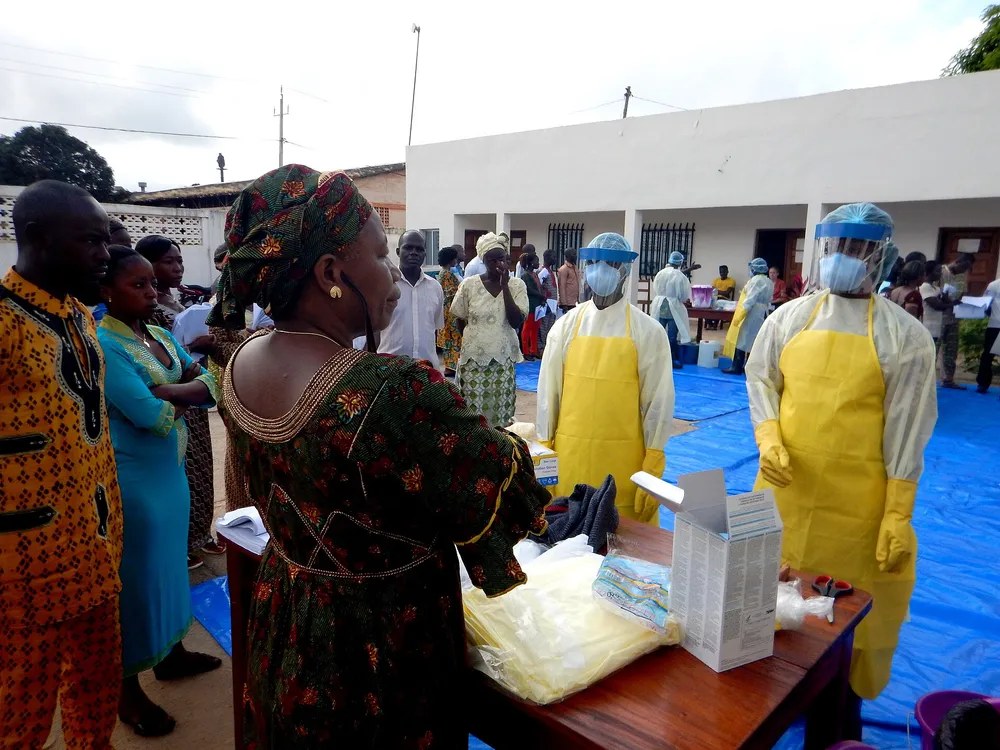 Healthcare workers in full PPE conducting Ebola community screening — Wikimedia Commons
The strike underscores a dire funding gap: WHO requires $115 million to fully respond to the outbreak but has received only 32% of that amount, against a backdrop of global humanitarian funding cuts. The 22 existing treatment centres with approximately 700 beds are operating at 90% capacity, with plans to add 300 more beds still pending resources.
Treatment Trials: Real Hope, But Months Away
On July 2, 2026, WHO launched the first formal clinical trials against the Bundibugyo strain, testing two experimental options:
- Remdesivir — Gilead Sciences' broad-spectrum antiviral, originally used against COVID-19 and hepatitis C
- MBP134 — an experimental monoclonal antibody from Mapp Biopharmaceutical
Patients are being randomised to receive standard supportive care plus one drug, both drugs, or neither (standard care only). Results, however, may take months and require up to 1,000 study participants, according to WHO estimates. The International Red Cross has warned that the outbreak itself could last a year before being brought under control.
What This Means for the Rest of the World
For those not travelling to central Africa, WHO assesses global risk — including for countries like Thailand — as "low". Ebola is not airborne; it spreads through direct contact with the body fluids of a symptomatic patient. WHO does not recommend any travel or trade restrictions.
That said, the outbreak carries clear lessons. A viral variant outside existing vaccine coverage can emerge and accelerate far faster than preparedness frameworks assume. The 40-day race to 1,000 cases should be a signal for the global health community to close the funding gap and accelerate broad-spectrum antiviral research before the next novel strain emerges.
Travellers planning trips to central or east Africa should monitor guidance from the WHO's travel health advisory and their own national health authorities.
Sources
- Al Jazeera — Confirmed Ebola deaths in DR Congo hit 600
- ABC News — Fastest-growing Ebola outbreak in history
- WHO Disease Outbreak News (DON612)
- Daily Sabah — Ebola outbreak in DRC becomes fastest-growing on record
- Doctors Without Borders (MSF) — Bundibugyo virus explainer
- Al Jazeera — Staff at DR Congo Ebola centre strike
Frequently asked questions
- How is the Bundibugyo Ebola strain different from the more familiar Zaire strain?
- Bundibugyo ebolavirus is a rare species seen only three times in history (Uganda 2007, DRC 2012, and now). Unlike the Zaire strain, for which the vaccine rVSV-ZEBOV (Ervebo) and treatments mAb114/REGN-EB3 exist, there is no approved vaccine or medicine specifically for Bundibugyo. Its fatality rate is roughly 25–50%, lower than Zaire's potential 90% without treatment, but still very high.
- Should people outside Africa — including in Thailand — be worried?
- WHO rates the global risk (including Thailand) as 'low' and does not recommend travel or trade restrictions. Ebola spreads through direct contact with body fluids of a symptomatic patient — not through the air. A single imported case was detected in France (a returning doctor) with no secondary transmission. Those not traveling to central Africa face very low risk.
Related news
 World
WorldRattlesnake Blood Yields Antivenom 10x Stronger Than Current Drugs
Proteins from rattlesnake blood, combined, neutralize venom 10x more potently than current antivenom in lab tests — a study with a Thai scientist on the team.
 World
WorldTwo Shots a Year, Near-Total HIV Protection: 'Lenacapavir' Rolls Out Across Countries in 2026 — Including Thailand
Lenacapavir (Yeztugo), a twice-yearly HIV prevention shot over 99.9% effective in trials, rolls out across countries in 2026, with a Thai pilot in July.
 World
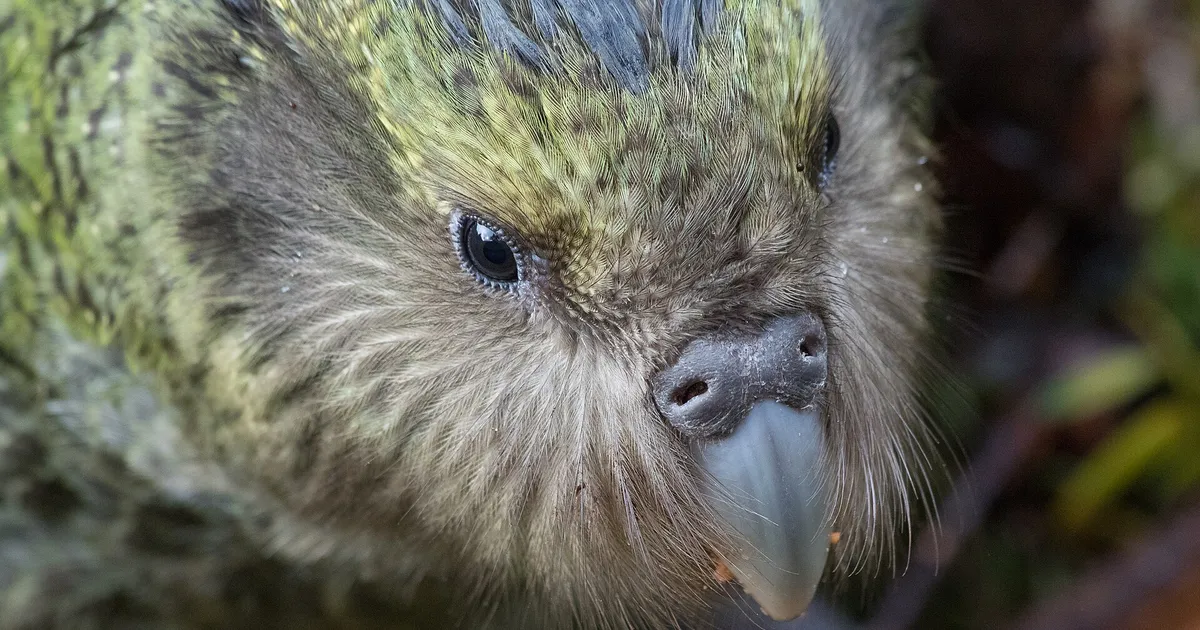
WorldKākāpō Population Soars Past 300 for First Time in 75 Years
New Zealand's kākāpō, the world's heaviest parrot, reached 325 birds after a record 2026 breeding season added 90 chicks — up from just 51 birds in 1995.