Rattlesnake Blood Yields Antivenom 10x Stronger Than Current Drugs
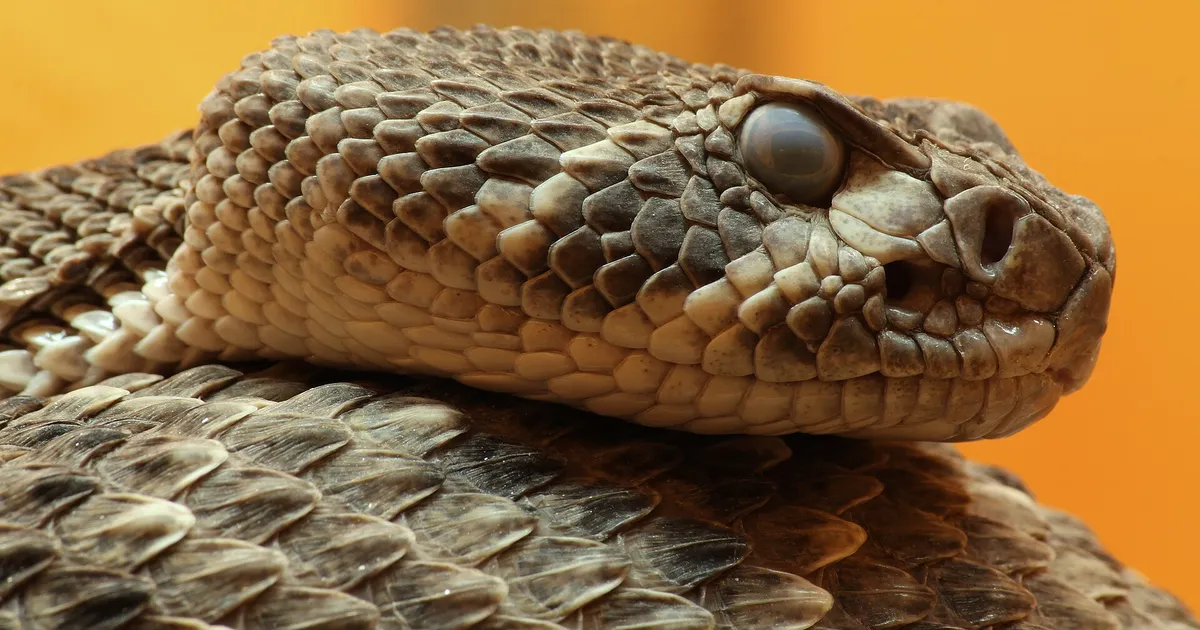
Researchers at the University of Maryland have discovered that proteins naturally found in the blood of western diamondback rattlesnakes, when combined in the right proportions, neutralize lethal snake venom roughly 10 times more potently than current commercial antivenom in laboratory tests. The study was published in the journal Proceedings of the National Academy of Sciences (PNAS) in late July 2026 and has drawn wide attention from international science media this week — reviving hope for a global health problem that is often overlooked.
How snakes survive their own venom — the origin of the discovery
The team, led by Sean B. Carroll, Distinguished University Professor of Biology at the University of Maryland, working with researchers at Texas A&M University-Kingsville, explains that scientists have known for over 100 years, from anecdotal observation, that many venomous snakes have some resistance to their own venom — but the mechanism was never clearly understood. That changed when Carroll's team isolated and tested a group of proteins called FETUA (serum metalloproteinase inhibitors) found in western diamondback rattlesnake blood serum.
"This is one of those great stories when nature has already solved a problem we've been grappling with for decades," Carroll said. "We've known from anecdotes for 100 years that vipers tend to be resistant to their own venom."
The interesting part: tested individually, each FETUA protein could block a specific effect of the venom — reducing bleeding or interfering with certain enzyme activity — but none alone could prevent death. It was only when the team combined several FETUA proteins together that the mixture fully neutralized the lethal action of rattlesnake venom, and even protected against venom from other, evolutionarily distant viper species.
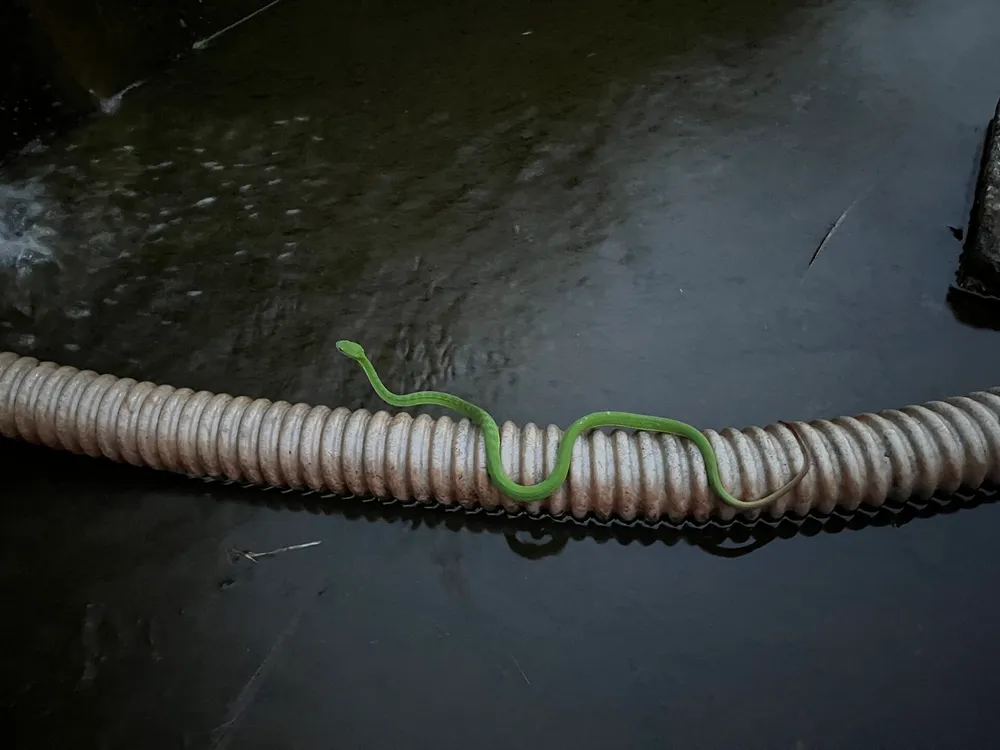 Illustrative photo: a green pit viper, a common Thai viper species — part of the same broad viper family the research targets
Why combining proteins was the key
A single snake's venom isn't one toxin — it's a cocktail of up to around 100 distinct toxin proteins from many different protein families. As Carroll put it: "The ingredients are there. We just have to keep testing various mixtures." The team had to test many combinations and ratios of FETUA proteins before finding a formula broad enough to cover multiple venom effects at once.
The result was a natural protein mixture roughly 10 times more potent than today's commercial sheep-derived antivenom at neutralizing venom lethality in lab tests — a figure that has excited toxinologists, since it suggests nature may already hold a more effective answer than the one humans have spent a century trying to engineer.
The problem with today's antivenom
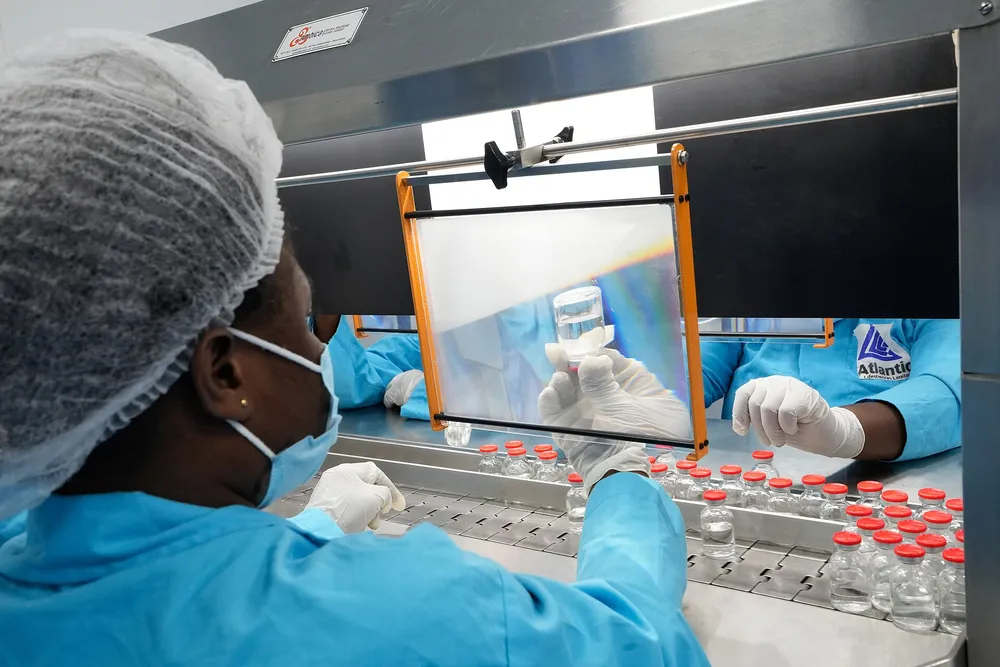 Illustrative photo: antivenom vials being packaged at a manufacturing facility — Foreign, Commonwealth & Development Office — CC BY 4.0 (Wikimedia Commons)
The method used to make antivenom for the past century hasn't fundamentally changed: inject a small amount of venom into a horse or sheep, let the animal produce antibodies against it, then harvest those antibodies into a drug. This approach has serious limitations — high production cost, limited supply, a cold chain required throughout shipping (a major obstacle in rural areas), effectiveness usually limited to closely related snake species, and a real risk that some patients will have a severe allergic reaction to the animal-derived serum.
| Factor | Current antivenom | New research (lab stage) |
|---|---|---|
| Source | Horse/sheep serum, immunized with venom | FETUA proteins from rattlesnake's own blood |
| Neutralizing potency | Reference baseline | ~10x more potent |
| Protection scope | Mostly closely related species | Covers multiple distinct viper species |
| Allergy risk | Risk of animal-serum allergy | No human data yet |
| Development stage | In real-world clinical use | Laboratory testing only |
As of September 2026 — summarized from the University of Maryland research team's reports.
Why this matters for Thailand
The World Health Organization estimates venomous snakebites kill 80,000-140,000 people worldwide every year, and permanently disable hundreds of thousands more — overwhelmingly in rural parts of Asia and Africa where antivenom is hard to reach. In Thailand, Department of Disease Control data cited by Thai PBS puts the average at over 6,000 snakebite cases a year, with cobras, king cobras, and green pit vipers among the species most commonly involved — the last of which belongs to the same broad viper family the new research shows FETUA proteins can protect against across species lines.
This study did not test Thailand's own green pit viper venom directly, but the "cross-species antivenom" approach it demonstrates opens a longer-term possibility for regions that have long relied on narrow, species-specific antivenom. One more detail worth noting: the research team includes a Thai scientist — Dr. Montamas Suntravat, an associate professor at the National Natural Toxins Research Center at Texas A&M University-Kingsville, who earned both her bachelor's and Ph.D. degrees at Chulalongkorn University in Bangkok and has researched snake venom for over a decade, according to her university faculty profile.
For anyone bitten by a snake in Thailand, official guidance is unchanged: wash the wound with clean water only, do not cut the wound, do not suck out the venom, do not apply a tourniquet, and get the patient to the nearest hospital as quickly as possible. (Find a nearby facility via Tetono's hospital directory.)
How far this still is from real-world use
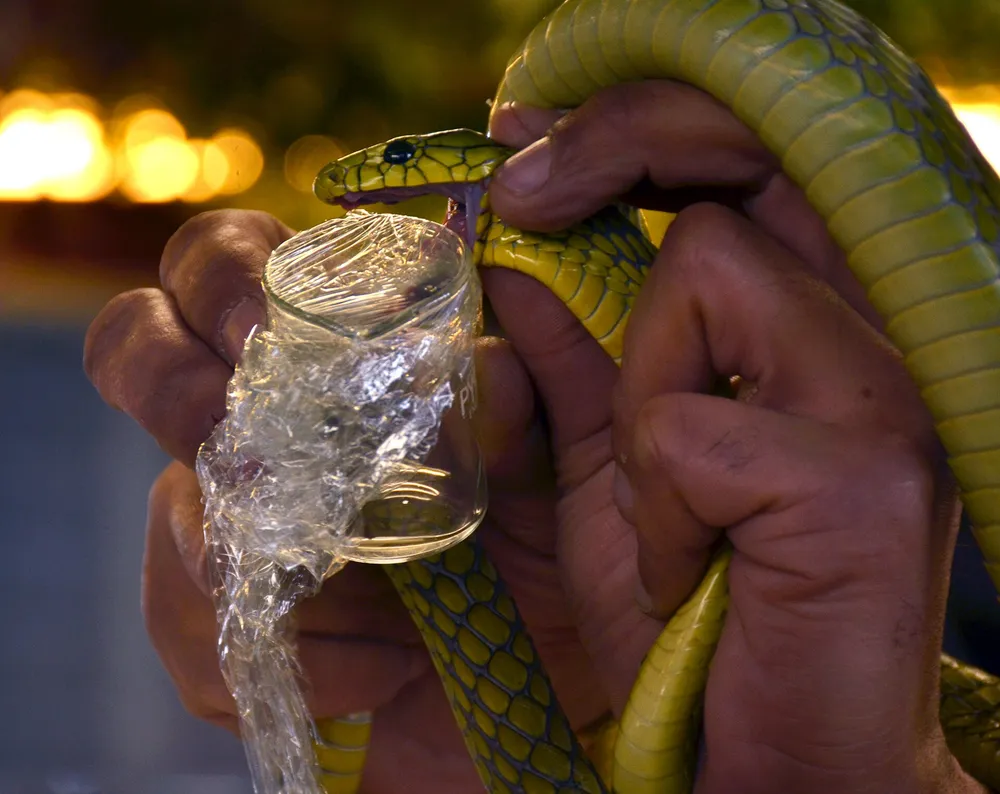 Illustrative photo: venom being milked from a snake for antivenom production — Vassil — CC0 (Wikimedia Commons)
The research team is clear that these results come from laboratory testing only — there has been no human trial yet, and a single snake's venom can contain up to 100 different toxin proteins across many families, meaning years of work remain to find combinations broad enough to cover venom comprehensively. Carroll says the next step is expanding the same strategy to toxin families beyond metalloproteinases, and the team expects the first commercial applications to be veterinary — treating dogs and livestock bitten by snakes — before human treatments follow.
"We could make train cars-worth of this stuff and help solve a massive global health problem," one of the researchers said of the approach's long-term potential. If it succeeds, this method could make antivenom production cheaper, more abundant, and free of the need to keep large herds of horses or sheep — a benefit that would matter most in the rural areas of developing countries that carry the heaviest burden of snakebite disease.
Medicine finding new solutions inside things nature already provides is not a new pattern — earlier this year, researchers found that digoxin, an almost 250-year-old heart drug, still reduces hospitalizations for heart failure patients by 25%, another case showing that sometimes the medical answer has been hiding in plain sight, waiting for someone to look at it the right way.
Sources
- University of Maryland Today — Scientists Discover an Antidote to Lethal Snake Bites in Snakes' Own Blood
- ScienceDaily — Scientists discover a powerful new antivenom hidden in rattlesnake blood
- PNAS — Nature's antivenom: Combinations of conserved rattlesnake serum metalloproteinase inhibitors block the lethal action of viper venoms
- phys.org — Combined rattlesnake proteins prove 10 times more potent than current antivenom in lab tests
- Texas A&M University-Kingsville — Dr. Montamas Suntravat faculty profile
- Thai PBS — Snakebite cases rise in Thailand's rainy season
Frequently asked questions
- What are FETUA proteins?
- FETUA is a group of naturally occurring metalloproteinase-inhibitor proteins found in rattlesnake blood serum. Snakes use them for partial protection against their own venom. Researchers found that combining several FETUA proteins in the right ratio completely blocks the venom's lethal effects.
- When could this become an actual snakebite treatment?
- It will take years. The results so far come only from laboratory tests. The researchers expect the first commercial applications to be veterinary — such as treating dogs bitten by snakes — before human treatments are developed.
- What's wrong with current antivenom?
- Most antivenom is made by injecting venom into horses or sheep and harvesting the antibodies the animals produce. This process is expensive, limited in supply, requires cold-chain shipping, and usually only works well against closely related snake species — and it carries a risk of severe allergic reactions to the animal serum.
Related news
 World
WorldEbola's Fastest-Ever Outbreak: 700+ Dead in DRC as Rare Bundibugyo Strain Outpaces Response
The Democratic Republic of Congo is battling the fastest-growing Ebola outbreak in history, with nearly 2,000 confirmed cases and over 700 deaths from the rare Bundibugyo strain — for which no approved vaccine or treatment exists.
 World
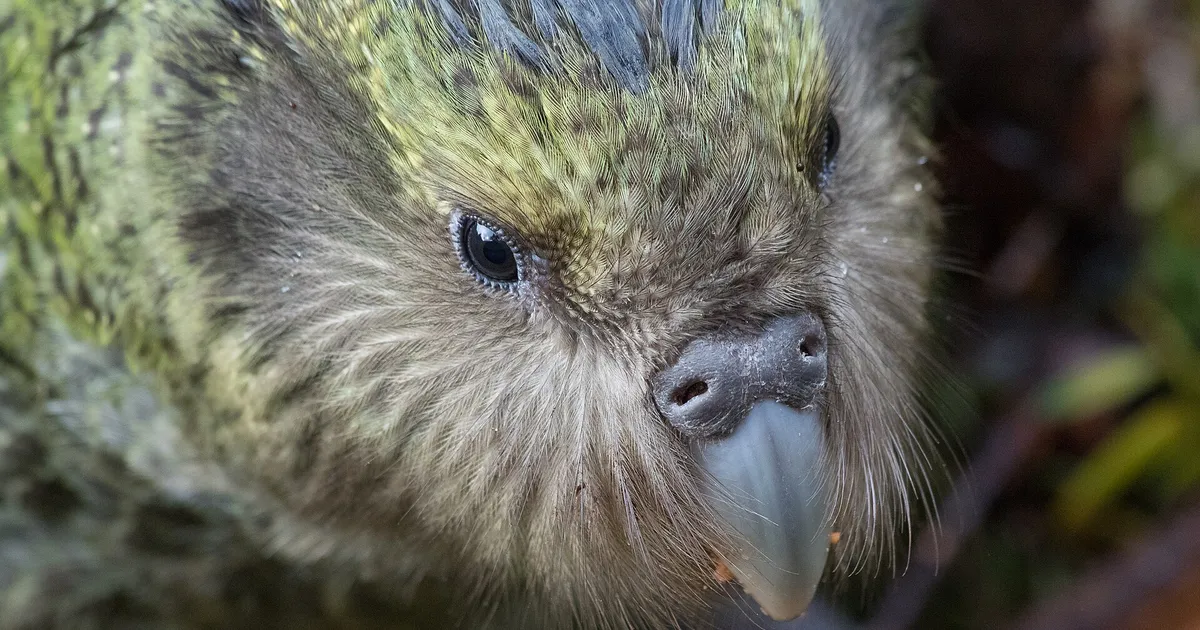
WorldKākāpō Population Soars Past 300 for First Time in 75 Years
New Zealand's kākāpō, the world's heaviest parrot, reached 325 birds after a record 2026 breeding season added 90 chicks — up from just 51 birds in 1995.
 World
WorldHimalayan Glacier Collapse Floods Nepal-Tibet: A Warning Lesson
A glacier broke away at 5,200m and sent a wall of water into Nepal. Scientists say the technology to warn people already exists — the monitoring does not.