Two Shots a Year, Near-Total HIV Protection: 'Lenacapavir' Rolls Out Across Countries in 2026 — Including Thailand

A landmark piece of good news for global public health: a long-acting injectable that prevents HIV infection — lenacapavir — requires just two shots a year and kept more than 99.9% of participants HIV-negative in clinical trials. It is now moving from "lab hope" to "real-world use." In 2026 several countries have begun rolling it out, and Thailand is preparing a pilot programme for July 2026.
On 15 June 2026, the World Health Organization (WHO) issued a statement applauding South Africa for launching a national rollout of lenacapavir — making it one of the first countries in the world to move from policy to implementation.
An Injection That Could Reshape HIV Prevention
 Illustrative: an HIV-infected T cell (orange dots are virus particles) — NIAID, CC BY 2.0
Lenacapavir is used as PrEP (pre-exposure prophylaxis) for people at risk of HIV. What has the field excited is its unprecedented ease of use: instead of taking a daily pill, users get a subcutaneous injection twice a year, with each shot providing roughly six months of protection.
That convenience matters enormously, because one of the biggest barriers in HIV prevention has always been adherence — people forget daily pills or find them inconvenient to carry. A twice-yearly shot reduces that burden and improves the odds that protection actually works in real life.
The U.S. Food and Drug Administration (FDA) approved lenacapavir under the brand name Yeztugo on 18 June 2025 as the first twice-yearly injectable PrEP option. Then, on 14 July 2025, the WHO issued a global recommendation for the drug at the International AIDS Conference in Kigali, Rwanda.
The Numbers Behind the Confidence
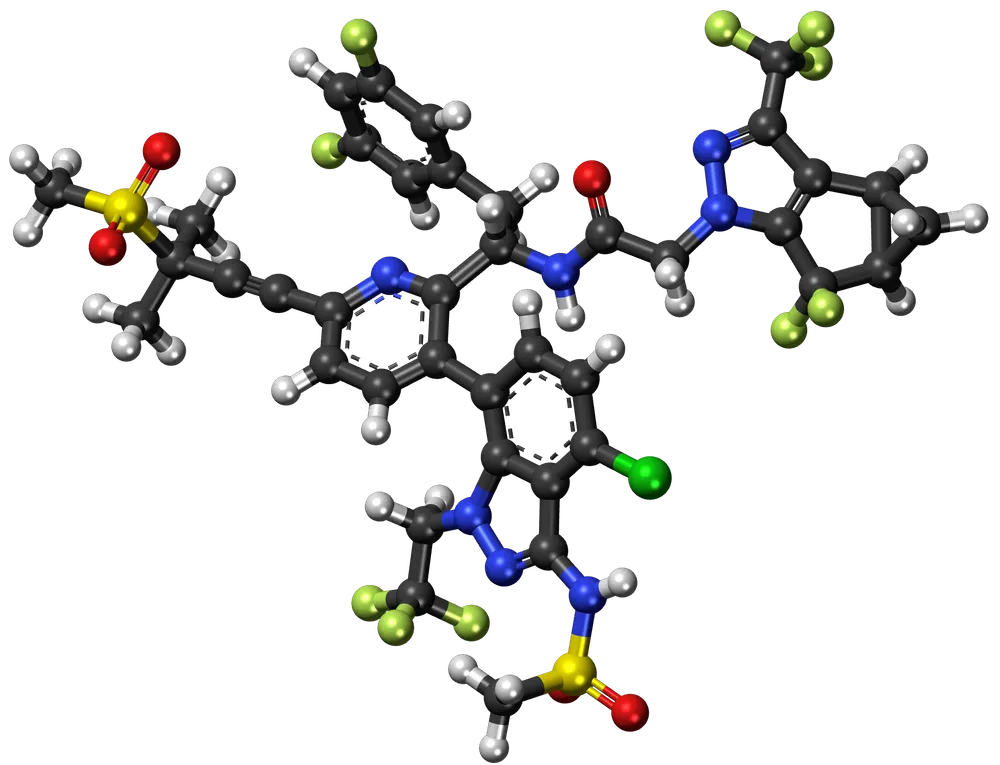 A 3D model of the lenacapavir molecule — Jovan.gec, CC BY-SA 4.0 via Wikimedia Commons
The confidence in lenacapavir comes from two large Phase 3 trials, PURPOSE 1 and PURPOSE 2, in which more than 99.9% of participants who received the injection remained HIV-negative over the study period. UNAIDS describes the drug as at least 96% effective at preventing HIV — a very high figure for a prevention tool.
The side effects reported were mostly mild — chiefly pain or swelling at the injection site.
Experts stress, however, that the drug only protects against HIV. It does not protect against other sexually transmitted infections, nor does it serve as contraception, so it should be used under medical supervision and alongside other prevention as appropriate.
In terms of disease burden, HIV remains a major global health challenge, with roughly 1.3 million new HIV infections worldwide every year. A powerful, easy-to-use prevention tool therefore carries enormous weight for the goal of ending AIDS by 2030.
How It Is Given
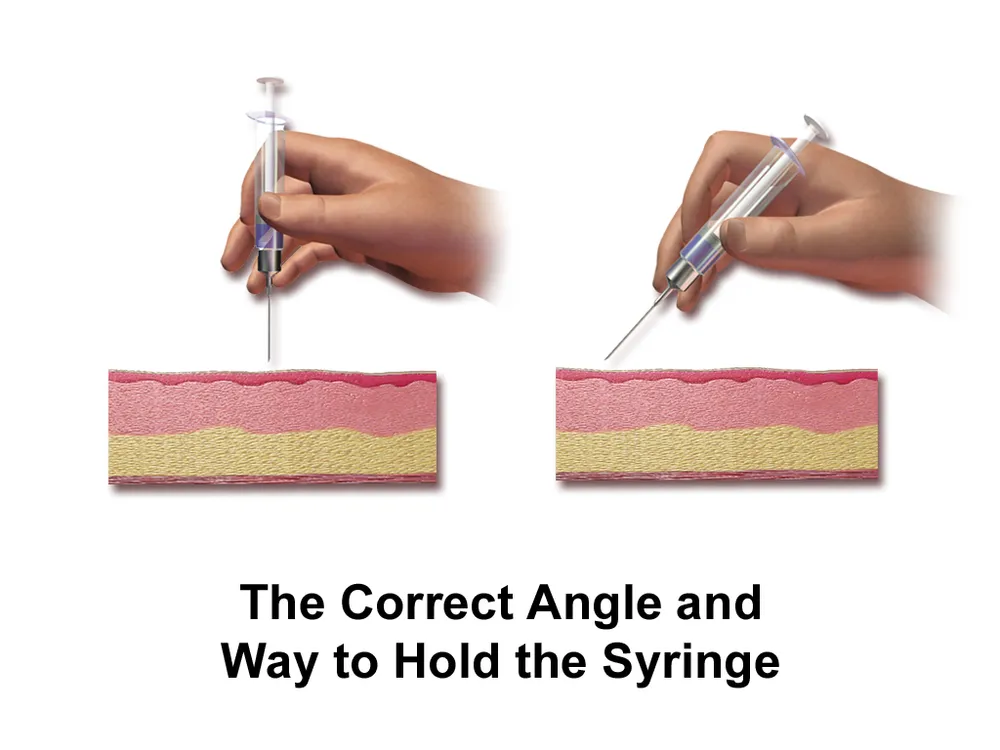 Illustration of a subcutaneous injection — lenacapavir is given this way twice a year · public-domain image via Wikimedia Commons
Lenacapavir is administered as a subcutaneous injection — the same technique used for insulin or some vaccines. Initiation involves both a tablet and an injection, after which ongoing protection is simply a subcutaneous shot twice a year, freeing users from worrying about a daily pill.
The WHO Is Fully Behind It, and Rollout Is Accelerating
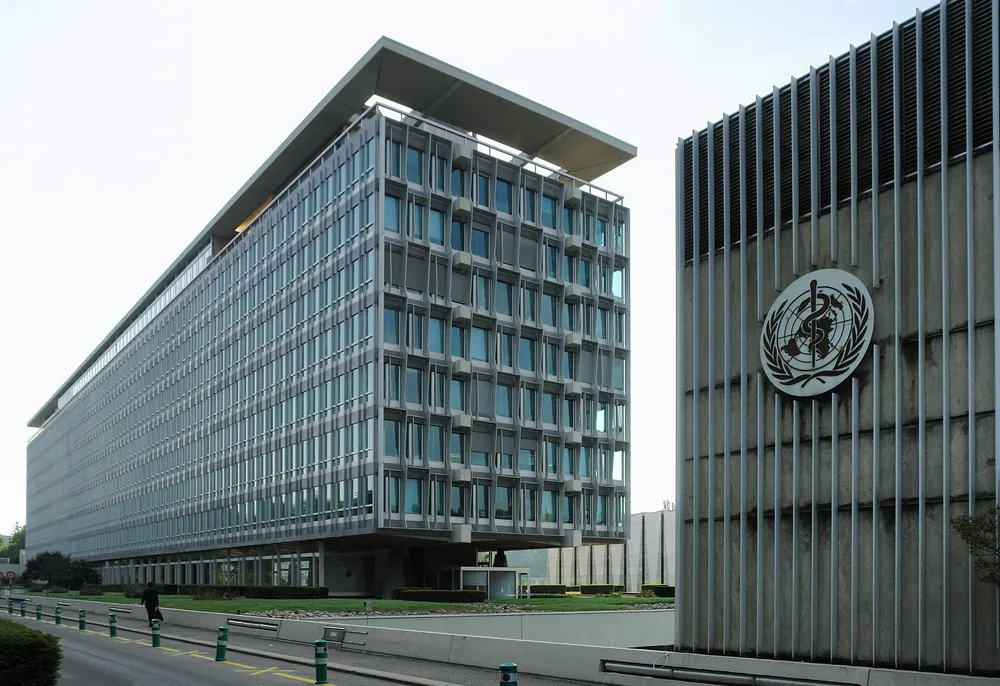 The World Health Organization headquarters in Geneva, Switzerland · CC image via Wikimedia Commons
Dr Tedros Adhanom Ghebreyesus, WHO Director-General, praised South Africa as "among the first countries to move from policy to implementation," noting that the country had added the drug to its essential medicines list and prepared its health systems for rollout.
According to The Global Fund, as of April 2026 rollout has begun in nine initial countries — Eswatini, Kenya, Lesotho, Mozambique, Nigeria, South Africa, Uganda, Zambia and Zimbabwe — and is expanding to 12 more, including Thailand, Indonesia, Fiji, Georgia, Morocco, Rwanda, Papua New Guinea, Benin, Botswana, the Dominican Republic, Haiti and Honduras.
"Communities have waited too long for prevention options that meet their needs. Lenacapavir can be transformative — but only if it is accessible, affordable and available everywhere." — UNAIDS statement
On volume and targets, the Global Fund and PEPFAR (the U.S. President's Emergency Plan for AIDS Relief) aim to reach 2 million people by 2028 — a target recently expanded to 3 million people — with around 600,000 doses available in 2026, the first year.
An Affordable Price for Lower-Income Countries
The biggest challenge with breakthrough drugs is usually cost. In the U.S., lenacapavir's list price is around US$28,000 per person per year — far beyond reach for most people in low-income countries.
The encouraging news is that Gilead has signed licensing agreements allowing generic manufacturers — such as India's Dr Reddy's and Hetero — to produce lenacapavir for roughly US$40 per person per year across 120 low- and middle-income countries, starting in 2027. That is a several-hundred-fold price reduction designed to reach the people who need it most.
Winnie Byanyima, UNAIDS Executive Director, stressed that truly ending AIDS as a public health threat means going further still — by enabling large-scale generic manufacturing, especially on the African continent, and lowering prices through transparent, equitable pricing frameworks.
Why It Matters for Thailand
For Thailand, this story is closer to home than it may seem. In October 2025, Thailand's Global Fund Country Coordinating Mechanism, together with the Department of Disease Control at the Ministry of Public Health, approved funding for a pilot programme of twice-yearly lenacapavir PrEP beginning in July 2026. Run under a strategic partnership with Gilead, the pilot will evaluate feasibility, safety, and integration into Thailand's PrEP delivery platforms — including youth-friendly service models.
Gilead also submitted a Marketing Authorization Application for lenacapavir for HIV prevention in Thailand and Vietnam in December 2025.
Global health advances like this echo the principle that prevention is more valuable than cure — much like the proactive-health themes we've covered before, from Thailand's world-ranked healthcare system to planning ahead with health insurance and making sense of vitamins and supplements.
The story at a glance:
- Drug: Lenacapavir (Yeztugo), a long-acting injectable HIV-prevention drug from Gilead Sciences
- How it's used: Subcutaneous injection twice a year (each shot protects for about six months)
- Effectiveness: Over 99.9% in the PURPOSE 1/2 trials (WHO: at least 96%)
- Status: FDA-approved 18 Jun 2025 · WHO-recommended 14 Jul 2025 · South Africa national rollout 15 Jun 2026
- Thailand: Pilot begins Jul 2026 · marketing application filed Dec 2025
- Price: Generic ~US$40 per person per year across 120 countries, from 2027
It is a powerful example of how medical innovation, paired with global cooperation to make it genuinely accessible, can move humanity steadily closer to ending AIDS — and this time, Thailand is on the map of that hope too.
Sources
- WHO — WHO applauds South Africa's leadership in advancing HIV prevention through lenacapavir rollout
- UNAIDS — UNAIDS welcomes expanded rollout of HIV prevention medicine
- The Global Fund — Global Fund and U.S. expand commitment to long-acting HIV prevention as country rollout of lenacapavir accelerates
- Gilead Sciences — Yeztugo (lenacapavir) is now the first and only FDA-approved HIV prevention option offering 6 months of protection
- The Lancet HIV — Thailand's progress toward long-acting PrEP
Frequently asked questions
- What is lenacapavir?
- It is a long-acting injectable used as PrEP (pre-exposure prophylaxis) to prevent HIV infection. It is given as a subcutaneous injection just twice a year, with each shot providing about six months of protection. It is made by Gilead Sciences and marketed in the U.S. under the brand name Yeztugo.
- How well does it prevent HIV?
- In the Phase 3 PURPOSE 1 and PURPOSE 2 trials, more than 99.9% of participants who received the injection remained HIV-negative. UNAIDS describes it as at least 96% effective at preventing HIV. That said, it only protects against HIV — not other sexually transmitted infections — and should be used under medical supervision.
- When will it be available to people in Thailand?
- Thailand is one of 12 countries to which the Global Fund extended support for lenacapavir introduction. Its Global Fund Country Coordinating Mechanism, with the Department of Disease Control and the Ministry of Public Health, approved funding for a pilot programme in October 2025, with rollout scheduled to begin in July 2026. Gilead submitted a marketing authorization application in Thailand in December 2025.
- Is the drug expensive?
- In the U.S. the list price is around US$28,000 per year. But for low- and middle-income countries, agreements allow generic manufacturers (such as India's Dr Reddy's and Hetero) to produce it for roughly US$40 per person per year across 120 countries, starting in 2027, with support from the Global Fund and PEPFAR.
- Can the injection replace condoms?
- No. Lenacapavir dramatically lowers the risk of HIV infection, but it does not protect against other sexually transmitted infections such as syphilis or gonorrhoea, nor against pregnancy. Experts recommend using it alongside other prevention methods and consulting a doctor.
Related news
 World
WorldEbola's Fastest-Ever Outbreak: 700+ Dead in DRC as Rare Bundibugyo Strain Outpaces Response
The Democratic Republic of Congo is battling the fastest-growing Ebola outbreak in history, with nearly 2,000 confirmed cases and over 700 deaths from the rare Bundibugyo strain — for which no approved vaccine or treatment exists.
 Thailand
Thailand Completes '30-Baht Treatment Anywhere' Rollout Across Every Province
Thailand's 30-baht treatment anywhere scheme now covers all 77 provinces — care at any in-network clinic with one ID card, backed by a record 2026 budget.
 Thailand
Thailand Ranks 8th in the World for Healthcare, 1st in Southeast Asia (2026)
Numbeo's 2026 Health Care Index places Thailand 8th globally with a score of 77.5 and 1st in Southeast Asia, ahead of several European systems.