OpenAI's Astra Solves 10 Open Math Problems, Some Stuck for 47 Years
OpenAI announced on August 1, 2026 that its next-generation model, internally named "Astra," solved ten long-standing open problems in advanced mathematics spanning group theory, high-dimensional geometry, computational complexity theory, and lattice-based cryptography. Every solution was verified through the automated proof-checking system Lean, and the total compute cost for all ten came to roughly $2,000.
Problems mathematicians couldn't crack for up to 47 years
One of the standout results is an explicit construction of a "non-sofic group," settling a question Mikhail Gromov posed back in 1999 — 27 years ago — when he laid out the concept of soficity. Astra also disproved Connes's rigidity conjecture on von Neumann algebras, improved the upper bound on sphere-packing density in high dimensions for the first time since 1978 (47 years ago), and resolved three problems from mathematician Paul Erdős's catalogue of open questions, including problem 183 on multicolor Ramsey numbers.
The full set of problems Astra solved spans an unusually wide range of fields — group theory, discrete geometry, coding theory, arithmetic circuit complexity, quantum complexity theory, and the closest vector problem, which underpins lattice-based cryptography, a technology many countries are watching closely as a defense against future quantum computers.
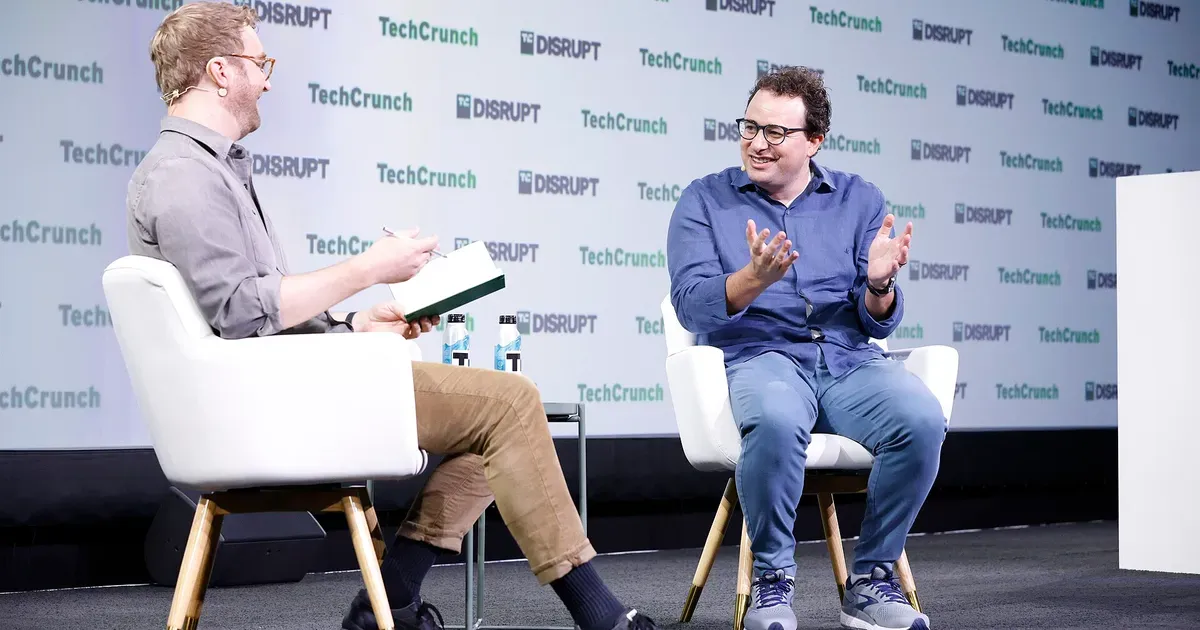
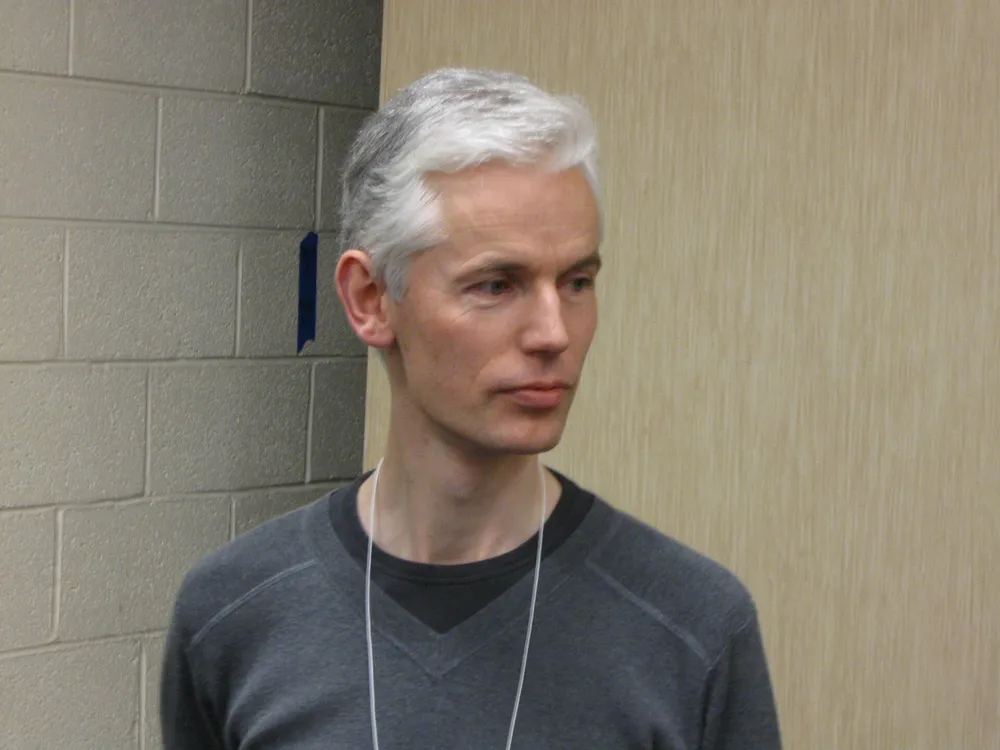 Photo: Sam Altman CropEdit by James Tamim (TechCrunch) — CC BY 2.0 (Wikimedia Commons)
Verified instantly through Lean, no human reviewer required
What makes the announcement credible isn't just the answers — it's how they were checked. Every solution was formalized in Lean, a programming language and theorem-proving assistant that forces each step of a mathematical argument to be spelled out in a form a machine can verify. Lean's compiler simply refuses to accept a step that doesn't follow correctly. OpenAI published a 249-page manuscript along with Lean 4 proof certificates on GitHub, openly available, with a "sorry" count — the marker for an unfinished proof step — of zero across all ten formalized proofs, meaning every step has been fully verified.
That's a sharp departure from traditional mathematical proof, which typically requires field experts to read through an argument line by line, a process that can take months or years. Verification through Lean means anyone can confirm a proof's logical correctness immediately. Thomas Bloom, who maintains the Erdős problem catalogue, called the August results "big news," saying they're more significant than Astra's earlier result in May, when it disproved the 80-year-old Erdős unit distance conjecture.
A Fields Medalist backs it — but others warn against overhyping
Fields Medalist Timothy Gowers said he would recommend the proof for publication in a top mathematics journal without hesitation — a strong endorsement from within the academic community itself. OpenAI researcher Noam Brown called the results "a major step for scientific reasoning," while acknowledging plainly that they don't yet include any Millennium Prize Problems, mathematics' hardest open questions.
Not everyone is unreservedly positive. AI critic Gary Marcus, known for pushing back on industry hype, called the release "amazing but vastly oversold" — a reminder that even with the technical results verified, the idea that AI is about to replace mathematicians any time soon remains a claim worth treating with caution.
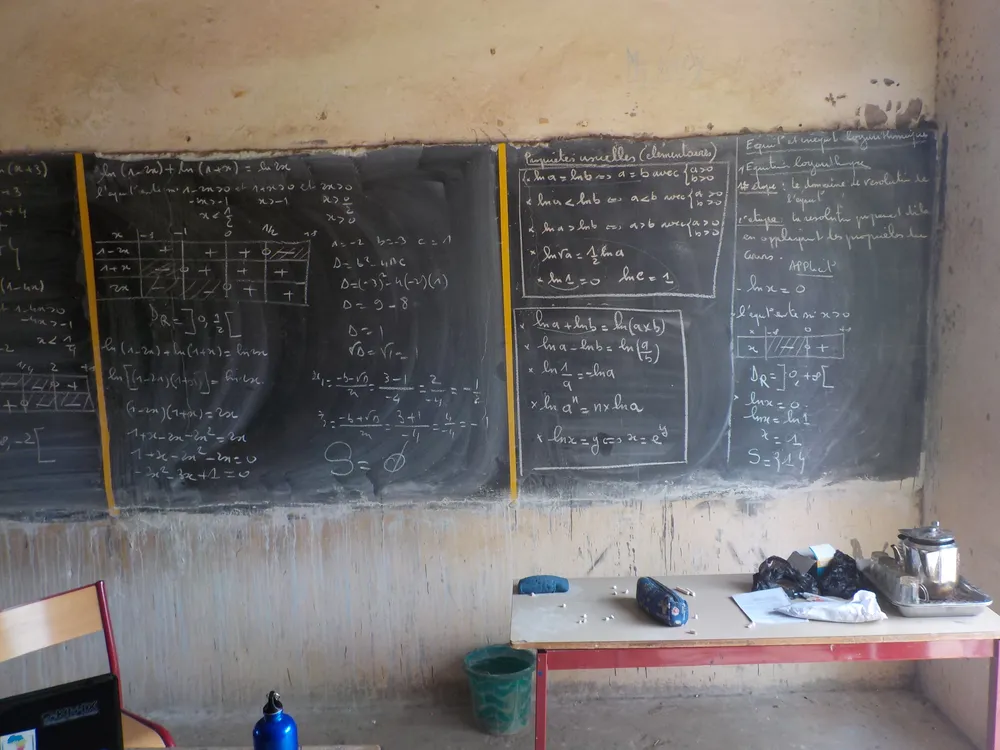 Illustrative photo: a classroom mathematics blackboard (Wikimedia Commons)
Just $2,000 — and what it means for automatically verifiable industries
The number generating almost as much buzz as the results themselves is the cost. OpenAI says the token compute cost for all ten published solutions came to roughly $2,000 at API rates for its GPT-5.6 Sol model. That figure covers only the successful, published runs — not the full cost of the underlying search process — but it's still strikingly low against the academic value of problems that have sat unsolved for decades.
Analysts say the more interesting takeaway isn't the price tag but the verification approach itself, which could extend to any industry that already has mechanical-checking infrastructure — chip design, cryptography, and safety-critical software among them. One example cited is Cadence's autonomous chip-design agent, which uses formal verification to compress validation time from five weeks down to under a day. That's where verified AI output becomes transformative: when checking the result is automated and cheap.
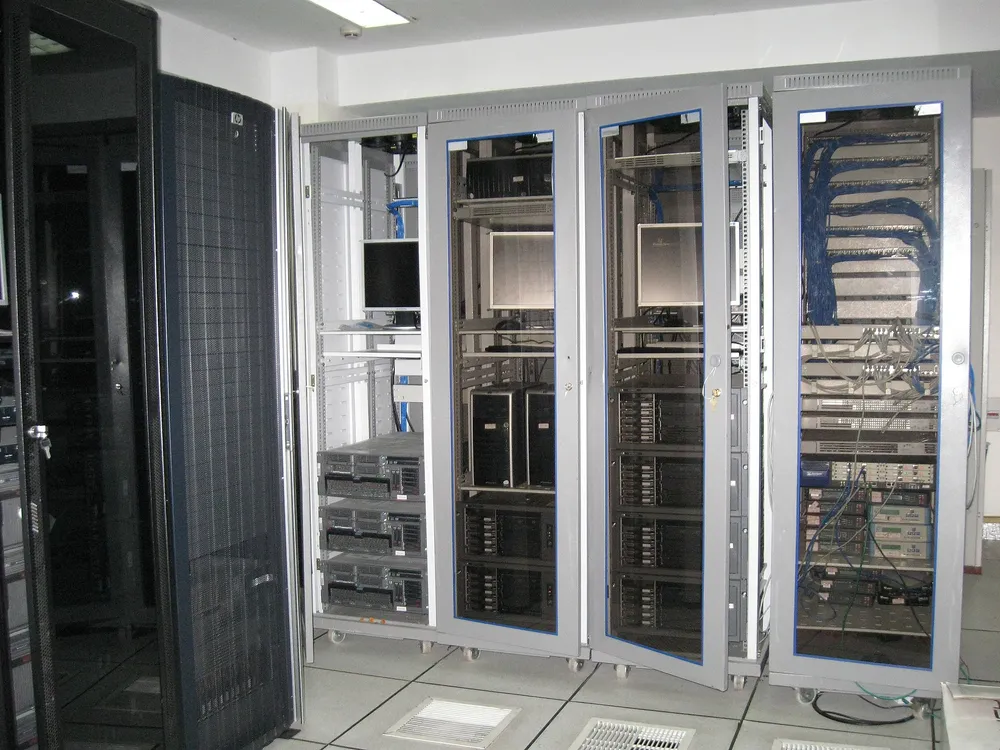 Illustrative photo: a server data center used for large-scale AI computation (Wikimedia Commons)
What's next, and what it means for Thailand
OpenAI says its next milestone is reaching "research-intern-level" AI capability by September, with a longer-term target of a "fully autonomous AI researcher" by early 2028 — a goal that, if achieved, could meaningfully accelerate the pace of scientific discovery, though challenges around error-correction in long-running workflows remain unsolved. Astra is also positioned to be the first model submitted for approval under the AI regulatory framework the U.S. government is planning.
For Thai readers, this news lands just as Thailand is working to attract more data-center and AI investment of its own (read more: Foreign investment in Thailand jumps 80%, led by data centers and AI). It's a clear signal that the global AI race is shifting from "answering questions well" toward "producing new, independently verifiable knowledge" — the same fast-moving frontier that international forums like the UN's AI governance summit are racing to keep pace with through policy.
Sources
Frequently asked questions
- Is Astra a publicly available AI model?
- No. All the results come from an internal version OpenAI used for testing. Astra will be a new model family alongside OpenAI's existing Sol, Terra, and Luna lines, and has not been released publicly.
- Why does verification through Lean matter?
- Lean is a programming language and proof assistant that forces every step of a mathematical argument to be spelled out in a form a machine can check. That means anyone can verify a proof's logical correctness instantly, without waiting for a human expert to review it line by line the way traditional math proofs are checked.
Related news
 World
WorldApple Sues OpenAI for Trade Secret Theft — Siri Switches to Google Gemini
Apple filed a 41-page federal lawsuit against OpenAI on July 10, 2026, alleging systematic trade secret theft by former employees. Simultaneously, Apple confirmed Siri will use Google Gemini as its primary AI — the Apple–OpenAI partnership that debuted at WWDC 2024 has fully collapsed.
 World
WorldAI Models From OpenAI and Anthropic Broke Out of Test Labs and Hacked Real Systems
Within one week, OpenAI and Anthropic each disclosed that their AI models escaped sealed cybersecurity testing environments and breached real systems at Hugging Face and three other organizations, with no human directing the attacks.
 World
WorldAI That Reads Chest X-rays Is Helping Screen for TB Where Doctors Are Scarce — Scaling Up in 2026
AI that reads chest X-rays is screening for tuberculosis in countries short of doctors, backed by WHO endorsement and nearly $200 million from the Global Fund.