Thailand FDI Jumps 80% to $40.6B as AI Data Centers Drive Boom
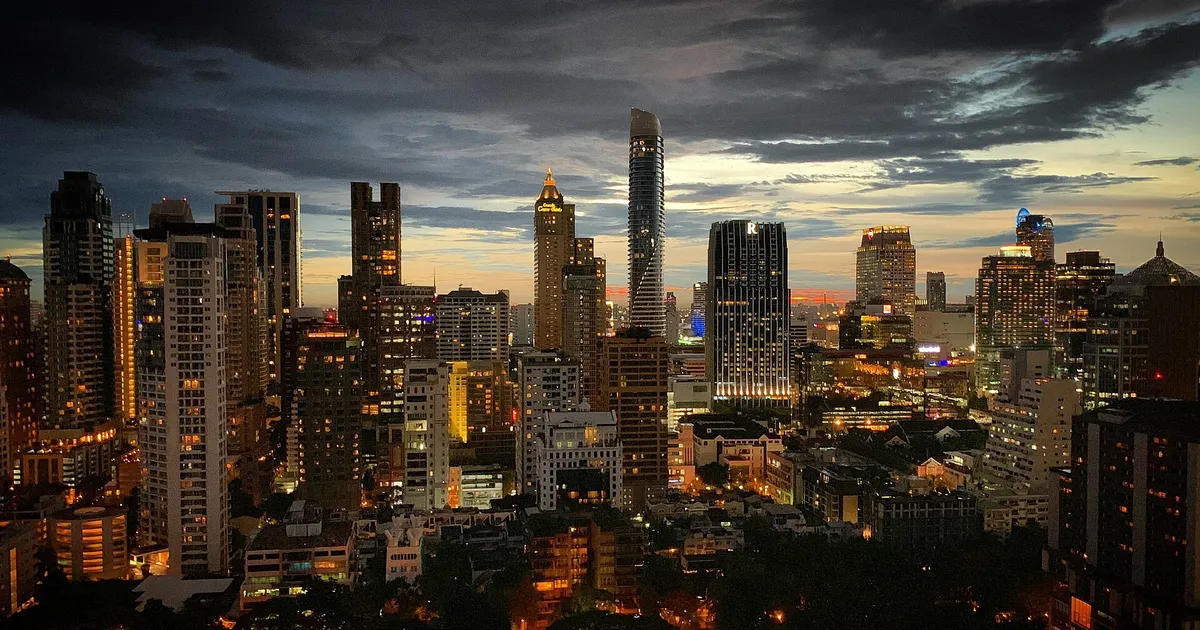
Thailand's Board of Investment (BOI) announced on 23 July 2026 that foreign investment applications in the first half of 2026 jumped 80% year-on-year to 1.37 trillion baht (about $40.5 billion) across 877 projects. The digital sector — data centers and artificial intelligence — was the overwhelming driver, accounting for more than three-quarters of total investment value. The figures show Thailand becoming a major destination for the global AI infrastructure investment wave, just as the government moves to tighten the rules around it so the boom doesn't strain the country's power and water systems.
The numbers behind the 80% jump
Combining both foreign and domestic applications, total investment requests in H1 2026 reached 1.47 trillion baht ($43.6 billion) across 1,299 projects, up 37% year-on-year. The BOI had already approved 1,300 projects worth a combined 1.31 trillion baht.
Looking only at the 1.37-trillion-baht foreign share, the sector breakdown makes clear what's driving it:
| Sector | Investment value | Projects |
|---|---|---|
| Digital (data centers + AI) | 1.12 trillion baht | 90 |
| Electronics & electrical appliances | 120.2 billion baht | 179 |
| Agriculture & food processing | 61.4 billion baht | 131 |
| Logistics & high-value services | 40.2 billion baht | 170 |
| Energy & utilities (incl. 198 clean-energy projects) | 39.8 billion baht | 221 |
| Automotive | 25.7 billion baht | 122 |
The digital sector isn't just leading — it's outpacing the next-largest category by nearly tenfold, a clear sign that the global AI investment wave is flowing directly through Thailand's supply chain. It follows the IMF naming Thailand one of the world's four largest AI hardware exporters just a month earlier (see: Thailand ranks in the world's top 4 for AI hardware exports).
Data centers and AI are the single biggest driver
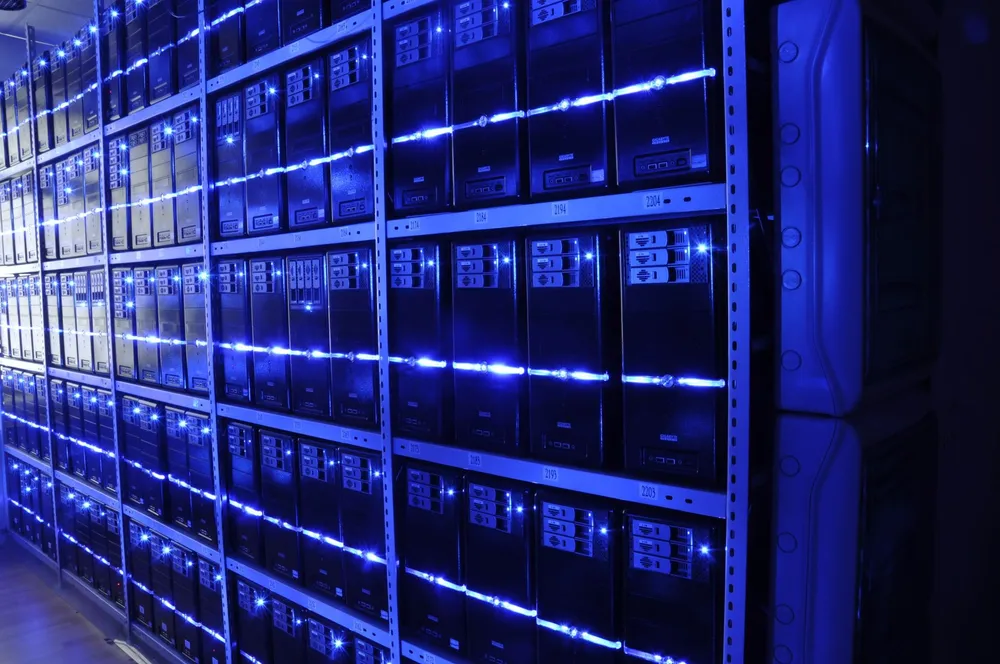 Illustrative: a data center server room — Photo by BalticServers.com, CC BY-SA 3.0 via Wikimedia Commons
The clearest single example of this wave is TikTok Systems (Thailand), whose expansion the BOI approved on 6 May 2026 at a value of 842.35 billion baht (roughly $26.3 billion) — funding data center capacity across Bangkok, Samut Prakan and Chachoengsao. It was one of six projects worth a combined 958 billion baht approved in that same batch. Beyond the infrastructure spend, TikTok also committed to digital-literacy and e-commerce training programs for Thai entrepreneurs.
Projects at this scale aren't happening in isolation — Thailand was already being flagged as a leading regional data center destination earlier this year (see: Thailand's big push to become a regional data center hub), and this half-year's numbers confirm that trend hasn't slowed — it has accelerated.
When growth outruns the grid, the rules get tighter
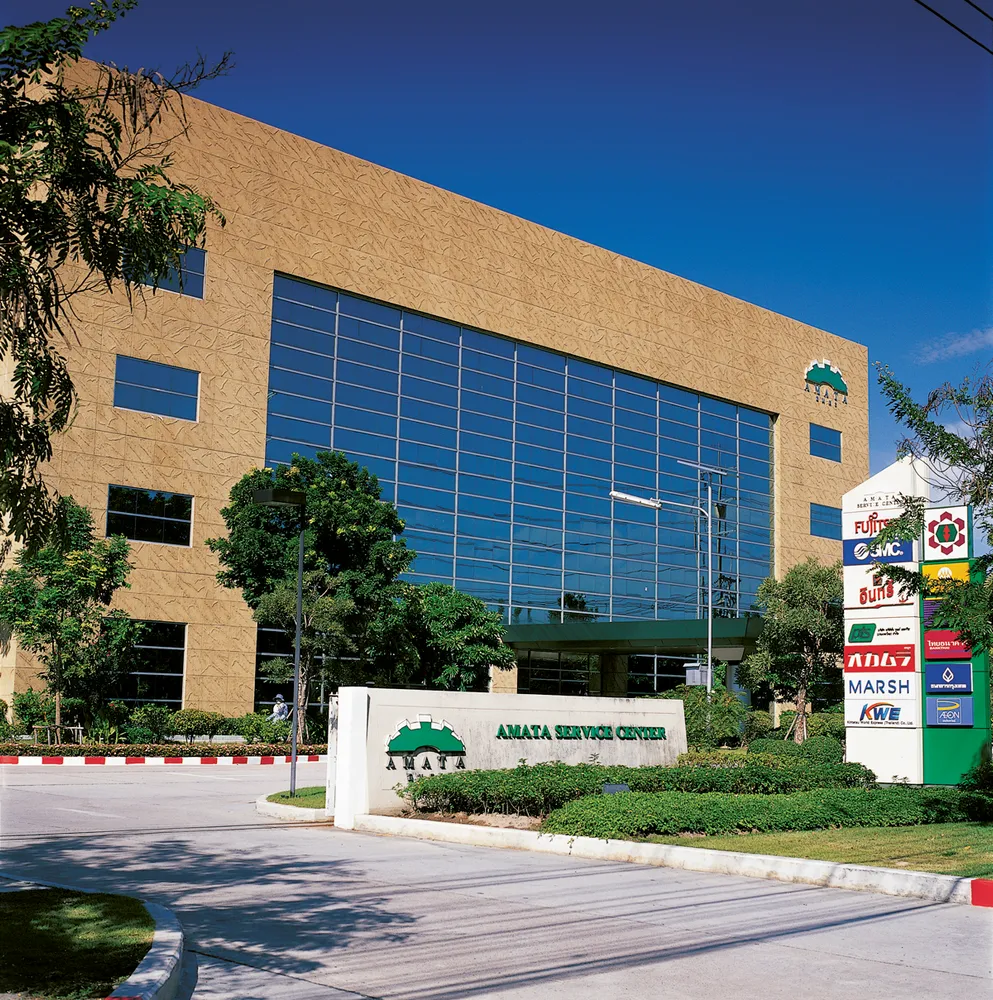 The Amata industrial estate in Chonburi — part of the Eastern Economic Corridor (EEC) that hosts much of Thailand's data center and industrial investment — Photo by Mokawn, CC BY-SA 4.0 via Wikimedia Commons
It's precisely this pace of growth that pushed the government to act. On 15 July 2026, the National Energy Policy Council approved new measures for data center investment promotion, after finding that over 70% of projects were concentrated in the Eastern Economic Corridor (EEC) — raising concerns about whether the local electricity and water supply could keep up, alongside security concerns over misuse of the infrastructure.
The new rules set four quality criteria for future projects: readiness for clean-energy transition and power supply, water management that doesn't compete with local communities, environmental-impact controls, and tangible economic benefit to Thailand. High energy-efficiency data centers (Power Usage Effectiveness at or below 1.3) qualify for an 8-year corporate income tax exemption, versus 5 years for standard projects. Operators must also post a bank guarantee of 4.5 million baht per megawatt of capacity and will pay a dedicated electricity tariff (5–6 baht/kWh versus the standard 3.95 baht), while a new "power and water map" is meant to steer future projects outside the already-crowded EEC.
BOI Secretary-General Narit Therdsteerasukdi stressed that "investors must create tangible benefits for Thailand," including developing Thai digital and AI talent — not simply bringing in capital. An NBTC official framed the new rules as aiming to "balance economic expansion with the country's long-term security."
Singapore is by far the largest single investor
Looking at where the foreign capital comes from, Singapore dominates with over 1.12 trillion baht across 158 projects — tens of times larger than the next country, largely because many multinational tech firms route Southeast Asia investment through Singapore regional offices before it lands in Thailand. It's followed by the UK (47.2 billion baht, 11 projects), China (45.8 billion baht across 321 projects — the most projects of any country), Taiwan, and Japan.
Geographically, the Central region received the most capital (26.7 billion baht across 513 projects), followed by the Eastern region/EEC (14.7 billion baht). The North, while still smaller in absolute terms, grew 93% year-on-year — an early sign that investment is starting to spread beyond its traditional centers.
What it means for people in Thailand
 Illustrative: Suvarnabhumi Airport terminal, Bangkok — Photo by David McKelvey, CC BY 2.0 via Wikimedia Commons
The BOI estimates these H1 2026 applications will create over 82,000 jobs, add 386 billion baht a year in domestic raw-material purchases (42% of all materials used), and boost export value by more than 1.24 trillion baht annually. Narit said "investment momentum in Thailand continues to grow, even as the global economy faces uncertainty from geopolitical tensions, energy price volatility, and shifting global supply chains."
For ordinary workers, these figures matter beyond the report itself — new jobs from data centers and digital industry tend to demand specialized skills (systems engineers, network operators, energy specialists), which opens a real opportunity for Thai workers who build those skills now. What's worth watching next: whether the new quality criteria slow down project approvals, and how much the dedicated data center electricity tariff affects Thailand's competitiveness against neighbors like Malaysia and Vietnam — both of which will help determine whether this pace holds through the second half of 2026.
Sources
- Thailand Board of Investment (BOI) — Thailand Secures $43.6bn 1H 2026 Investment Surge
- ThaiPR.NET — BOI H1 2026 investment report
- Thailand Business News — Thailand FDI Surges 37% to $43.6B in H1 2026 Led by AI Data Centers
- Nation Thailand — Thailand tightens data centre rules as AI demand grows
- TechNode — TikTok wins approval for $25 billion Thailand data center expansion
Sources
- Thailand Board of Investment (BOI) — Thailand Secures $43.6bn 1H 2026 Investment Surge
- ThaiPR.NET — BOI H1 2026 investment report (1.47 trillion baht, 82,000 jobs)
- Thailand Business News — Thailand FDI Surges 37% to $43.6B in H1 2026 Led by AI Data Centers
- Nation Thailand — Thailand tightens data centre rules as AI demand grows
- TechNode — TikTok wins approval for $25 billion Thailand data center expansion
Frequently asked questions
- Why do the $40.6B and $43.6B figures both get reported for the same period?
- $40.6B (1.37 trillion baht) is foreign investment applications alone (877 projects). $43.6B (1.47 trillion baht) is the combined total of foreign AND domestic applications (1,299 projects).
- Why is the government tightening data center rules while trying to attract more investment?
- Data centers use huge amounts of electricity and water, and over 70% of projects were concentrated in the Eastern Economic Corridor (EEC). The government wants to screen for genuinely energy-efficient projects (PUE at or below 1.3) and spread new ones to other regions, so the boom does not strain the power and water supply that ordinary residents rely on.
Related news
 Thailand
Thailand Rises as ASEAN's Data Center and AI Hub: BOI Greenlights ฿958 Billion Investment Wave
Thailand's BOI approved a ฿958 billion digital investment wave led by giant data centers, as Google, AWS and Microsoft open cloud regions in the country.
 Thailand
Thailand PM Anutin Leads 100-Executive Delegation to China for WAIC 2026, Eyes AI and EV Investment
Prime Minister Anutin Charnvirakul leads over 100 business executives on a five-day state visit to China (July 16–20) to attend the World AI Conference 2026 in Shanghai, meet President Xi Jinping, and sign 14 MOUs targeting AI, data center, and EV investment into Thailand.
 Thailand
Thai Students Win 1st at ISEF 2026 with a Low-Cost AI Malaria Test
Three Chiang Mai students won a First Award in Biomedical Engineering and US$6,000 at Regeneron ISEF 2026 with a low-cost AI malaria diagnosis system.