Thailand Rises as ASEAN's Data Center and AI Hub: BOI Greenlights ฿958 Billion Investment Wave

Thailand is emerging as one of ASEAN's hottest data center and AI-infrastructure hubs after the Board of Investment (BOI) greenlit a major wave of digital-technology investment worth roughly ฿958 billion (about US$29 billion) at its 7 May 2026 board meeting — while the world's three largest cloud providers, Google, Amazon and Microsoft, have all already established regions in the country.
A Record-Setting Round of Deals
The same approval covered six projects, and the standout was a trio of data center and cloud-services projects worth a combined ~฿913 billion. Leading the wave was a project by TikTok System (Thailand) worth roughly ฿842 billion (about US$25 billion) to expand server installation and data processing-and-storage facilities across Bangkok, Samut Prakan and Chachoengsao.
It was followed by Skyline Data Center and Cloud Services (part of UAE's DAMAC group) worth about ฿46 billion with a 200-megawatt IT load in Chachoengsao, and Bridge Data Centres (from Singapore) worth about ฿24.6 billion with a 134-megawatt load in Chonburi.
"Investment in Thailand's digital and advanced technology sectors continues to grow." — Narit Therdsteerasukdi, Secretary General of the BOI
Numbers on a Steep Climb
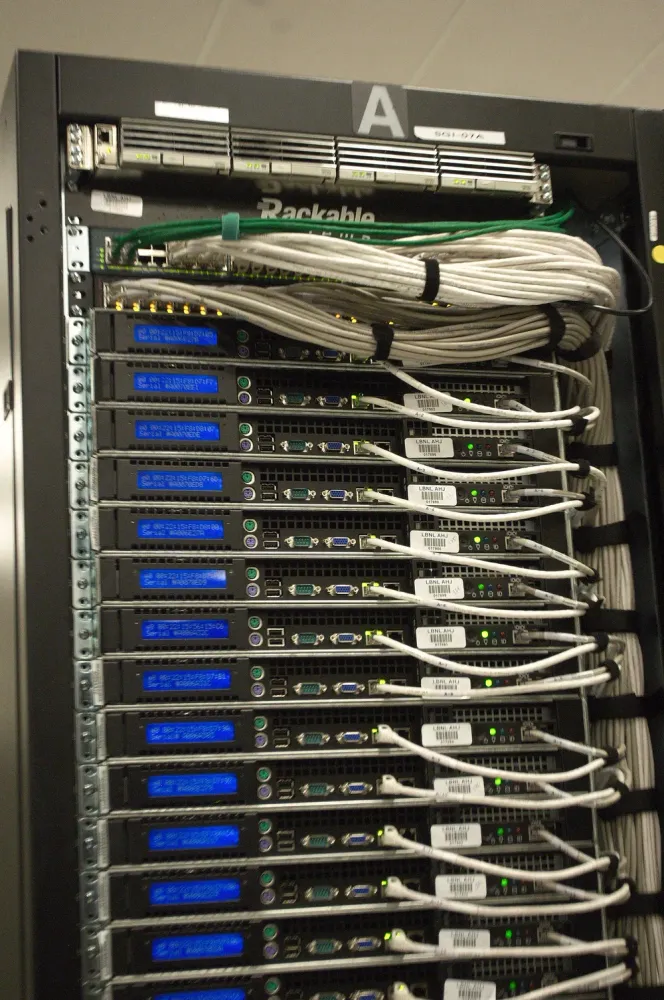 Illustrative photo: a server rack at the heart of a data center — CC BY-SA via Wikimedia Commons
The momentum did not appear overnight. In 2025, Thailand attracted more than ฿728 billion in data center investment applications across 36 filings — a more than sevenfold jump from about ฿98.5 billion in 2024. Investors came from Europe, Singapore, Japan, the United States and Thailand itself, clustering in Rayong, Chonburi, Pathum Thani and Samut Prakan.
Heading into 2026 the momentum only intensified: BOI investment applications in the digital sector during the first quarter of 2026 reached record highs, with digital-sector application value running into the hundreds of billions of baht — a sign that Thailand has become a top regional destination for AI-related capital.
Three Cloud Giants Plant Their Flags
The clearest endorsement of Thailand's status is that all three global cloud providers have chosen to build infrastructure in the country. Amazon Web Services (AWS) opened a Thailand region alongside an announced ~US$5 billion investment, Microsoft launched its first Thailand cloud region, and Google Cloud officially opened its Bangkok region in January 2026 as part of a roughly US$1 billion commitment to the country.
Google estimates its Bangkok region will add about ฿1.4 trillion (around US$41 billion) to Thailand's GDP over five years and support an average of 130,000 jobs a year, while giving Thai businesses local access to AI tools such as Vertex AI and Gemini models — with data governance aligned to Thailand's Personal Data Protection Act (PDPA).
"Our new Thailand cloud region brings the same world-class infrastructure that powers Google's global services directly to Thai enterprises, startups and public sector institutions." — Karthik Narain, Google Cloud
Why This Matters for Thais
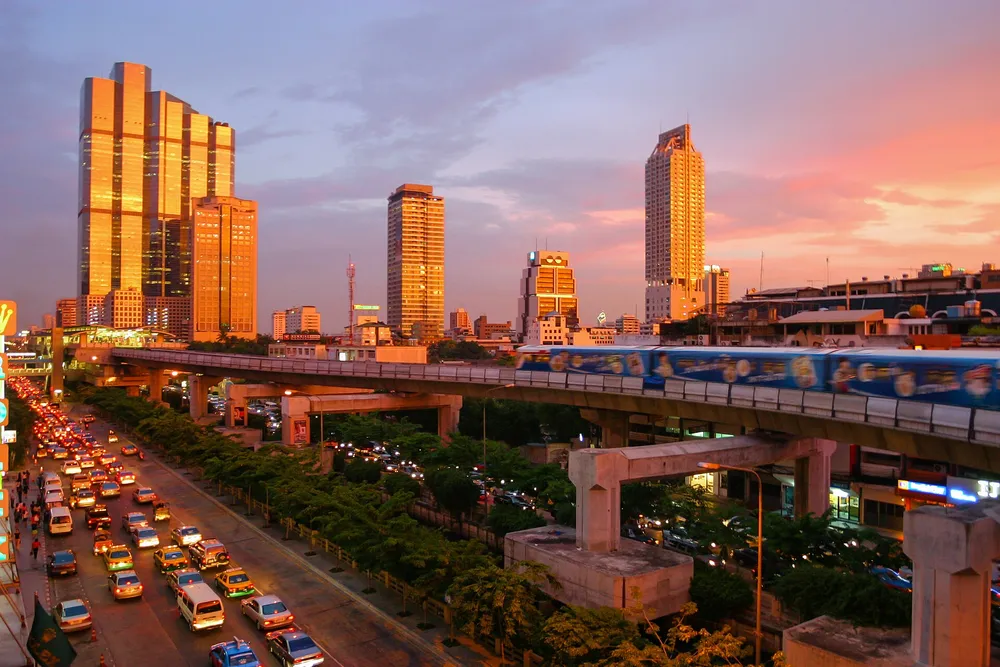 Illustrative photo: the Bangkok skyline — the heart of Thailand's digital economy that investment capital is now flowing into — CC BY-SA via Wikimedia Commons
The huge inflows are not just headline numbers — they touch ordinary Thais in several ways: through high-skill jobs in engineering, power systems, cooling and cybersecurity, and through local access to AI computing power for Thai startups and businesses, who no longer need to send data abroad. That means lower cost, lower latency and easier compliance with data laws.
Having cloud infrastructure in-country also lets Thai digital services run faster and more reliably, matching the way Thais increasingly use AI tools and cloud services in daily life — see our guides on free Google AI tools Thais can use and how to choose a worthwhile cloud storage service.
This builds on a string of Thai innovation success stories making waves globally, such as the Thai students' malaria-detecting AI at the ISEF competition — a sign that both Thailand's people and its technology infrastructure are growing together.
Looking Ahead: From Data Centers to Chips
Thailand is not content to be merely a "place to put servers." It is planning further upstream with a "Made-in-Thailand" semiconductor plan targeting 2050, aiming to attract more than ฿2.5 trillion in investment over 25 years (2026–2050) and to build a skilled workforce of over 230,000 people across power, sensor, photonics and other chip categories — feeding the automotive, electronics, telecom and AI industries.
The challenges to watch are sufficient, clean electricity — AI data centers are enormous power consumers — and developing enough skilled talent to keep pace. If Thailand manages both well, becoming ASEAN's digital hub is well within reach.
Key facts (approved 7 May 2026):
- New investment wave: 6 projects, ~฿958 billion total (~US$29 billion)
- Data centers/cloud: 3 projects, ~฿913 billion, led by TikTok System at ~฿842 billion
- Global cloud in Thailand: AWS · Microsoft · Google Cloud (Bangkok region, Jan 2026)
- Long term: "Made-in-Thailand" chips by 2050, targeting ฿2.5 trillion investment
Taken together, these are signs that Thailand's digital economy is shifting from "technology user" toward "builder and host" of regional digital infrastructure — good news that lays a foundation for jobs, capital and opportunity for Thais over the long term.
Sources
- Thairath English — Thailand attracts over 720 billion baht in data center investment
- TechNode Global — Thailand approves $29B investment wave as data center demand surges
- Asia Times — Thailand's big money bid to become ASEAN's data center capital
- Computer Weekly — Google Cloud opens Bangkok region to support Thailand's AI economy
- Developing Telecoms — Thailand's BOI approves massive data centre investments
Frequently asked questions
- How large was the BOI's latest digital investment approval?
- On 7 May 2026, the BOI board approved six investment projects worth a combined ~฿958 billion (about US$29 billion). Three of the six were data center and cloud-services projects worth a combined ~฿913 billion.
- Which is the largest approved data center project?
- A project by TikTok System (Thailand) Co., Ltd., valued at about ฿842 billion (around US$25 billion), to expand server installation and data processing/storage across Bangkok, Samut Prakan and Chachoengsao.
- Which global cloud providers have invested in Thailand?
- Amazon Web Services, Microsoft and Google Cloud (which opened its Bangkok region in January 2026) have all established cloud infrastructure in Thailand. Google estimates its region will add about ฿1.4 trillion to GDP over five years and support an average of 130,000 jobs a year.
- How does this benefit ordinary Thais?
- It creates high-skill jobs, draws capital and technology into the country, gives Thai startups and businesses local access to AI computing power (lower cost, no need to send data abroad), and lays the foundation for a long-term digital economy — including a 'Made-in-Thailand' chip plan by 2050.
- Why is Thailand attracting so many data centers right now?
- Key drivers are surging global demand for AI computing power, Thailand's central ASEAN location, its power grid and subsea cables, the EEC industrial zone, and BOI investment incentives.
Related news
 Thailand
Thailand FDI Jumps 80% to $40.6B as AI Data Centers Drive Boom
Foreign investment in Thailand jumped 80% to $40.6B in H1 2026, led by AI data centers and digital infrastructure — creating over 82,000 jobs.
 Thailand
Thailand PM Anutin Leads 100-Executive Delegation to China for WAIC 2026, Eyes AI and EV Investment
Prime Minister Anutin Charnvirakul leads over 100 business executives on a five-day state visit to China (July 16–20) to attend the World AI Conference 2026 in Shanghai, meet President Xi Jinping, and sign 14 MOUs targeting AI, data center, and EV investment into Thailand.
 Thailand
Thai Students Win 1st at ISEF 2026 with a Low-Cost AI Malaria Test
Three Chiang Mai students won a First Award in Biomedical Engineering and US$6,000 at Regeneron ISEF 2026 with a low-cost AI malaria diagnosis system.