Thai Students Win 1st at ISEF 2026 with a Low-Cost AI Malaria Test

In a bright spot for Thai youth science, a student team from The Prince Royal's College in Chiang Mai has won a First Award in Biomedical Engineering, along with a US$6,000 prize, at Regeneron ISEF 2026 — the world's largest pre-college science competition — for a low-cost, AI-powered system that automatically diagnoses malaria in remote areas.
The fair was held in Phoenix, Arizona, USA, from 9–15 May 2026 — the 76th edition — bringing together more than 1,700 young scientists from over 60 countries to compete for upwards of US$7 million in awards. Thai students brought home six awards in total this year.
How "MalariaX" works
The three students behind the project — Natdanai Suksri, Nattaphong Thaworn and Poomjai Pongsriwat — developed an entry officially titled "Cost-Effective MalariaX: An AI-Optomechatronic System…", or MalariaX for short: an automated malaria-diagnosis device that combines artificial intelligence with smart microscopy in a single, affordable unit.
Its standout feature is the ability to detect all five major species of malaria at high resolution while sharply cutting diagnosis time. It is built specifically for rural and hard-to-reach communities, where access to labs and specialists is limited and conventional malaria testing is often slow and less accurate.
The world's biggest youth science stage
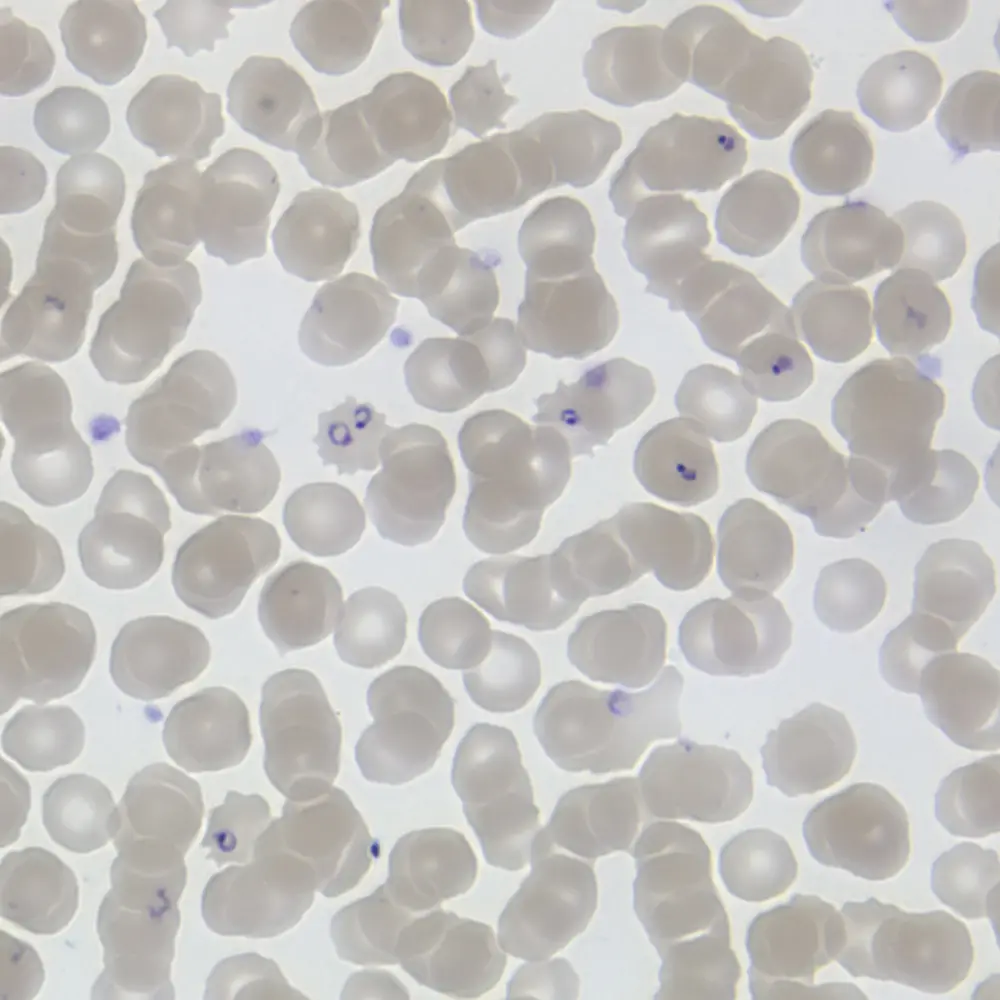 Illustrative: malaria parasites in blood under a microscope — what the MalariaX system is built to detect — Public domain via Wikimedia Commons
Regeneron ISEF (International Science and Engineering Fair) is organised by the US-based Society for Science and is the largest and longest-running pre-college science competition in the world. Finalists must first win at affiliated fairs in their home countries before earning a place on the international stage.
Taking a First Award in Biomedical Engineering against competitors from around the world is no fluke — it reflects the strength of the idea, the maturity of the build, and the ability of Thai teens to apply AI to a real-world problem.
Why it matters
Malaria remains a health threat in many regions, especially along borders and in remote areas where fast, accurate diagnosis is critical to timely treatment. A tool that is cheap, portable and AI-assisted could let small clinics screen patients themselves without always relying on specialists.
Just as important is the inspiration: the win shows Thai students can stand at the front of the global innovation stage — in line with a broader picture of Thailand strengthening both its healthcare system and socially-minded technology, alongside clean-energy breakthroughs drawing attention worldwide.
What's next
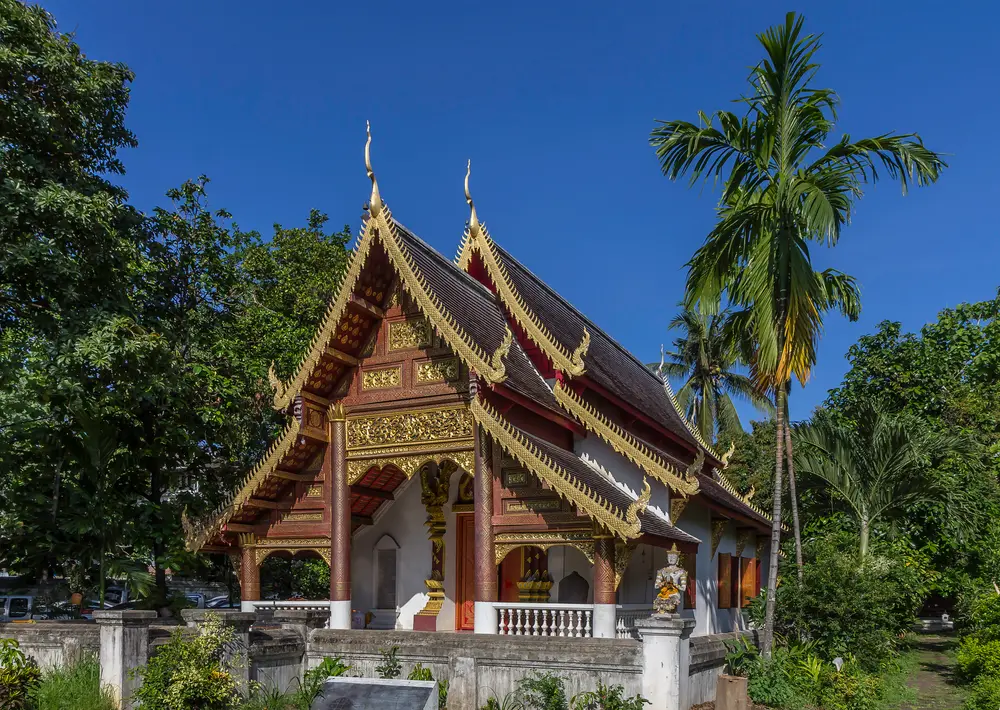 Illustrative: Wat Chiang Man, Chiang Mai — the team's home province — by Stefan Fussan, CC BY-SA 3.0 via Wikimedia Commons
Many ISEF projects go on to real-world deployment or deeper research. If a project like MalariaX is developed and tested further, it could become a genuine life-saving screening tool for remote communities — a strong signal of what investing in science education and backing young Thai talent can achieve.
Key facts
- Team: Natdanai Suksri, Nattaphong Thaworn, Poomjai Pongsriwat — The Prince Royal's College, Chiang Mai
- Award: First Award, Biomedical Engineering · US$6,000 prize
- Project: MalariaX — AI + smart microscopy, detects all 5 malaria species, built for remote areas
- Event: Regeneron ISEF 2026 · Phoenix, Arizona, USA · 9–15 May 2026
- Thailand overall: six awards this year
This report is based on the official award announcements from Society for Science and Regeneron, as of May–June 2026.
Sources
Frequently asked questions
- What did the Thai students win at ISEF 2026?
- A team from The Prince Royal's College in Chiang Mai won a First Award in Biomedical Engineering with a US$6,000 prize, and Thai students took home six awards in total this year.
- What is the winning project?
- MalariaX — a low-cost, automated malaria diagnosis system that pairs AI with smart microscopy to detect all five major malaria species, designed for remote areas.
- When and where was ISEF 2026 held?
- In Phoenix, Arizona, USA, from 9–15 May 2026, with more than 1,700 young scientists from over 60 countries.
Related news
 Thailand
Thailand FDI Jumps 80% to $40.6B as AI Data Centers Drive Boom
Foreign investment in Thailand jumped 80% to $40.6B in H1 2026, led by AI data centers and digital infrastructure — creating over 82,000 jobs.
 Thailand
Thailand Rises as ASEAN's Data Center and AI Hub: BOI Greenlights ฿958 Billion Investment Wave
Thailand's BOI approved a ฿958 billion digital investment wave led by giant data centers, as Google, AWS and Microsoft open cloud regions in the country.
 World
WorldOpenAI's Astra Solves 10 Open Math Problems, Some Stuck for 47 Years
OpenAI's next model resolved decades-old math problems, verified by the machine-checkable proof system Lean, at a compute cost of roughly $2,000.