New Catalyst Makes Clean Hydrogen at Far Lower Temperatures, Turning Waste Heat Into Fuel

Researchers at the University of Birmingham in the UK have reported an advance that could make "clean hydrogen" far cheaper and easier to produce. They developed a new catalyst that splits water into hydrogen at much lower temperatures than before — opening the door for factories and renewable-energy sites to turn "waste heat" into a valuable fuel.
The work, led by Professor Yulong Ding of the School of Chemical Engineering with the University of Science and Technology Beijing, was published on 2 June 2026 in the International Journal of Hydrogen Energy.
The old problem: hydrogen needs extreme heat
Hydrogen is seen as a fuel of the future because burning it emits no carbon. But a key obstacle is that traditional thermochemical water splitting required temperatures of 700–1,000°C to generate hydrogen, and as high as 1,300–1,500°C to regenerate the catalyst — hugely energy-hungry and costly.
The breakthrough: a cooler-running perovskite
 Photo: ESA/Hubble & NASA, M. Hayes — CC BY (wikimedia)
The team developed a new family of perovskite catalysts called BNCF — made from barium, niobium, calcium and iron, all relatively abundant and non-toxic. Their lattice structure absorbs oxygen and breaks apart oxygen-containing compounds at far lower temperatures than earlier catalysts.
| Process | Traditional tech | BNCF catalyst |
|---|---|---|
| Generate hydrogen | 700–1,000°C | 150–500°C |
| Regenerate catalyst | 1,300–1,500°C | 700–1,000°C |
The best-performing formula, BNCF100, held steady across 10 production cycles with minimal structural change — a good sign for real-world durability.
Why it matters
Lower temperatures mean hydrogen could be produced near renewable-energy sources, or made using industrial waste heat from steel, cement, glass and chemical plants — heat that is normally thrown away.
As the researchers put it, the lower overall temperature "could enable hydrogen to be produced nearby renewable energy generation plants," and helps overcome the storage and transport hurdles that have long bottlenecked the industry.
For consumers, advances like this are small steps that could gradually make clean energy more cost-competitive — much as better batteries have made electric vehicles more appealing.
What to watch
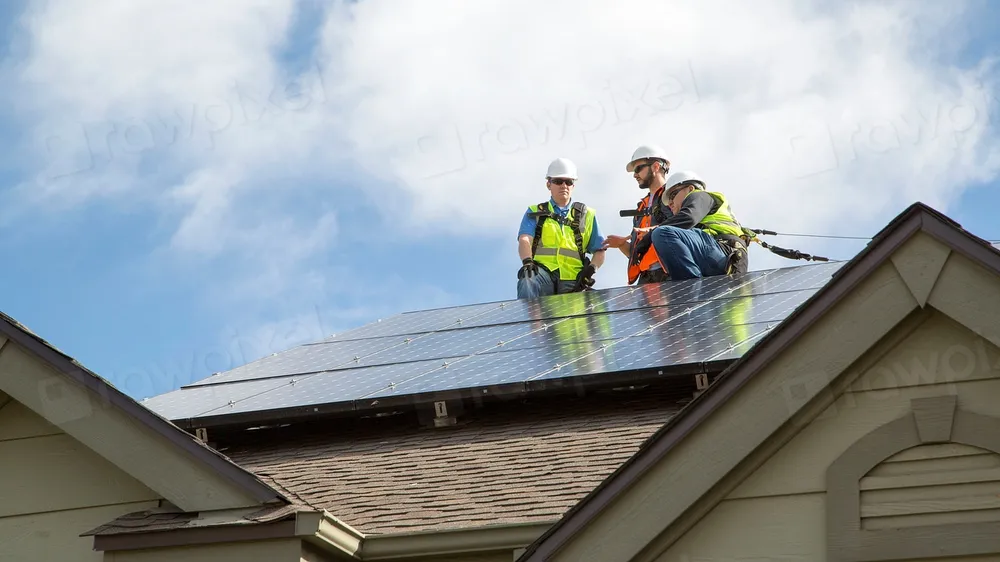 Photo: U.S. Department of Energy — CC CC0 (rawpixel)
Exciting as it is, this is still lab-stage work. The next step is scaling up and proving it works commercially — a path that many energy innovations take years to travel. The figures here reference the published study as of June 2026.
Read more good news on our news page.
Sources
Frequently asked questions
- How is clean hydrogen different from ordinary hydrogen?
- 'Clean' hydrogen is produced without carbon emissions — e.g. split from water using renewable energy — unlike most hydrogen today, which comes from natural gas and emits CO2.
- Is this technology ready to use?
- Not yet. The results, published in June 2026, are at the lab stage and still need to be scaled up and proven commercially.
Related news
 World
WorldHimalayan Glacier Collapse Floods Nepal-Tibet: A Warning Lesson
A glacier broke away at 5,200m and sent a wall of water into Nepal. Scientists say the technology to warn people already exists — the monitoring does not.
 World
WorldESA Data Reveals Earth's Core Reversed Flow Beneath Pacific in 2010
ESA satellite data shows molten iron in Earth's outer core beneath the Pacific abruptly reversed direction in 2010. The cause is still unknown.
 Thailand
Thailand Wins 3 Silver Medals at Biology Olympiad 2026 in Lithuania
Four Thai students won 3 silver medals and 1 honorable mention at the 2026 International Biology Olympiad in Vilnius, Lithuania.