Thailand Wins 3 Silver Medals at Biology Olympiad 2026 in Lithuania
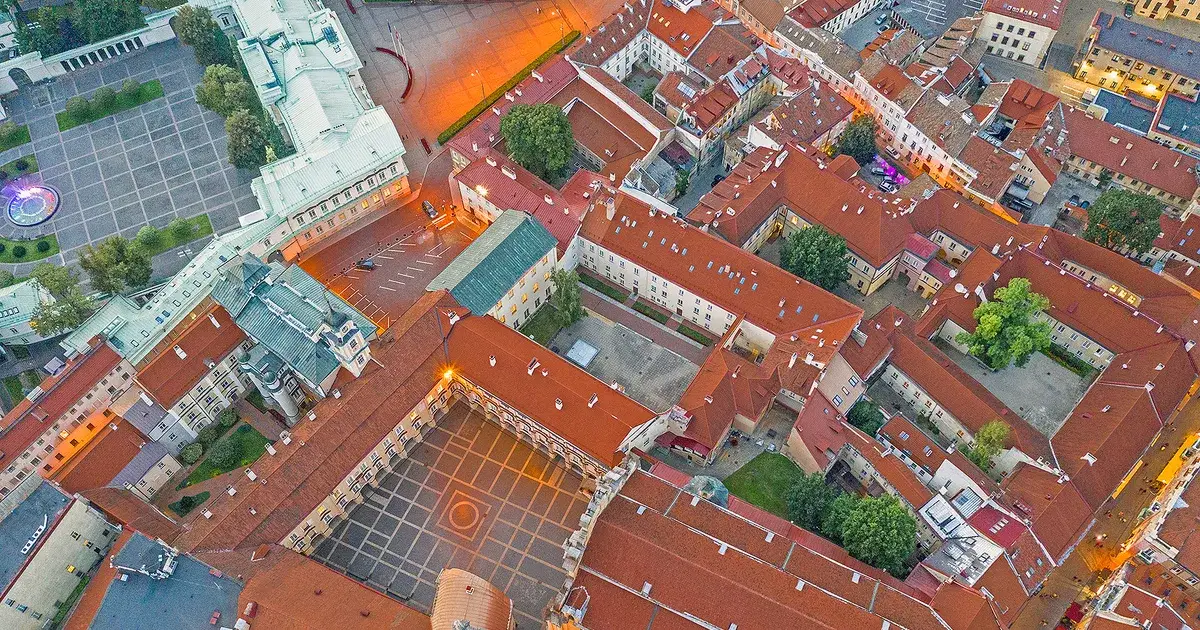
Thailand's youth delegation delivered another proud result on the international academic stage: four Thai students won 3 silver medals and 1 honorable mention at the 37th International Biology Olympiad (IBO) 2026, held in Vilnius, Lithuania, from July 12–19. The competition drew more than 300 high-school students from 78 countries and teams worldwide.
The Institute for the Promotion of Teaching Science and Technology (IPST), the Thai government agency responsible for selecting and fielding Thailand's teams at international academic olympiads, held a welcome ceremony for the returning delegation at Suvarnabhumi Airport on July 20, 2026. Thanyakan Kulsupkorn, Assistant Director of IPST, gave the welcome remarks.
What the four Thai representatives won
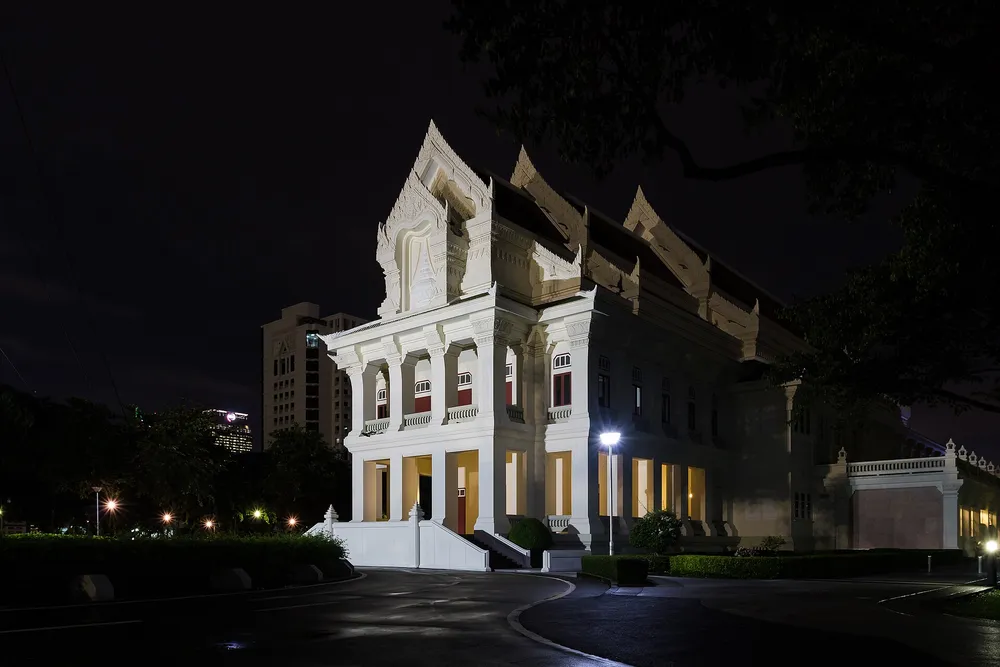 Chulalongkorn University, the parent institution of the Demonstration School attended by one of this year's silver medalists (illustrative — not the demonstration school building itself). Photo: Supanut Arunoprayote, CC BY 3.0 via Wikimedia Commons
The three silver medals went to:
- Praoporn Thanyakitphaisan, Chulalongkorn University Demonstration School (Secondary Section)
- Thanakrit Phitak, Prince Royal's College, Chiang Mai
- Paricha Liulaksana, Kamnoetvidya Science Academy, Rayong
Kamonrat Wiboonchak, from Princess Chulabhorn Science High School Pathum Thani, received an Honorable Mention — a recognition given to competitors who score well but fall just short of medal range.
Notably, all four Thai students who competed came home with an award — nobody on the team left empty-handed, which points to consistent depth across the whole team rather than a single standout performer.
A global stage with nearly 80 countries competing
IBO is widely regarded as one of the most demanding academic biology competitions for high-school students anywhere in the world, rotating host countries each year. This year Lithuania hosted the 37th edition in its capital, Vilnius, drawing 302 students from 78 countries and teams. Competitors sat both a theory exam and a real hands-on laboratory practical, covering molecular biology, genetics, physiology, ecology and evolution.
Organizers described this year as "one of the largest IBO classes in recent years," with record participation from students and countries alike. A total of 185 medals and honorable mentions were awarded: 33 gold, 60 silver, 92 bronze, and 30 honorable mentions.
The overall results: who took the top spots
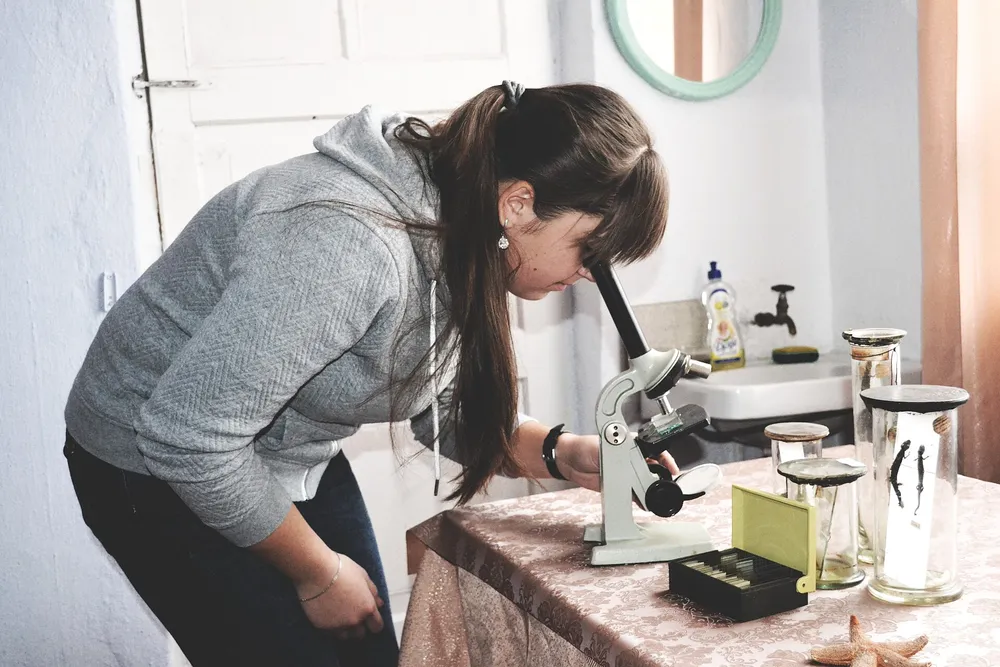 Illustrative: examining biological specimens under a microscope — the kind of hands-on lab skill every IBO competitor is tested on. Photo: Мирослава Тимофіїв, CC BY 4.0 via Wikimedia Commons
The competition's top overall scorer was Ziheng Wang of China, who claimed the individual championship. At the team level, China, Chinese Taipei, the United States, and South Korea each had all four of their team members win gold medals, with Iran and Singapore close behind — each bringing home three golds and one silver.
Even host-nation Lithuania performed strongly, with all four of its representatives earning a medal: two silver and two bronze — a sign of how deep the competition ran this year, beyond just the usual leading countries.
Against that backdrop, winning three silver medals from a four-student team is a solid result for Thailand, even if it falls short of gold — medals reserved, this year, for countries with decades of continuous investment in science-olympiad training pipelines.
Behind Thailand's team: selection and training
All four Thai representatives were selected through Thailand's national biology olympiad before entering an intensive training camp under IPST, the agency that has run Thailand's academic olympiad program for decades across mathematics, physics, chemistry, biology, computing and astronomy.
For IBO 2026, the coaching team comprised six instructors from leading Thai universities, led by Asst. Prof. Dr. Kittikhun Wangkanont as team leader, together with Dr. Chanati Jantharachotichai (deputy team leader), Assoc. Prof. Dr. Chatchawan Jaisukun, Asst. Prof. Dr. Sompit Samipak and Dr. Warut Siriwut as assistant team leaders, and Mr. Chakkraphat Suwannakut as team manager.
This structure — selection through a national contest, followed by months of intensive coaching from university faculty before the international competition — mirrors what has produced Thai success in other academic olympiads recently, including the physics olympiad team that ranked among Asia's best and Thai students whose malaria-detection AI research won recognition at the international ISEF fair.
Why this matters for Thai education
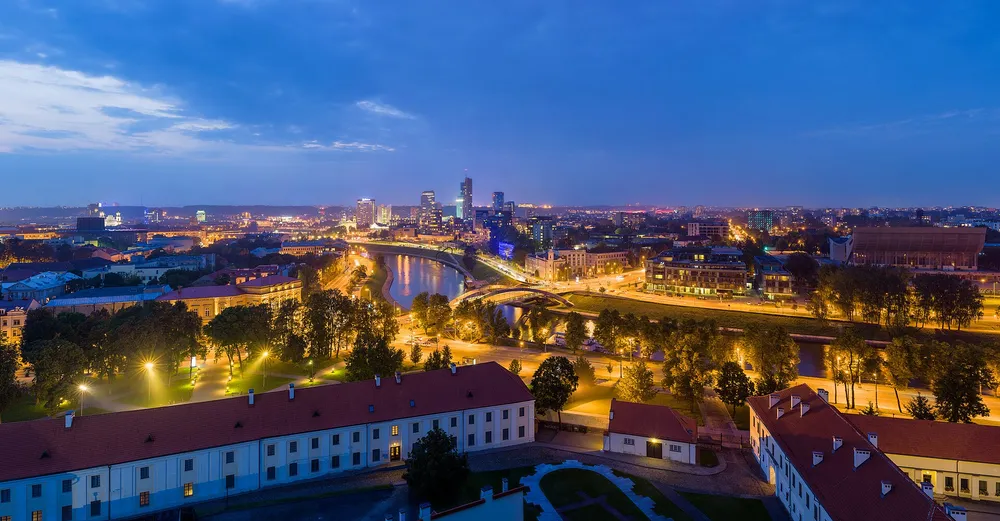 Vilnius, Lithuania, host city of the 37th IBO, where Thailand's team competed from July 12–19, 2026. Photo: Diliff, CC BY-SA 3.0 via Wikimedia Commons
Success at international academic olympiads isn't just personal glory — it's a long-run indicator of a country's science-education quality. Many students who reach these stages go on to scholarships at leading universities at home and abroad, and a good number later become researchers or academics in biomedical science and biology.
For Thailand, which is actively pushing a knowledge-based economy and bio-economy industrial strategy, having young people with world-competitive biology fundamentals is meaningful human capital. This year's result — three silvers and one honorable mention from a four-student team — continues a string of positive results from Thailand's academic olympiad program across other subjects this year as well.
Next year's IBO will move to a new host country under the competition's usual rotation, and IPST will begin selecting Thailand's next delegation through the national biology olympiad once again — the same pipeline that has continued to produce internationally competitive students in recent years.
Sources
- IPST — Thai youth make their mark on the world stage! Welcoming the Biology Olympiad delegation home with 3 silver medals, 1 honorable mention from IBO 2026
- Dailynews — Amazing Thai students win silver at the 'International Biology Olympiad 2026'
- IBO 2026 (Vilnius, Lithuania) — Results of IBO 2026 (official)
Frequently asked questions
- What is the International Biology Olympiad (IBO)?
- The IBO is the top academic biology competition for high-school students, held annually in a different host country each year. Each country sends a team selected through its own national biology olympiad, and students sit both a theory exam and a real hands-on laboratory practical. The 2026 edition was the 37th, held in Vilnius, Lithuania, with 302 students from 78 countries/teams.
- Why didn't Thailand win a gold medal this year?
- IBO medals are awarded based on cumulative scores against the whole field, not head-to-head elimination — gold typically goes to roughly the top 10% of scorers. This year every member of China, Chinese Taipei, the US and South Korea's teams won gold, countries with decades of intensive science-olympiad development programs. Winning 3 silvers and 1 honorable mention from a 4-student team is a strong result in a field with that level of competition.
Related news
 World
WorldESA Data Reveals Earth's Core Reversed Flow Beneath Pacific in 2010
ESA satellite data shows molten iron in Earth's outer core beneath the Pacific abruptly reversed direction in 2010. The cause is still unknown.
 World
WorldNew Catalyst Makes Clean Hydrogen at Far Lower Temperatures, Turning Waste Heat Into Fuel
A University of Birmingham team developed a perovskite catalyst that splits water into hydrogen at just 150–500°C, opening the door to cheaper clean fuel.
 Thailand
Bangkok Floods 2026: Impact, Relief Payments, Drainage Timeline
Bangkok flood 2026 update: 1.7 million affected across 27 provinces, 8 dead. How to claim the 9,000-baht relief payment, and the drainage timeline.