NOAA Confirms El Niño Is Here and Could Be One of the Strongest in Decades — Thailand Braces for Drought and Food-Price Impact in 2026–2027

The U.S. National Oceanic and Atmospheric Administration (NOAA) confirmed in early July 2026 that El Niño has arrived and is strengthening, with as high as an 81% chance of becoming a "super El Niño" later this year — a signal prompting Thailand to accelerate preparations for drought, water shortages, and the food-price effects that could follow into 2027.
El Niño Is Here, and Getting Stronger — What NOAA Says
NOAA has issued an "El Niño Advisory," saying the pattern began forming in June 2026 with high confidence it will persist. The latest figures (updated in early July 2026) show:
- A 97% chance El Niño persists into early 2027
- An 81% chance it strengthens to "very strong" during October–December 2026
- Sea-surface temperatures in the equatorial Pacific currently about +1.2°C above average, with the ECMWF model suggesting they could climb toward +3°C at the peak
If that holds, this El Niño could rank among the strongest since 1950 — on par with the historic "super El Niño" events of 1997–98 and 2015–16, which caused severe drought across Southeast Asia.
How El Niño Affects Thailand
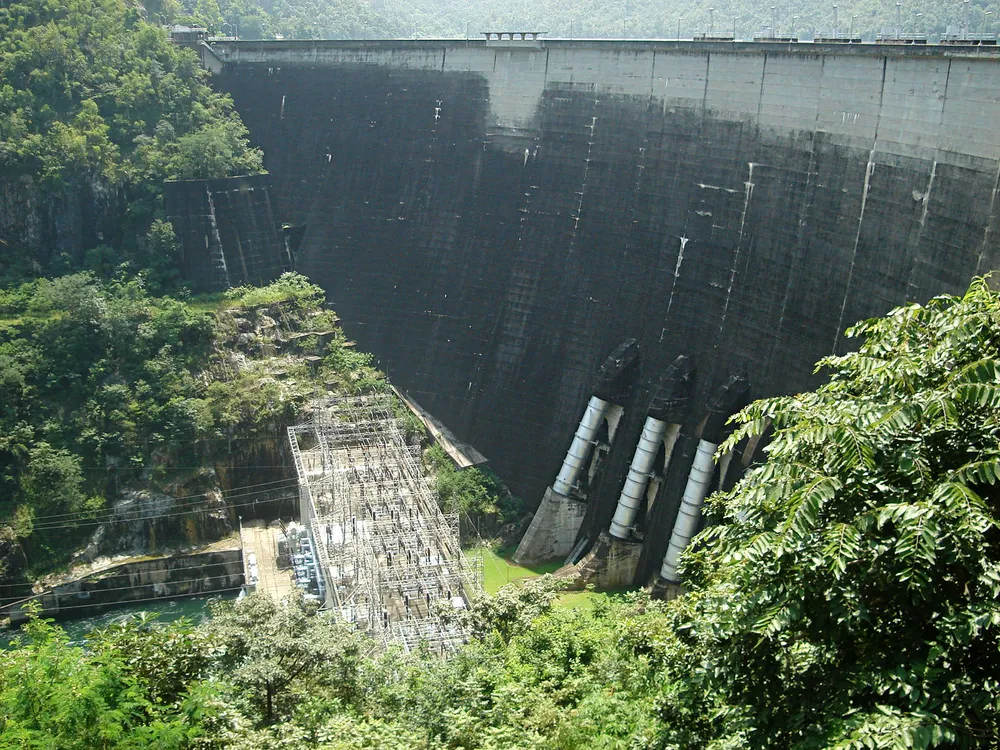
For Southeast Asia — including Thailand, Vietnam, Malaysia, Indonesia and the Philippines — El Niño often works in the opposite direction to many other parts of the world, bringing less rain and hotter weather. Thailand's Department of Climate Change and Environment (DCCE) forecasts that the country will face:
- Below-average rainfall in nearly every region, from mid-2026 into early 2027
- Higher-than-normal average temperatures, especially December 2026 – February 2027, meaning this year's cool season may be "less cool" than last year's
- The southern region's December–January rainy season is also at risk of reduced rainfall
A key vulnerability: more than 80% of Thailand's cultivated land still depends on rainfall, without irrigation access. Compounding this, Krungthai COMPASS data shows central-region dam reserves had fallen to just 28% (as of 6 June 2026) — already below the 30% critical threshold.
The Numbers to Watch — Farms and Food
Krungthai COMPASS estimates that if El Niño returns in the second half of 2026 through mid-2027, it could cause total damage to Thai agriculture of more than THB62 billion (about 0.31% of GDP), with rice the hardest-hit crop.
| Crop | Estimated output lost | Estimated damage |
|---|---|---|
| Rice | ~5.4 million tonnes | ~THB43,046 million (≈ two-thirds of the total) |
| Sugarcane | ~12 million tonnes | ~THB10,711 million |
| Cassava | ~3.1 million tonnes | ~THB8,098 million |
The research unit also estimates that farm income could fall by about 8% in 2026, with rice output shrinking as much as 18%. As output declines, prices of some farm goods and foods tend to rise — ultimately feeding through to household living costs nationwide.
How Thailand Is Preparing — From "Reactive" to "Proactive"
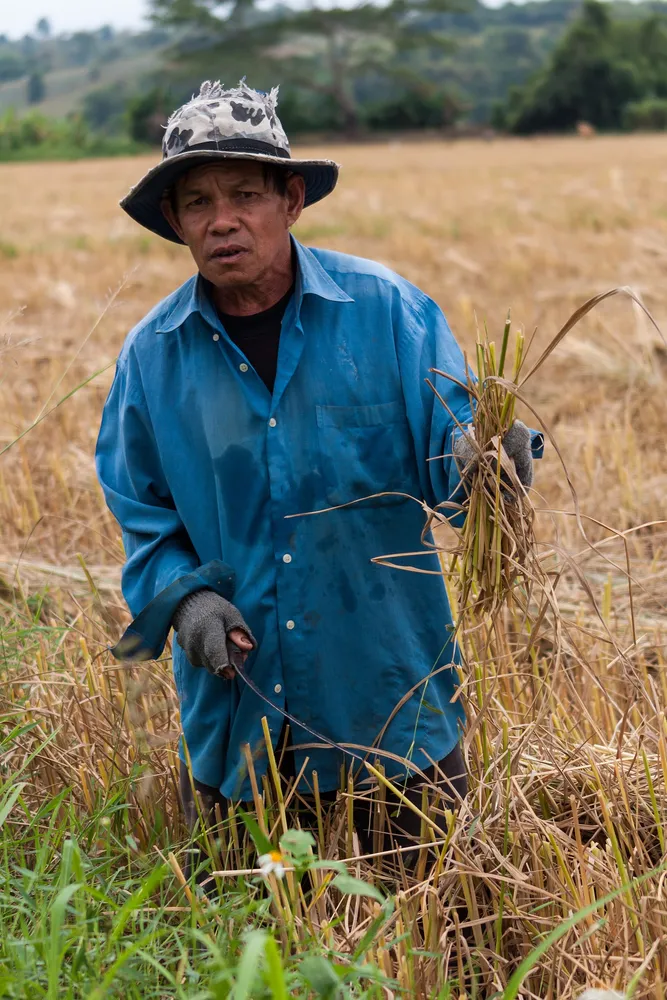
Dr Phirun Saiyasitpanich, Director-General of the DCCE, stressed that Thailand must "closely monitor the effects of El Niño on both rainfall and temperature," while rolling out new tools to shift from reactive disaster response toward proactive prevention:
- High-resolution climate projections extending to the year 2100, at 25×25 km and 5×5 km resolution, covering rainfall, temperature and humidity — available through the Climate Change Information Centre
- A river flood-risk dataset at 90×90-metre resolution, developed with Weathernews Inc., due for completion by early 2027
- A subdistrict-level Climate Risk Map covering floods, drought, landslides, sea-level rise and temperature increases, expected by 2028
These tools aim to support crop planning, strengthen food security, and build infrastructure that is more resilient to increasingly volatile weather.
How People and Farmers Can Prepare
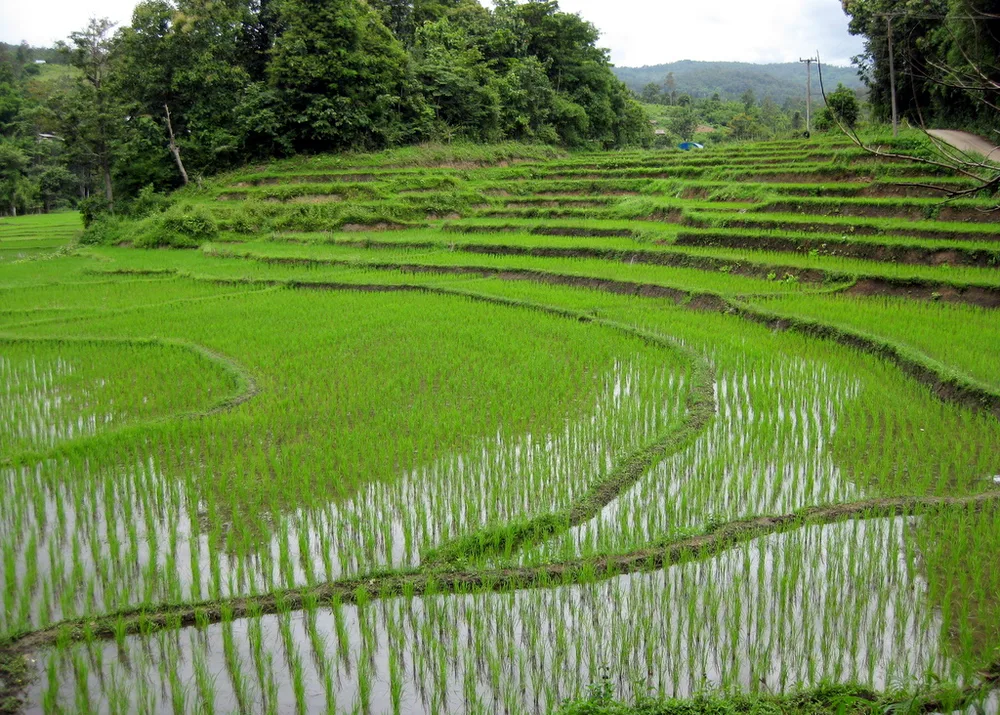
Although El Niño is an unavoidable natural phenomenon, its impacts can be softened with early preparation. Krungthai COMPASS and water agencies recommend concrete steps:
- For households: follow the weather forecast and drought warnings regularly, plan for water saving, and store water in at-risk areas
- For farmers: use the Alternate Wetting and Drying (AWD) rice technique to cut water use significantly, choose drought-resistant crop varieties, and consider contract-farming arrangements to reduce price and market risk
- For government and communities: manage dam water tightly, prioritise water for consumption first, and quickly communicate risk information to rain-dependent farming areas
Proactive adaptation in agriculture also aligns with directions Thailand is already pursuing — such as using technology for smart farming, which improves water efficiency and yields, while Thailand's agricultural exports must watch for effects on crop volume and quality in the months ahead.
What's Next — Watch the Late-Year Peak
The period to watch most closely is October 2026 to January 2027, which NOAA forecasts as El Niño's strongest phase — coinciding exactly with the start of Thailand's dry season. Managing dam water, planning dry-season cultivation, and issuing early warnings will be crucial.
The good news: this time Thailand has months of advance warning, more accurate forecasts, and better risk-management tools than ever before. If every sector prepares early, the impact on crop output, food prices and living costs can be significantly reduced. (Data as of 10 July 2026.)
Sources: NOAA / weather.com · NOAA Climate Prediction Center · The Nation Thailand — DCCE response · The Nation Thailand — Krungthai COMPASS
Sources
Frequently asked questions
- How strong will this year's El Niño be?
- NOAA says El Niño has been present since June 2026 and there is an 81% chance it will strengthen to 'very strong' during Oct–Dec 2026 — potentially ranking among the strongest El Niño events since 1950, comparable to the historic super events of 1997–98 and 2015–16. There is a 97% chance it persists into early 2027.
- How will El Niño affect food prices and the cost of living in Thailand?
- El Niño typically brings less rain and higher temperatures to Thailand, raising drought risk that hits rice, sugarcane and cassava. As output falls, prices of some farm goods and foods tend to rise. Krungthai COMPASS estimates total agricultural damage of about THB62 billion from late 2026 to mid-2027.
- How should people and farmers prepare?
- Follow weather forecasts and drought warnings closely, plan for water saving, and store water in at-risk areas. For farmers, experts recommend the Alternate Wetting and Drying (AWD) rice technique, drought-resistant varieties, and contract-farming arrangements to secure supply and prices.
Related news
 Thailand
Grey Thailand Wins Thailand's First-Ever Green Pencil at The One Show 2026 with Fertilizer 2.5
Grey Thailand won Thailand's first Green Pencil at The One Show 2026 with Fertilizer 2.5, turning PM 2.5-causing rice straw into fertilizer in 7 days.
 Thailand
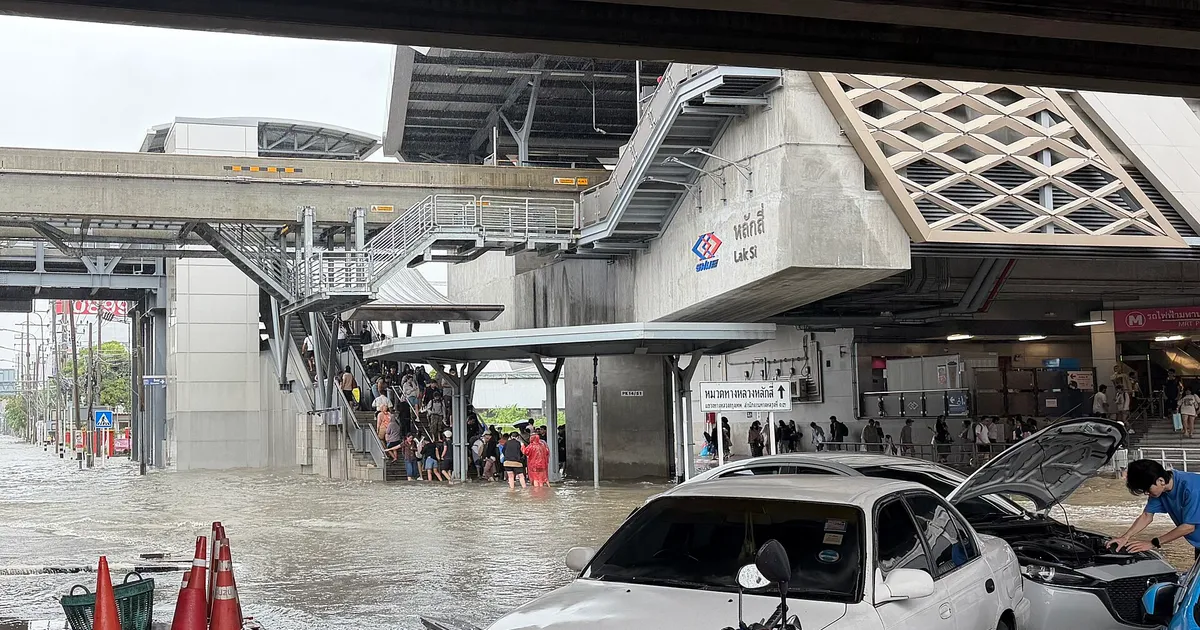
Bangkok Floods 2026: Impact, Relief Payments, Drainage Timeline
Bangkok flood 2026 update: 1.7 million affected across 27 provinces, 8 dead. How to claim the 9,000-baht relief payment, and the drainage timeline.
 Thailand
Thailand Wins 3 Silver Medals at Biology Olympiad 2026 in Lithuania
Four Thai students won 3 silver medals and 1 honorable mention at the 2026 International Biology Olympiad in Vilnius, Lithuania.