10 Best Home Air Conditioners in Thailand 2026 — Daikin, Mitsubishi, Sharp Compared

If your electricity bill keeps climbing every year and you still have a non-inverter aircon — that's one of the biggest culprits. Choosing the right aircon model in 2026 could mean saving 5,000–10,000 THB per year on electricity alone, without changing how often you use it.
This guide compares the 10 best-value models in 2026 across all price ranges, with the real information you need before buying: how to calculate BTU correctly, how to read the 5-star energy label, how much money you'll actually save, and the traps that catch most buyers.
Before You Buy — What You Actually Need to Know
Calculate BTU Correctly
The #1 buying mistake is getting the wrong BTU for the room. Too few BTU and the compressor overworks constantly, electricity bills spike, and the unit fails early. Too many BTU and you've wasted money — plus the unit won't dehumidify properly.
BTU sizing guide:
| Room Size | BTU (shaded) | BTU (direct sun) |
|---|---|---|
| 10–12 sq.m. | 8,500–9,000 BTU | 9,000–12,000 BTU |
| 12–15 sq.m. | 9,000–12,000 BTU | 12,000 BTU |
| 15–20 sq.m. | 12,000–15,000 BTU | 15,000–18,000 BTU |
| 20–25 sq.m. | 15,000–18,000 BTU | 18,000 BTU |
| 25–32 sq.m. | 18,000–24,000 BTU | 24,000 BTU |
| 32–40 sq.m. | 24,000–27,000 BTU | 27,000+ BTU |
Add more BTU for:
- Top floor or exposed roof: +10–15%
- More than 2 people in the room: +600 BTU per extra person
- Large electronics (desktop PC, big TV): +400–500 BTU each
- Poor insulation: +15%
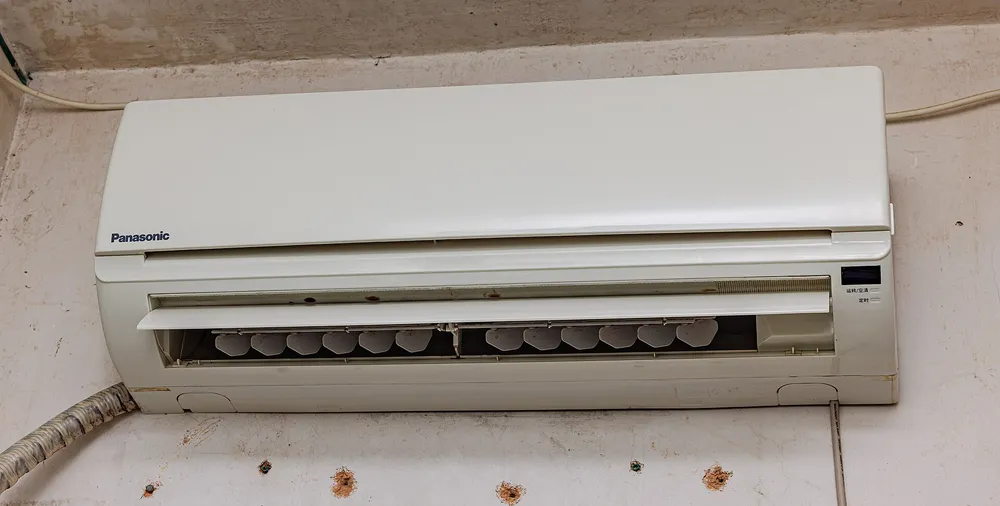
Inverter vs Non-Inverter — Why Inverter Is the Only Choice in 2026
A non-inverter aircon has a compressor that switches fully on when the room gets warm, then shuts off when the set temperature is reached, then restarts again. This on/off cycling draws the most power at every start.
An inverter aircon adjusts compressor speed continuously — it starts strong, then runs at partial power to maintain temperature. This means far lower average electricity consumption.
Monthly electricity cost comparison (12,000 BTU, 8 hrs/day, 4.70 THB/kWh):
| Type | Avg. Power Draw | Daily Cost | Monthly Cost |
|---|---|---|---|
| Non-Inverter | ~1,100W | ~41–52 THB | ~1,241–1,540 THB |
| Inverter 5-star (mid-range) | ~700W | ~26–33 THB | ~790–990 THB |
| Inverter 5-star (premium) | ~450W | ~17–21 THB | ~508–630 THB |
Monthly saving: 450–730 THB = 5,400–8,700 THB per year, per unit
The price premium for inverter is typically 3,000–8,000 THB, recovered within 6–18 months from electricity savings. Inverter units also run quieter (no on/off cycling noise) and last 12–15 years vs 8–12 years for non-inverter.
Conclusion: In 2026, there is no reason to buy a non-inverter aircon.
Thailand's 5-Star Energy Label — How to Read It
Effective 1 January 2024, EGAT and the Ministry of Energy updated the Thai energy label from a maximum of 3 stars to 5 stars for air conditioners, allowing finer differentiation between efficient models.
- 5 stars = most efficient (highest SEER value)
- 1 star = minimum standard (least efficient)
Key insight: Compare the SEER number, not just the star count. Two 5-star units can have significantly different SEER values.
| SEER Range | Meaning |
|---|---|
| ≥ 15.00 | Minimum for inverter units to qualify for any label |
| 15–17 | Good efficiency (most mid-range 2026 models) |
| 17–19 | Very good efficiency |
| ≥ 20 | Highest efficiency (premium models) |
Tip: When choosing between two similarly-priced units, compare the actual SEER figure directly. The label also shows annual energy consumption in kWh/year — multiply by 4.70 THB to get your estimated annual electricity cost.
Top 10 Best Air Conditioners for Thai Homes in 2026
#1: Daikin MAX Sabai FTKB-Z — Best Overall for Most Buyers
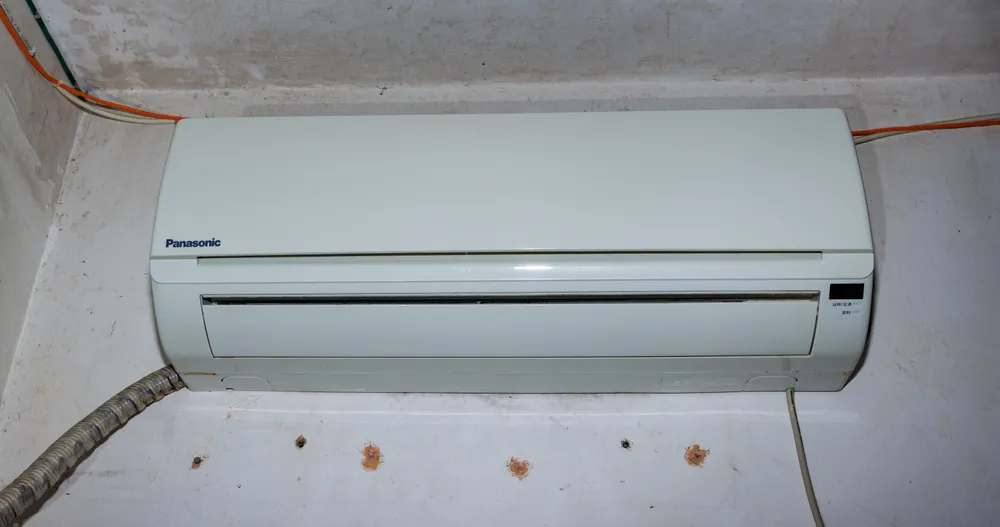
Daikin has led the Thai aircon market for years, manufacturing locally and maintaining the widest technician network in the country. The MAX Sabai FTKB-Z hits the right balance of price, performance, and long-term reliability.
Key features:
- Super PCB Pro Circuit Board — protects against power surges and lightning strikes, significantly tougher than standard PCBs
- Coanda Airflow — guides cool air along the ceiling before it flows downward, eliminating the "cold air hitting your face" effect
- 3-in-1 Streamer — captures PM2.5, kills pathogens, neutralizes odors
- 5-year compressor warranty (Daikin Thailand standard)
| Spec | Detail |
|---|---|
| BTU Options | 9,000 / 12,000 / 18,000 / 24,000 |
| Price | 13,990–28,990 THB (depending on BTU) |
| Energy Label | 5 stars (SEER 17+) |
| Refrigerant | R32 |
| WiFi | Not on base models |
Pros: Best service network in Thailand, easy-to-find parts, surge-protected PCB, comfortable Coanda airflow Cons: No WiFi on basic models, price premium of ~2,000–3,000 THB vs equivalent competitors
Best for: Anyone who wants long-term reliability, homeowners who don't want to deal with repair headaches, upcountry buyers who need technicians within reach
#2: Mitsubishi Electric MSY-KA Happy Inverter — Most Durable, Quietest
Mitsubishi Electric has the strongest reputation for long-term durability of any Japanese brand in Thailand — many units run 12–15 years without needing a compressor replacement. The Happy Inverter maintains Japanese engineering standards at an accessible price.
Key features:
- Fast Cool Mode — drops room temperature 25% faster during extreme heat
- 8-metre airflow reach — covers long rooms effectively
- Minimum temperature 17°C — for those who prefer it cold
- Error code detection — helps technicians diagnose issues immediately, reducing repair time
| Spec | Detail |
|---|---|
| BTU Options | 9,212 / 12,283 / 17,060 |
| Price | 12,590–25,000 THB |
| Energy Label | 5 stars (SEER 15–17) |
| Refrigerant | R32 |
| WiFi | Not available |
Pros: Most durable long-term, quietest operation in its price range, wide technician coverage, long service life Cons: Slightly higher price than Daikin in some BTU ranges, no air purification system, no WiFi
Best for: Anyone who wants an aircon that simply works for 10–15 years, bedrooms where silence matters, buyers who prioritize reliability over features
#3: Sharp AH-XP J-Tech Inverter — Best Value with Plasmacluster Air Purification
Sharp's J-Tech Inverter offers the best value in the 13,000–20,000 THB range, combining real Plasmacluster air purification with 5-star efficiency and a competitive price.
Key features:
- Plasmacluster Ion — releases positive and negative ions that kill airborne bacteria and allergens, with scientific validation
- Super Jet Mode — drops room temperature by 5°C in 5 minutes
- J-Tech Inverter Compressor — reduced vibration, quieter, more efficient
- Auto Air Swing — covers the full room automatically
| Spec | Detail |
|---|---|
| BTU Options | 9,146 / 12,082 / 17,109 / 21,390 |
| Price | 13,490–30,990 THB |
| Energy Label | 5 stars (SEER 16–18) |
| Refrigerant | R32 |
| WiFi | Available on XP models |
Pros: Best price among 5-star inverters with air purification, Plasmacluster is scientifically validated, Super Jet cools fast Cons: Smaller service network vs Daikin/Mitsubishi outside Bangkok, long-term durability slightly behind Japanese top-tier
Best for: Mid-range budget 13,000–18,000 THB, allergy sufferers or PM2.5-heavy cities, medium-sized bedrooms
#4: Samsung WindFree AI Inverter — Smartest, Direct-Draft-Free Airflow
Samsung WindFree is genuinely different from conventional aircons. Rather than blowing cold air from a vent, it disperses it through 23,000 micro-holes — so you feel cool air filling the room without any cold draft hitting your face or body.
Key features:
- Wind-Free Cooling — cool air disperses through 23,000 micro-holes, no direct cold draft
- SmartThings App — control remotely, monitor daily electricity cost in THB, schedule, Google/Alexa compatible
- AI Motion Sensor — detects occupancy, automatically adjusts mode when room is empty
- Copper Anti-bacterial Filter — filters PM1.0, prevents bacterial growth
| Spec | Detail |
|---|---|
| BTU Options | 9,026 / 12,035 / 17,935 / 21,552 |
| Price | 15,990–31,900 THB |
| Energy Label | 5 stars (SEER 16–18) |
| Refrigerant | R32 |
| WiFi | Yes (SmartThings) |
Pros: Wind-Free experience is unmatched, easiest-to-use WiFi app in Thailand, AI reduces electricity consumption automatically Cons: Premium of 2,000–5,000 THB vs equivalent non-Samsung models, technicians not in every province
Best for: Anyone sensitive to cold air drafts, households with allergy sufferers, smart home enthusiasts, budget 15,000–32,000 THB
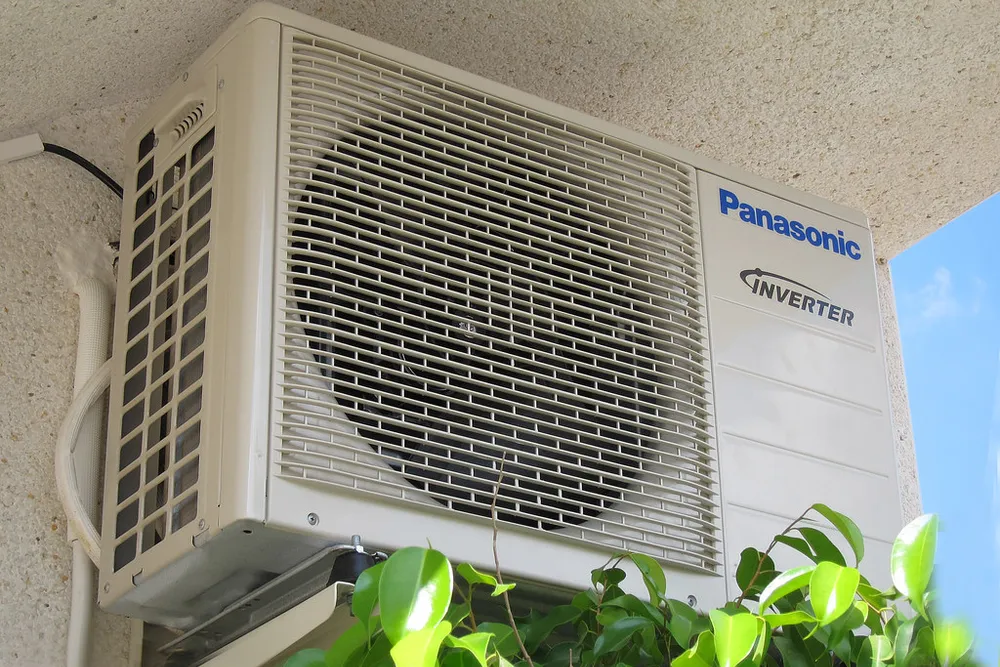
#5: Panasonic nanoe X Inverter — Best PM2.5 Air Purification
Panasonic's nanoe X system has the most research validation of any aircon purification technology — the OH Radicals it generates are proven to handle PM2.5, mold, bacteria, and odors, which are all major issues in Thai homes during the rainy season.
Key features:
- nanoe X (OH Radical) — eliminates PM2.5, mold, viruses (99.99%), and cooking/pet odors
- Gear Mode — 8-speed fan (vs the 3-speed Low/Med/High of most aircons)
- i-Clean — self-cleans automatically after shutdown, prevents mold buildup in the coil
- Comfort Cloud App — WiFi control, electricity monitoring
| Spec | Detail |
|---|---|
| BTU Options | 9,065 / 12,087 / 18,130 / 24,220 |
| Price | 18,000–41,127 THB |
| Energy Label | 5 stars (SEER 15–18) |
| Refrigerant | R32 |
| WiFi | Yes (Comfort Cloud) |
Pros: Best-in-class air purification, i-Clean prevents mold inside the unit, Gear Mode gives precise control Cons: Highest price in its segment, smaller service network outside Bangkok
Best for: Urban residents in PM2.5-heavy areas, allergy and respiratory condition sufferers, rooms prone to humidity and mold
#6: Haier Clean Cool Inverter — 10-Year Compressor Warranty
Haier's clearest selling point: 10-year compressor warranty — the longest in the Thai aircon market. Combined with an automatic 20-minute self-cleaning cycle, it's a compelling choice for buyers who want peace of mind.
Key features:
- 10-year compressor warranty — industry-leading in Thailand
- Auto Self-Cleaning (20 min) — automatically cleans the cooling coil, prevents mold
- Blue Fin Coating — anti-corrosion coating on the condenser fins, important near the coast
- Triple Airflow — distributes cool air in three directions
| Spec | Detail |
|---|---|
| BTU Options | 9,000 / 12,000 / 18,000 / 24,000 |
| Price | 14,900–25,000 THB |
| Energy Label | 5 stars (SEER 15–17) |
| Refrigerant | R32 |
| WiFi | Available on Smart models |
Pros: Longest warranty in Thailand, Self-Cleaning reduces technician visits, competitive pricing Cons: Less established long-term reputation than Japanese brands, smaller service network
Best for: Mid-range budget 15,000–22,000 THB, buyers who want the longest warranty, coastal homes (Blue Fin resists saltwater corrosion)
#7: TCL T-Pro WiFi Inverter — Cheapest WiFi Inverter, Google Assistant
TCL has grown to become the 3rd–4th largest aircon brand in Thailand by offering WiFi and Google Assistant features at 30–40% lower prices than Japanese and Korean competitors.
Key features:
- WiFi + Google Assistant + Alexa — voice control at the most accessible price point
- TCL Home App — remote control, scheduling, Eco Mode
- Healthy Filter — PM2.5 filtration with replacement alerts
- 5-star energy label across the entire range
| Spec | Detail |
|---|---|
| BTU Options | 9,490 / 12,720 / 18,990 / 24,230 |
| Price | 9,890–20,900 THB |
| Energy Label | 5 stars |
| Refrigerant | R32 |
| WiFi | Yes (TCL Home) |
Pros: Cheapest WiFi + Inverter + 5-star combination, Google Assistant voice control Cons: Newer brand without proven 10+ year track record in Thailand, smaller service network
Best for: Budget 10,000–18,000 THB with WiFi requirement, younger buyers building a smart home ecosystem
#8: Carrier X-Inverter Plus — Mid-Range with Self-Cleaning
Carrier is a US brand manufactured locally in Thailand, known for competitive pricing in the mid-range and solid after-sales coverage. The X-Inverter Plus includes self-cleaning and the brand's X-Inverter technology.
| Spec | Detail |
|---|---|
| BTU Options | 9,200 / 12,300 / 18,000 / 25,100 |
| Price | 14,000–28,000 THB |
| Energy Label | 5 stars (SEER 16–18) |
| Refrigerant | R32 |
| WiFi | Available (Carrier In The Air) |
Pros: Good value in mid-range, self-cleaning standard, nationwide service network, 5-year warranty Cons: Less long-term reputation than Daikin/Mitsubishi
Best for: Mid-range budget 14,000–22,000 THB, buyers who want self-cleaning, existing Carrier users
#9: LG Dual Inverter Compressor — Reliable LG at Mid-Range
LG has significantly improved reliability in recent years. The Dual Inverter Compressor runs quieter and more efficiently than single-inverter designs, and comes with a 10-year compressor warranty on Dual Inverter models.
| Spec | Detail |
|---|---|
| BTU Options | 9,000 / 12,000 / 18,000 / 24,000 |
| Price | 13,990–30,000 THB |
| Energy Label | 5 stars |
| Refrigerant | R32 |
| WiFi | Some models (ThinQ App) |
Pros: Dual Inverter Compressor is quiet and durable, 10-year Dual Inverter warranty, competitive pricing Cons: Smaller service network outside Bangkok vs Daikin
Best for: LG ecosystem users, budget 14,000–25,000 THB, buyers who want Dual Inverter quiet operation
#10: Hisense CE Series Inverter — Most Affordable with 5-Star Rating
Hisense CE Series is for buyers with genuinely tight budgets — under 10,000 THB for smaller sizes — while still delivering an inverter compressor and 5-star energy label. The Anti-Mildew mode is a practical feature for Thailand's rainy season.
| Spec | Detail |
|---|---|
| BTU Options | 9,500 / 12,000 / 18,000 |
| Price | 8,550–18,000 THB |
| Energy Label | 5 stars |
| Refrigerant | R32 |
| WiFi | Some models (ConnectLife) |
Pros: Cheapest 5-star inverter available, Anti-Mildew mode prevents rainy-season mold, operates up to 50°C ambient temperature Cons: Smallest service network, long-term durability not yet fully proven in Thailand
Best for: Budget under 12,000 THB, guest rooms or secondary rooms used infrequently, first-time inverter buyers
Full Comparison Table
| Rank | Brand / Model | 12,000 BTU Price | Label | WiFi | Key Advantage |
|---|---|---|---|---|---|
| 1 | Daikin FTKB-Z | ~18,990 THB | ⭐⭐⭐⭐⭐ | ❌ | Best service network, surge-proof PCB |
| 2 | Mitsubishi MSY-KA | ~16,289 THB | ⭐⭐⭐⭐⭐ | ❌ | Most durable, quietest |
| 3 | Sharp AH-XP | ~15,490 THB | ⭐⭐⭐⭐⭐ | Optional | Plasmacluster, best value |
| 4 | Samsung WindFree AI | ~22,000 THB | ⭐⭐⭐⭐⭐ | ✅ SmartThings | Wind-Free, AI sensor |
| 5 | Panasonic nanoe X | ~22,000 THB | ⭐⭐⭐⭐⭐ | ✅ Comfort Cloud | Best air purification |
| 6 | Haier Clean Cool | ~17,800 THB | ⭐⭐⭐⭐⭐ | Optional | 10-year warranty, self-clean |
| 7 | TCL T-Pro WiFi | ~13,490 THB | ⭐⭐⭐⭐⭐ | ✅ TCL Home | Cheapest WiFi inverter |
| 8 | Carrier X-Inverter | ~17,000 THB | ⭐⭐⭐⭐⭐ | Optional | Self-clean, mid-range value |
| 9 | LG Dual Inverter | ~17,990 THB | ⭐⭐⭐⭐⭐ | Optional | Dual Inverter quiet, ThinQ |
| 10 | Hisense CE | ~10,590 THB | ⭐⭐⭐⭐⭐ | Optional | Cheapest inverter available |
Prices as of June 2026 for 12,000 BTU models, excluding installation
Real Installation Costs in 2026
Many buyers look only at the unit price and forget installation, which typically adds 3,000–6,000+ THB.
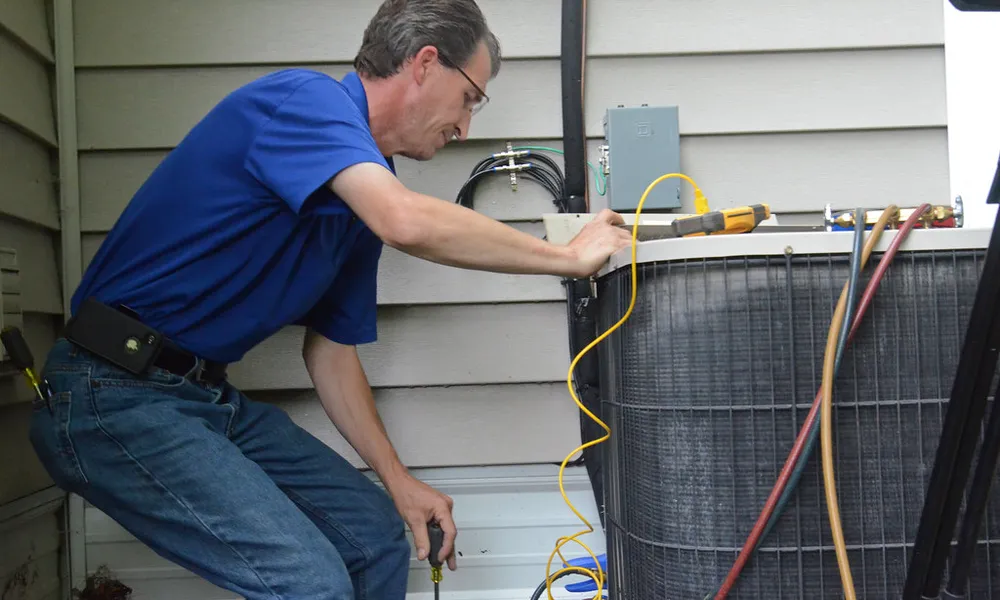
Standard installation rates (wall-mounted, 2026):
| BTU | Labour Cost | Includes |
|---|---|---|
| 9,000–13,000 BTU | 2,500–3,200 THB | 4m pipe, 10m wiring, 1 circuit breaker |
| 15,000–18,000 BTU | 2,800–3,500 THB | Same |
| 18,001–25,000 BTU | 3,000–4,000 THB | Same |
| 25,001–32,000 BTU | 3,500–4,500 THB | 4m pipe, 15m wiring, circuit breaker |
Common extra charges:
| Extra | Cost |
|---|---|
| Extra pipe run (per metre) | 400–600 THB/m |
| Extra wiring (beyond 10m) | 30–100 THB/m |
| Decorative conduit/duct cover | 200–300 THB/m |
| Concrete wall drilling | 500–700 THB per hole |
| Reinforced outdoor unit bracket | 500–1,200 THB |
| Condensate pump (no gravity drain) | 2,500–5,000 THB |
| Condo building surcharge | 1,000–2,000 THB |
Real-world total example (12,000 BTU, standard bedroom):
- Unit: ~16,000–19,000 THB
- Standard labour: ~3,000 THB
- Extra pipe 2m: ~800 THB
- Conduit: ~500 THB
- Total: ~20,300–23,300 THB
5-Year Total Cost of Ownership — Electricity Matters More Than Unit Price
| Item | Non-Inverter | 5-Star Inverter | Saving |
|---|---|---|---|
| Unit price | ~10,000 THB | ~16,000 THB | -6,000 THB |
| Installation | ~3,000 THB | ~3,000 THB | — |
| Monthly electricity | ~1,350 THB | ~850 THB | 500 THB |
| Electricity 5 yrs (60 months) | ~81,000 THB | ~51,000 THB | 30,000 THB |
| Cleaning 5 yrs (×10 times) | ~6,000 THB | ~6,000 THB | — |
| Total 5 years | ~100,000 THB | ~76,000 THB | ~24,000 THB |
Investing 6,000 THB more in an inverter unit today saves a net 24,000 THB over 5 years.
For a home with 2–3 aircons, that's 48,000–72,000 THB saved — enough to pay for another 2–3 units.
For more ways to reduce electricity bills across your whole home, read How to Save Electricity: Practical Tips for Thai Homes.
10 Mistakes to Avoid When Buying an Aircon
1. Buying the Wrong BTU "to Save Electricity"
Buying undersized BTU actually causes more electricity use — the compressor runs at full power continuously trying (and failing) to reach the set temperature. Always size correctly.
2. Choosing Non-Inverter to Save Upfront
The 500–700 THB monthly electricity difference means payback within 7–10 months. After that, the inverter keeps saving for years.
3. Counting Stars Without Checking the SEER Number
Two 5-star units at similar prices can have different SEER values, translating to hundreds of THB difference per year.
4. Choosing a Brand With No Service Network in Your Area
A great aircon with the nearest technician 100km away and a 2-week wait for appointments is a bad aircon. Confirm service coverage in your specific district before buying — especially for upcountry buyers.
5. Cheap or DIY Installation
Wrong installation (incorrect refrigerant level, kinked pipes, skipping vacuum procedure) reduces efficiency by up to 30% and can destroy the compressor within 1–3 years. Use a brand-authorised technician.
6. Turning the Aircon On and Off Frequently to "Save Electricity"
Each startup draws the highest power surge. For inverter units, leaving the unit running at 25–26°C continuously uses less electricity than switching it off and on every 2 hours.
7. Neglecting the Filter
A dirty filter reduces cooling efficiency by up to 30% and raises electricity consumption — and cleaning it is free and takes 10 minutes. Set a reminder every 2–4 weeks.
8. Buying Only on Price, Ignoring After-Sales
Grey-market units and suspiciously cheap online sellers often have no Thai warranty, misrepresented BTU ratings, or non-R32 refrigerant. Always verify the local warranty.
9. Ignoring Room Factors
Top-floor rooms, west-facing afternoon sun, poor insulation, or multiple occupants all require significantly more BTU than the basic formula suggests. Size up when in doubt.
10. Not Checking the Coil Material
Copper coils are significantly more durable and easier to repair than aluminium. Ask before buying, especially for coastal locations where corrosion is a concern.
How to Choose by Budget and Use Case
If your room has persistent humidity or mold issues, consider pairing the aircon with a dehumidifier for more effective moisture control.
Budget-based recommendations (12,000 BTU):
| Budget | Recommendation | Why |
|---|---|---|
| Under 12,000 THB | Hisense CE / TCL TAC | Inverter + 5 stars within tight budget |
| 12,000–16,000 THB | Mitsubishi Happy / Sharp XP | Durability or air purification at good price |
| 16,000–20,000 THB | Daikin FTKB-Z / Haier Clean Cool | Best balance of quality and service |
| 20,000–25,000 THB | Samsung WindFree / Panasonic nanoe X | WiFi + premium purification |
| 25,000 THB+ | Daikin FTKZ / Panasonic Deluxe TU | Premium SEER 20+ with top-tier purification |
Use-case recommendations:
| Situation | Recommendation |
|---|---|
| Bedroom requiring silence | Mitsubishi Electric (quietest) |
| Heavy PM2.5 or allergy issues | Panasonic nanoe X or Sharp Plasmacluster |
| Want WiFi on a tight budget | TCL T-Pro |
| Don't want cold air hitting directly | Samsung WindFree |
| Coastal home near the sea | Haier Clean Cool (Blue Fin anti-corrosion) |
| Upcountry, need full service coverage | Daikin or Mitsubishi |
| Absolute minimum budget | Hisense CE Series |
Maintenance Schedule for Long Aircon Life
An aircon that's properly maintained lasts 12–15 years; a neglected one may fail within 5–7.
| Frequency | Task | Cost |
|---|---|---|
| Every 2–4 weeks | Wash filter under tap water | Free |
| Every 6 months | Full professional aircon wash | 500–700 THB |
| Annually | Check refrigerant level, coil condition | Included in wash |
| Every 5 years | Check wiring and circuit breaker | Electrician |
How to clean the filter yourself:
- Switch off the aircon and unplug for 5 minutes
- Lift the front panel (most units have two latches on the sides)
- Slide out the filter(s) — usually two pieces
- Rinse gently under running water, or brush lightly
- Dry completely before reinstalling (critical — wet filter grows mold)
- Reinstall, close the panel, switch on
For homes dealing with existing damp or mold, also read How to Fix a Damp, Mouldy House in Thailand.
Verdict — Summary
Best aircon for most Thai buyers in 2026:
- Best overall: Daikin MAX Sabai FTKB-Z — best service network, surge-protected PCB, comfortable Coanda airflow. ~19,000 THB installed
- Most durable: Mitsubishi Electric MSY-KA Happy Inverter — for a unit that runs 15 years worry-free. ~16,300 THB
- Best value: Sharp AH-XP J-Tech Inverter — air purification at a mid-range price. ~15,500 THB
- Smartest: Samsung WindFree AI — for WiFi + Wind-Free + AI. ~22,000 THB
- Tightest budget: Hisense CE Series — inverter + 5-star under 12,000 THB
What matters more than the brand: size the BTU correctly for your room, check the SEER number on the label (not just the stars), confirm your brand has technicians in your area, and clean the filter every 2–4 weeks.
Investing in the right 5-star inverter aircon today means saving 20,000–30,000 THB net over the next 5 years — one of the best home investments you can make in Thailand.
Sources
- Best Air Conditioner Brands 2026 — OFM.co.th
- Best Aircon Brands Bangkok Condos 2026 — bangkokaircon.com
- How to Calculate BTU Required — Carrier Thailand
- Aircon Installation Cost 2026 — SC Air
- Thailand 5-Star Energy Label New Standard 2024 — Teddy Air
- Thailand Air Conditioner Market 2025–2032 — Globe Newswire
- Aircon Cleaning / Wash Prices 2026 — Good Air Services
- Electricity Costs Thailand 2026 — Farang Blog
- Most Durable Aircon Brands 2026 — Wattana Air
Frequently asked questions
- What is the difference between inverter and non-inverter aircon? Which should I choose?
- An inverter aircon adjusts compressor speed continuously, saving 30–50% electricity vs a fixed-speed non-inverter. In Thailand's climate (8–16 hrs/day usage), you save 450–730 THB per month — around 5,400–8,700 THB per year. The inverter unit costs 3,000–8,000 THB more upfront but pays back within 6–18 months. In 2026, inverter is always the recommended choice.
- How do I calculate how many BTU I need for my room?
- Simple formula: BTU = Room area (sq.m.) × 700–900. Shaded rooms use ×700; rooms with direct sun use ×800–900. A 12–15 sq.m. room needs 9,000–12,000 BTU; 18–20 sq.m. needs 12,000–18,000 BTU; 25–30 sq.m. living room needs 18,000–24,000 BTU. Add 10–15% for top-floor rooms or poor insulation.
- How do I read the Thailand 5-star energy label? What is SEER?
- Thailand's 5-star energy label (updated standard 2024) rates units from 1 star (least efficient) to 5 stars (most efficient). The SEER number (Seasonal Energy Efficiency Ratio) matters more than stars alone — two 5-star units can have very different SEER values. For inverter units, aim for SEER ≥ 15 minimum, and SEER 17+ for best real-world savings.
- What does aircon installation cost in Thailand in 2026?
- Standard installation for a wall-mounted aircon (9,000–18,000 BTU) costs 2,500–3,500 THB, including 4m pipe, 10m wiring, and 1 circuit breaker. Extra pipe runs cost 400–600 THB/m. A complete install with unit for a standard bedroom typically totals 18,000–25,000 THB depending on the model.
- How often should I clean my aircon filter, and can I do it myself?
- Clean the filter yourself every 2–4 weeks — slide it out, rinse under running water, dry completely before reinserting. Full professional aircon cleaning (wash) every 6 months costs 500–700 THB. A dirty filter reduces cooling efficiency by 20–30% and raises electricity consumption, making it the single most important maintenance task.
- Is WiFi aircon worth the extra cost?
- WiFi models typically cost 1,000–3,000 THB more than equivalent non-WiFi versions. For a primary bedroom or living room used daily, it's worth it for: remote pre-cooling before arriving home, daily electricity cost monitoring (in THB/day), scheduling, and filter alerts. Best WiFi apps in Thailand: Samsung SmartThings, Daikin App, and TCL Home (Google Assistant).
Related articles

10 Best Refrigerators 2026 — Samsung, LG, Hitachi: Which Is Worth It?
Compare the 10 best Inverter refrigerators in Thailand 2026, from ฿7,000 to ฿28,000 — capacity guide, energy label tips and real electricity costs.

10 Best Thai Mother's Day Gifts 2026: What to Buy at Every Budget
10 Thai Mother's Day gift ideas for 2026, every budget from a few hundred baht to six figures, with real prices and who each pick suits best.

Front-Load Washing Machines 2026: How to Choose + 8 Picks by Budget
The 2026 front-load washing machine guide: capacity, Inverter motors, real running costs, 8 picks by budget, and how to prevent rainy-season mould.