Thailand Vegetarian Festival 2026: Dates, Rules, Health Facts & Budget Guide
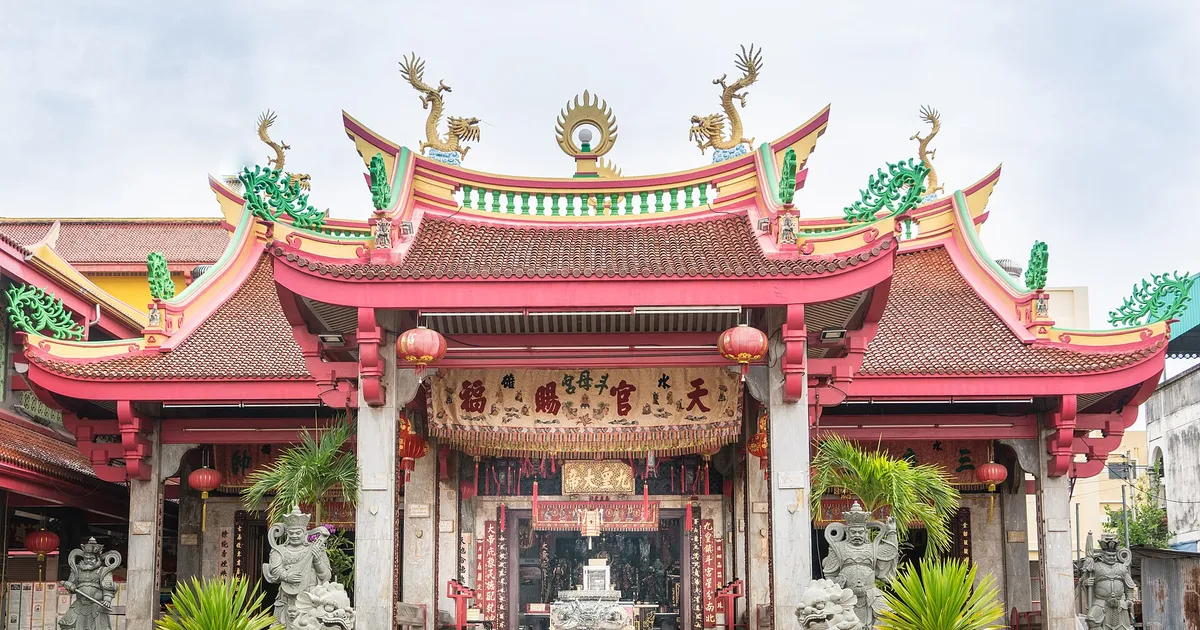
Every October, yellow banners with red "Jay" (เจ) characters appear on restaurants across Thailand — from small provincial markets to Bangkok's biggest malls. Thailand's Vegetarian Festival 2026 runs October 10-18, 2026 — 9 days total, and every year brings the same questions: can jay eaters have eggs, which vegetables are forbidden, is it actually healthier or just belief, how much more will the daily food budget cost, and if you want to see the real festival atmosphere, should you go to Phuket or Yaowarat?
This guide answers all of it in one place: the origin of the tradition, the precepts, forbidden foods, the health facts doctors actually warn about, a real budget table, and where to experience the biggest celebrations nationwide. Finish reading and you won't need to look anywhere else.
What the Vegetarian Festival is, and why Thai-Chinese communities observe it
The Vegetarian Festival (Thai: เทศกาลกินเจ, Teochew: "jiah chai" 食菜, literally "eat vegetables") traces back to a Taoist rite honoring the Nine Emperor Gods (กิ๋วอ๋องไต่เต่), held on the 1st through 9th waxing moon of the 9th lunar month every year. Observers believe that abstaining from meat and keeping body, speech, and mind pure for 9 days wards off misfortune, builds merit, and brings good health for the year ahead.
In Thailand, the clearest point of origin is Phuket, around 1825, when a Chinese Hokkien opera troupe performing near the Kathu tin mines fell seriously ill with a mysterious epidemic — unsurprising given the dense jungle terrain thick with mosquitoes and malaria at the time. The troupe held a vegetarian rite in the style of their homeland to atone before the gods, and their illness reportedly cleared. Phuket residents took it as a genuine miracle and have carried the tradition forward for nearly 200 years, making it the island's biggest annual event today.
From Phuket, the tradition spread to Chinese communities nationwide centered around Chinese shrines — Yaowarat (Bangkok), Trang, Hat Yai, Krabi, and Chonburi — each adapting the rituals to the intensity of local devotion. It's one of several Chinese festivals Thai-Chinese families keep throughout the year, alongside the Mid-Autumn Mooncake Festival in mid-September to early October.
The 10 precepts and the 5 forbidden pungent vegetables
"Observing the vegetarian precepts" isn't only about food — it's about keeping body, speech, and mind disciplined. The commonly followed 10 precepts are:
- Purify the body before the rite begins (bathe, wash hair)
- Clean the kitchen and use separate cookware exclusively for jay food — never mixed with cookware that has touched meat
- Keep body and clothing clean throughout (white clothing is traditional)
- Abstain from all meat, plus eggs, dairy, and any animal-derived products
- Avoid the "5 pungent vegetables" (detailed below)
- Abstain from all intoxicants (alcohol, cigarettes)
- Those menstruating or in mourning traditionally abstain from participating in rites
- Strictly keep the Five Precepts — no killing, no lying, no stealing
- Keep the mind clear — no anger, no quarrels, think well, speak well, act well
- Make merit regularly — pray, chant, and help others throughout the festival
The 5 forbidden pungent vegetables are garlic, onion (including spring onion and cilantro in some traditions), Chinese chives, Chinese leek/rakkyo, and tobacco leaf. Traditional belief holds these plants are intensely pungent and strong-smelling — eaten raw they're said to provoke anger, cooked they're said to stir desire — and that they disrupt the body's five elemental energies, causing key internal organs to malfunction. That's why even a simple stir-fried vegetable dish at a jay restaurant never contains garlic or onion, despite being plant-based.
⚠️ A common mistake: many pre-made sauces and chili pastes contain garlic or onion powder as an ingredient. Read labels carefully, or only buy products clearly certified with the "Jay" mark.
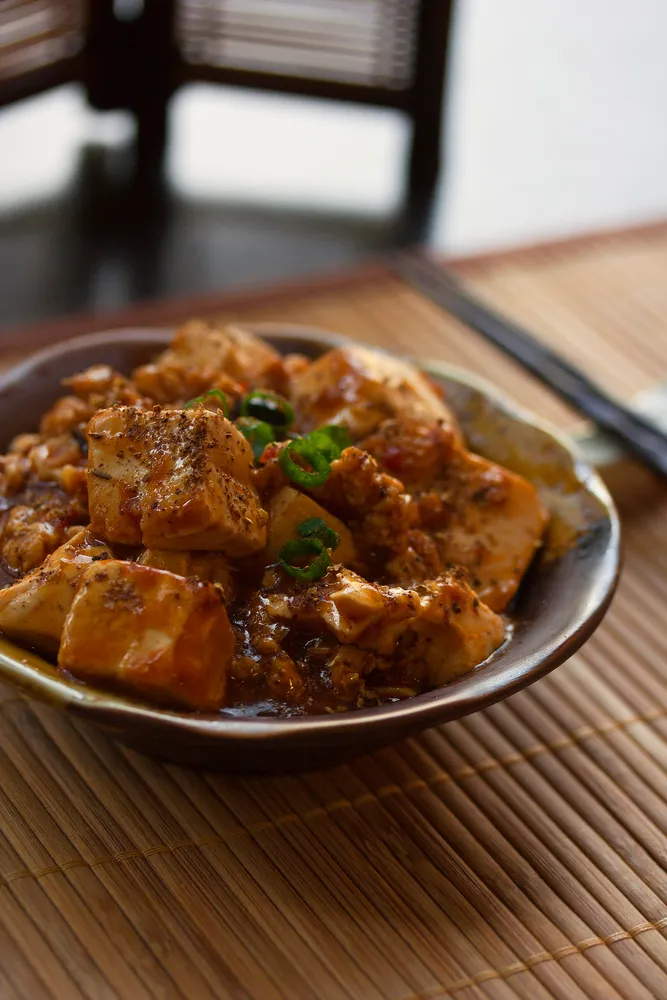 Photo: Billyfoodmabodofu3 by Archon6812 — CC BY-SA 3.0 (Wikimedia Commons)
Jay vs. vegetarian vs. vegan — what's actually different
Many people use these three terms interchangeably, but they don't mean exactly the same thing. Here's the table that settles it in one look:
| Principle | Eats meat | Eats eggs | Eats dairy | Avoids the 5 pungent vegetables | Focus |
|---|---|---|---|---|---|
| Jay (เจ) | ✗ No | ✗ No | ✗ No | ✓ Avoided | Chinese religious observance tied to the festival period |
| Vegetarian (general) | ✗ No | Varies by type | Varies by type | ✗ Eaten normally | Health/ethics, not tied to a specific period |
| Vegan | ✗ No | ✗ No | ✗ No | ✗ Eaten normally | Avoids all animal products for life, including honey and leather |
The most important distinction: jay eaters cannot have eggs or dairy at all, while many vegetarians (ovo-lacto vegetarians) still eat both normally. Vegan and jay diets look similar on the food side, but vegans don't avoid the pungent vegetables and aren't tied to any particular festival — it's a year-round lifestyle, whereas most jay observers only keep it for the 9 festival days before returning to their usual diet.
Is jay actually healthier? The benefits science backs up
Cutting meat for 9 days brings real, measurable benefits — not just belief:
- Lower saturated fat and dietary cholesterol — jay food centers on vegetables, grains, and tofu, all far lower in saturated fat than meat
- More fiber, vitamins, and minerals from plants — supports digestion and, sustained long-term, lowers the risk of heart disease, high blood pressure, and type 2 diabetes
- Gives digestive organs a break from heavy fats — protein from beans and tofu digests more easily than red meat and animal fat
- A good trial run for people considering long-term vegetarianism — many use the 9 days as a test before committing further
The real risks — how to avoid hidden nutrient deficiencies
This is the part other guides skip over, but it matters as much as the benefits:
- Risk of deficiency in high-quality protein, iron, zinc, and vitamin B12 — these nutrients mostly come from meat, eggs, and dairy. Without careful substitution, 9 days can leave you fatigued and low-energy, especially for anyone training hard. Anyone concerned can look at vitamin and mineral supplements to cover the gap during the 9 days
- Processed jay "mock meat" isn't automatically healthy — doctors warn these processed products often carry sodium and frying oil levels no better than ordinary processed food. Eating them for decades carries the same long-term risks as any processed food, though a short 9-10 day stretch with mostly fresh ingredients carries very low risk
- Weight gain is easier than people expect — most jay restaurants use generous amounts of frying oil for fried tofu and mock meats, plus people eat more rice and noodles to feel full in place of missing protein, which spikes blood sugar more than usual
- Not ideal for certain patients without menu adjustments — particularly diabetics (high starch), kidney patients (high sodium), and heart patients. Consult a doctor or dietitian before strict observance
How to eat jay and stay genuinely healthy: choose fresh tofu, soy milk, dried beans, and mushrooms as your main protein instead of processed mock meat. Cook by steaming, boiling, or light stir-frying rather than deep-frying. Eat brown or unpolished rice instead of white rice to manage blood sugar, and keep exercising and sleeping normally — there's no need to skip either just because you're observing jay.
Daily jay food budget — pricier than you'd think
Many assume eating vegetables must be cheaper than eating meat, but in practice jay food often costs about the same as, or slightly more than, an ordinary rice-and-curry meal — because mock meat (textured soy protein, soy sauce, gluten) doesn't always cost less to source and process than real meat.
| Eating style | Approx. price/meal | Notes |
|---|---|---|
| Jay rice-and-curry, 1 dish | 40-60 THB | Similar to a regular rice-and-curry meal |
| Jay rice box, 2-3 dishes (festival market) | 50-80 THB | Prices often rise slightly during the festival due to demand |
| Jay noodle dishes | 40-60 THB | Similar to regular noodle dishes |
| Packaged mock meat (cooking at home) | 60-150 THB/pack | Often more expensive than fresh pork or chicken per kilogram |
| Full day's budget (3 meals) | 150-300 THB | Close to ordinary food costs, not meaningfully cheaper |
A real budget tip: cook jay food at home using fresh tofu, beans, and seasonal vegetables instead of pre-made mock meat — clearly cheaper than buying from markets or restaurants, especially if you buy ingredients before the festival starts, since vegetable and tofu prices tend to rise in the first 2-3 days of the festival as demand spikes.
Where to experience the biggest celebrations nationwide
If you want the full festival atmosphere rather than just eating jay food at home, these are the three main destinations people travel to.
| Location | Highlights | Ritual intensity | Best for |
|---|---|---|---|
| Phuket | Street processions, trance-medium rituals, firewalking, cheek/tongue piercing | Very high — some scenes are graphic | Culture/photography enthusiasts wanting the real ritual; not for the squeamish |
| Yaowarat (Bangkok) | A food market stretching nearly a kilometer, hundreds of restaurants | Low — food-focused, no heavy rituals | Families, food lovers, anyone who can't travel far |
| Trang | Traditional vegetarian precepts, a provincial-scale procession | Moderate to high | Those who want to see rituals without Phuket's crowds |
If you choose Phuket, plan ahead — accommodation fills up fast and prices rise during the festival. See our full Phuket travel guide for lodging, transport, and a complete budget breakdown, which also covers the best timing for an October trip.
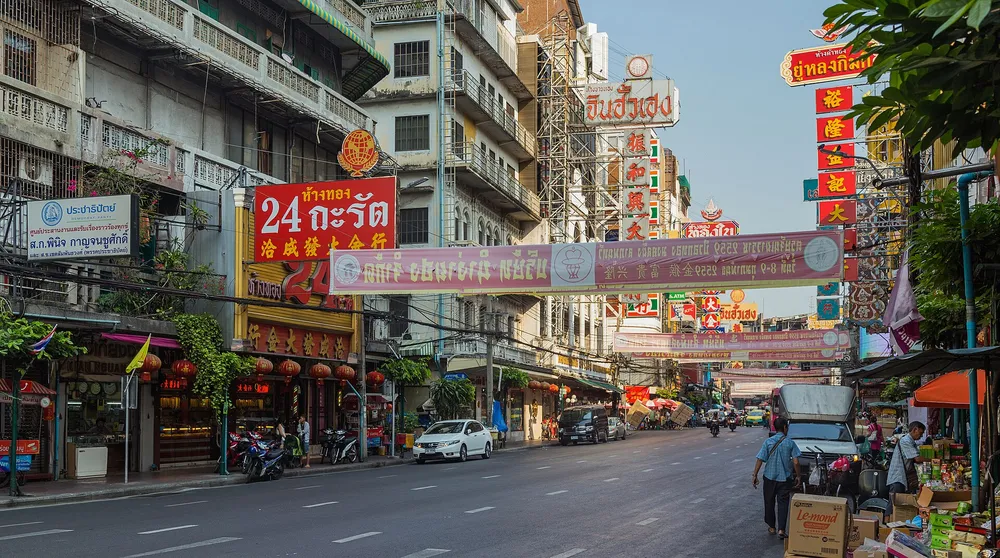 Photo: 2016 Bangkok, Dystrykt Samphanthawong, Ulica Yaowarat by Marcin Konsek — CC BY-SA 4.0 (Wikimedia Commons)
Phuket's processions and rituals — what to know before watching
Processions in Phuket depart from various shrines every morning throughout the 9 days, with shrines taking turns hosting the procession day. Mediums (ม้าทรง) lead the processions performing rituals that look intense — cheek piercing with sharp objects, firewalking, and walking through continuously exploding firecrackers — believed to be painless because a deity is possessing the medium's body.
⚠️ Safety notes for visitors: firecrackers are extremely loud for hours at a stretch — bring earplugs if you're sound-sensitive. Wear fully enclosed shoes (never sandals), since firecracker debris and hot embers can travel far. Stand at the safe distance marked by officials, never cut across a procession or approach a firewalking area. Some rituals look graphic — think carefully before bringing young children.
 Photo: 2011 Phuket Vegetarian Festival by Joseph Ferris III — CC BY 2.0 (Wikimedia Commons)
A sample 9-day jay menu — cook it at home without getting bored
Many people quit halfway through because the menu gets repetitive. Here's a sample 9-day rotation built around tofu, beans, and mushrooms instead of all-fried mock meat:
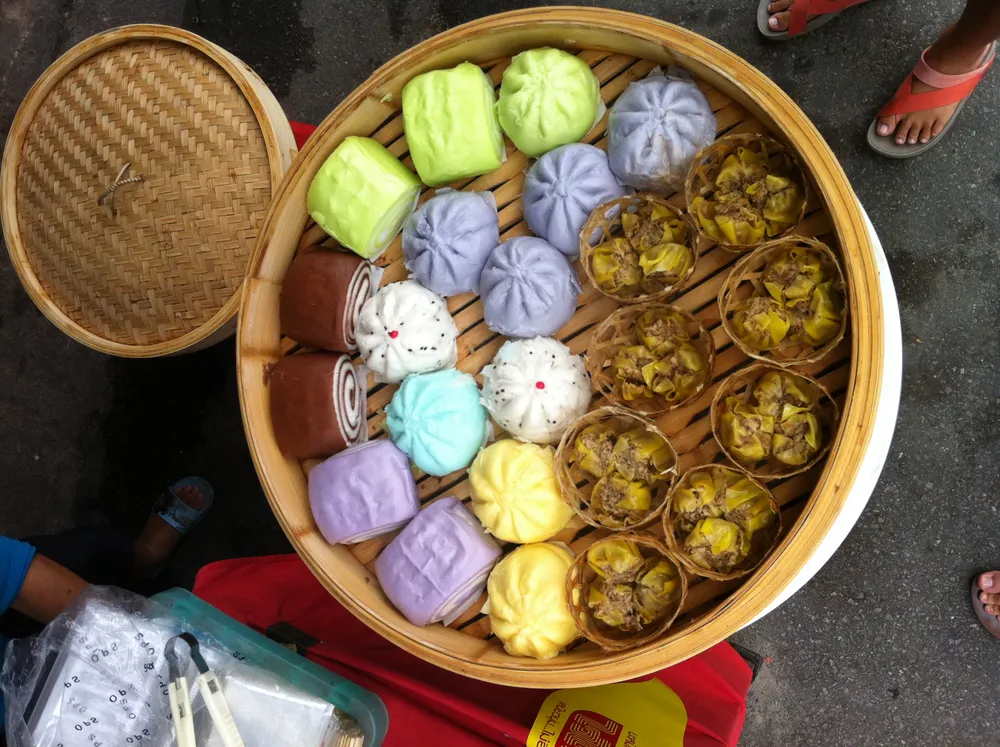 Photo: Steamed buns, the Vegetarian Festival in Phuket by Kirill Kay — CC BY-SA 3.0 (Wikimedia Commons)
| Day | Suggested dish | Main protein |
|---|---|---|
| 1 | Stir-fried tofu with shiitake sauce + brown rice | Firm tofu |
| 2 | Jay mixed-vegetable soup (jub chai) | Edamame/mushroom |
| 3 | Jay dumplings with mushroom-carrot filling | Mushroom |
| 4 | Jay pineapple fried rice with green peas | Green peas |
| 5 | Tom yum with soft tofu and mixed mushrooms | Soft tofu |
| 6 | Stir-fried beansprouts with tofu + soy milk | Tofu/soy milk |
| 7 | Spaghetti with creamy mushroom sauce | Mushroom |
| 8 | Jay green curry (tofu, eggplant, mushroom) | Tofu |
| 9 | Mixed bean salad with sesame dressing | Mixed beans |
Common mistakes and misconceptions
- Confusing "jay" with "vegetarian" — leading some to order a vegetarian dish that contains egg or garlic without realizing it breaks jay principles. Ask staff directly or look for a genuine certified yellow-and-red "Jay" sign
- Assuming processed jay food is automatically healthy just because it's meat-free — jay fried meatballs, sausages, and ham brands often carry sodium and trans fat from repeated frying oil no better than ordinary processed food
- Not reading ingredient labels — jay "oyster sauce," jay fish sauce, and some MSG products still use plant extracts for a meat-like flavor, but some brands quietly include garlic or onion powder without clear labeling. Check for the FDA mark and genuine jay certification
- Visiting Phuket's rituals unprepared — no enclosed shoes, no earplugs, standing too close to firewalking or the procession route risks real injury from firecrackers and embers
- Aiming to lose weight without adjusting the menu — gaining weight on jay food usually comes from relying on fried items and starch, not from eating jay itself
Verdict — how to prepare for this year's festival
Thailand's Vegetarian Festival 2026 (October 10-18) is a good opportunity both for faith and for health, if planned properly: choose fresh tofu, beans, and mushrooms as your main protein instead of processed mock meat, cook by steaming or boiling rather than frying, and remember the daily budget will run close to ordinary food costs — not necessarily cheaper.
For anyone wanting the full festival atmosphere, Yaowarat suits food lovers who don't want to travel far or watch intense rituals, while Phuket suits culture enthusiasts wanting to see the real processions and trance ceremonies — just prepare properly for safety before watching the more intense rituals. Whichever you choose, the heart of the observance is keeping the precepts with a clear mind while balancing your body's nutritional needs.
Sources
- Vegetarian Festival 2026 dates — Thairath
- Vegetarian Festival 2026 — Sanook
- History of the Phuket vegetarian precepts tradition — PRD
- The 5 forbidden pungent vegetables — Bangkokbiznews
- "Jay eating" health cautions — Sanook Health
- 8 benefits of eating jay — Chularat 11 Hospital
- Jay vs. vegetarian vs. vegan — Suan Dusit University Culinary School
- Vegetarian Festival 2026 nationwide event locations — Kapook
Frequently asked questions
- When does Thailand's Vegetarian Festival 2026 start and end?
- It runs from Saturday, October 10, 2026 to Sunday, October 18, 2026 — 9 days total. Strict observers begin a preparatory 'cleanse' (cutting meat and fermented foods) from October 9 so the body adjusts before the festival proper begins.
- Can jay (vegetarian festival) eaters have eggs or dairy?
- No. Jay observers avoid all meat, eggs, dairy, and animal-derived products entirely — unlike general 'vegetarian' diets, where some people (ovo-lacto vegetarians) still eat eggs and dairy. This is the most common point of confusion between the two terms.
- What are the 5 forbidden pungent vegetables during jay?
- Garlic, onion (including spring onion and cilantro in some traditions), Chinese chives, Chinese leek/rakkyo, and tobacco leaf. Traditional belief holds these pungent, strong-smelling plants stir up anger or desire and disrupt the body's five elemental energies, so they're avoided alongside meat.
- Does eating jay for 9 days make you lose weight?
- Not necessarily. Many people gain weight because they rely on deep-fried processed mock meat (fried tofu, fried mock pork) and eat more rice or noodles to feel full in place of missing protein. To manage weight, prioritize steamed or boiled dishes, fresh tofu, beans, and fresh vegetables instead.
- Where in Thailand has the biggest Vegetarian Festival?
- Phuket hosts the biggest and most intense celebration, with street processions, trance-medium rituals, and firewalking. Yaowarat (Bangkok's Chinatown) focuses on food stalls and restaurants stretching nearly a kilometer with no heavy rituals — better suited to those who want to eat without traveling far or watching intense ceremonies.
- Can pregnant women, children, or people with chronic conditions eat jay?
- Yes, but consult a doctor first — especially people with diabetes, kidney disease, or heart conditions, since some jay dishes are high in sodium and starch but low in protein, which can affect disease management. There's no need to force strict observance if it doesn't suit your health.
Related articles

10.10 Shopee Lazada 2026: 10 Categories Worth Buying, and Should You Wait?
When is the 10.10 Shopee-Lazada 2026 sale, which categories discount for real, and should big-ticket items wait for 11.11? 10 best categories plus scams to avoid.
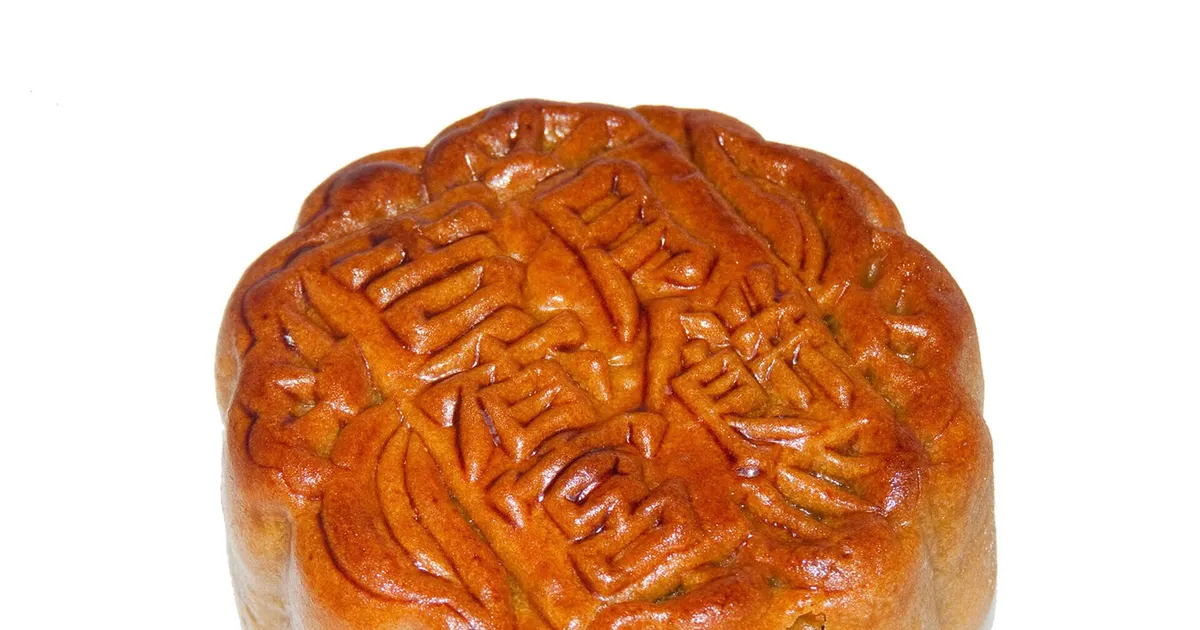
Mid-Autumn Festival 2026: Date, Rituals + 10 Mooncakes Worth Trying
Mid-Autumn Festival 2026 falls on September 25. When and how to make the offering, plus 10 ranked mooncakes from budget to premium gift boxes, with real prices.

10 Best Water Pumps for Flood Season Thailand 2026: What Not to Buy
10 best water pumps for Thailand's 2026 flood season, from ฿600 submersible pumps to ฿9,000+ petrol engines, with a price/power/flow comparison table and buying advice.