Caltech Robot Builds Part of a Structure in Space on Its Own
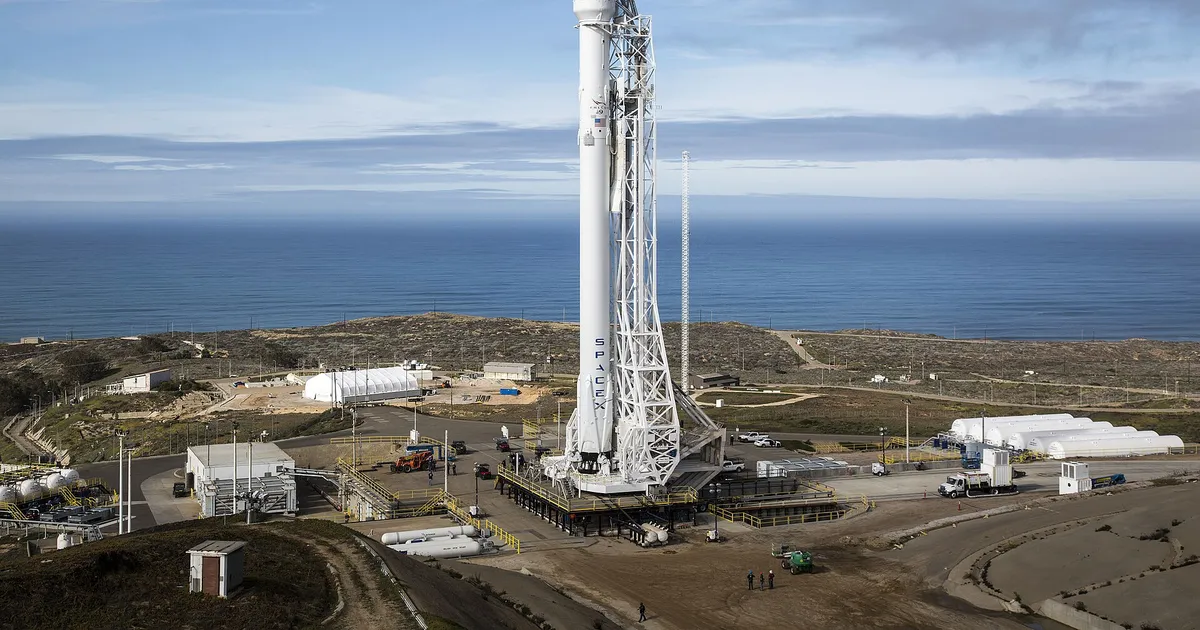
Engineers at the California Institute of Technology (Caltech) reported on November 9, 2026 that the ASTRA project's robot, about one cubic metre in size, autonomously built part of a structure in low Earth orbit. The team lead says it is the first time a structure has been constructed autonomously in space.
What happened in orbit
ASTRA stands for Autonomous In-Space Tensioned Reflector Assembly. It is a demonstration mission designed to test whether a robot can build a reflector antenna in space without astronauts helping.
The robot launched on March 30, 2026 aboard a SpaceX Transporter-16 rideshare mission from Vandenberg Space Force Base in California, hosted on Momentus's Vigoride 7 vehicle, which carried 10 payloads to low Earth orbit.
According to the team, the robot flew with two frame bays already built. Its robotic arm then picked struts and joints from onboard dispensers and assembled the third bay by itself.
Why it matters
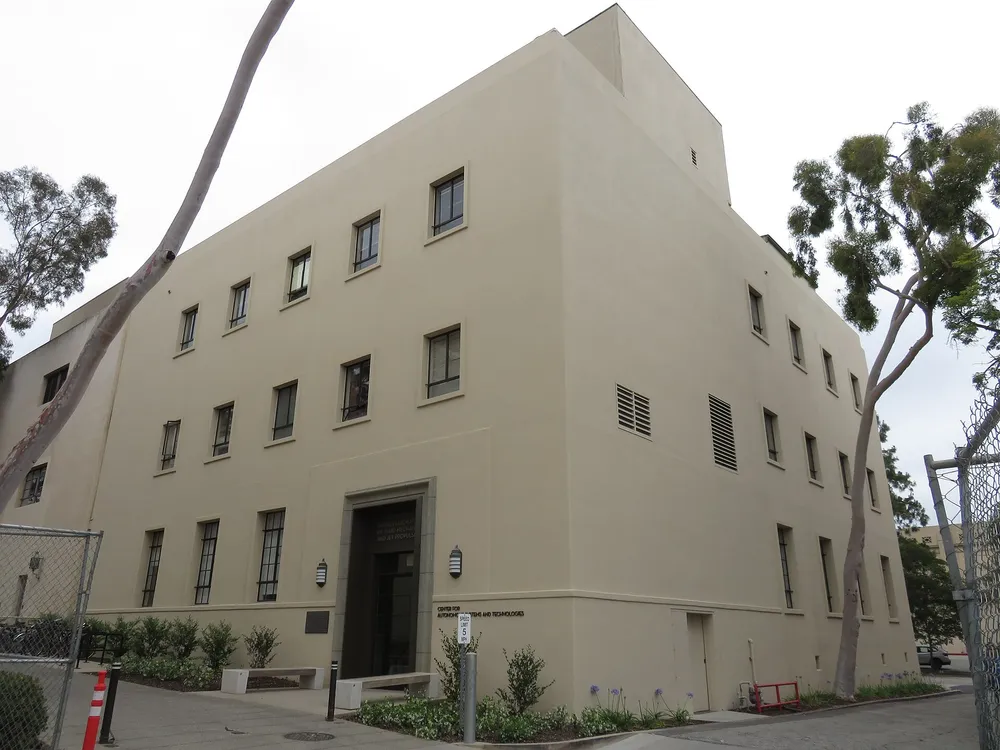 Photo: Caltech's Center for Autonomous Systems and Technologies building — Antony-22, CC BY-SA 4.0 (Wikimedia Commons)
Almost every structure in space today is built on Earth, folded to fit inside a rocket fairing and unfolded in orbit. That caps the size and mass of what can be launched. If robots can assemble parts in orbit, antennas, telescopes and other equipment could grow beyond what a single rocket can carry.
Andrew Detor, DARPA's NOM4D program manager, said: "Nothing approaching that scale can be achieved today." Sergio Pellegrino, the Caltech team lead, said: "This is the first time that a structure has been autonomously constructed in space."
The numbers and the hardware
- Target: a reflector 1.4 metres across, made of 11 connected frame bays
- Materials: composite fibre tubes, aluminium connectors and a reflective film of Kapton perforated with many small openings, which needs less tension than conventional knitted metal mesh
- Schedule: the team had less than 12 months to build, test and deliver the hardware
- Communications: roughly 7 to 8 contact windows a day, each about 15 minutes
The mission falls under DARPA's NOM4D program (Novel Orbital and Moon Manufacturing, Materials, and Mass-efficient Design), launched in 2022. Igor Bargatin of the University of Pennsylvania co-invented the perforated reflective film.
Not smooth all the way, and not finished
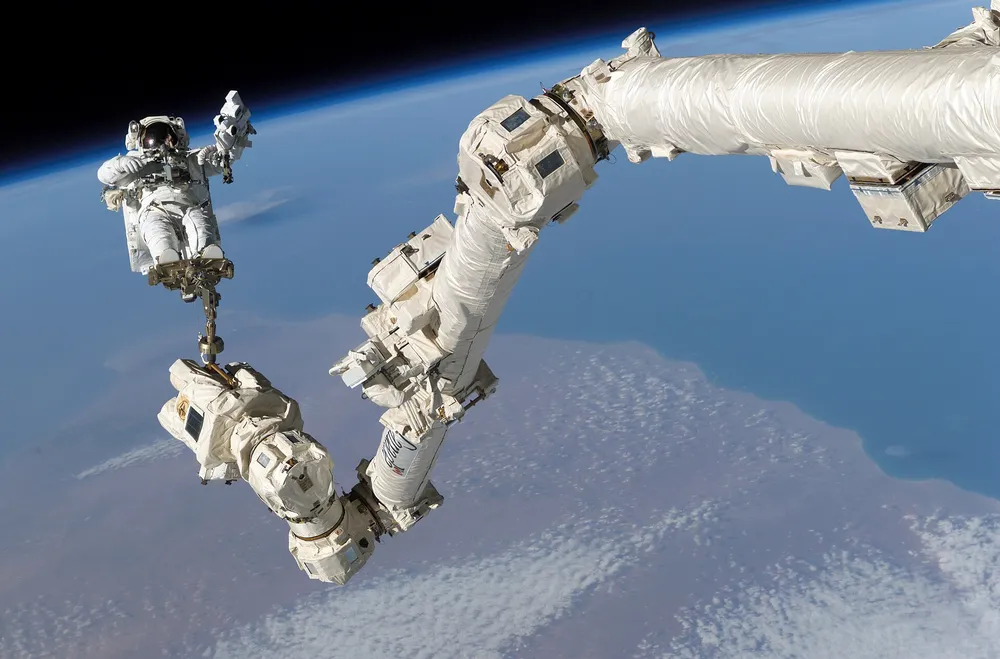 Illustrative: the ISS's Canadarm2, not the ASTRA robot — NASA, public domain (Wikimedia Commons)
Ground engineers sent the commands, checked results from photos and tested fixes on a spare robot in the lab when the build hit problems. Jaden Suh, a former Caltech postdoctoral researcher now at UT Austin, said: "That's basically the reason you do proof-of-concept testing."
The team does not expect all 11 bays to be completed before the mission ends in December. Even so, it says the demonstration shows the construction approach is technically feasible, even though the antenna was not completed.
What's next
NOM4D has a second team at the University of Illinois Urbana-Champaign, which is using a module on the International Space Station to harden carbon tubes in orbit. Both approaches aim at the same goal: manufacturing and assembling large structures directly in space.
This report is based on a Caltech press release rather than a peer-reviewed paper. Information as of November 10, 2026.
For more space coverage, see NASA's Aeolus mission to Mars and India's uncrewed Gaganyaan test.
Sources
Frequently asked questions
- What did the ASTRA robot achieve?
- It autonomously assembled the third bay of an antenna frame in low Earth orbit with a robotic arm, after deploying two bays that were pre-built on the ground.
- Why is the antenna not finished?
- The reflector needs 11 frame bays. The team says time is limited and does not expect to complete them before the mission ends in December, though the demonstration proves the concept.
Related news
 World
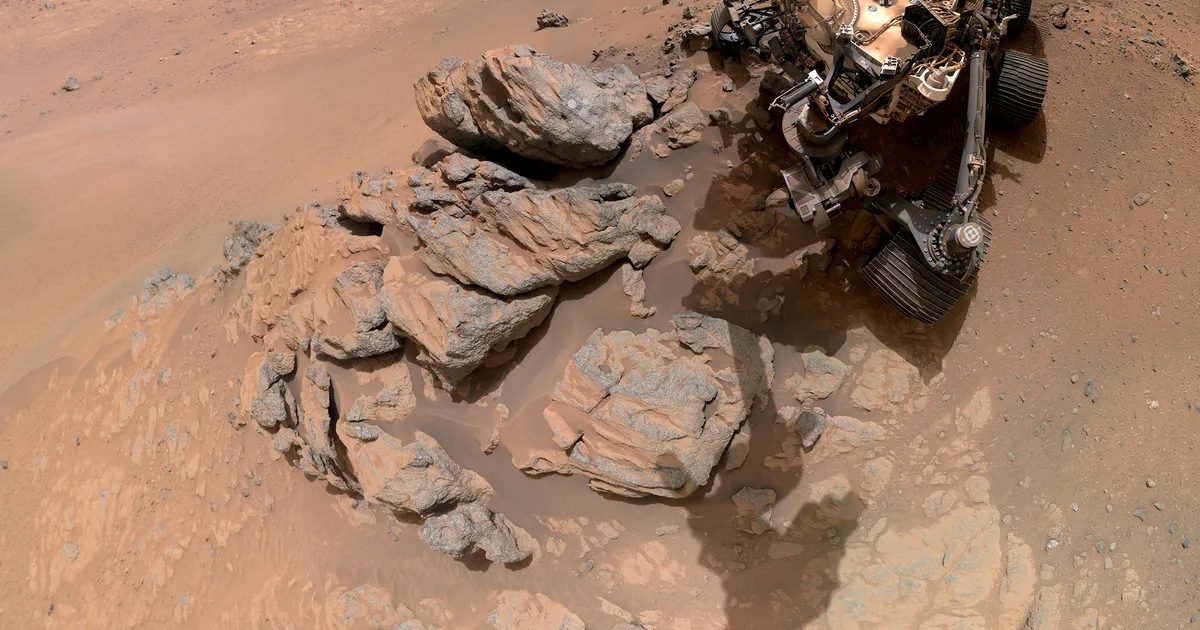
Perseverance Sets Record for Farthest Drive on Another World
NASA's Perseverance has driven 45.22 km on Mars, passing Opportunity's 45.16 km record in about a third of the time, mostly under its own AutoNav control.
 World
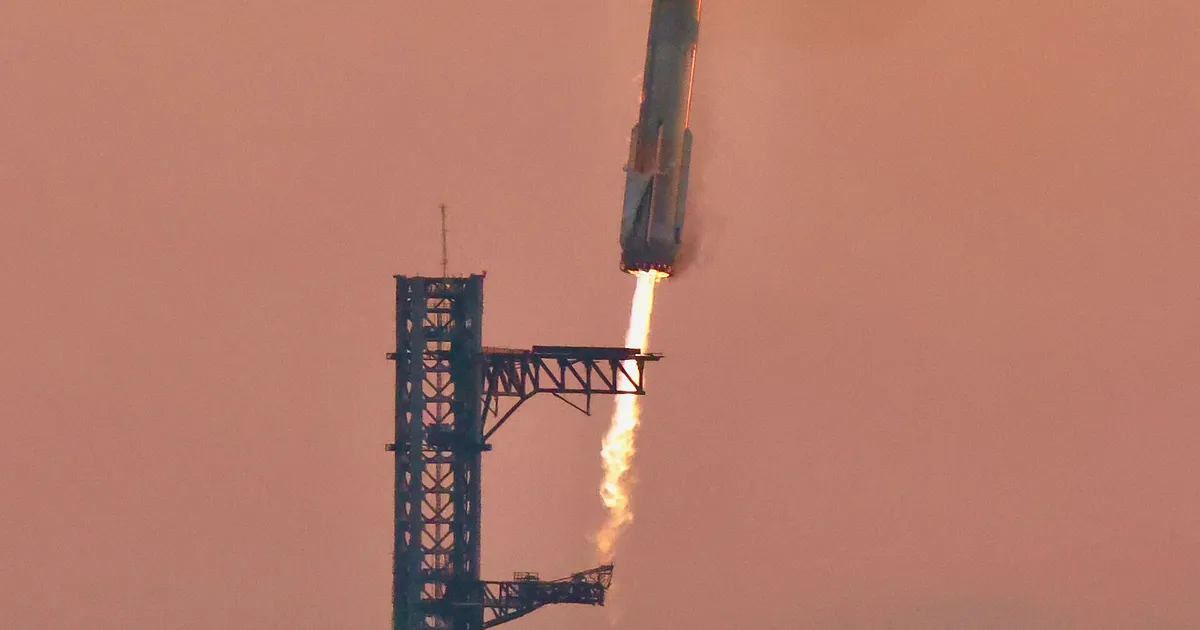
SpaceX Catches a Starship Returning From Orbit for the First Time
On Nov 14, 2026, SpaceX’s Starship 42 returned from a 22-hour orbital flight and was caught by the launch tower’s arms in Texas — a first for a spacecraft coming back from orbit.
 World
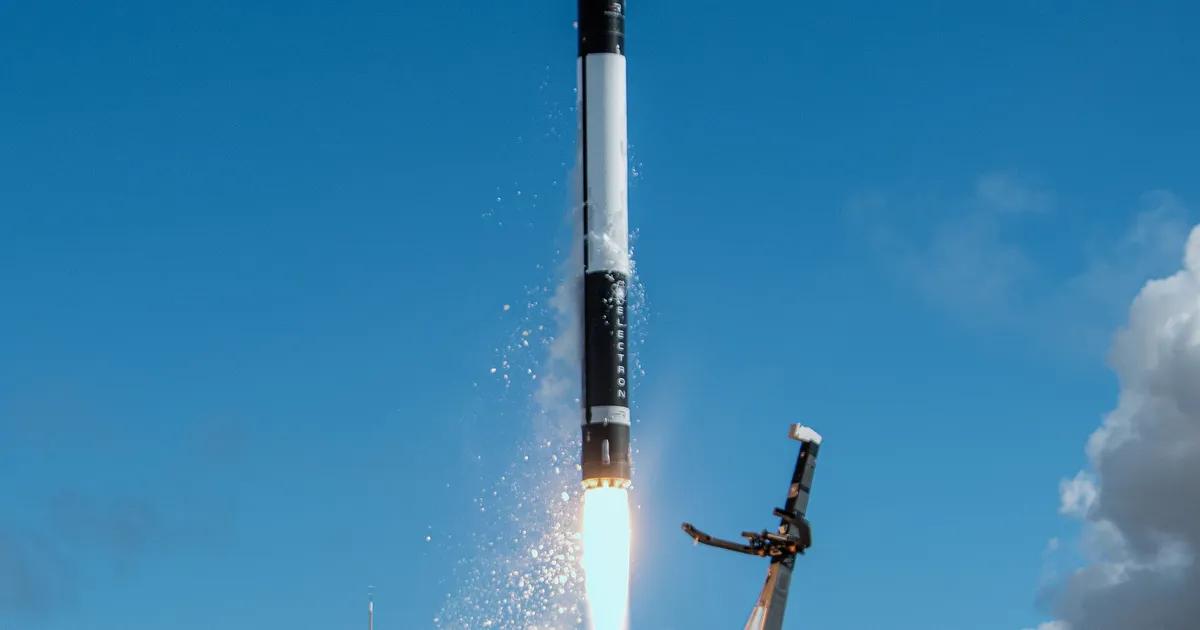
Rocket Lab Launches Its 100th Electron, Fastest Commercial Rocket to 100
Rocket Lab flew its 100th Electron from New Zealand on Nov 14, 2026, carrying a radar satellite for Japan’s iQPS — the fastest commercial rocket to the mark, it says.