India Edges Closer to Human Spaceflight: ISRO Readies Uncrewed Gaganyaan-1 for Late 2026

The Indian Space Research Organisation, or ISRO, is entering the home stretch of a historic mission — Gaganyaan-1 (G1), the first "uncrewed" test flight of India's maiden human spaceflight program. As of June 2026, the work is roughly 90% complete, having cleared more than 8,000 ground tests, and is on track to launch into orbit in the second half of 2026. It marks a major step toward India becoming the fourth nation in the world to send humans into space using its own technology.
India's First Step Toward Human Spaceflight
The Gaganyaan program (Sanskrit for "sky craft") is India's plan to send its own astronauts into Earth orbit aboard rockets and spacecraft it has developed itself. But before any people fly, ISRO is following a "safety first" approach by testing every system on uncrewed flights.
The G1 flight is therefore a full end-to-end "dress rehearsal" — from liftoff and orbital insertion to atmospheric re-entry and sea recovery — without risking any astronaut's life. If everything goes smoothly, it will be followed by a second uncrewed flight, G2, within 2026, ahead of the first crewed flight in 2027.
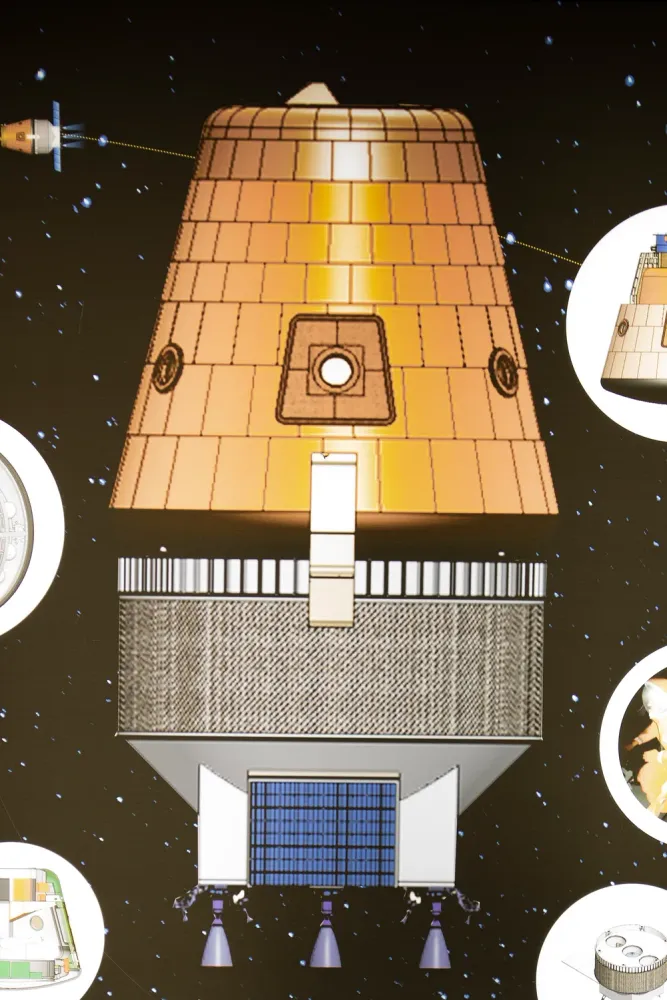 Illustration: Gaganyaan module diagram by Dean Sumith — CC BY-SA 4.0 (Wikimedia Commons)
Vyommitra: A Test Pilot That Isn't Human
At the heart of the G1 flight is Vyommitra, a half-humanoid robot with female-presenting features that ISRO first unveiled in 2020. The robot will stand in for a real astronaut: it can speak with ground control in both Hindi and English, read the spacecraft's instrument panels, and monitor cabin conditions such as temperature, pressure, radiation levels, and air quality.
Vyommitra's job is to simulate "having a human aboard" so engineers can see how well the Environmental Control and Life Support System (ECLSS) performs in microgravity. The capsule will also carry fruit flies (Drosophila) to study the effects of spaceflight on living organisms.
The G1 capsule will reach low Earth orbit at an altitude of about 400 kilometres and circle for roughly three days before returning through the atmosphere.
The HLVM3 Rocket and the Sriharikota Spaceport
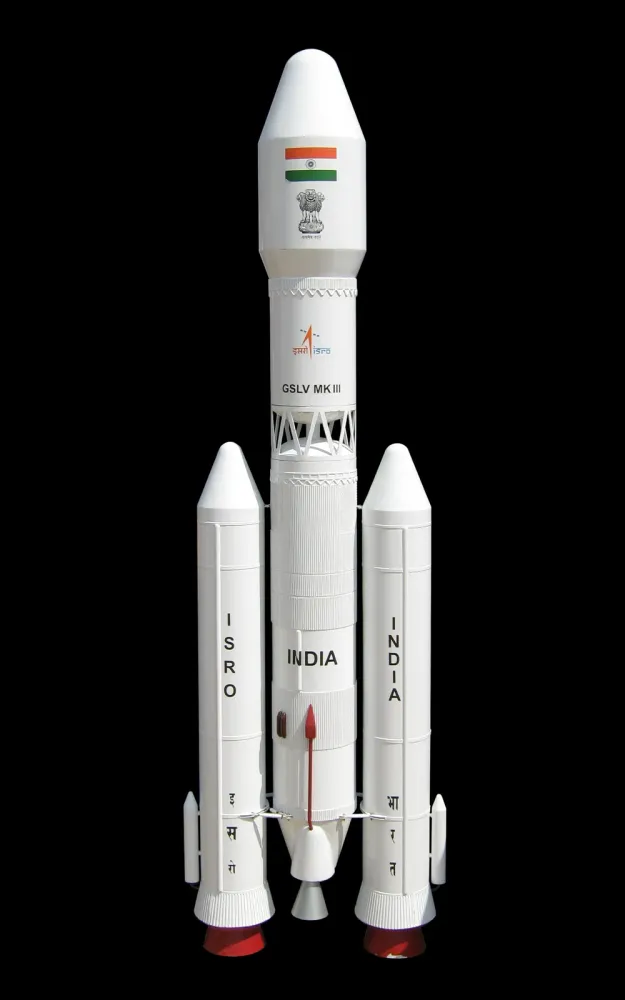 Illustration: HLVM3 rocket model by ISROSpaceflight — CC BY-SA 4.0 (Wikimedia Commons)
The mission will fly on the HLVM3 (Human-rated LVM3) — a version of the LVM3 rocket (formerly known as the GSLV Mk III) upgraded to meet the safety standards required for carrying humans. Standing about 43 metres tall, it is fitted with a Crew Escape System that can instantly pull the crew capsule away from the rocket if anything goes wrong during launch.
The launch will take place at the Satish Dhawan Space Centre on Sriharikota island, off India's east coast on the Bay of Bengal — ISRO's main launch site, which has already sent the Chandrayaan lunar missions and India's Mars orbiter on their way.
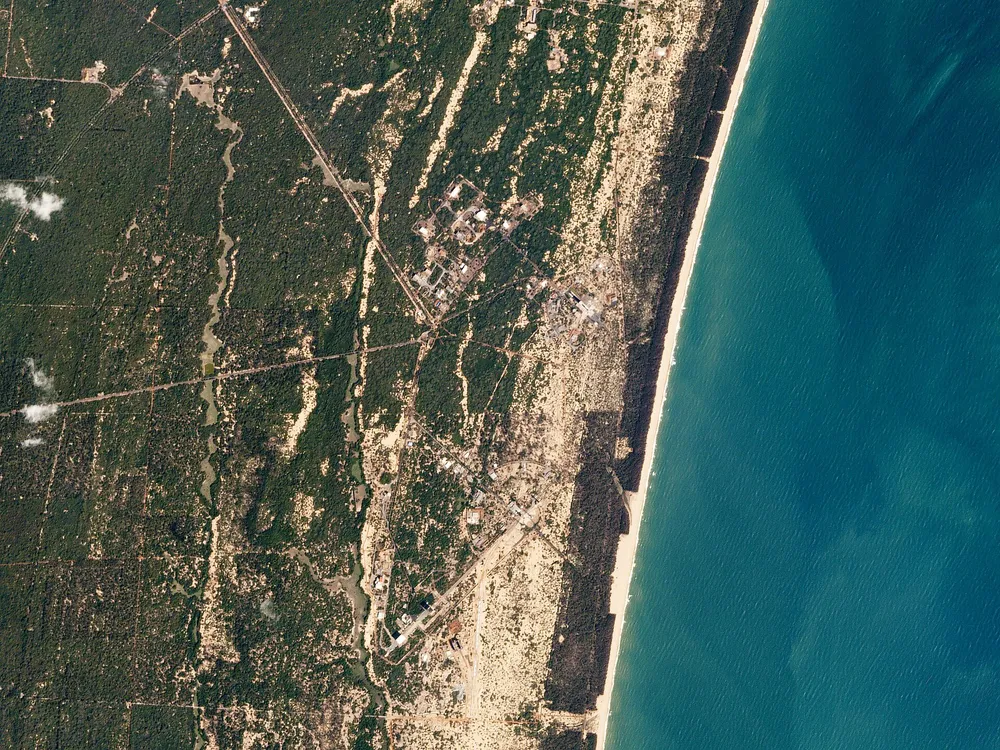 Illustration: Satish Dhawan Space Centre photographed by Planet Labs, Inc. — CC BY-SA 4.0 (Wikimedia Commons)
Why It Matters
Today, only three nations can launch humans into space using their own technology: Russia, the United States, and China. If the Gaganyaan program succeeds, India would become the fourth — a milestone of enormous pride for the whole of Asia.
The achievement builds on India's recent run of space successes, including Chandrayaan-3, which in 2023 became the first mission to land near the Moon's south pole, and a remarkably low-cost Mars orbiter — proof that affordable, self-reliant space programs are possible.
For readers across Thailand and the rest of Asia, the story is an inspiring reminder that developing nations can move to the front rank of world science and technology — much like we have seen with Thai students using AI to detect malaria and winning a global award and Thailand's physics olympiad team on the Asian stage.
Voices From ISRO and What to Watch
ISRO Chairman Dr. V. Narayanan has underscored the safety standards demanded of a crewed mission, saying "every system must score one hundred out of one hundred" — a sign the team will not compromise on a single detail when astronauts' lives are at stake.
ISRO has set up an Integrated Mission Review Committee to scrutinise critical design elements and any gaps in mission simulations, to ensure the flight is robust and fail-safe. For sea recovery, the Indian Navy will lead operations, with the capsule descending under a system of ten parachutes.
What to watch next is the official G1 launch in the second half of 2026, followed by the G2 flight and, finally, the H1 flight that will carry Indian astronauts into space for the first time in 2027 — a new chapter in the history of Asian spaceflight.
Gaganyaan-1 Mission at a Glance (as of June 2026):
| Detail | Information |
|---|---|
| Mission | Gaganyaan-1 (G1) — uncrewed test |
| Agency | ISRO (India) |
| Rocket | HLVM3 (human-rated LVM3) |
| Launch site | Satish Dhawan Space Centre, Sriharikota |
| Passengers | Vyommitra humanoid robot + fruit flies |
| Orbit | ~400 km, for ~3 days |
| Target launch | Second half of 2026 (H2 2026) |
| Crewed flight (H1) | Targeted 2027 |
Sources
Frequently asked questions
- What is Gaganyaan-1?
- Gaganyaan-1 (G1) is the first 'uncrewed' test flight of the Gaganyaan program, India's first human spaceflight program. It will carry a humanoid robot named Vyommitra instead of real astronauts to validate every system safely before people fly.
- When will Gaganyaan-1 launch?
- As of June 2026, ISRO has scheduled the G1 mission for the second half of 2026 (H2 2026) after delays. The mission is roughly 90% complete and has cleared more than 8,000 ground tests.
- Who is Vyommitra?
- Vyommitra is a half-humanoid robot developed by ISRO, with female-presenting features. It can speak to ground control, read instrument panels, and simulate human presence to collect data on the spacecraft's life-support systems.
- When will India send real astronauts to space?
- After the uncrewed G1 and G2 flights within 2026, ISRO targets its first crewed flight (H1) in 2027. If it succeeds, India would become the fourth nation to launch humans into space using its own technology.
Related news
 World
WorldNASA Set to Launch Roman Space Telescope to Probe the Universe
NASA is set to launch the $4.3 billion Nancy Grace Roman Space Telescope aboard a Falcon Heavy on Aug 30, 2026, to investigate dark energy and hunt for exoplanets.
 World
WorldChina's Tianwen-2 Reaches Earth's 'Quasi-Moon' Asteroid — About to Collect Samples from What May Be a Chunk of Our Moon
China's Tianwen-2 entered orbit around asteroid Kamoʻoalewa on June 7, 2026 and will close to 20 km on July 4 — the rock may be a fragment of the Moon.
 World
WorldNASA Partners with Relativity Space on Aeolus Mission to Map Mars Atmosphere
NASA and Relativity Space announced the Aeolus Mars orbiter, launching in 2028 to deliver the first daily global measurements of Mars weather.