Perseverance Sets Record for Farthest Drive on Another World
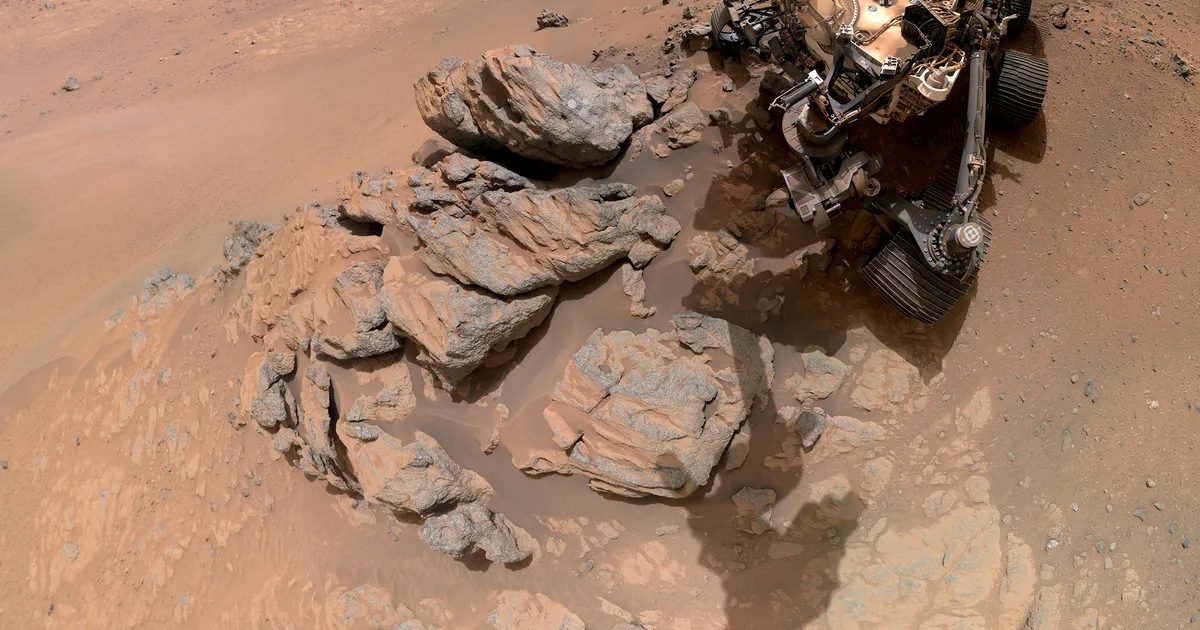
NASA's Perseverance rover has driven farther than any vehicle ever has on the surface of another world. On 11 October 2026 its odometer passed the old mark set by the Opportunity rover, reaching about 45.22 kilometres (28.10 miles) on Mars, and it got there in roughly a third of the time.
The numbers behind the record
According to the Guinness World Records write-up, Perseverance drove 91.31 metres from a spot nicknamed "Lac de Charmes" on the rim of Jezero Crater toward a region called "Idubi". That short hop moved the odometer from 45.13 km to 45.22 km, past the 45.16 km (28.06 miles) Opportunity logged over its 14-year mission. NASA announced the milestone the following Monday, and the rover crossed it on the 2,006th Martian day, or sol, of its mission.
Opportunity needed nearly 15 years to cover that distance. Perseverance, which began operating on Mars on 18 February 2021 after landing in Jezero Crater, an ancient river delta, did it in under six years.
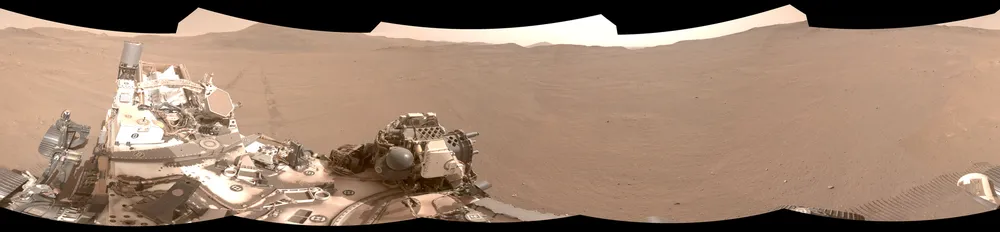
Perseverance looks back along the tracks it has left on Mars. Photo: NASA/JPL-Caltech, public domain via Wikimedia Commons.
Why it matters: a rover that mostly drives itself
The most striking difference is how the distance was covered. Perseverance relies on AutoNav, a self-driving system that builds 3D maps of the terrain, spots hazards and plans a route between waypoints chosen by engineers on Earth. NASA says the system has handled about 90% of the rover's driving. Opportunity and its twin Spirit used an earlier version only about 5% of the time.
Autonomy matters because real-time driving is impossible. Mars is on average about 225 million km from Earth, so a radio signal takes roughly 13 minutes each way. A rover that can safely decide where to put its wheels covers far more ground per day than one waiting for instructions.
The original mission plan called for no more than 12.4 miles (20 km) of driving. Steven Lee, project manager for the Curiosity and Perseverance rovers at NASA's Jet Propulsion Laboratory, said the team had "blown well past that". Guinness notes the rover's motors were rated for 20 km but are now expected to last at least 100 km.
A short history of rover distance records
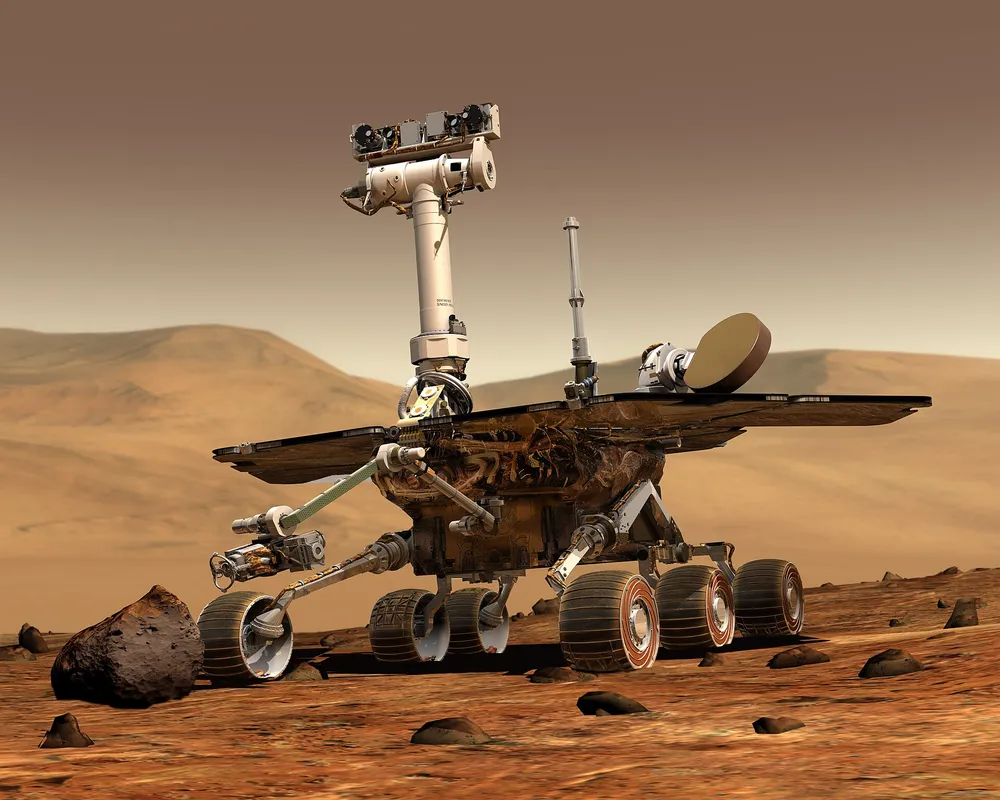
Illustration: an artist's concept of a Mars Exploration Rover like Opportunity. NASA/JPL, public domain.
The record has changed hands only a few times in history, as Guinness World Records recounts:
| Rover | Where | Distance | Notes |
|---|---|---|---|
| Lunokhod-1 (USSR) | Moon, 1970-71 | 10.54 km | First planetary rover |
| Lunokhod-2 (USSR) | Moon, 1973 | 37 km | Record stood for more than 40 years |
| Opportunity (NASA) | Mars, 2004-2018 | 45.16 km | Passed Lunokhod-2 on 27 July 2014 |
| Curiosity (NASA) | Mars, since 2012 | about 38 km | Nuclear powered, still driving |
| Perseverance (NASA) | Mars, since 2021 | 45.22 km | New record, 11 Oct 2026 |
Opportunity was designed to travel no more than about 1 km. A planet-wide dust storm ended its mission in 2018 while it explored Endeavour Crater.
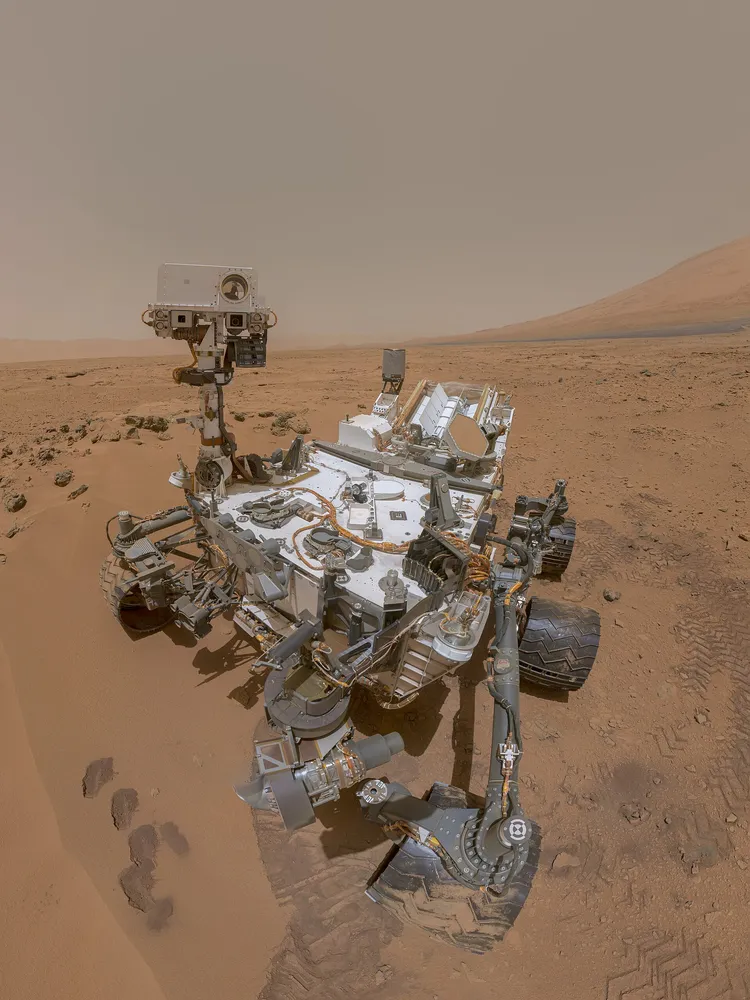
Perseverance's older sibling, Curiosity, which has driven about 38 km since 2012. Photo: NASA/JPL-Caltech/MSSS, public domain.
What Perseverance is doing now
The record drive was not a stunt. Perseverance is crossing an area nicknamed "Lac de Charmes" near Jezero Crater's western rim, heading toward the Idubi site. That region may contain the oldest landscape ever investigated in the solar system. Along the way the rover drills sediment samples, analyses them with its onboard laboratory and sends the results to scientists.
NASA approved the mission's first extension in October, which would keep the rover operating through about the end of 2028. Lee said the team expects "Perseverance to keep adding to this record for many years to come".
What to watch next
- More distance: the odometer keeps climbing with each drive; Curiosity, at about 38 km, is the next-closest rover still operating.
- Idubi: the science payoff of reaching ancient terrain on the crater rim.
- Autonomy: how much of the next mission extension is driven by software rather than by human route planners.
Figures as of 22 October 2026, from NASA statements as reported by Popular Science, Guinness World Records and AIAA. Odometer readings differ slightly between outlets because of rounding.
Sources
Related news
 World
NASA Set to Launch Roman Space Telescope to Probe the Universe
NASA is set to launch the $4.3 billion Nancy Grace Roman Space Telescope aboard a Falcon Heavy on Aug 30, 2026, to investigate dark energy and hunt for exoplanets.
 World
China's Tianwen-2 Reaches Earth's 'Quasi-Moon' Asteroid — About to Collect Samples from What May Be a Chunk of Our Moon
China's Tianwen-2 entered orbit around asteroid Kamoʻoalewa on June 7, 2026 and will close to 20 km on July 4 — the rock may be a fragment of the Moon.
 World
India Edges Closer to Human Spaceflight: ISRO Readies Uncrewed Gaganyaan-1 for Late 2026
India's ISRO targets the second half of 2026 for Gaganyaan-1, its first uncrewed test flight, after 8,000+ ground tests, ahead of a crewed launch in 2027.