China's Tianwen-2 Reaches Earth's 'Quasi-Moon' Asteroid — About to Collect Samples from What May Be a Chunk of Our Moon

On June 7, 2026, China's spacecraft Tianwen-2 successfully entered orbit around asteroid Kamoʻoalewa (469219) — a peculiar space rock that astronomers call Earth's "quasi-moon" — after a 13-month journey through space. The spacecraft is now approximately 2,000 kilometres from the asteroid and preparing for a historic close approach on July 4, 2026, when it will swoop to within just 20 kilometres for the first detailed imaging ever attempted of this mysterious object.
What makes this mission truly extraordinary: Kamoʻoalewa may be a chunk blasted off our own Moon by an ancient asteroid impact millions of years ago. If sample analysis confirms this, it would mark the first time humanity has retrieved lunar material from any body other than the Moon itself.
Earth's Mysterious Wobbling Neighbour
The name Kamoʻoalewa comes from Hawaiian and translates as "the oscillating fragment" — an apt description. The asteroid orbits the Sun with a period of 365.77 days, almost identical to Earth's year. From our rotating reference frame, it appears to trace a spiralling loop around our planet every ~45 years, oscillating between 38 and 100 times the distance of the Moon (roughly 4.6 million km).
It is not a true moon in the gravitational sense — it orbits the Sun, not Earth — but our planet's gravity locks it into this stable co-orbital relationship that has persisted for millions of years and will continue far into the future. The asteroid was discovered on April 27, 2016, by the Pan-STARRS telescope at Haleakalā, Hawaiʻi. At just 40–100 metres wide (about the size of a 10–30-storey building), it is extremely difficult to observe from Earth.
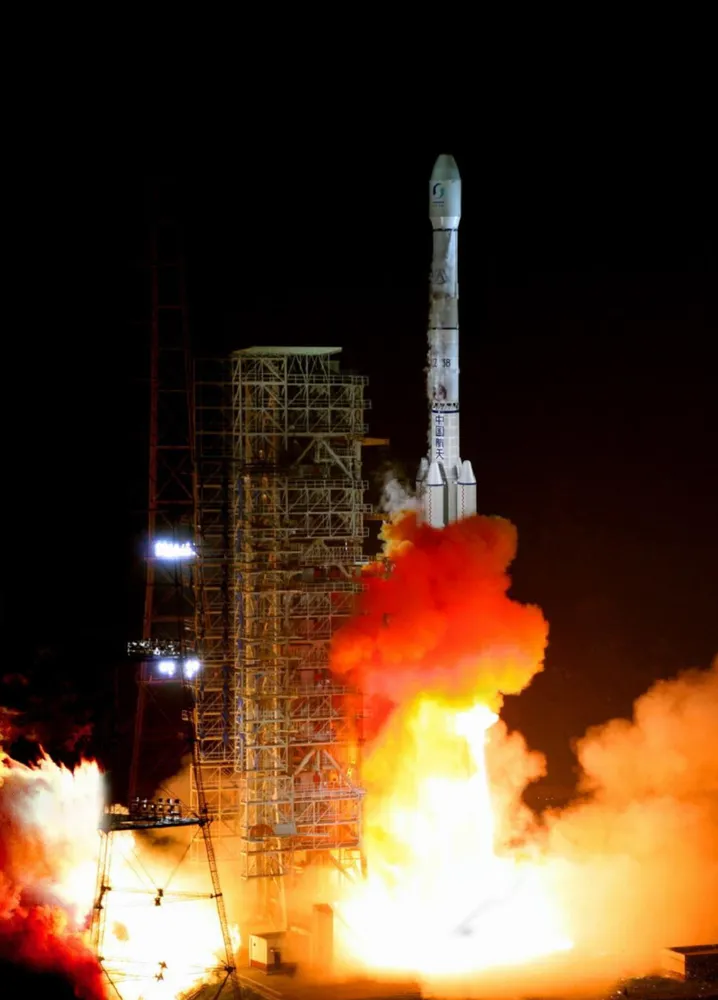
A 13-Month Journey from Xichang
Tianwen-2 lifted off on a Long March 3B rocket from the Xichang Satellite Launch Center on May 28, 2025, with CASC confirming a successful launch approximately one hour after liftoff at 17:31 UTC. Over the following 13 months, the spacecraft performed autonomous navigation, executed deep-space manoeuvres including a major trajectory correction in October 2025, and carefully matched orbits with Kamoʻoalewa — a technical feat made especially challenging by the asteroid's 28-minute rotation period.
Interestingly, CNSA (China National Space Administration) has not issued an official statement confirming the June 7 orbit insertion. The confirmation came instead from AMSAT-DL, a German-Dutch amateur astronomy group, whose radio telescopes decoded Tianwen-2's telemetry and independently verified the successful arrival.
The Theory That Changed Everything: A Fragment of the Moon?
The central scientific question driving this mission was first raised in a landmark 2021 paper in Communications Earth & Environment by researchers at the University of Arizona. They found that Kamoʻoalewa's reflectance spectrum closely matches lunar silicate material and diverges sharply from every known near-Earth asteroid class — a striking anomaly.
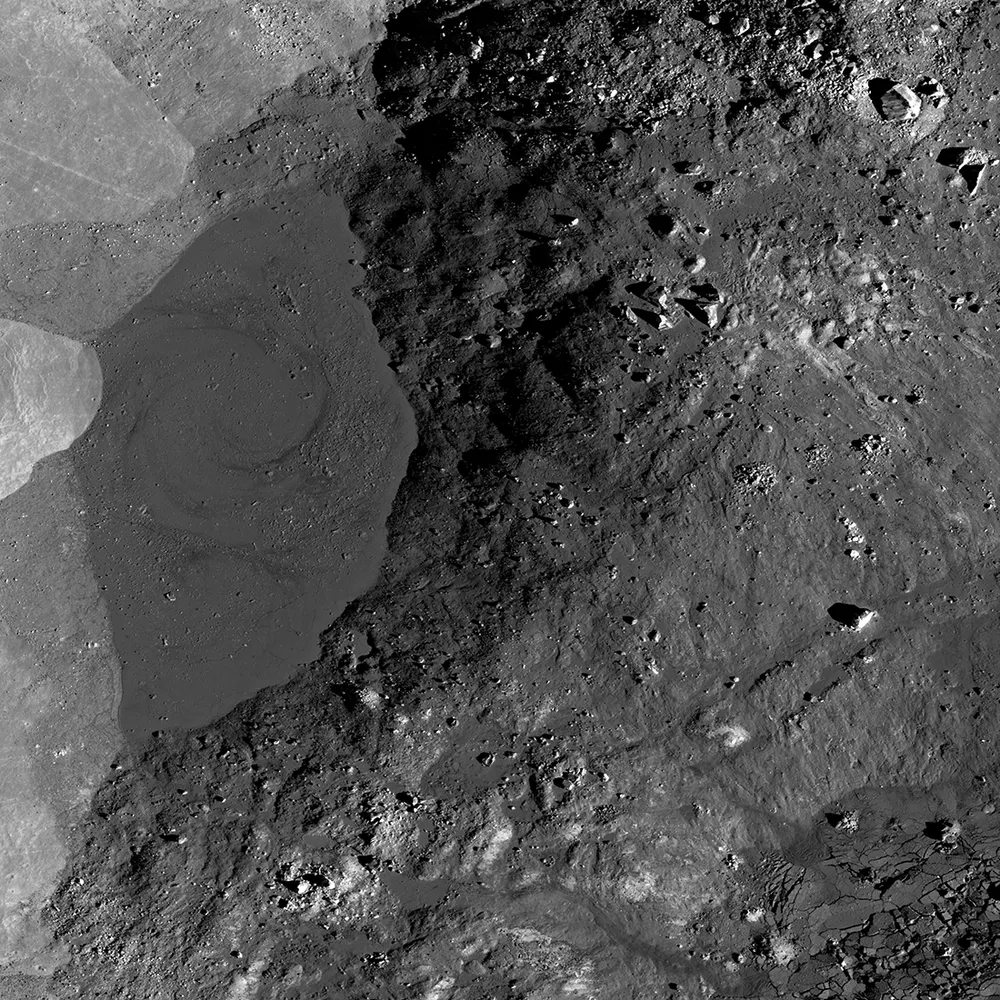
Follow-up numerical simulations by José Daniel Castro-Cisneros and Regents Professor Renu Malhotra (University of Arizona, 2023–2024) demonstrated that the impact forming the Giordano Bruno crater on the Moon's far side (diameter ~22 km), which occurred roughly 1–10 million years ago, could feasibly have ejected material into a quasi-satellite orbit around Earth — precisely matching Kamoʻoalewa's current trajectory.
A Nature Communications paper published in 2026 added further support: Kamoʻoalewa's surface has an Itokawa-like silicate composition (S-type, similar to the asteroid sampled by Japan's Hayabusa mission) but with unusually heavy space weathering — consistent with material that spent time on or near the lunar surface before being ejected.
July 4: The Day the World Watches
On July 4, 2026, Tianwen-2 will reduce its distance from ~2,000 km to approximately 20 kilometres from the asteroid's surface — the first-ever close-range view of Kamoʻoalewa. The spacecraft carries 11 scientific instruments including multispectral cameras, LiDAR for surface topography mapping, a sounding radar to peer beneath the surface, and thermal sensors to characterise the asteroid's composition.
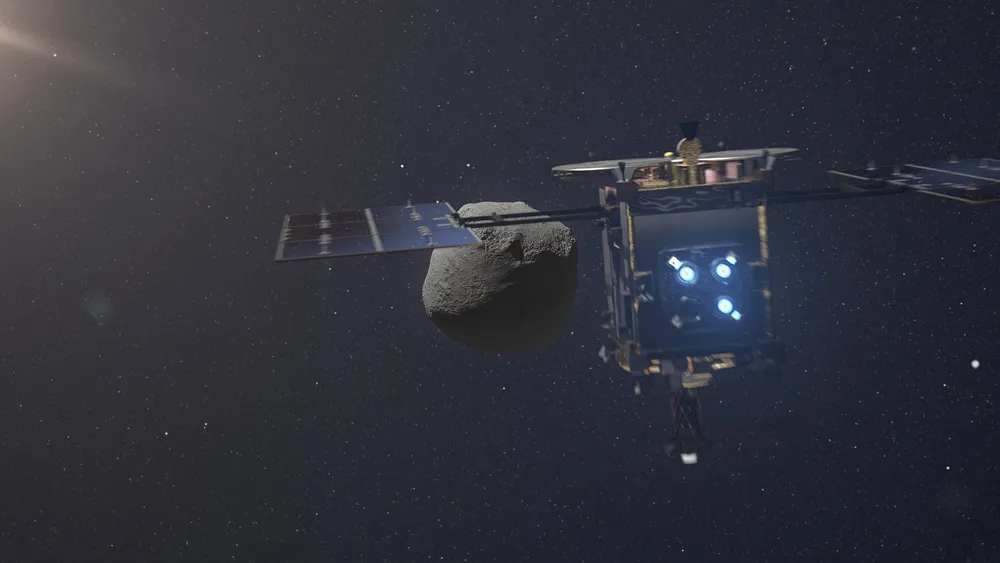
The mapping and survey phase will continue through April 2027, when the spacecraft will attempt a touch-and-go landing to collect 200–1,000 grams of surface material. The sample return capsule is expected to land in Inner Mongolia, China, in November 2027.
The mission does not end there. After releasing the sample capsule, the main spacecraft will continue on to a second target: Comet 311P/PanSTARRS, with arrival expected around 2035 — making Tianwen-2 a dual-target sample return and comet exploration mission.
Why This Matters Beyond Science
Tianwen-2 represents China's second interplanetary mission, following Tianwen-1's successful Mars orbit, landing, and rover operations in 2021. The autonomous navigation and small-body rendezvous capabilities demonstrated here are a significant advance in China's space programme.
For planetary science, the stakes could hardly be higher. Confirmation that Kamoʻoalewa is made of lunar ejecta would prove that ancient mega-impacts can scatter Moon material into stable orbits around Earth — potentially solving long-standing puzzles about the transport of material through the inner solar system. It would also open a new chapter of comparative selenology: studying the Moon's history through samples collected not on the Moon itself, but from a long-lost wandering fragment.
The world is watching.
For more on space exploration: India's Gaganyaan Uncrewed Spacecraft and Thailand's TSC-1 Earth Observation Satellite.
Sources: The Planetary Society · Wikipedia (Tianwen-2, 469219 Kamoʻoalewa) · China in Space · SpaceNews · Nature Communications (data as of 2 July 2026)
Sources
Frequently asked questions
- What is Kamoʻoalewa and why is it called Earth's 'quasi-moon'?
- Kamoʻoalewa (469219) is a small 40–100 m asteroid that orbits the Sun on nearly the same period as Earth (~365.77 days), making it appear to loop around our planet in a spiral every ~45 years in Earth's rotating frame. It is not a true moon — it orbits the Sun — but Earth's gravity keeps it in this stable co-orbital relationship, earning it the nickname 'quasi-moon.'
- When will Tianwen-2 collect samples and bring them back?
- The spacecraft will spend several months (June 2026 – April 2027) mapping Kamoʻoalewa's surface with 11 scientific instruments before attempting a touch-and-go sample collection of 200–1,000 grams. The sample capsule is expected to return to Inner Mongolia, China, in November 2027.
- Why would confirming a lunar origin for Kamoʻoalewa be scientifically groundbreaking?
- If samples confirm the asteroid is made of lunar material, it would be the first time in history that humanity has retrieved Moon material from a body other than the Moon itself — proving that ancient impacts can eject lunar debris into stable Earth co-orbits and opening a new chapter in understanding the solar system's impact history.
Related news
 World
WorldStanford Physicists Capture the First-Ever "Quantum Jump" of Sound in Real Time
Stanford physicists observed a quantum jump of a "phonon" — the smallest unit of sound — in real time for the first time, opening a path to quantum-error correction using sound.
 World
WorldNASA Set to Launch Roman Space Telescope to Probe the Universe
NASA is set to launch the $4.3 billion Nancy Grace Roman Space Telescope aboard a Falcon Heavy on Aug 30, 2026, to investigate dark energy and hunt for exoplanets.
 World
WorldScientists Generate Quantum Entanglement From Sunlight
University of Ottawa and Max Planck Institute researchers used sunlight, not a laser, to create entangled photon pairs with 94% fidelity.