Major Trial Confirms Brush-On Liquid Stops Kids' Cavities — No Drilling, No Needles

A large Phase III clinical trial published in JAMA Pediatrics on July 27, 2026 has confirmed that a 38% silver diamine fluoride (SDF) solution, painted directly onto teeth, can stop cavities from progressing in more than half of treated baby teeth — with no drilling, no anesthetic injections, and no sedation. The finding offers a gentler, more accessible option for children aged 1 to 6, many of whom cannot cooperate with conventional dental treatment.
The trial was led by researchers at the University of Michigan, together with New York University (NYU) and the University of Iowa, and was funded with more than $12 million from the US National Institute of Dental and Craniofacial Research (NIDCR), part of the NIH.
The Results: Numbers That Matter
Researchers randomized 830 children aged 12–71 months (roughly 1 to 6 years old) with severe early childhood caries into two groups: 414 received real SDF, while 416 received a placebo (deionized water tinted blue to look identical). The trial was double-blind, the gold standard for clinical evidence.
At the 6-month mark:
- SDF group: cavities arrested in 54.0% of cases (95% CI 43.1–64.6%)
- Placebo group: cavities arrested in just 22.5% of cases (95% CI 15.3–31.8%)
- Odds ratio: 4.06, with high statistical significance (p < .001)
In plain terms, children who received SDF were more than four times as likely to have their cavities stop progressing compared to the placebo group. The effect held up through 8 months of follow-up (after a repeat application at month 6), with a 50.2% arrest rate versus 17.4% for controls. Crucially, there was no difference in reported pain between the two groups.
Why This Matters: How Big a Problem Is Childhood Tooth Decay?
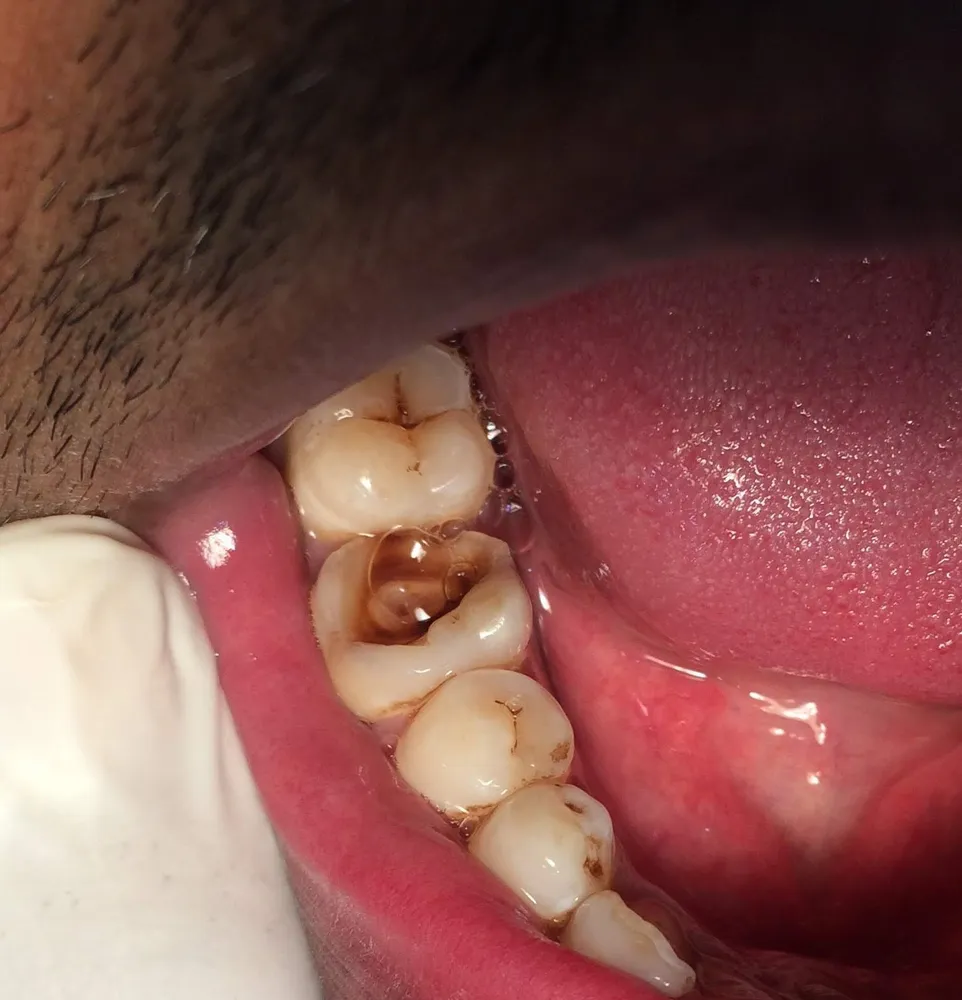 Illustrative: an example of tooth decay — Photo: Dr. Yogesh, CC BY-SA 4.0 (Wikimedia Commons)
Tooth decay is the most common chronic disease of childhood, roughly five times more common than asthma and seven times more common than hay fever among children in the US. More than half of children aged 6–8 have had a cavity in at least one baby tooth, and about 1 in 5 children aged 5–11 has an untreated decayed tooth. Children from lower-income families are twice as likely to have cavities as their higher-income peers.
The problem is that standard treatment — drilling and filling — usually requires sedation or general anesthesia for very young children, who cannot cooperate for injections or drilling. That makes it expensive, riskier, and often out of reach, especially for families in rural or underserved areas. SDF sidesteps that barrier entirely: no sedation, no anesthetic, and just seconds of application per tooth.
How SDF Works
SDF is applied directly onto the decayed area of a tooth with a tiny sponge-tipped applicator, taking only a few seconds per tooth. The silver ions act against cavity-causing bacteria, while the fluoride promotes remineralization of the tooth surface — together arresting the progression of the lesion rather than restoring lost tooth structure.
In the US, SDF has been FDA-cleared since 2014, but only as a treatment for tooth sensitivity; its use for arresting cavities has remained off-label until now. This large trial was specifically designed to provide the efficacy and safety evidence needed to support a future FDA approval for cavity-arrest as its own indication.
Voices from the Research Team
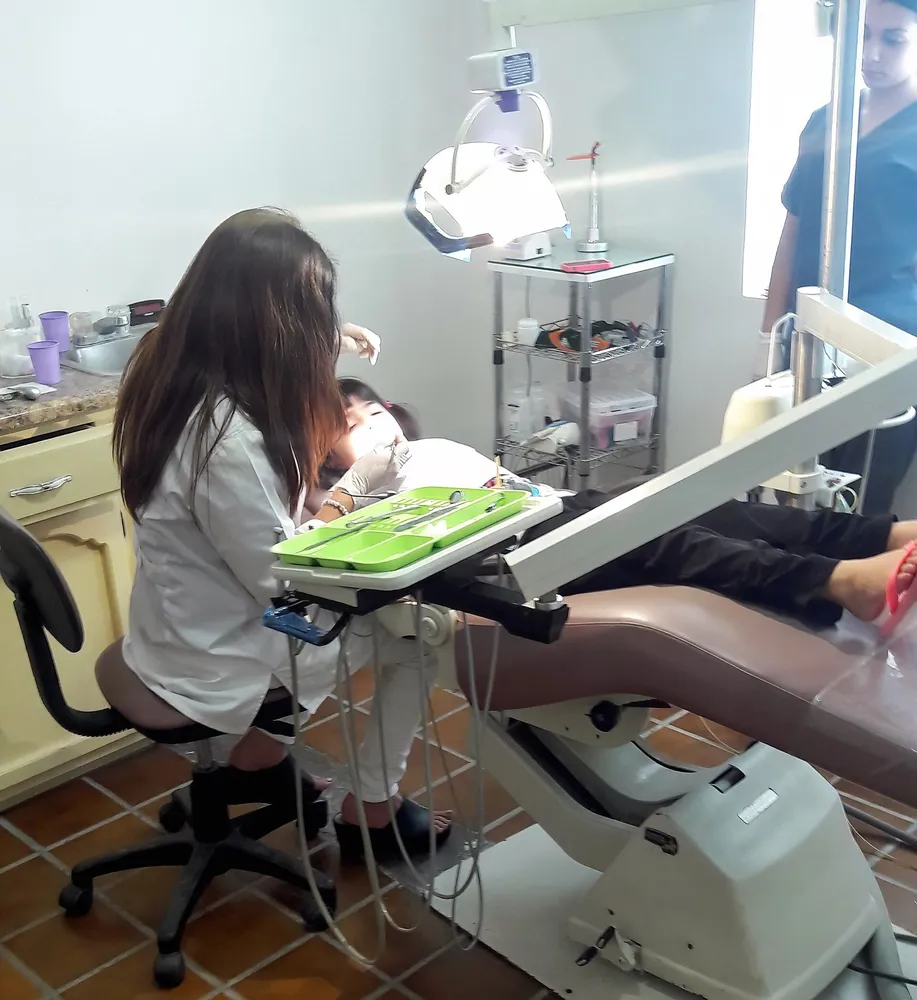 Photo: Miguel Angel Omaña Rojas — CC BY 4.0 (Wikimedia Commons)
Dr. Margherita Fontana, Professor of Dentistry at the University of Michigan and the trial's lead investigator, said of the results:
"This is a very effective and safe treatment — even in children as young as 1."
The research team also included investigators from the University of Iowa and biostatisticians from Indiana University, who together designed the double-blind randomized trial, recruiting children through dental offices, pediatric medical practices, and Head Start programs across three states.
The Trade-Off to Know About
Despite its safety and effectiveness, SDF comes with one well-known cosmetic trade-off: the treated, already-decayed portion of the tooth turns permanently black. Healthy enamel is unaffected. Because the treatment is used on baby teeth that will eventually fall out naturally, researchers and clinicians generally consider this an acceptable trade-off against the cost and risk of drilling or sedation. Overall adverse-event rates were similar between groups — 47.3% for SDF versus 43.3% for placebo — and severe adverse events were rare, occurring in just 0.6% of participants.
The Thailand Angle: Dentists Here Already Use SDF
 Photo: Shixart1985 — CC BY 2.0 (Wikimedia Commons)
For Thai parents, SDF isn't entirely new — a number of dental clinics in Thailand already use SDF to manage cavities in young children, off-label, much as US dentists have. Thai academic research on parental attitudes toward SDF use in children also exists. However, as in the US prior to this trial, there is currently no formal regulatory approval in Thailand for SDF specifically as a cavity-arrest treatment.
Strong Phase III evidence like this could be an important catalyst for the Dental Council of Thailand and public health authorities to consider clearer guidance in the future — something that would particularly benefit Thai families in remote areas where access to sedation dentistry for children is limited, building on a healthcare system that already ranks 8th in the world.
What Happens Next
The research team says the trial data will be used to support an application for FDA approval specifically for the cavity-arrest indication. If approved, this could reshape clinical treatment guidelines and insurance coverage in the US. Experts see SDF as especially valuable for uncooperative young children, children with dental anxiety, children with developmental disabilities, elderly patients, and families with limited access to sedation dentistry.
For parents concerned about their children's dental health, taking a child to the dentist from the time the first tooth appears and keeping up with regular checkups remains the best line of defense against cavities. Parents planning ahead for their children's long-term medical costs can also look into health insurance options.
Data as of July 30, 2026.
Sources: JAMA Pediatrics · ScienceDaily · Medical Xpress
Sources
Frequently asked questions
- What is SDF, and is it safe?
- Silver diamine fluoride (SDF) is a liquid containing silver and fluoride that is brushed directly onto a decayed tooth to kill cavity-causing bacteria and help remineralize the tooth surface. The trial found adverse-event rates similar to placebo, with no difference in reported pain.
- Why does SDF turn treated teeth black?
- This is a well-known side effect: SDF permanently darkens only the already-decayed part of the tooth, leaving healthy enamel unaffected. Because it is used on baby teeth that will eventually fall out naturally, researchers consider this a reasonable trade-off against drilling or sedation.
Related news
 World
WorldDigoxin: Nearly 250-Year-Old Heart Drug Cuts Hospitalizations 25%
New Dutch trial data: digoxin, a heart drug costing under 10 cents a day, cuts heart-failure hospitalizations by about 25%.
 World
WorldRattlesnake Blood Yields Antivenom 10x Stronger Than Current Drugs
Proteins from rattlesnake blood, combined, neutralize venom 10x more potently than current antivenom in lab tests — a study with a Thai scientist on the team.
 World
WorldKākāpō Population Soars Past 300 for First Time in 75 Years
New Zealand's kākāpō, the world's heaviest parrot, reached 325 birds after a record 2026 breeding season added 90 chicks — up from just 51 birds in 1995.