Thailand Launches FastPass to Unlock $21 Billion in High-Tech Investment

Thailand took a major step in its economic transformation on June 23, 2026, when Prime Minister Anutin Charnvirakul formally launched the FastPass program at Government House — mobilizing over USD 21 billion (approximately 700 billion baht) in strategic high-tech investment across 101 projects. The initiative links eight government agencies into a single approval pipeline, cutting regulatory timelines by up to 50%.
From Regulator to Facilitator: The Philosophy Behind FastPass
FastPass represents a fundamental shift in how Thailand operates with global investors. Rather than navigating separate bureaucratic queues — the BOI here, the factory permit office there, the environmental authority somewhere else — all eight agencies now coordinate under one pipeline, formalised with a signed memorandum of understanding.
"In today's global economy, speed is the ultimate competitive differentiator," Prime Minister Anutin told the over 300 attendees, including foreign diplomats and multinational executives. "The Thai government is shifting from regulator to active business facilitator. By removing regulatory hurdles, increasing speed, and ensuring policy transparency, we are driving physical investments that will generate next-generation employment and secure Thailand's long-term regional competitiveness."
The Numbers: 101 Projects, $21 Billion, 13,000 Jobs
FastPass launches with two cohorts of projects:
| Cohort | Projects | Value (USD) | Value (THB approx.) |
|---|---|---|---|
| Phase 1 (previously approved, cleared) | 76 projects | $14.4 billion | ฿474 billion |
| Phase 2 (new cohort launched at ceremony) | 25 projects, 23 companies | $6.7 billion | ฿223 billion |
| Total | 101 projects | $21.1 billion | ~฿697 billion |
The second cohort alone is projected to generate over 13,000 high-skilled jobs in targeted sectors: advanced electronics, aerospace technology, precision machinery and automation systems, and recycled plastics.

Eight Agencies, One Pipeline: Half the Wait Time
BOI Secretary-General Narit Therdsteerasukdi explained the mechanics: "The FastPass program fundamentally changes how Thailand works with global investors. We put eight agencies into one pipeline. Permit timelines that once stretched for months can now be cut by up to half. That gets factories built, creates high-skilled jobs, and pulls Thai suppliers into global supply chains."
The streamlined process covers:
- Factory permits (Department of Industrial Works)
- Free-zone processing (Customs Department + IEAT)
- Environmental assessments (ONEP)
- Power connections (Energy Regulatory Commission + electricity authorities)
Deputy Prime Minister Ekniti Nitithanprapas added that the program delivers "immediate, concrete economic results in the short term" while establishing long-term structural benefits for the Thai economy.
Investors Speak: Why They Chose Thailand
The second cohort draws participants from the US, Malaysia, and beyond — and their testimonials point to Thailand's improving investment environment as a decisive factor.
Simon Gwozdz, CEO of Equatorial Space (Thailand) — a developer of low-Earth orbit launch vehicles — said: "Thailand possesses the talent, infrastructure, and policy support necessary for next-generation industries. The BOI's one-stop coordination significantly reduces regulatory complexity."
Donald Carpenter, CFO of US-based PureCycle Technologies (recycled plastics), noted: "The availability of raw materials, infrastructure, and proactive government support were critical in our decision to anchor our regional operations here. The FastPass mechanism directly improves our operational efficiency."
Record Investment Momentum Heading Into 2026
FastPass arrives at a moment of unprecedented demand to invest in Thailand. The BOI received a record USD 54.5 billion (~฿1.8 trillion) in investment applications in 2025. In the first quarter of 2026 alone, applications already exceeded USD 30.3 billion (~฿1 trillion) — signalling that the pipeline for future FastPass cohorts is deep.
This investment surge aligns with Thailand's rise to 26th in the IMD World Competitiveness Ranking earlier this month, and the continued expansion of Thailand's data centre infrastructure across Southeast Asia — all part of the country's broader push to position itself as a next-generation industrial hub.
What Comes Next: From Licence to Open Factory

The proof of FastPass will be in execution. The BOI has set a clear success metric: the time from investment promotion certificate to factory opening. The agency will track all 101 projects to ensure the promises made at Government House translate into operating facilities on the ground.
For Thailand's broader supply chain, the indirect impact may matter even more than the 13,000 direct jobs. When international manufacturers set up high-tech facilities, they pull local Thai suppliers upward into global value chains — a multiplier effect that raises wages and capabilities across the economy far beyond the factory gates themselves.
Data as of June 24, 2026, based on the FastPass launch at Government House on June 23, 2026.
Sources
Frequently asked questions
- What is Thailand's FastPass program and how does it work?
- FastPass is Thailand's investment acceleration initiative that coordinates eight government agencies — the BOI, Department of Industrial Works, Customs Department, ONEP, IEAT, Energy Regulatory Commission, Metropolitan and Provincial Electricity Authorities — into a single workflow pipeline. Instead of investors applying to each agency separately, all approvals flow through one coordinated channel, cutting key permit timelines by up to 50%.
- Which companies are joining Thailand's FastPass program?
- The second cohort includes 25 projects from 23 companies, including PureCycle Technologies (US, recycled plastics), Equatorial Space Thailand (US, low-Earth orbit launch vehicles), SAM Precision (Malaysia, semiconductor components), and Advanced Connection Technology (Malaysia, PCB manufacturing), among others from multiple countries.
- How will FastPass benefit Thai workers?
- The second cohort of 25 projects is projected to create over 13,000 high-skilled jobs in advanced electronics, aerospace, precision machinery, and recycled plastics. Beyond direct employment, the program is expected to pull Thai suppliers into global supply chains, multiplying the economic impact across the country.
Related news
 Thailand
Thailand Jumps 4 Places to 26th in IMD World Competitiveness Ranking 2026
Thailand climbed four spots to 26th of 70 economies in the IMD World Competitiveness Ranking 2026, lifted by business efficiency and infrastructure gains.
 Thailand
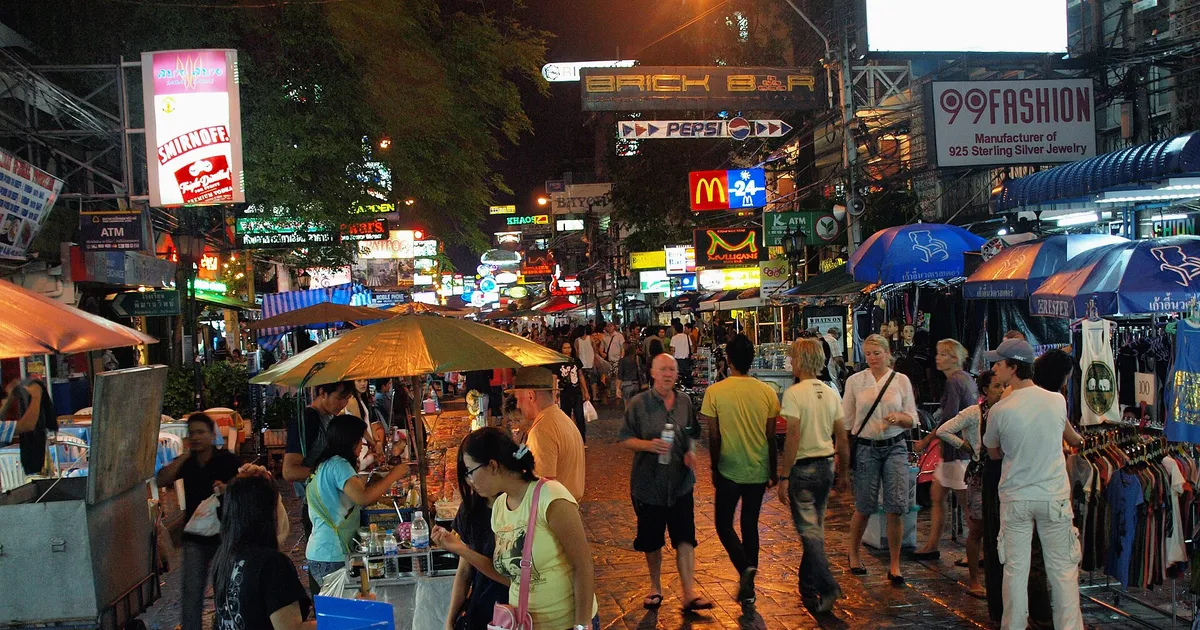
Bangkok Named World's Best Nightlife City for 2026 by Time Out
Time Out ranked Bangkok the world's best nightlife city for 2026, up from 13th, beating Berlin and NYC as Thailand extends bar hours to 4am.
 Thailand
Thailand Caps First 200 Power Units at 3 Baht from September
Thailand's energy regulator has finalized a new tariff that caps the first 200 units of household electricity at 3 baht, easing bills for over 21 million homes from September.