Thailand Lifts Imported EV Excise Tax to 35% From January 2027
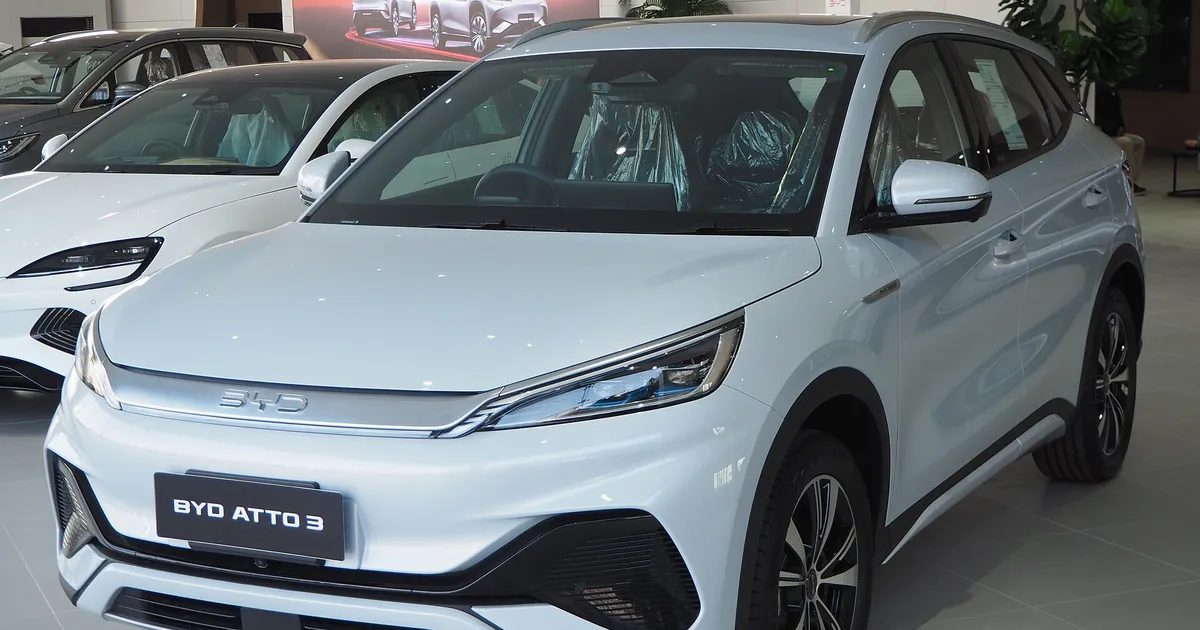
Thailand's Cabinet has decided that electric cars built abroad will be taxed far more heavily from the new year, in a move officials say is meant to pull more EV production — and more local parts — into the country.
What was decided
On 3 November 2026 the Cabinet approved raising the excise tax on fully imported battery electric vehicles (BEVs) from 10% to 35%. Imported range-extended EVs (REEVs) go from 15% to 35%. The new rates take effect on 1 January 2027, according to the Bangkok Post, The Nation Thailand and Xinhua.
EVs manufactured in Thailand keep the existing 2% rate. The Cabinet also asked the Excise Department to design new investment incentives, with special rates for investors. Reports say rules on import quotas — which would let manufacturers investing in Thailand keep current rates on a set number of eligible imports — are not yet finalised.
Why the government says it is doing this
Officials frame the change as support for local production. The Industry Minister was reported as arguing that the excise tax can offset import-duty concessions, so that makers with Thai plants are not undercut by fully imported cars. The aim is to encourage investment in domestic assembly and a wider use of Thai-made components.
Component depth matters here. An internal-combustion car has roughly 20,000–30,000 parts, and an EV thousands more in battery and electronics systems, The Nation reported. Mitsubishi pickups built in Thailand, by contrast, carry local content above 60%, with some models at 70–80%.
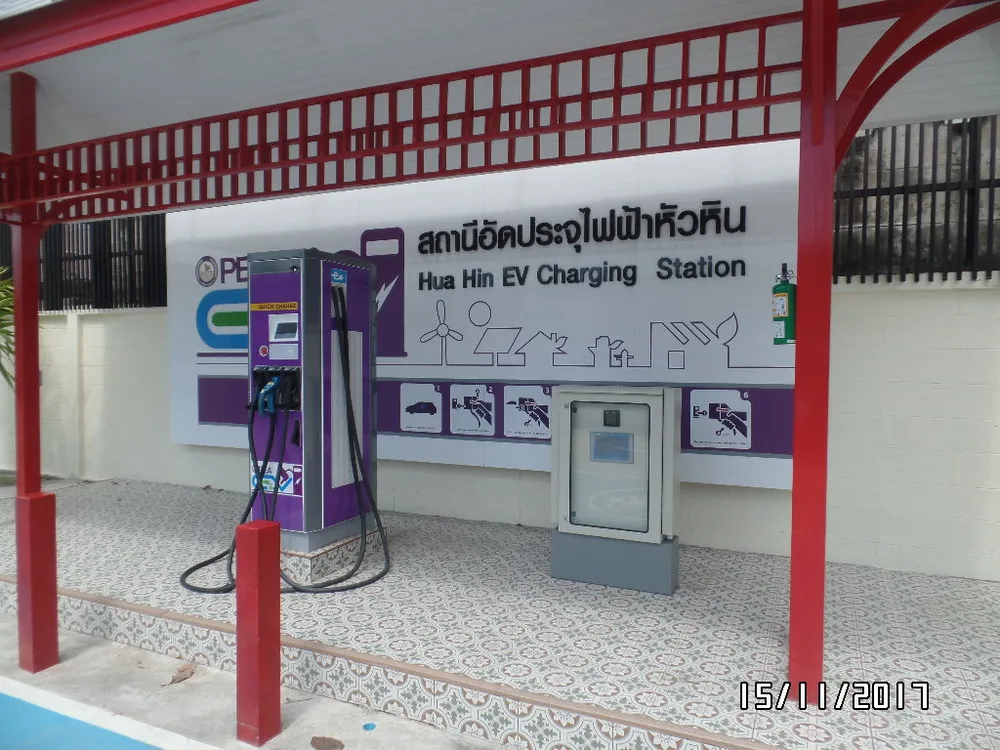
Photo: Hua Hin EV charging station, Seligne — CC BY-SA 4.0 via Wikimedia Commons (illustrative).
What it could mean for buyers
A senior executive at a Chinese carmaker estimated that retail prices of some imported models could rise by up to 10% — tens to hundreds of thousands of baht — though no model-specific figures were given. The most exposed brands are those without Thai production plans, including Tesla, Volvo, Porsche and Audi, according to The Nation.
The scale of the market explains the stakes. In January–September 2026, electric passenger-car sales reached 161,532 units, or 30.99% of total sales of 521,226 units (data as of the report). Cars assembled in Thailand are unaffected, so buyers of locally built models should see no change from this measure. For anyone planning a purchase, the cost comparison with petrol — see our EV vs petrol guide and the EV charging cost tool — may look different after January.
How carmakers are responding
Several Chinese brands are reported to back the plan, particularly those already assembling in Thailand. Rêver Group, BYD's Thai distributor, supports the policy; its CEO said: "The new tax structure will provide meaningful protection for companies investing in Thailand."
XPeng vice president James Wu supported using tax measures to protect the component industry and said, "We are ready to adapt to the rules." XPeng is studying a Thai CKD (completely knocked-down) operation but has no timetable.
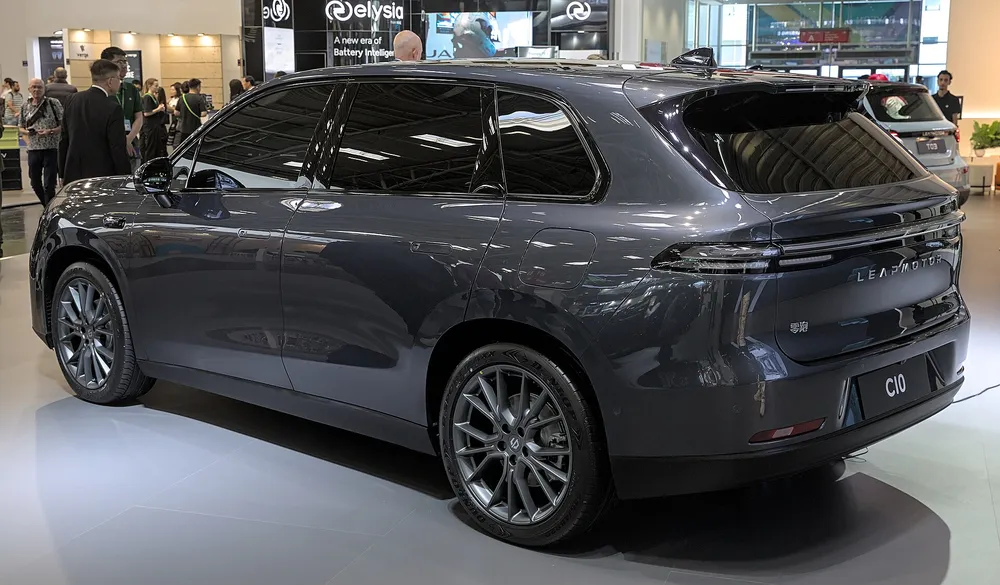
Photo: Leapmotor C10 showcar, S5A-0043 — CC BY 4.0 via Wikimedia Commons (illustrative).
Leapmotor has identified four assembly options with initial capacity of 60,000–80,000 vehicles a year, with production planned to start in 2027, and plans to send a team from China in November. Its general manager Liam Liu said: "We are not looking at doing business for three or five years." Dongfeng/Voyah, via AI Mobility, agreed a Thai production line is needed, with joint investment or a contract assembler as options. The Nation noted that production costs in China are reportedly at least 30% lower than in Thailand, which is the gap the incentives will have to bridge.
What to watch next
- The final rules on import quotas for investing manufacturers.
- The investment incentives the Excise Department is asked to design.
- Whether dealers see a year-end rush to buy imported stock before January.
- Which brands announce Thai assembly plans in the coming months.
Key facts
- Decision: Cabinet, 3 November 2026
- Effective: 1 January 2027
- Imported BEV: 10% → 35%; imported REEV: 15% → 35%
- Thai-made EVs: 2%
- Possible price effect: up to 10% on some imported models
Related: Thailand EV record surge and Toyota hydrogen Hilux BOI.
Sources
Sources
- Bangkok Post — Thailand approves steep tax hikes on imported EVs
- The Nation Thailand — Imported EV prices could rise up to 10%
- The Nation Thailand — Some Chinese EV brands back 35% Thai excise tax
- Xinhua — Thailand to raise excise tax on imported EVs to 35 pct from 2027
- Thairath English — Cabinet approves raising import tax on BEV–REEV
Frequently asked questions
- When does the new rate apply?
- From 1 January 2027, according to reports on the 3 November 2026 Cabinet decision.
- Do Thai-assembled EVs pay the higher rate?
- No. Vehicles made in Thailand continue to attract the existing 2% excise rate.
Related news
 Thailand
Udon Thani Horticultural Expo 2026 Opens: 134 Days, 3.6M Visitors Targeted
Udon Thani’s International Horticultural Expo runs 1 Nov 2026–14 Mar 2027 with 32 international gardens, 3.6 million expected visitors and a B20bn economic target.
 Thailand
 Caps First 200 Power Units at 3 Baht from September
Thailand's energy regulator has finalized a new tariff that caps the first 200 units of household electricity at 3 baht, easing bills for over 21 million homes from September.
 Thailand
 EV Sales Smash Records in Jan 2026 — Over 44,000 Units, 48% Share, as Kingdom Becomes ASEAN's EV Export Base
Thailand's battery-EV registrations hit a record 44,000-plus in January 2026 with EV share at 48%, as BYD's Rayong plant ships Thai-built cars to Europe.