Thailand Jumps 4 Places to 26th in IMD World Competitiveness Ranking 2026

Thailand climbed four places to 26th out of 70 economies in the IMD World Competitiveness Ranking 2026, announced on 18–19 June. The result is among Thailand's strongest in recent years, driven by improvements in business efficiency and infrastructure — though significant structural challenges in energy dependence and labour productivity remain firmly on the reform agenda.
What Is the IMD Ranking and Why Does It Matter?
The IMD World Competitiveness Ranking is one of the most widely cited measures of how well a country's economic environment supports business competitiveness. Published annually since 1989 by IMD Business School in Lausanne, Switzerland, the 2026 edition assessed 70 economies using 264 indicators — combining official statistics with a survey of approximately 6,900 senior executives worldwide.
The four pillars are: Economic Performance, Government Efficiency, Business Efficiency, and Infrastructure. For international investors and multinationals deciding where to deploy capital, IMD rankings are among the first reference points they check. A higher rank translates, in practical terms, into a stronger signal for attracting foreign direct investment.
Four Pillars: Two Clear Gains
The breakdown by pillar reveals where Thailand improved and where work remains:
| Pillar | 2026 Rank | 2025 Rank | Change |
|---|---|---|---|
| Economic Performance | 10th | 8th | −2 |
| Government Efficiency | 32nd | 32nd | Flat |
| Business Efficiency | 21st | 24th | +3 |
| Infrastructure | 45th | 47th | +2 |
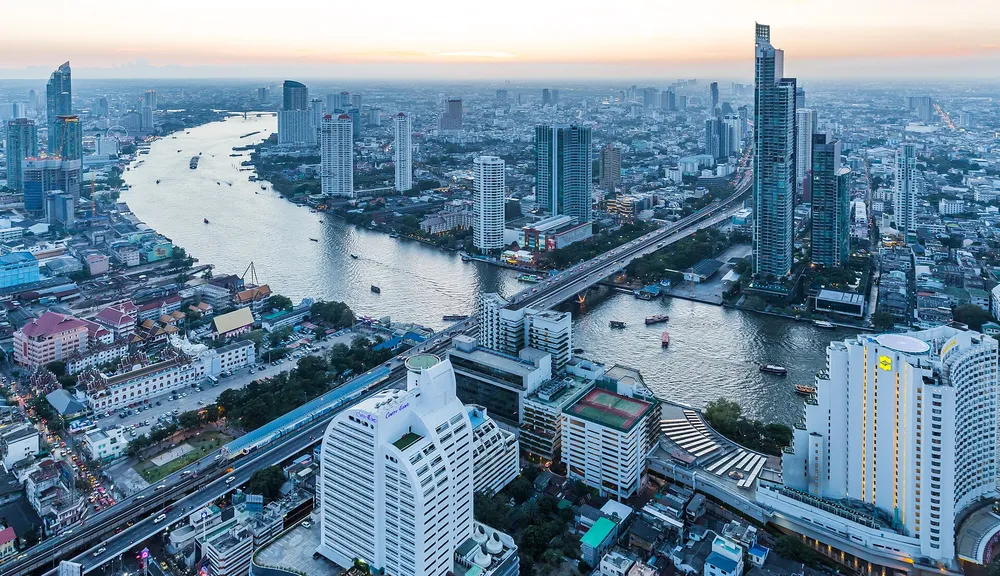
What drove the gains: Business Efficiency climbed three places, supported by growth in part-time employment and higher compensation for high-skilled professionals — a positive signal for knowledge-economy investment. Infrastructure rose two places, led by a five-place jump in the basic infrastructure sub-indicator to 20th globally, reflecting investment in transport and public utilities.
Where it slipped: Economic Performance fell two places, dragged by slower growth in commercial services exports and a five-place drop in the international trade sub-indicator. Employment also edged down from 3rd to 4th. The energy intensity sub-indicator — at 67th out of 70 — remains the most glaring structural weakness, reflecting Thailand's heavy dependence on imported oil and natural gas (energy imports equivalent to roughly 10% of GDP).
ASEAN Standings: Singapore Reclaims No. 1 — Vietnam Debuts at 27th
Across Southeast Asia, Singapore reclaimed the global top spot it lost in 2025, returning to No. 1. Malaysia recorded its best-ever ranking, surging eight places to 15th globally.
| Country | 2026 Rank |
|---|---|
| Singapore | 1 |
| Malaysia | 15 |
| Thailand | 26 |
| Vietnam | 27 |
| Philippines | 47 |
| Indonesia | 48 |
The most notable development for Thailand is Vietnam's debut at 27th — immediately behind Thailand — on its first-ever appearance in the IMD ranking. Vietnam outranked Thailand on several Government Efficiency and Business Efficiency sub-indicators, underscoring the intensifying competition in Southeast Asia for the same pool of global investors and manufacturing relocations.
Deputy PM Ekniti: Fix Energy, Reskill Workers Now
Deputy Prime Minister and Finance Minister Ekniti Nitithanprapas confirmed the results and laid out a clear reform direction. "We must preserve our strengths, which offer stability, and eliminate our weaknesses, such as high dependence on foreign energy," he said. "We must implement projects to transition energy use, upgrade workforce skills, and improve investment regulations."
The minister pointed to Thailand's near-bottom energy intensity ranking as the top priority, announcing a push to accelerate the energy transition and reduce reliance on imported fossil fuels. He also unveiled a "Skill Bridge" programme — designed to connect workers' skills to business sector demand, including reskilling workers aged 60 and above for new market roles.
The Thailand Management Association (TMA) Centre for Competitiveness, which represents IMD in Thailand, added a note of caution: "Labour productivity remains one of the biggest risks to the country's long-term competitiveness." TMA identified persistent structural gaps — productivity, language skills, technology and AI readiness, and public-sector governance effectiveness — as issues requiring urgent, sustained attention. The body also flagged Middle East geopolitical tensions as a supply-chain risk that could weigh on Thailand's trade performance.
The Reform Road Ahead

Thailand is channelling its response through two key mechanisms: a newly formed Joint Public-Private Consultative Committee tasked with building a reform agenda, and a four-year investment roadmap led by the Finance Ministry. The priority areas are:
- Energy transition — reduce import dependence; accelerate renewable energy investment
- Workforce development — the Skill Bridge programme linking workers to business-sector demand
- Investment regulation reform — streamline FDI processes and reduce regulatory barriers
- New export market development — diversify beyond existing trading partners
These priorities align with broader structural shifts already underway in Thailand, including its drive to become a regional data centre hub and the record-breaking uptake of electric vehicles — both indicators of an economy repositioning itself toward higher-value sectors.
Taken together, the 2026 IMD result delivers both encouragement and a clear call to action. The four-place climb is a positive signal that global investors will notice — but Vietnam's immediate appearance one rung below is a reminder that competitive advantage in Southeast Asia is never standing still. Sustaining the momentum will require closing structural gaps, not merely maintaining current strengths.
Data as of 21 June 2026. Source: IMD World Competitiveness Ranking 2026, released 18–19 June 2026.
Sources
Frequently asked questions
- What is the IMD World Competitiveness Ranking?
- The IMD World Competitiveness Ranking is one of the world's most respected annual economic competitiveness indices, published by IMD Business School in Switzerland since 1989. It assesses 70 economies across 264 indicators grouped into four pillars: Economic Performance, Government Efficiency, Business Efficiency, and Infrastructure — combining statistical data with a survey of around 6,900 senior executives globally.
- Where does Thailand rank in ASEAN in 2026?
- Thailand ranks 3rd in ASEAN in 2026, behind Singapore (1st globally) and Malaysia (15th globally). Vietnam made its debut in the IMD ranking at 27th — just one place behind Thailand.
- What are Thailand's key weaknesses in global competitiveness?
- Thailand's three key structural weaknesses are: high reliance on energy imports (ranked 67th out of 70 for energy intensity, with energy imports at roughly 10% of GDP), labour productivity, and public-sector governance (rule of law at 57th, transparency at 51st).
Related news
 Thailand
Thailand Joins Global Top 4 AI Hardware Exporters — IMF Recognises Tech-Export Surge
The IMF's July 2026 World Economic Outlook Update named Thailand alongside South Korea, Malaysia, and Taiwan as the world's four largest net exporters of AI-related hardware. Thai electronics exports surged 41.5% in the first five months of 2026.
 Thailand
Thailand Launches FastPass to Unlock $21 Billion in High-Tech Investment
PM Anutin launched Thailand's FastPass on June 23, 2026 — over US$21 billion in high-tech investment across 101 projects, with approvals up to 50% faster.
 Thailand
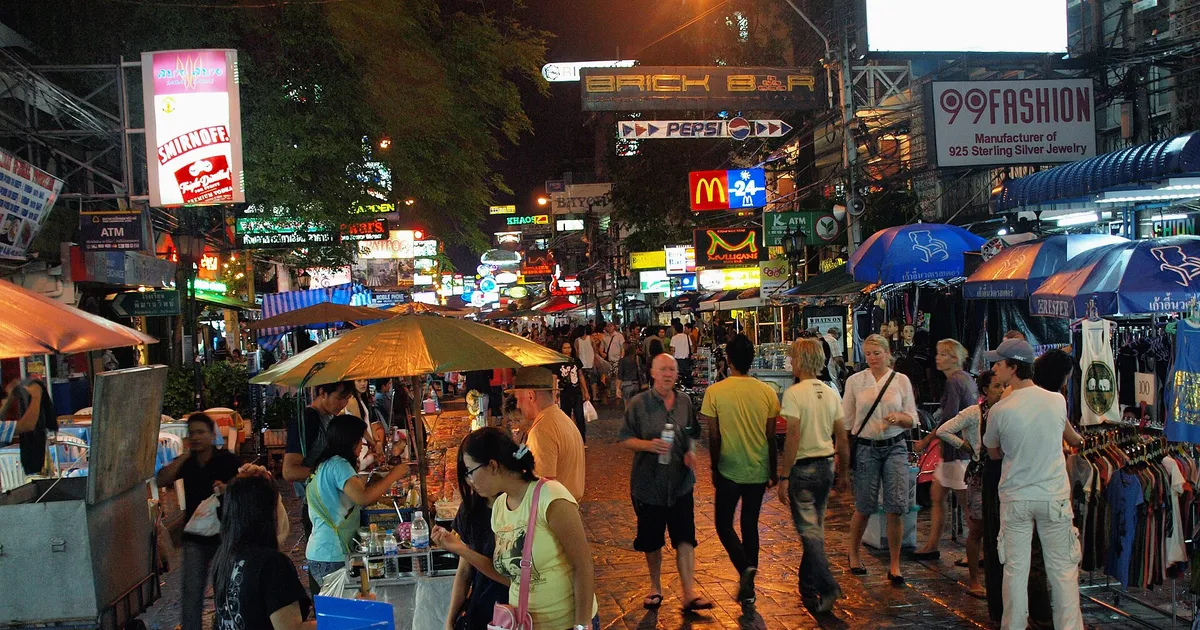
Bangkok Named World's Best Nightlife City for 2026 by Time Out
Time Out ranked Bangkok the world's best nightlife city for 2026, up from 13th, beating Berlin and NYC as Thailand extends bar hours to 4am.