Thailand Joins Global Top 4 AI Hardware Exporters — IMF Recognises Tech-Export Surge

On 8 July 2026, the International Monetary Fund (IMF) released its World Economic Outlook Update for July, singling out Thailand as one of four countries that dominate global net exports of AI-related hardware — alongside South Korea, Malaysia, and Taiwan.
The IMF did not merely mention Thailand in passing. It described the four economies as "the standout performers of the current global technology cycle" and noted that they exceeded their Q1 2026 GDP growth forecasts by an average of 4.4 percentage points — a dramatic beat driven directly by the worldwide surge in AI infrastructure investment.
What Is AI Hardware — and Why Does Thailand Make So Much of It?
When most people think of AI, they picture software models and apps. But before any AI system can run, it requires vast physical infrastructure: massive data centres, high-performance servers, and hundreds of millions of hard disk drives (HDDs) to store training data and model outputs.
The IMF defines "AI-related hardware" to include computer equipment and components, semiconductor-manufacturing machinery, memory chips, and server/data-centre parts. Thailand's competitive edge sits firmly in HDDs and electronics assembly — the physical backbone that keeps the AI industry running.
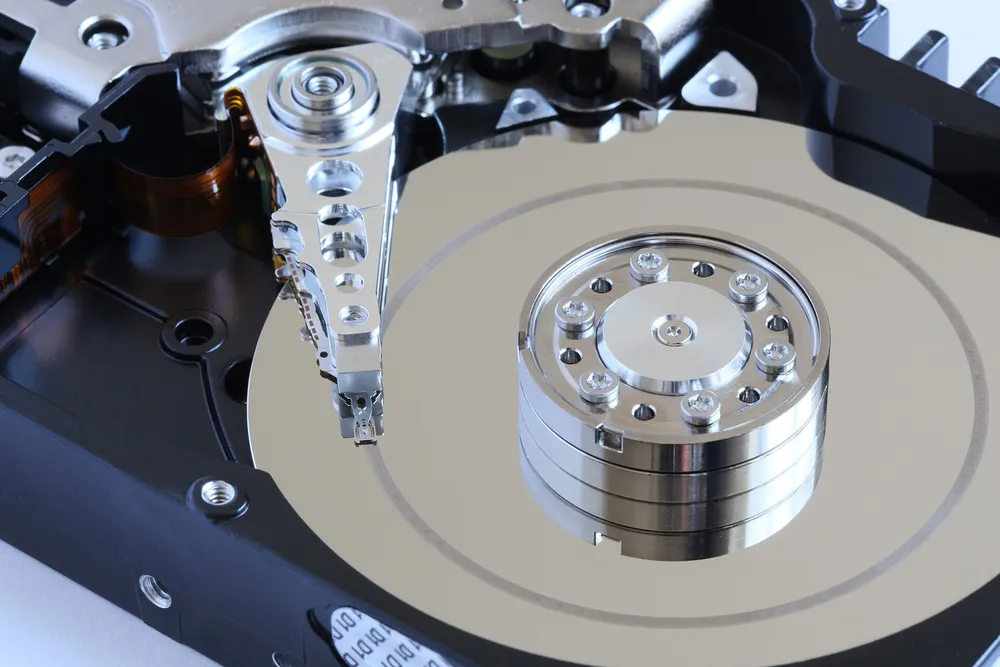 Hard disk drives — Thailand assembles around 80% of global supply through Western Digital and Seagate — CC via Wikimedia Commons
The Numbers: Electronics Exports Surge 41.5%
Thailand's export strength in 2026 is backed by concrete data:
- Electronics exports, January–May 2026: THB 1.295 trillion, up 41.5% year-on-year
- April 2026 alone: electronics up 65% YoY — the strongest single month in years
- Telecommunications equipment: up 148% YoY
- Computer-related products: up 37% YoY
- Thai electronics exports to the US specifically: up more than 70% YoY
For the overall trade picture, Thailand exported US$162.1 billion in goods from January to May 2026, up 17% from the same period last year. The National Shippers' Council responded by lifting its full-year 2026 export-growth forecast from 2–4% all the way to 8–10%, a figure confirmed by Nantapong Chiralerspong, Director-General of the Trade Policy and Strategy Office (TPSO).
The IMF matched the optimism. It raised Thailand's 2026 GDP growth forecast by 0.4 percentage points to 1.9% (from 1.5%), and lifted its 2027 forecast to 2.2% — explicitly citing "robust technology-related exports and investment" as key drivers.
How Thailand Came to Assemble 80% of the World's Hard Drives
Thailand's position as the world's hard-drive factory is the product of decades of deliberate policy and private investment — not luck.
Western Digital operates major plants in Bang Pa-in (Phra Nakhon Si Ayutthaya) and Prachin Buri, with a combined capacity of around 40 million drives per year. The company recently approved a THB 23.5 billion expansion that is expected to create over 10,000 jobs and add more than THB 200 billion per year to Thailand's HDD export value.
Seagate runs a large integrated campus in Nakhon Ratchasima (Korat), handling the full production stack from nano-transducer fabrication to final assembly.
Both companies arrived in Thailand in the 1980s–1990s, drawn by BOI (Board of Investment) incentives, Thailand's central location in Southeast Asia, and its developing pool of technical workers. The catastrophic 2011 floods severely damaged Ayutthaya-area factories and disrupted global HDD supply chains — yet neither company relocated. Both expanded their Thai footprints instead, cementing the country's dominance.
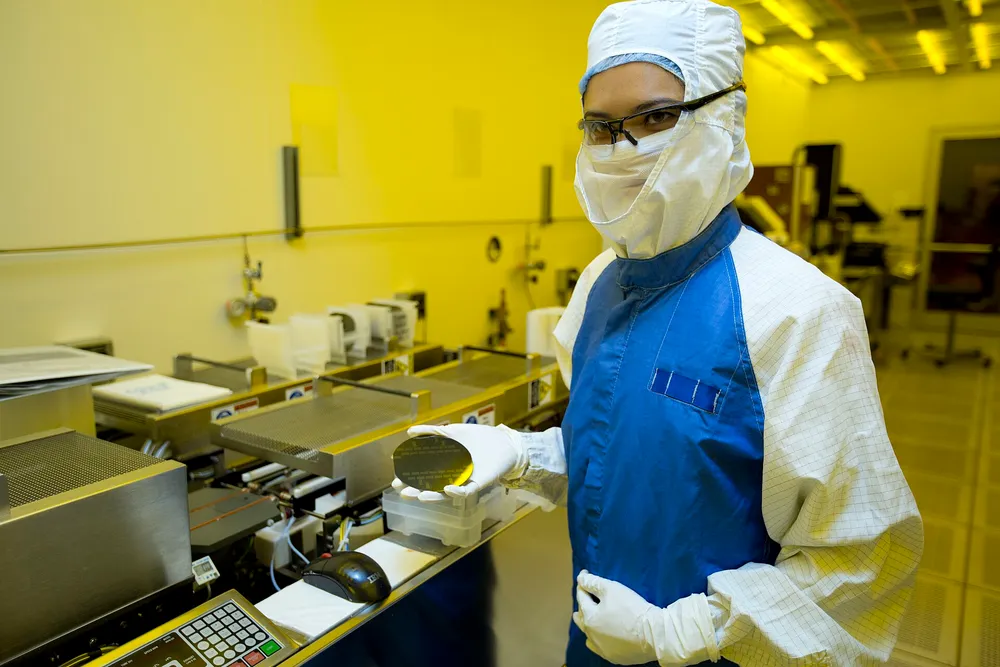 Semiconductor manufacturing — Thailand's next ambition, backed by a national strategy targeting 2050 — CC via Wikimedia Commons
Government Response and the Long-Term Semiconductor Strategy
Government spokesperson Rachada Dhanadirek responded to the IMF findings: "The IMF's assessment supports the government's designation of AI, semiconductors, and advanced electronics as strategic industries. The government will continue to promote investment in future industries to translate AI-driven growth into quality employment."
Prime Minister Anutin Charnvirakul has formalised Thailand's ambitions through PM Order 192/2569, establishing a National High-Level Semiconductor and Electronics Industry Policy Committee. Targets include attracting THB 2.5 trillion in investment by 2050, building a workforce of 230,000 skilled workers, and eventually producing chips domestically — the "Chip Made in Thailand" vision.
Thailand's current semiconductor exports are primarily general-purpose chips, not the cutting-edge AI processors dominated by TSMC and Samsung. Power management ICs grew 21% in 2026, and microcontrollers 25%, according to Kasikorn Bank Research Centre. These chips are largely outside the scope of US Section 232 AI-chip tariffs, which target advanced logic processors specifically, giving Thai exports a degree of trade-policy insulation.
Thailand vs Its Three Peers
All four IMF-flagged economies bring different strengths to the AI hardware ecosystem:
| Country | Core strength | 2026 GDP forecast |
|---|---|---|
| South Korea | Memory chip design and manufacturing (Samsung, SK Hynix) | 2.6% |
| Taiwan | Advanced logic chips (TSMC) | — |
| Malaysia | Chip packaging, testing, and some fab | 4.7% |
| Thailand | HDD assembly + electronics components | 1.9% |
Thailand's lower GDP growth rate partly reflects the fact that assembling HDDs adds less value per unit than designing or fabricating chips. But in sheer export volume and supply-chain criticality, Thailand occupies an indispensable position in global AI infrastructure.
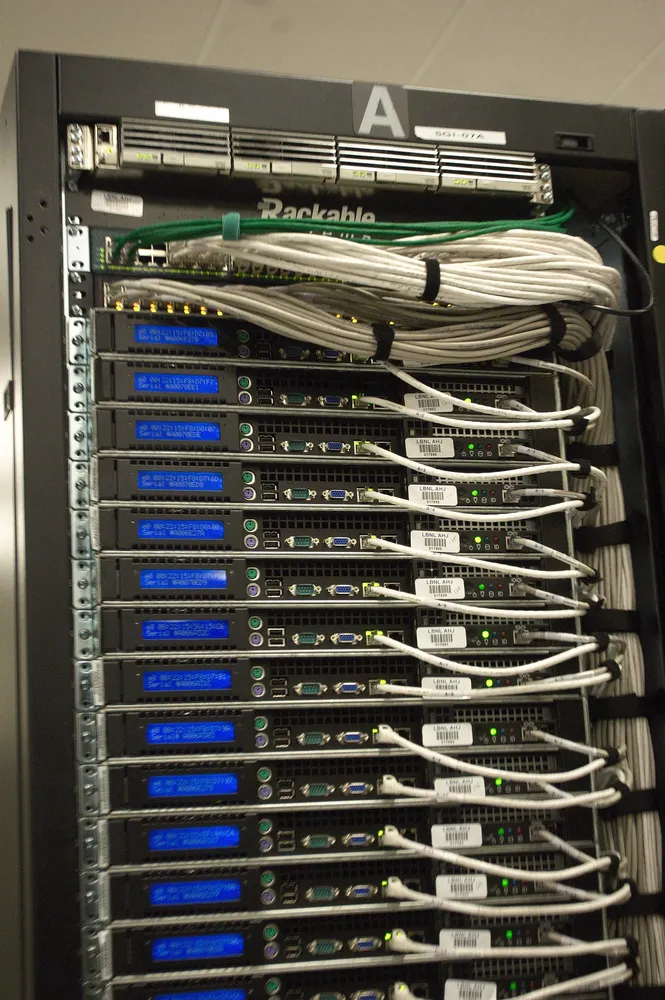 Data centres worldwide depend on storage hardware assembled in Thailand — illustrative photo, CC via Wikimedia Commons
What to Watch: Opportunities and Risks
Thailand's 2026 export boom sits against a backdrop of factors to monitor:
- US tariff exposure: Thailand faces a general US reciprocal tariff, but most AI hardware exports fall outside the AI-chip-specific Section 232 measures, offering some protection.
- Demand dependency: HDD and data-centre component orders track global AI capex plans. If cloud giants slow data-centre spending, Thai volumes could soften.
- Moving up the value chain: The government's stated ambition is to shift from assembler to designer-manufacturer over the coming decades — a transition that will require sustained investment in education, R&D, and talent pipelines.
The IMF's recognition marks Thailand as a confirmed node in the global AI hardware supply chain — a status that should continue to attract further investment, provided the government's semiconductor strategy stays on track. For more context on Thailand's technology ambitions, see our earlier coverage of Thailand at the WAIC China AI conference and Thailand's IMD competitiveness ranking.
Sources
- IMF World Economic Outlook Update, July 2026
- TNGlobal — Korea, Malaysia, Thailand, Taiwan lead AI-driven growth surge: IMF
- Thailand NOW — IMF ranks Thailand among elite exporters for AI hardware
- Nation Thailand — Thailand plans AI and semiconductor push after IMF recognition
- VietnamPlus — IMF places Thailand among world's top four AI hardware exporters
- Spacebar.th — IMF raises Thailand growth most among major economies on AI boom
Sources
- IMF World Economic Outlook Update — July 2026
- TNGlobal/TechNode — Korea, Malaysia, Thailand, Taiwan lead AI-driven growth surge: IMF
- Thailand NOW — IMF ranks Thailand among elite exporters for AI hardware
- Nation Thailand — Thailand plans AI and semiconductor push after IMF export recognition
- VietnamPlus — IMF places Thailand among world's top four AI hardware exporters
- Spacebar.th — IMF raises Thailand growth most among major economies on AI boom
Frequently asked questions
- What AI hardware does Thailand actually produce?
- Thailand's primary strength is in hard disk drives (HDDs) — it assembles around 80% of the world's supply through Western Digital and Seagate factories — plus general-purpose semiconductors, server components, and computer peripherals. Thailand is not yet a designer or producer of advanced AI chips like Nvidia H200, but HDD storage is essential infrastructure for AI data centres worldwide.
- Why does Thailand make 80% of the world's hard drives?
- Western Digital and Seagate set up major factories in Thailand in the 1980s–1990s, attracted by BOI investment incentives, a central ASEAN location, and a skilled workforce. Despite the severe 2011 floods damaging plants in Ayutthaya, neither company left; both expanded instead. Decades of accumulated expertise and supply-chain depth have made Thailand the undisputed global HDD assembly hub.
- How sustainable is Thailand's AI hardware export boom?
- In the short to medium term, demand for HDDs and data-centre components remains strong, driven by global AI infrastructure investment. Long-term, Thailand needs to move up the value chain toward chip design and advanced semiconductor manufacturing — a goal the government has set for 2050 under its National Semiconductor Strategy.
Related news
 Thailand
Thai Exports Hit Record High: April 2026 Jumps 23.1% for a 22nd Straight Month, Led by Electronics and Fruit
Thai exports grew a 22nd straight month, hitting US$31.58 billion in April 2026, up 23.1%, after a record March — led by AI-linked electronics and fruit.
 Thailand
US Imposes 12.5% Tariff on Thai Goods, Thailand Races to Negotiate It Down to 10%
The US began charging a 12.5% tariff on most Thai goods on July 24, 2026, citing forced-labour concerns. 2,120 product lines are exempt as Thailand pushes for a trade deal to match neighbours' 10% rate.
 Thailand
Thailand Jumps 4 Places to 26th in IMD World Competitiveness Ranking 2026
Thailand climbed four spots to 26th of 70 economies in the IMD World Competitiveness Ranking 2026, lifted by business efficiency and infrastructure gains.