US Strikes Iran Again as Three Tankers Attacked in Strait of Hormuz

July 7, 2026 — Three commercial vessels were struck in the Strait of Hormuz, prompting the United States to launch retaliatory airstrikes on Iran and reimpose oil sanctions within hours. Global oil markets surged more than 5%, reigniting fears that the fragile calm in world energy markets — barely two weeks old after the strait's reopening — could unravel again.
Three Ships Struck — The Incident That Reignited the Crisis
Early on July 7, the UK Maritime Trade Operations centre (UKMTO) reported that Al Rekayat, a Qatari-flagged LNG tanker, had been hit by an unidentified projectile roughly 13 kilometres off the coast of Oman. A fire broke out in the engine room; no casualties were reported.
Hours later, Saudi Arabia's crude supertanker Wedyan sustained a hit near the Omani coast, and a third vessel was struck by a drone with minor structural damage. Three attacks in a single day marked the most intense day of assaults since late April 2026, according to the UN International Maritime Organization.
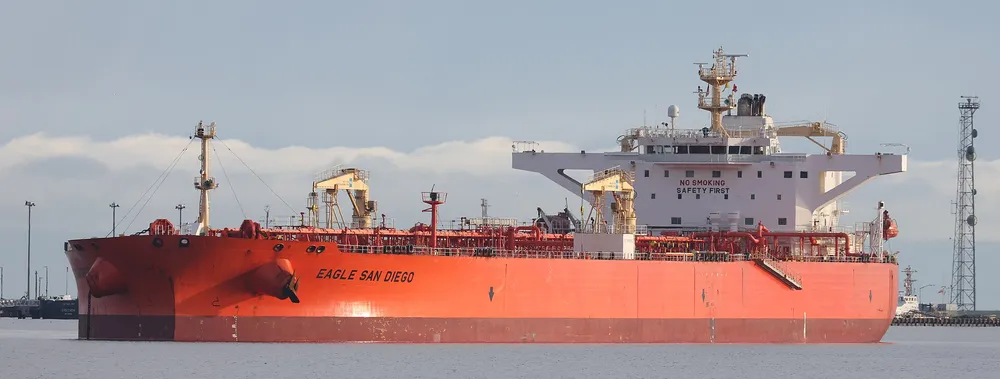
Qatar and Saudi Arabia both attributed the attacks to Iran, though no official claim came from Tehran.
US Response: Airstrikes and Reimposed Sanctions
US Central Command stated it had "begun launching a series of powerful strikes against Iran to impose heavy costs for targeting and attacking commercial shipping crewed by innocent civilians in an international waterway." Targets included air-defence systems, ground-to-air missiles, anti-ship cruise missile launch sites, and port facilities on Qeshm Island and in the city of Sirik on the Iranian mainland. Iranian state TV confirmed explosions in both areas.
Simultaneously, the US Treasury Department revoked the sanctions waiver that had allowed Iran to export oil — a concession made during recent ceasefire talks. The move eliminates a key revenue source for Tehran and signals that Washington is prepared to escalate economic pressure further.
Iran's foreign minister responded: "Negotiations on a final deal will not commence if threats continue." Meanwhile, President Donald Trump, attending a NATO summit in Ankara on July 7–8, praised Turkey as "a great ally" and said the US would consider lifting sanctions and selling F-35 jets to Turkey, but did not make a direct statement on the Hormuz escalation.
Why the Strait of Hormuz Matters So Much
The Strait of Hormuz is a narrow body of water — about 33 kilometres at its narrowest point — separating Iran from Oman and connecting the Persian Gulf with the Indian Ocean. Through this single passage flows:
- ~25% of globally traded seaborne oil
- ~20% of the world's liquefied natural gas (LNG)
- Key non-energy commodities: fertilizers, methanol, and aluminium
The current crisis began on February 28, 2026, when the US and Israel launched airstrikes on Iran. Iran responded by blocking the strait. Brent crude rocketed to $126 per barrel in March — the largest monthly oil price spike since the 1970s energy crisis. A ceasefire memorandum of understanding was reached in late June; the strait reopened and prices eased to around $72/barrel. The July 7 attacks now call that recovery into question.
Oil Markets React Sharply
Markets responded instantly:
- Brent crude surged 5.5% to approximately $76/barrel
- WTI rose 5%+ to roughly $72/barrel
Both benchmarks remain well below the March $126 peak. But analysts warn that a sustained escalation could test the $80–85 resistance zone again. For context, the PTT weekly oil report for July 6–10 showed average Brent at $72.32/barrel before the fresh attacks rattled markets.
War-risk insurance premiums for vessels in the Persian Gulf have also spiked, adding to shipping costs that will eventually be passed on to end consumers.
Impact on Thailand: Higher Fuel, Electricity, and Consumer Prices
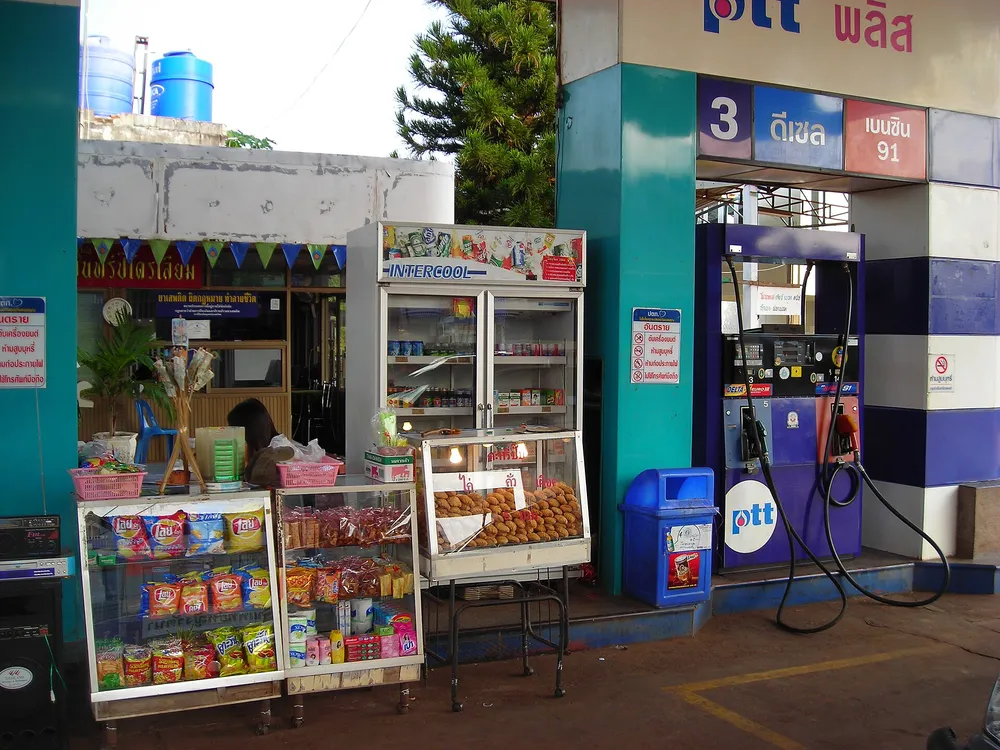
Thailand imports approximately 90% of its oil consumption, making it one of Asia's most exposed energy importers. As a whole, Asian countries receive around 84% of the oil flowing through the Strait of Hormuz — with China, India, Japan, and South Korea the largest buyers.
The good news: PTT and the Thai government hold strategic and commercial reserves covering approximately 60 days of consumption, providing a buffer against short-term disruption. There is no immediate shortage risk.
The risks, however, are real if tensions persist:
- Petrol prices at the pump — tracking global prices directly, pressuring household and logistics budgets nationwide
- Electricity bills — gas-fired power plants burning imported LNG face higher fuel costs, feeding through to the Ft tariff in the next billing cycle
- Consumer goods — higher freight rates and input costs squeeze manufacturers across at least 11 major Thai industries
The longer-term message is clear: Thailand's exposure to global oil market swings — including through the Hormuz chokepoint — reinforces the urgency of its accelerating EV transition and renewable energy expansion to reduce import dependence.
What Happens Next
Uncertainty remains high. Iran is navigating a political transition following the death of Supreme Leader Khamenei, and its government has signaled willingness to negotiate if Washington backs down on its threats. The US is simultaneously managing the NATO summit in Ankara, where defence spending and Ukraine top the agenda.
Key developments to watch:
- Negotiation progress — any US-Iran talks, likely mediated through Qatar, could de-escalate quickly
- Shipping volumes through the strait in the coming days
- Global oil prices — the market's real-time verdict on how severe this round of tensions is
Track gold prices — which historically spike alongside oil during geopolitical crises — with Tetono's Gold Price tool.
What is already clear: the Strait of Hormuz remains the world's most fragile energy chokepoint, and this week's events are a sharp reminder that the post-crisis recovery in global energy markets is anything but secure — especially for oil-importing nations like Thailand.
Sources
Frequently asked questions
- How important is the Strait of Hormuz to global oil supply?
- About 25% of the world's seaborne oil trade and 20% of global LNG passes through the Strait of Hormuz. It also carries methanol, fertilizers, and aluminium. A closure — as happened in early March 2026 — can push oil prices to $126/barrel or higher, triggering the worst energy disruption since the 1970s.
- How does this crisis affect Thailand?
- Thailand imports about 90% of its oil needs. PTT holds roughly 60 days of strategic and commercial reserves, so there is no immediate shortage risk. However, sustained price increases would push up petrol pump prices, electricity bills (via the Ft tariff), and consumer goods costs across the board.
Related news
 World
WorldTrump Hits Canada with 50% Tariffs — A New Trade-War Escalation Shakes Global Markets
The US imposed 50% tariffs on roughly $20 billion worth of Canadian imports — from wine to cement to furniture — using a Depression-era law. Canada's PM Carney called it a 'direct violation' of USMCA but opened the door to talks.
 Thailand
US Imposes 12.5% Tariff on Thai Goods, Thailand Races to Negotiate It Down to 10%
The US began charging a 12.5% tariff on most Thai goods on July 24, 2026, citing forced-labour concerns. 2,120 product lines are exempt as Thailand pushes for a trade deal to match neighbours' 10% rate.
 World
WorldAMD Tops $1 Trillion Market Cap for First Time, Thai Chip Stocks Rally Too
AMD stock closed at a record $613.92, pushing its market cap past $1 trillion for the first time. The same day, Thailand's HANA and DELTA shares rallied on the same AI wave.