AMD Tops $1 Trillion Market Cap for First Time, Thai Chip Stocks Rally Too

AMD (Advanced Micro Devices) stock closed at a record high of $613.92 a share on Monday, September 21, 2026, pushing its market capitalization past $1 trillion for the first time in the company's history — making it the fourth US chipmaker to reach that milestone, after Nvidia, Broadcom, and Micron. The rally was driven by investor confidence that demand for AI chips shows no sign of slowing, and the momentum wasn't confined to Wall Street: the same day, electronics stocks on the Thai stock exchange rallied on the same wave.
How AMD crossed the $1 trillion mark
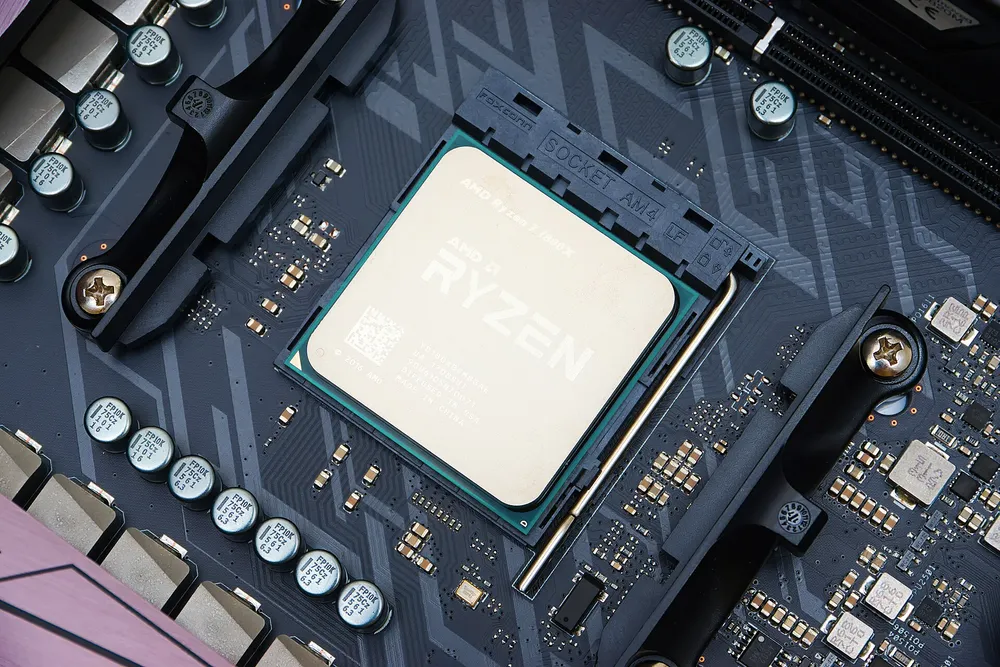 Illustrative photo: an AMD Ryzen chip — Brian Wong — CC BY-SA 2.0 (Wikimedia Commons)
AMD shares jumped about 9% in a single day on Monday, closing at a new record high of $613.92. That capped a roughly 24–26% surge over the prior five trading days, and the stock is now up more than 180% since the start of 2026.
At that price, AMD's market capitalization crossed $1 trillion for the first time, making it the fourth US chipmaker to reach that level, joining Nvidia (worth more than $5 trillion), Broadcom, and Micron — both of which crossed the mark only recently themselves.
| Metric (Sept 21, 2026) | Figure |
|---|---|
| New record close | $613.92/share |
| Single-day gain | ~9% |
| 5-trading-day gain | ~24–26% |
| Year-to-date gain | 180%+ |
| Market cap | Topped $1 trillion (first time) |
| Rank among US chipmakers at $1T | 4th (after Nvidia, Broadcom, Micron) |
As of September 21, 2026 — CNBC, GuruFocus, and wire reports.
The surge also marks a clear turnaround: AMD shares had earlier tumbled as much as 7% in the summer after the company issued quarterly revenue guidance that disappointed investors. But over the past month, renewed confidence in AI demand reversed the picture entirely — and not just for AMD. The whole semiconductor sector rallied in tandem, with Intel up about 11% and Qualcomm gaining roughly 4.1% the same day, while the Nasdaq closed at its first record high since June, partly lifted by Meta shares surging more than 11% after its "Muse" AI assistant app topped Apple's App Store free-download charts.
The OpenAI deal behind the rally
Much of investors' confidence in AMD traces back to a strategic partnership with OpenAI announced back in October 2025 — one of the largest AI chip-supply deals in the industry's history. Under the agreement, OpenAI will deploy up to 6 gigawatts of AMD Instinct GPUs over several years, with the first 1-gigawatt tranche of AMD Instinct MI450 chips scheduled to begin deployment in the second half of 2026.
The deal is estimated to be worth roughly $100 billion over its lifetime. Just as notable is the warrant AMD issued OpenAI, giving it the right to buy up to 160 million AMD shares — roughly 10% of the company — if fully exercised. Vesting is tied to actual deployment progress and AMD's share price, meaning the more chips AMD ships and the higher its stock climbs, the more of AMD OpenAI ends up owning — a structure that tightly aligns both companies' incentives.
"Accelerating faster than I imagined" — CEO Lisa Su
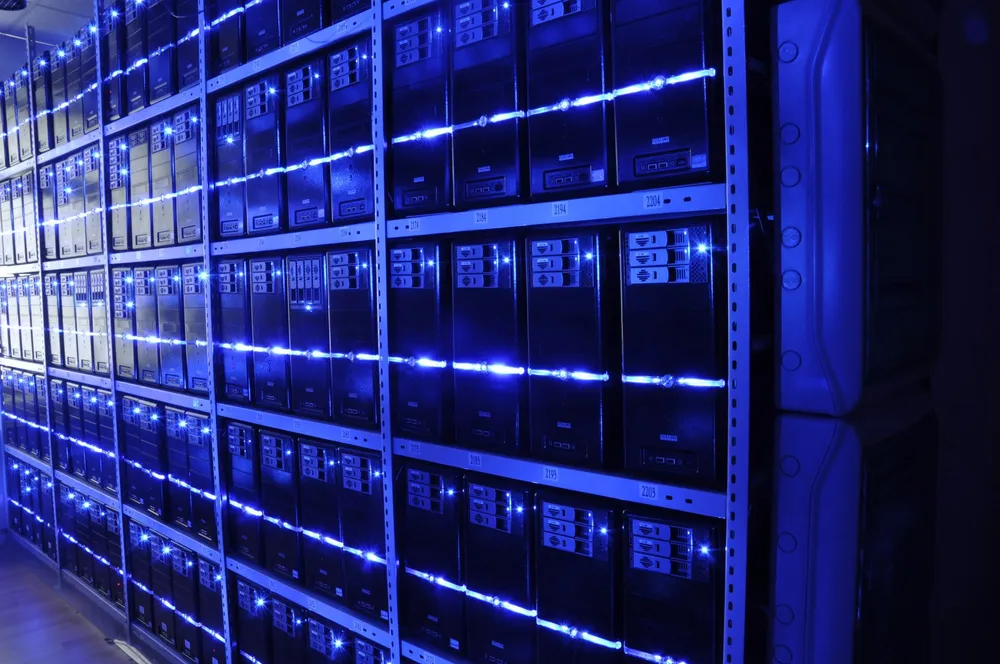 Illustrative photo: a data-center server room — BalticServers.com — CC BY-SA 3.0 (Wikimedia Commons)
AMD CEO Dr. Lisa Su has repeatedly stressed the strength of AI demand this year, saying "the demand for AI is just incredible. It's going through the roof." Back in May, she also pushed back on AI-bubble concerns, calling demand "absolutely real" and arguing the industry is still in an early phase of growth.
On AMD's first-quarter 2026 earnings call, Su sharply raised her forecast for the total addressable market of AI data-center chips, now projecting 45% annual growth to reach $1.4 trillion by 2030 — up from an estimate of just $500 billion she had given only six months earlier. Even AMD's own leadership, in other words, has had to revise its view of how big the AI market will get, and revise it upward fast.
Thai electronics stocks catch the same wave
 Photo: Stock Exchange of Thailand building, Bangkok — Yu tptw — CC BY-SA 4.0 (Wikimedia Commons)
The AI-driven rally lifting AMD wasn't confined to US markets. On the same day (September 21, 2026), electronics stocks on the Stock Exchange of Thailand (SET) rallied too, lifted by positive sentiment from US markets and confidence that global AI investment will keep expanding.
| Stock | Change (Sept 21, 2026) | Close |
|---|---|---|
| HANA (Hana Microelectronics) | +4.19% | 49.75 baht |
| DELTA (Delta Electronics Thailand) | +2.07% | 246.00 baht |
| KCE (KCE Electronics) | +1.15% | 65.75 baht |
| CCET | +1.13% | 8.95 baht |
As of September 21, 2026 — Stock Exchange of Thailand.
Both DELTA and HANA have business lines directly tied to the AI data-center market — DELTA already holds data-center product orders, while HANA is expanding into AI data centers through High Density PCBA and power-management products. Thanawat Thamsuk, an analyst at Phillip Securities (Thailand), said negative factors from Fed rate-hike concerns have already passed, with no major new headwinds expected in the near term.
Notably, DELTA just reported second-quarter 2026 net profit of 6,075 million baht, up 31.3% year-on-year — a sign that Thailand's AI-data-center-linked electronics makers are starting to show the gains as real earnings, not just rising share prices on expectations.
Risks and what to watch next
Despite the bullish picture, some analysts are flagging AMD's increasingly stretched valuation. GuruFocus data puts AMD's price-to-earnings ratio at roughly 157x, well above its five-year median of about 102x — part of a broader, unresolved debate in the tech industry over whether AI stocks have entered bubble territory.
What to watch next: whether AMD hits its plan to begin delivering the first tranche of Instinct MI450 chips to OpenAI in the second half of this year, and whether AMD's next quarterly results turn the AI demand executives keep describing into actual revenue and profit. On the Thai side, investors in electronics stocks will be watching whether overseas orders tied to the AI data-center boom keep converting into sales and profit in the coming quarters, as AI infrastructure investment keeps expanding into Southeast Asia — including Thailand, which is positioning itself as a regional data-center hub and recently ranked 4th globally in AI hardware readiness in an IMF assessment.
For more on the chip rivalry behind this story, read AMD vs Intel: which CPU should you buy in 2026, or follow Thailand's AI data-center investment boom in Foreign capital pours into Thailand's AI data centers.
Sources
- CNBC — AMD hits $1 trillion market cap for the first time as stock rides 5-day rally
- Semafor — AMD reaches a $1 trillion market cap, as chip stocks drive rally
- The Daily Caller — AMD Cracks $1 Trillion As AI Frenzy Sends Chip Stocks Soaring
- GuruFocus — AMD Stock Surges to New Heights, Exceeds $1 Trillion Market Cap
- OpenAI — AMD and OpenAI announce strategic partnership to deploy 6 gigawatts of AMD GPUs
- Bangkok Biznews — Electronics stocks rally in tandem, HANA-DELTA jump 4.19% on US market sentiment, AI wave
Frequently asked questions
- How did AMD become a $1 trillion company?
- AMD's stock jumped about 9% in a single day on September 21, 2026, closing at a record $613.92 a share, which pushed its market capitalization past $1 trillion for the first time. The rally was driven mainly by investor confidence in continued AI chip demand, especially a large chip-supply deal with OpenAI.
- How does this connect to Thai stocks?
- Thailand's own electronics stocks with ties to AI data-center supply chains, such as HANA and DELTA, rose the same day on the Thai stock exchange, riding the same wave of positive US market sentiment and continued global AI infrastructure investment.
Related news
 World
WorldTrump Hits Canada with 50% Tariffs — A New Trade-War Escalation Shakes Global Markets
The US imposed 50% tariffs on roughly $20 billion worth of Canadian imports — from wine to cement to furniture — using a Depression-era law. Canada's PM Carney called it a 'direct violation' of USMCA but opened the door to talks.
 World
WorldUS Strikes Iran Again as Three Tankers Attacked in Strait of Hormuz
Three commercial vessels were attacked in the Strait of Hormuz on July 7, 2026 — the US struck Iran and reimposed oil sanctions, lifting Brent crude 5.5%.
 World
WorldA Quiet Milestone: 79% of the World's Adults Now Have a Financial Account
The World Bank's Global Findex 2025 finds 79% of adults worldwide own a bank or mobile-money account, up from 51% in 2011, driven by mobile phones.