Naga Fireballs 2026: Where, When & How to Get to Nong Khai
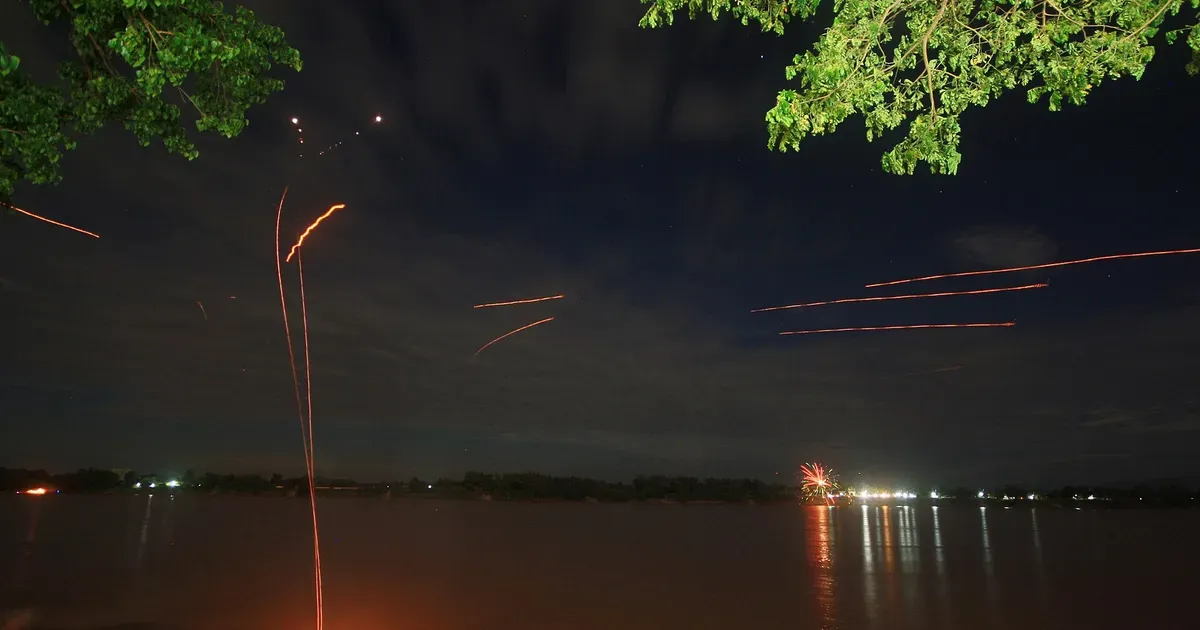
Watch more: "Naga Fireballs" — over 200 fireballs seen in Nong Khai, by Thai PBS News
Every year on the night that marks the end of Buddhist Lent, tens of thousands of people sit along the banks of the Mekong River in Nong Khai province, eyes fixed on the dark water, waiting for something science still can't fully explain — reddish-pink fireballs, roughly the size of a betel nut, shooting up from the middle of the river 50–150 metres into the sky. No smoke. No smell. No sound. Then they simply fade into the air. This is the Naga Fireballs, and this stretch of river is the only place on Earth where it's reported to happen.
In 2026 it falls on the night of Monday, 26 October. If you're planning to witness this once-in-a-lifetime phenomenon, this guide covers everything you need — the legend and the scientific debate around it, the viewing spots with the best track record, every way to get there from Bangkok, real costs, things to do around Nong Khai, and the mistakes travelers commonly make. Read to the end and you shouldn't need to look anywhere else.
Dates and venue details are based on Nong Khai provincial announcements as of late September 2026. Sub-event details may still be adjusted — check official announcements again closer to your travel date.
What are the Naga Fireballs — legend versus a science that still hasn't settled it
Riverside communities in Nong Khai used to call this phenomenon "ghost fireballs" before the more familiar name "Naga Fireballs" took over. What people observe are reddish-pink orbs, roughly the size of a betel nut to a ping-pong ball, rising straight up from the middle of the Mekong — with none of the arcing motion you'd expect from a flare or a projectile. They climb roughly 50–150 metres over 5–10 seconds, then simply extinguish mid-air. No sound, no smell, no smoke, and no falling debris — completely unlike fireworks or a flare.
The legend holds that when the Buddha descended from the Tavatimsa heaven after teaching his mother during his final Rains Retreat, the Naga serpents living in their underwater kingdom beneath the Mekong were overjoyed, and shot fireballs into the sky as an offering to welcome him back — a tribute they've repeated every year on the same night ever since. That's the reason, believers say, why it happens only on the night marking the end of Lent.
The scientific side has seen several Thai research teams study the river and propose that the phenomenon is caused by methane-nitrogen gas, produced by bacteria decomposing organic matter on the riverbed in this particular stretch of the Mekong, which sits along a known geological fault line. When gas accumulates under just the right temperature, pressure, and composition on that particular night, it's theorized to rise to the surface and self-ignite on contact with oxygen in the air — a combustion effect comparable to marsh gas or "will-o'-the-wisp" phenomena occasionally reported igniting spontaneously at night elsewhere.
However, no study has conclusively proven this 100%. The hardest part for the scientific explanation to account for is why the phenomenon reportedly occurs specifically on this one night tied to the lunar calendar, rather than as a seasonal or geological event that should, in theory, recur more randomly. That gap is exactly why the mystery persists on both sides of the debate. Whichever explanation you find more convincing, one thing is undeniable: this is one of the strangest natural phenomena you can witness anywhere — and the Mekong stretch running through Nong Khai and Bueng Kan is the only place it's reported at all.
The 2026 End of Buddhist Lent & World Naga Fireball Festival
Nong Khai's official annual event carries the full name "End of Buddhist Lent and World Naga Fireball Festival" (Miracle of Naga: The Essence of Nong Khai). In 2026 it takes place on the night of Monday, 26 October, the full moon of the 11th lunar month. The main venue is the Twin Naga Cultural Plaza at Wat Lamduan, on the Mekong riverfront in Nong Khai's municipal district, with related activities spread across three riverside districts through late October and early November, including:
- Illuminated boat processions and floating lantern ceremonies along the Mekong
- Traditional long-boat races, a long-running local custom that draws competing teams from neighboring provinces
- Light-and-sound shows retelling the Naga legend and the beliefs behind the fireballs
- Local food stalls and a cultural market to browse and snack at while waiting for the fireballs
- Traditional music performances and concerts running through the night
The province has also built a digital "Nong Khai City Map" tool that plots historical fireball hotspots along with nearby accommodation and restaurant information, making it easier to plan a route before you travel.
⚠️ An important thing to understand: the official festival venue in town and the actual spots where fireballs appear are two different places. Most fireballs are reported from riverside villages in Phon Phisai and Rattanawapi districts, roughly 40–60 kilometres out from the city. If seeing as many fireballs as possible is your priority, plan to head to the viewing spots in these two districts directly, rather than relying solely on the in-town festival grounds (which do usually screen live feeds from the outer viewing points as a supplement).
Best places to watch the Naga Fireballs — based on 2025 statistics
To help you decide where to go, here's a summary of real 2025 sighting data (287 fireballs province-wide, down from 371 in 2024):
| District | Fireballs recorded | Top hotspot | Approx. visitors |
|---|---|---|---|
| Rattanawapi | 237 (highest) | Ban Ton Yai (40), Ban Ton Noi, Ban Dong Mod Daeng-Nong Khon (25) | Several thousand spread across spots |
| Phon Phisai | 50 | Wat Thai riverfront, Ban Nong Kung Nuea-Tai | Ban Tha Muang ~4,500, Ban Tha Tong (Rattanawapi) ~5,000 |
Things worth knowing before you pick a spot:
- Rattanawapi has out-performed in recent years, but Phon Phisai is the original "birthplace" of the tradition and has the longest-standing reputation — plus more visitor infrastructure already in place (parking, food vendors, live-feed screens).
- This is a natural phenomenon with no guaranteed location. Last year's stats are a reference point, not a prediction of where fireballs will appear this year.
- If traveling all the way to either district isn't practical, staying at the main festival grounds in Nong Khai town still gives you a chance, since the Mekong flows past the city itself too — though the odds are statistically lower than at the two districts above.
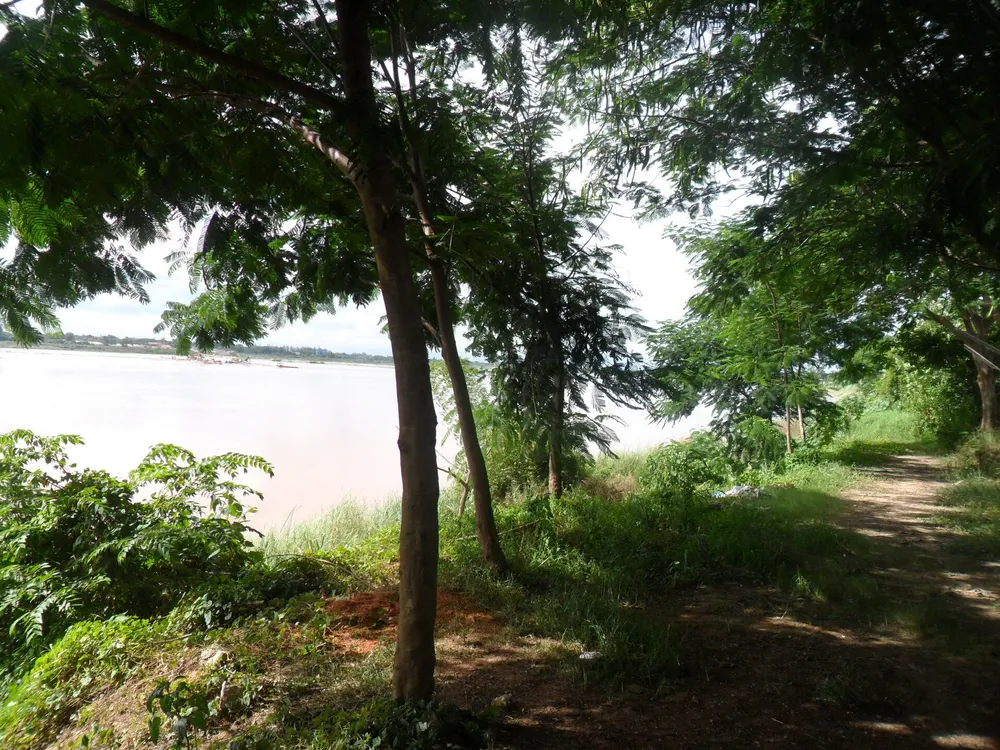 Photo: satori.corvus — CC BY 3.0 (Wikimedia Commons)
A tip on claiming a spot: at both popular districts, people start staking out riverbank positions from early afternoon. Bring your own mat or folding chair, and if you're driving yourself, aim to arrive before 4 PM — the minor roads into these villages get very congested by evening and parking is limited.
Getting to Nong Khai — every option, real prices and times
Nong Khai sits in northeastern Thailand on the Mekong River, directly across from Vientiane, the capital of Laos, roughly 620 kilometres from Bangkok. Important to know: Nong Khai has no airport of its own. The nearest airport is in Udon Thani, about 55 kilometres away.
| How to travel | Travel time | Approx. cost | Best for |
|---|---|---|---|
| Direct bus from Mo Chit 2 | ~9 hours | 515 baht one-way | Budget travelers, comfortable sleeping on the bus, no rush |
| Flight (into Udon Thani) + connecting ride | ~2–2.5 hours total | 495–2,000 baht (airfare) + connecting transport | Fastest option, moderate budget |
| Train (Bangkok–Nong Khai) | ~11 hours 15 minutes | Cheaper in a seat car, pricier for a sleeper berth | Relaxed travelers who enjoy the ride and don't mind an overnight trip |
| Self-drive / rental car | 7–8 hours (excluding stops) | Fuel + tolls | Independent travelers who want to stop along the way (Korat, Khon Kaen) |
| Chartered van/taxi from Udon Thani | ~1 hour | 500–1,000 baht per trip (whole vehicle) | Groups/families landing at Udon Thani airport |
Book transport especially early for the festival night — a huge number of visitors converge on Nong Khai on the same single night, so outbound bus seats and flights often sell out 2–3 weeks earlier than usual.
Best time to go, and how many days you need
The main festival night (26 October 2026) is the only night with an official festival program and, statistically, the best odds of seeing fireballs — but it's also when crowds, accommodation, and traffic are at their toughest.
If you'd prefer a calmer experience: some years see a handful of fireball sightings continue for a night or two afterward in the same week (though fewer than on the main night). Arriving a day early to see the rest of Nong Khai first, then heading out for the main event, spreads the risk around accommodation and transport more evenly.
Weather in late October: this is the start of the cool season in Isaan. Daytime can still hit 32–34°C, but the Mekong riverside cools down noticeably at night — late-night waiting for fireballs can dip to 20–22°C. Pack a light jacket even though it's not quite full winter yet.
Recommended length of stay: 2 days, 1 night is enough if you're only here for the fireballs and the main sights in town. But if you want to properly see Wat Pho Chai, Sala Keoku, Tha Sadet Market, and have a buffer for weather or traffic, 3 days, 2 nights is the better plan.
Real trip costs for Nong Khai
| Item | Budget | Comfort |
|---|---|---|
| Round-trip transport (bus/flight) | 1,030 baht (round-trip bus) | 2,500–4,500 baht (round-trip flight) |
| Accommodation, 2 nights | 1,700–2,400 baht (850–1,200/night) | 5,000–8,000 baht (2,500–4,000/night, riverside view) |
| Food, 3 days | 600–900 baht (200–300/day) | 1,500–2,400 baht (500–800/day) |
| Extra attraction fees (Sala Keoku, etc.) | 100–150 baht | 150–250 baht |
| Local transport (chartered van/taxi to viewing spots) | 300–600 baht | 1,500–2,500 baht (whole trip charter) |
| Total per person, approx. | 3,730–5,050 baht | 10,650–17,650 baht |
Note: figures are for a 3-day, 2-night trip, assuming 2+ travelers splitting accommodation and charter costs. Prices may rise above these figures around the festival night itself.
Things to do in Nong Khai — round out the trip
If you have time before or after the festival night, Nong Khai town has several worthwhile sights, all easy to reach without traveling far.
Wat Pho Chai (home of Luang Pho Phra Sai)
A royal temple in the heart of Nong Khai, home to Luang Pho Phra Sai, a revered Buddha image cherished by locals and visitors from across Thailand alike. The temple's architecture blends Lan Xang influences, and it's a natural first stop to pay respects before starting your trip. Free entry, open all day.
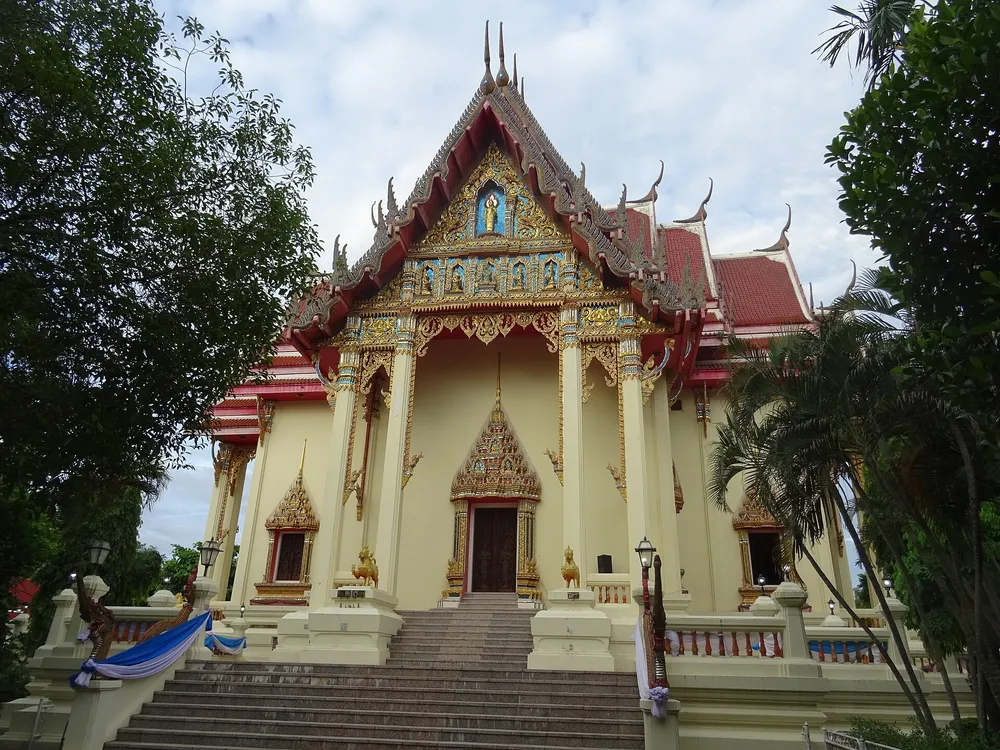 Photo: Christophe95 — CC BY-SA 4.0 (Wikimedia Commons)
Sala Keoku (Wat Khaek)
A striking sculpture park of giant concrete statues blending Buddhist, Hindu, and local folk beliefs into one unusual collection. It was built by Luang Pu Bunleua Sulilat, the same monk behind the similarly styled Xieng Khuan sculpture park across the river in Laos. The highlight is a row of statues, some standing several dozen metres tall, rising around a pond — equal parts eerie and fascinating. Open 9 AM–6 PM, and one of Nong Khai's most photographed spots.
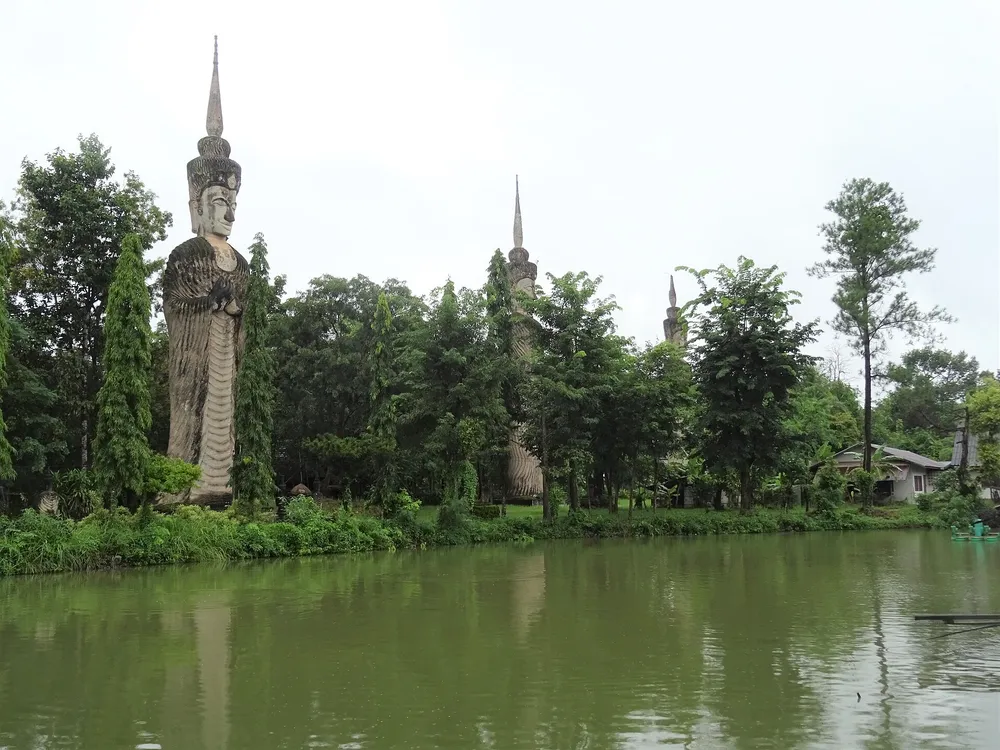 Photo: Christophe95 — CC BY-SA 4.0 (Wikimedia Commons)
Tha Sadet Market
A riverside market in the city centre, known for goods from Indochina and Eastern Europe — dried food, household items, herbal products, and inexpensive souvenirs. A pleasant evening stroll with a genuine Mekong-riverside atmosphere, and it's within easy walking distance of the Twin Naga Cultural Plaza, the festival's main venue.
Thai–Lao Friendship Bridge
This bridge crosses the Mekong from Nong Khai to Tha Deua, on the outskirts of Vientiane, the capital of Laos, built through a joint effort by Thailand, Laos, and Australia as a symbol of the two countries' relationship. Open for viewing and photos from 5 AM–8 PM. If you have the right visa/documents and fancy a same-day trip into Vientiane, this is where you'd cross.
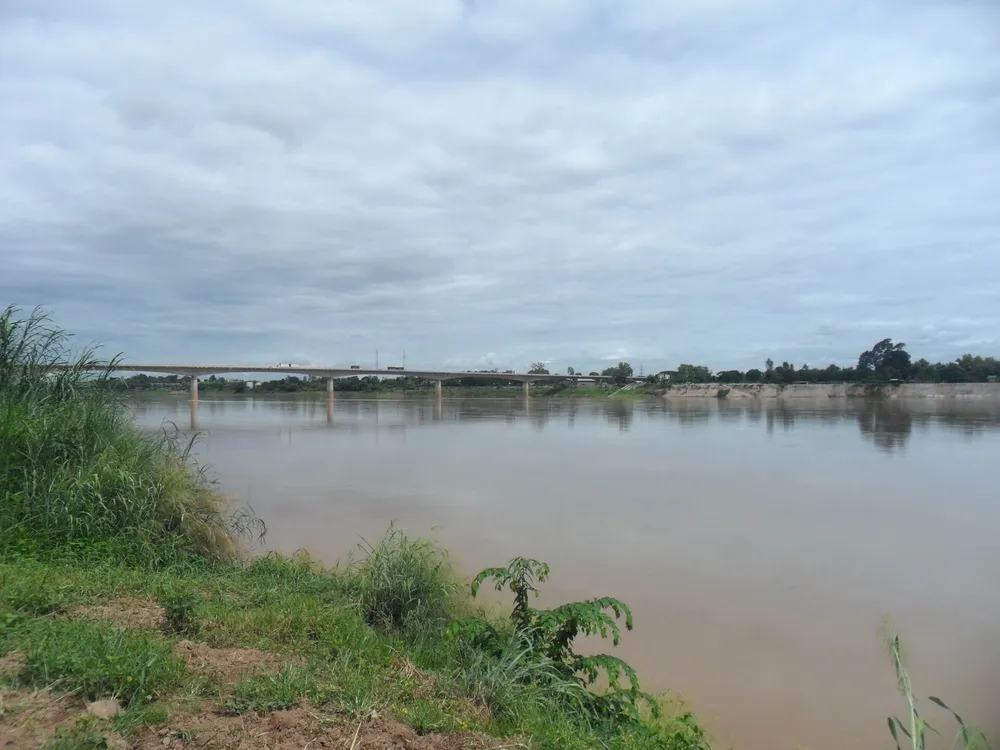 Photo: satori.corvus — CC BY 3.0 (Wikimedia Commons)
Where to stay and eat
Budget-to-mid hotels (850–1,500 baht/night): in-town options near Tha Sadet Market such as Nong Khai White Hotel or Cho Fa Gallery Hotel, both an easy walk to the riverfront and festival venue — good for travelers who prioritize location over luxury.
Mid-to-upper riverside options (2,000–4,000+ baht/night): hotels and resorts with balconies facing the Mekong directly, such as Amanta Hotel Nong Khai or Park and Pool Hotel — a good pick for couples or families who want to wake up to a river view.
Local food: try fresh Mekong river fish such as grilled kang or giant catfish, spicy fish koi salad, and Lao-style som tam at riverside restaurants — expect roughly 80–200 baht per dish.
Riverside cafés: Nong Khai has a good scattering of riverfront cafés, perfect for a relaxed morning or for killing time before heading out to a viewing spot in the evening.
A practical 3-day, 2-night itinerary
| Day | Morning | Afternoon | Evening/Night |
|---|---|---|---|
| Day 1 | Arrive in Nong Khai, check into your hotel | Wat Pho Chai + Sala Keoku | Stroll Tha Sadet Market, riverside dinner |
| Day 2 (festival night, 26 Oct) | Rest, pack essentials (mat, chair, light jacket) | Head to your chosen viewing spot in Phon Phisai/Rattanawapi before 4 PM | Wait for the fireballs + join the festival at the Twin Naga Cultural Plaza |
| Day 3 | Thai–Lao Friendship Bridge, morning photos | Souvenir shopping at Tha Sadet Market | Head home |
If you have 1–2 extra days, consider extending to Chiang Khan in Loei province, only about 200 kilometres further along the Mekong, for a completely different sea-of-mist and old-town atmosphere.
Common mistakes and useful tips
1. Assuming the in-town festival venue is where most fireballs appear As covered above, most sightings happen out in Phon Phisai and Rattanawapi, not the city itself. If seeing fireballs is your priority, plan your trip specifically around those two districts.
2. Not booking accommodation early The festival night pulls tens of thousands of visitors into town at once. Good rooms near the venue fill up within 1–2 months of the date — the longer you wait, the fewer (and pricier) your options.
3. Expecting to see fireballs guaranteed This is a natural phenomenon nobody can control or promise. Some years and some spots see fewer sightings than expected, or none at all in a given window. Go in ready to enjoy the whole event — the processions, the food, the riverside atmosphere — rather than pinning everything on the fireballs alone.
4. Not packing warm layers or seating Waiting for fireballs can mean several hours by the river at night, and it gets colder than most people expect, especially late at night. Bring a light jacket, a mat or folding chair, and snacks and water.
5. Underestimating the return trip after the event ends Minor roads from the viewing spots back to town or to Udon Thani airport get heavily congested once the festival wraps up, since everyone leaves at once. Budget an extra 1–2 hours, and if you have an early flight the next morning, consider staying overnight in Udon Thani instead of Nong Khai to be safe.
6. Skipping travel insurance A trip with big crowds, dark conditions, and a long cross-region journey carries more risk of accidents or lost belongings than an ordinary trip. Domestic travel insurance before you set off is a worthwhile safeguard — it costs a few hundred baht but can cover tens of thousands in losses. Read more in the domestic travel insurance guide.
7. Driving yourself without checking your car first The Bangkok–Nong Khai route is over 600 kilometres. Check your tyres and brakes are in good shape before setting off — see the tyre maintenance guide and safe long-distance driving tips.
Verdict: is it worth going to see the Naga Fireballs?
Absolutely worth it — if you go in open to the whole experience, not just fixated on the fireballs themselves. This is one of the strangest natural phenomena you can witness anywhere in the world. Whether that particular night brings many sightings or few, the festival atmosphere along the Mekong — the processions, the illuminated boats, and the shared belief of tens of thousands of people gathering for one night — is a genuinely worthwhile experience on its own.
Good for:
- ✅ Fans of unusual natural phenomena and local folk beliefs
- ✅ Photographers — a rare chance to shoot fireballs over a river at night
- ✅ Isaan travel enthusiasts — easy to combine with Chiang Khan and Loei in one trip
- ⚠️ Anyone who needs a 100% guarantee of seeing what they came for — since it's a natural phenomenon, nothing is promised
The one thing to remember: book transport and accommodation at least 1–2 months ahead if you're going for the main night on 26 October 2026, and check upcoming public holidays before you finalize your leave dates.
Sources
- MGR Online — announcement of the 2026 End of Buddhist Lent & World Naga Fireball Festival
- PPTV HD 36 — 2025 Naga Fireball statistics (287 fireballs) and 2024 figures (371)
- Thai PBS News — on-the-ground reporting of the Naga Fireballs phenomenon
- Thairath — sighting counts broken down by district and village
- Phon Phisai district website — history and legend of the Naga Fireballs
- th.wikipedia.org — บั้งไฟพญานาค (Naga Fireballs)
- 12go.asia / busonlineticket.co.th — Bangkok–Nong Khai transport prices and schedules, 2026
Frequently asked questions
- What date are the Naga Fireballs in 2026?
- The night of Monday, 26 October 2026 — the full moon of the 11th lunar month, known in Thai as Wan Ok Phansa (the end of Buddhist Lent). The province holds its main event, the "End of Buddhist Lent & World Naga Fireball Festival", at the Twin Naga Cultural Plaza by Wat Lamduan on the Mekong riverfront. The fireballs themselves are usually reported from early evening into the night, and some years a handful are spotted for another night or two afterward at certain spots — so if you can, plan to stay at least two nights to raise your odds of seeing one.
- Where is the best place to watch the Naga Fireballs?
- Based on 2025 data, Rattanawapi district had by far the most sightings — 237 fireballs, concentrated around Ban Ton Yai and Ban Ton Noi villages. Phon Phisai district, the traditional 'birthplace' of the custom, had 50, spread across several riverside spots including Wat Thai and Ban Nong Kung Nuea-Tai. That said, this is a natural phenomenon with no guaranteed location — last year's hotspots aren't a forecast for this year. Watching from the main festival grounds in Nong Khai town is still worthwhile too, since the Mekong runs past the city itself and the event usually screens live feeds from the outer viewing points.
- Are the Naga Fireballs a legend or a scientific phenomenon?
- There's no fully settled answer either way. The traditional belief holds that Naga serpents living in the underwater kingdom beneath the Mekong send fireballs into the sky as an offering to the Buddha on the night he is believed to have descended from heaven at the end of Lent. The scientific theory, backed by several Thai research teams, points to methane-nitrogen gas produced by bacteria decomposing organic matter on the riverbed, which rises and self-ignites on contact with air under just the right temperature and pressure. Neither has been conclusively proven — and the science struggles to explain why it happens specifically on this one lunar night rather than as an ordinary seasonal event, which is part of why the mystery endures.
- What's the cheapest way to get from Bangkok to Nong Khai?
- The cheapest option is a direct bus from Bangkok’s Mo Chit 2 terminal to Nong Khai, from around 515 baht, taking about 9 hours (day and overnight departures available). To save time instead, fly into Udon Thani airport (Nong Khai has no airport of its own), with fares from roughly 495–2,000 baht depending on when you book, then take a van or taxi about an hour further to Nong Khai. The train takes the longest at around 11 hours 15 minutes, best for travelers who enjoy a slow overnight ride.
- How far ahead should I book accommodation for the festival night?
- At least 1–2 months ahead, especially for riverside hotels in Nong Khai town, which are the most sought-after location. The festival draws a very large crowd from across Thailand and abroad into one small city on a single night (over 31,500 visitors across the two main districts in 2025 alone), so good rooms near the venue fill up fast and prices often rise closer to the date. If you can’t find anything in Nong Khai itself, try Udon Thani (~55 km away) and drive over in the late afternoon or early evening instead.
- Can I bring kids or elderly family members to watch?
- Yes, but plan around large crowds and long waits — sometimes several hours — before any fireball appears, with no guarantee one will (it is a natural phenomenon, after all). Pick a viewing spot with flat, easy walking rather than steep riverbank steps, bring a folding chair, a light jacket (the Mekong riverside gets noticeably cool late at night in late October), a spare flashlight, and budget extra time for the return trip, since roads get heavily congested once the event ends.
Related articles
Chiang Khan & Loei Travel Guide 2026: Phu Kradueng, Phu Ruea, Sea of Fog
Complete 2026 guide to Chiang Khan, Loei — Phu Kradueng, Phu Ruea, the walking street, Kaeng Khut Khu, the skywalk, getting there, real costs, and a 3-day itinerary
Pai, Mae Hong Son Travel Guide 2026: Sights, Stays & 3-Day Plan
Complete 2026 guide to Pai, Thailand: the 762-curve drive, must-see sights, stays for every budget, real costs, and a working 3-day itinerary.
How to Save Fuel in Thailand 2026: Real Tips as Gas Prices Rise
Thailand fuel prices rose Sep 2026. Proven ways to cut fuel costs, a real cost-impact table, and whether switching to an EV finally pays off.