AI That Reads Chest X-rays Is Helping Screen for TB Where Doctors Are Scarce — Scaling Up in 2026

In remote community clinics with no radiologist on staff, a new tool is changing how tuberculosis (TB) is found. A patient simply gets a routine chest X-ray, and then artificial intelligence (AI) software reads the image in seconds and flags who should be sent on for confirmatory testing. The technology is scaling up around the world in 2026 — and it has become one of the clearest examples of "AI for good" in healthcare.
The key is that the AI doesn't replace doctors. It fills the gap exactly where there aren't enough of them — and that is precisely where TB hits hardest.
The old problem: many patients, few people to read the films
Tuberculosis remains the world's deadliest infectious disease, according to the latest World Health Organization (WHO) figures. In 2024, around 10.7 million people fell ill and roughly 1.23 million died. New cases edged down from 10.8 million in 2023 — the first improvement since the COVID-19 disruptions — but the world is still far from its goal of ending TB.
A major obstacle is finding cases early. Chest X-rays are a strong screening tool, but reading them requires trained radiologists — and in many high-burden countries those specialists are in severe short supply. Films pile up waiting to be read, and some patients drop out of the system before they are ever diagnosed.
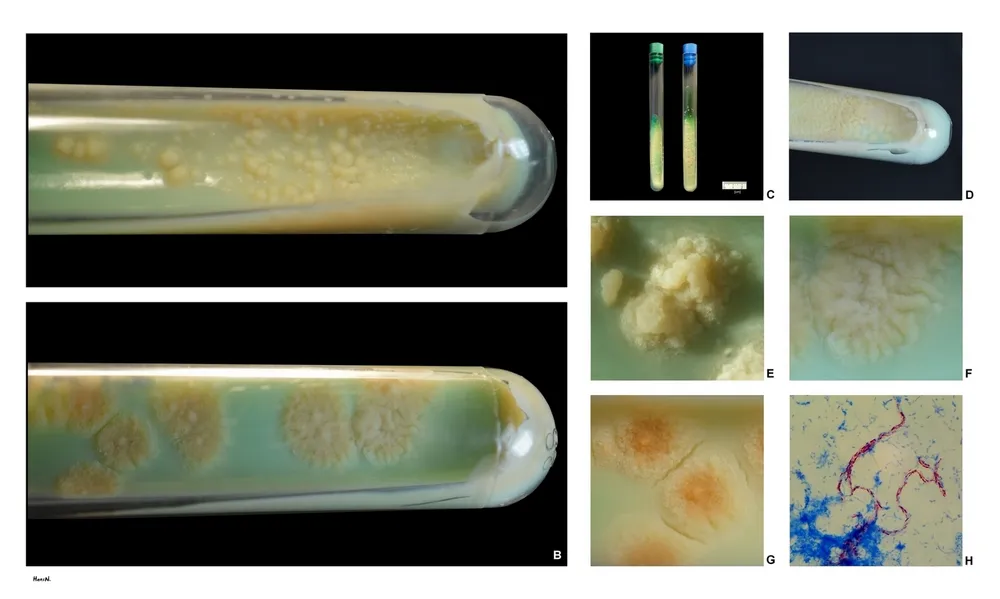 Illustrative: Mycobacterium tuberculosis, the bacterium that causes TB — Wikimedia Commons
How AI steps in
This class of software is called CAD (computer-aided detection). Trained on vast numbers of chest X-rays, it learns to spot abnormalities suggestive of pulmonary TB on its own. As soon as a film is captured, the system produces an abnormality score instantly — some systems even display it like a heat map, where blue means clear and red means suspicious.
The two products most often cited in research are qXR, made by Qure.ai (India), and CAD4TB, made by Delft Imaging (the Netherlands). Peer-reviewed studies have found leading software reaching sensitivity of roughly 90–93%, meeting the WHO's minimum benchmark for a TB triage test: 90% sensitivity and 70% specificity.
The turning point came in 2021, when the WHO recommended CAD as an alternative to human reading for the first time, for screening and triage of people aged 15 and over. That officially opened the door for AI to enter real public-health systems — and deployment has been growing ever since.
On the ground: from Mali to the Philippines
The technology isn't confined to the lab. In Mali, in West Africa, a local non-profit uses AI to read films at community health centres that have no radiologist on staff, letting them screen far more people and surface hidden cases.
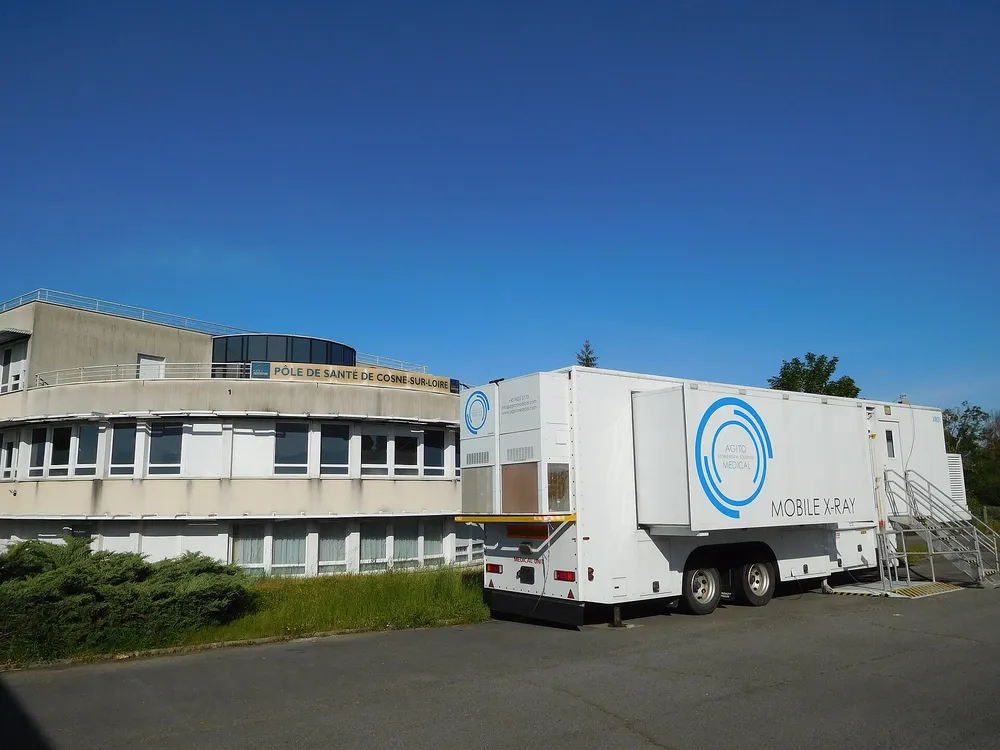 Illustrative: a mobile X-ray unit of the kind used for active community screening — Cjp24, CC BY-SA 4.0 via Wikimedia Commons
Another example is the Philippines, which aims to screen 12 million people by 2026 under its national TB-elimination plan, using ultra-portable AI-powered chest X-rays alongside molecular confirmatory tests. Pairing "mobile X-ray + AI" lets teams travel out to communities and get screening results on the spot, instead of shipping films back to a large hospital to be read.
Behind this scale-up is serious money: The Global Fund says it has invested nearly $200 million over the past four years to support AI-enabled TB screening — and has seen a significant rise in the number of cases detected in that time.
Voices from the field
"AI does. It's brilliant," said Peter Sands, head of the Global Fund, on the technology's power to catch patients who previously slipped through the cracks.
Prof. Regina Barzilay, an AI researcher at MIT, argues that lower-income countries may "adopt AI much faster" than wealthy ones precisely because their unmet need is so great.
At the same time, experts urge caution. The tools need proper quality control and oversight, the scoring threshold must be tuned to each local setting, and everyone agrees the AI is only a first-line screen — never the final diagnosis.
Why it matters for readers in Thailand
Thailand is among the countries the WHO classes as high-burden for TB. A tool that enables active screening in communities, prisons, or clinics that lack radiologists has direct value for finding cases early and breaking the chain of transmission.
It also reflects a bigger global trend of AI entering healthcare — much as we've seen Thai students use AI to help diagnose malaria and win a world award, and Thailand's health system climb the global rankings. To explore AI tools you can actually use day to day, see our guide to free Google AI tools.
Key facts
- TB is the world's deadliest infectious disease — about 10.7 million new cases and 1.23 million deaths in 2024 (figures as of June 2026).
- The WHO recommended AI (CAD) for reading TB screening X-rays back in 2021, for people aged 15 and over.
- Leading software (qXR, CAD4TB) reaches roughly 90–93% sensitivity, meeting the WHO minimum benchmark.
- The Global Fund has invested nearly $200 million over four years, expanding use in Mali, the Philippines and beyond.
- The AI is a screening/triage tool that fills the doctor-shortage gap — not a replacement for final diagnosis.
For more good news and tech-for-good stories, visit our news page.
Sources
Sources
Frequently asked questions
- How does AI tuberculosis screening work?
- A patient gets a routine chest X-ray. AI software then analyses the image in seconds and produces an abnormality score that flags who should be sent for confirmatory testing — so screening can happen even where no radiologist is on site.
- Does AI replace the doctor?
- No. The AI is a triage-and-screening tool that highlights who needs a confirmatory test such as sputum analysis. Diagnosis and treatment still stay in the hands of medical staff.
- How accurate is the AI at reading X-rays?
- Peer-reviewed studies show leading software such as qXR and CAD4TB reaching roughly 90–93% sensitivity, meeting the WHO minimum benchmark for a TB triage test (90% sensitivity, 70% specificity).
- Is tuberculosis still a big problem in 2026?
- Yes — it remains the world's deadliest infectious disease. In 2024 about 10.7 million people fell ill and 1.23 million died, according to the WHO, which is why finding cases early matters so much.
- Why does this matter for readers in Thailand?
- Thailand is among the countries the WHO classes as high-burden for TB, so pairing AI with mobile X-rays helps actively find cases in communities and clinics that lack radiologists.
Related news
 World
WorldOpenAI's Astra Solves 10 Open Math Problems, Some Stuck for 47 Years
OpenAI's next model resolved decades-old math problems, verified by the machine-checkable proof system Lean, at a compute cost of roughly $2,000.
 World
WorldApple Sues OpenAI for Trade Secret Theft — Siri Switches to Google Gemini
Apple filed a 41-page federal lawsuit against OpenAI on July 10, 2026, alleging systematic trade secret theft by former employees. Simultaneously, Apple confirmed Siri will use Google Gemini as its primary AI — the Apple–OpenAI partnership that debuted at WWDC 2024 has fully collapsed.
 Thailand
Thailand FDI Jumps 80% to $40.6B as AI Data Centers Drive Boom
Foreign investment in Thailand jumped 80% to $40.6B in H1 2026, led by AI data centers and digital infrastructure — creating over 82,000 jobs.