Cuba's Repeated Blackouts: 5 Nationwide Grid Collapses in 5 Months Affect 10 Million

Watch more: Cuba suffers second nationwide blackout in five days by FRANCE 24 English
On July 14, 2026, Cuba's national power grid went dark for the third time in ten days. The state utility UNE reported a "total disconnection of the electrical system" at 11:05 AM local time, plunging all 10 million Cubans into darkness once again. It was the island's fifth nationwide blackout of 2026.
This is not a crisis of coincidence. It is the culmination of decades of deteriorating infrastructure, deepening fuel shortages, and geopolitical pressure — all colliding at once.

A Grid on the Verge of Collapse
The numbers tell the whole story. Cuba has thermoelectric plants with an installed nameplate capacity of 3,000 megawatts, but they currently produce just 1,278 MW in practice — less than half. Peak electricity demand runs at roughly 3,100 MW. That leaves the country with a daily shortfall of 1,700 to 1,800 MW, every single day.
A grid with zero reserve capacity cannot survive even a single equipment failure. On July 10, when the Nuevitas thermoelectric plant broke down while the Antonio Guiteras plant was attempting a restart — its 17th breakdown of 2026 alone — the entire grid cascaded into total collapse within minutes.
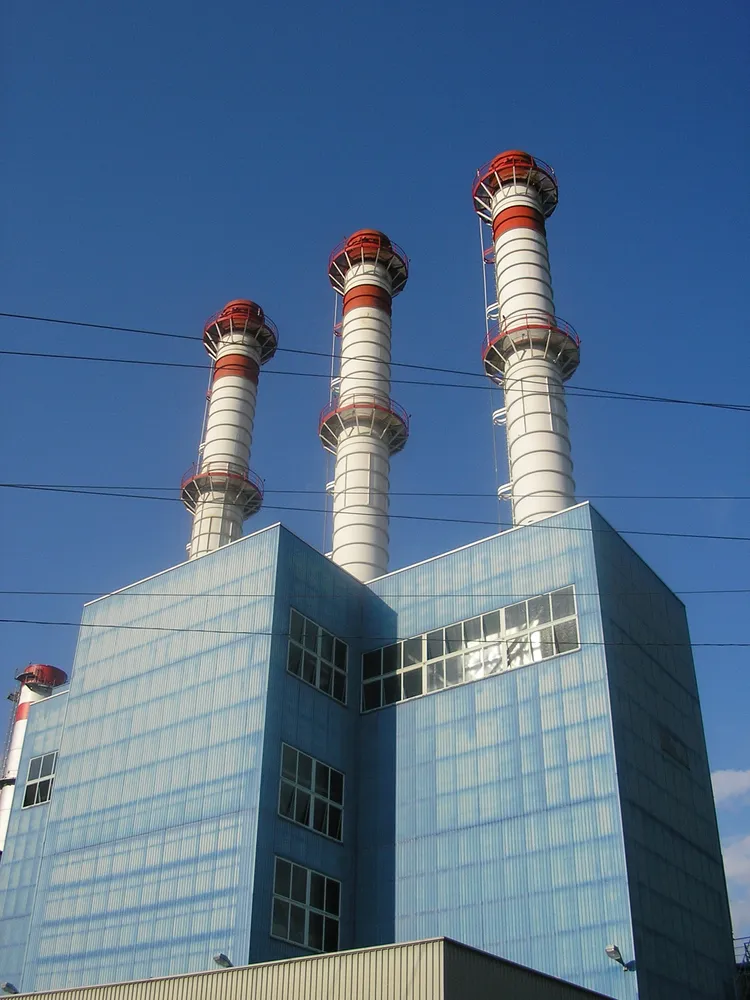
Cuba depends on 16 thermoelectric plants built primarily in the 1960s through 1980s using Soviet, Japanese, and Czech technology. These facilities are now 40 to 60 years old, and years of limited maintenance budgets and scarce replacement parts have pushed them to the breaking point.
The Fuel Cutoff: When Geopolitics Turns Off the Lights
If Cuba's crumbling infrastructure was the kindling, the oil cutoff was the match. Cuba produces only around 40% of its domestic oil needs; the remaining 60% historically came from imports. Venezuela was the primary supplier, sending roughly 35,000 barrels per day.
That changed in January 2026. The Trump administration issued an executive order declaring Cuba "an unusual and extraordinary threat" and threatening steep tariffs on any country that continued supplying Cuba with fuel. Venezuela and Mexico halted shipments almost immediately. Since then, only a single Russian oil tanker has managed to reach Cuba.
Cuba's government attributes the crisis entirely to what it calls a "US fuel blockade." US Ambassador Michael Waltz countered: "Change your ways and turn on the lights back on for your people." Between those two positions, Cuba's ordinary citizens bear the entire cost.
For more on US trade pressure in 2026, see our report on Trump's 50% tariff threat against Canada.
Life in the Dark: The Human Toll
Statistics only go so far. For Cuban families, each blackout means no running water (pumps need electricity), spoiled food (refrigerators stop within hours), halted public transport, and hospitals scrambling to stretch emergency fuel for generators. In rural areas, some communities went without power for more than 70 hours straight.
The UN's human rights office reported that infant mortality in Cuba had "nearly doubled in recent months," partly due to disruptions in access to medicines and medical equipment, with tens of thousands of surgeries canceled across the country during the crisis.
Residents in Havana have taken to the streets during the worst outages, banging pots and pans and shouting for the lights to come back on — a rare display of public frustration that signals just how far the situation has stretched the population's endurance.
China's Emergency Solar Response
Amid the darkness, one story stands out. Under extreme pressure, Cuba is executing what CNN has called "one of the fastest solar revolutions on the planet" — and China is bankrolling much of it.
Between 2025 and early 2026, Cuba connected 49 new solar farms to its grid, adding over 1,000 MW of solar capacity. The share of solar power in Cuba's electricity mix jumped from 5.8% in early 2025 to 20% in 2026. China shipped $117 million worth of solar panels to Cuba in 2025 alone, followed by $80 million in emergency aid for electrical equipment in January 2026. An additional 5,000 solar kits were installed in health centres across 168 municipalities.
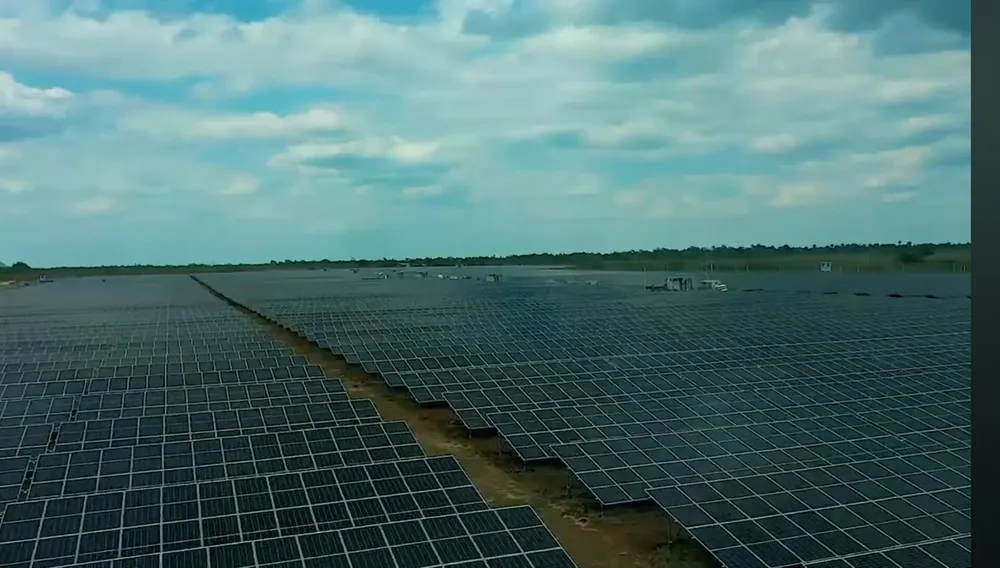
Cuba's target is to build 92 solar farms by 2028 and raise renewables to 24% of electricity generation by 2030. Russia is also contributing, with modernisation of three existing thermoelectric plants and construction of a new 200 MW facility. Four battery storage units are being installed to help stabilise grid frequency overnight — though the capacity remains far short of what the island needs.
The critical limitation of solar power is that it generates nothing after dark, when demand remains high. Without adequate battery storage, the grid stays vulnerable throughout evening and night hours.
What Comes Next
Experts estimate that a lasting fix for Cuba's power grid would require $8–10 billion in investment over the next decade. Cuba has already spent over $1 billion, supplemented by EU funding, but the gap remains enormous.
For the 10 million Cubans waiting in the dark, this crisis illustrates how decades of infrastructure neglect, compounded by geopolitical pressure, can hollow out the quality of daily life with devastating speed. It also shows that the transition to clean energy — which the rest of the world is pursuing by choice (as seen in the UK where EVs now outsell petrol cars) — can be forced on a country by circumstance.
Whether Cuba's accelerated solar buildout can outpace the deterioration of its old grid before the next collapse remains the central question to watch.
Sources
- Al Jazeera — Cuba's power grid collapses again, triggering third blackout in 10 days
- Al Jazeera — Cuba suffers second island-wide blackout in a week amid Trump fuel blockade
- CNN — Cuba hit with nationwide blackout as US pressure continues
- CNN Climate — As the US starves it of oil, Cuba is pulling off one of the fastest solar revolutions on the planet
- Wikipedia — 2024–2026 Cuba blackouts
Frequently asked questions
- Why does Cuba keep having nationwide blackouts?
- Cuba relies on Soviet-era thermoelectric plants (built in the 1960s–1980s) that are badly deteriorated. On top of that, US pressure caused Venezuela and Mexico to stop supplying oil to Cuba, leaving the island with only 43% of the power it needs to meet demand.
- What is Cuba doing to fix the problem?
- Cuba is rapidly building solar farms with Chinese support. Solar power now accounts for 20% of total generation (up from 5.8% in early 2025), and Cuba aims to build 92 solar farms by 2028.
- How does this relate to global oil markets?
- Venezuela's oil cutoff to Cuba is a direct result of Trump administration policy pressuring countries that supply fuel to Cuba. This crisis has forced Cuba to accelerate its renewable energy transition rather than continuing to rely on fossil fuels.
Related news
 World
WorldSuper Typhoon Bavi Makes Landfall in China — 1.7 Million Evacuated, Trail of Destruction Across Four Countries
Typhoon Bavi made landfall in China's Zhejiang Province on the night of July 11, 2026, after weakening from a super typhoon. China evacuated nearly 1.88 million people across three provinces. The Philippines reported 17–19 deaths, Taiwan 87 injuries, Japan 82,939 evacuations. Total damage exceeds $164 million USD.
 World
WorldRattlesnake Blood Yields Antivenom 10x Stronger Than Current Drugs
Proteins from rattlesnake blood, combined, neutralize venom 10x more potently than current antivenom in lab tests — a study with a Thai scientist on the team.
 World
WorldKākāpō Population Soars Past 300 for First Time in 75 Years
New Zealand's kākāpō, the world's heaviest parrot, reached 325 birds after a record 2026 breeding season added 90 chicks — up from just 51 birds in 1995.