Scientists Crack the Code to Destroying PFAS 'Forever Chemicals' With UV Light — No Added Chemicals

Scientists at Aarhus University in Denmark have found a hidden weakness in PFAS — the "forever chemicals" that have contaminated global environments for over 80 years without ever breaking down naturally. A study published in Environmental Science & Technology proves that high-intensity ultraviolet (UV) light can generate hydrogen radicals from plain water molecules, which then attack and destroy the notoriously tough chemical bonds of PFAS — with no added chemicals whatsoever.
What Are PFAS and Why Won't They Go Away?
PFAS (per- and polyfluoroalkyl substances) are a family of more than 14,000 synthetic chemicals developed since the 1940s for use in industrial and consumer products: non-stick cookware, food packaging, waterproof jackets, stain-resistant carpets, and AFFF firefighting foam used extensively at airports and military bases.
The very property that makes PFAS industrially useful is what makes them dangerous: the carbon-fluorine (C-F) bond, one of the strongest bonds in organic chemistry. It resists heat, acids, bases, and almost every natural degradation process, causing PFAS to accumulate indefinitely in soils, water systems, food chains, and human bodies.
Exposure to PFAS is associated with elevated risks of multiple cancers, liver and kidney damage, hormonal disruption, and developmental harm in infants and fetuses. The World Health Organization (WHO) classified PFOA — one of the most studied PFAS compounds — as a Group 1 human carcinogen in 2023.

The New Mechanism That Changes Everything
Previously, scientists believed that hydrated electrons — electrons dissolved in water — were the primary agents breaking down PFAS when UV light was applied. The Aarhus University team, led by Associate Professor Zongsu Wei from the Department of Biological and Chemical Engineering, discovered that the real driver is something different: hydrogen radicals — highly reactive particles generated when water is exposed to high-energy UV light.
The process works like this:
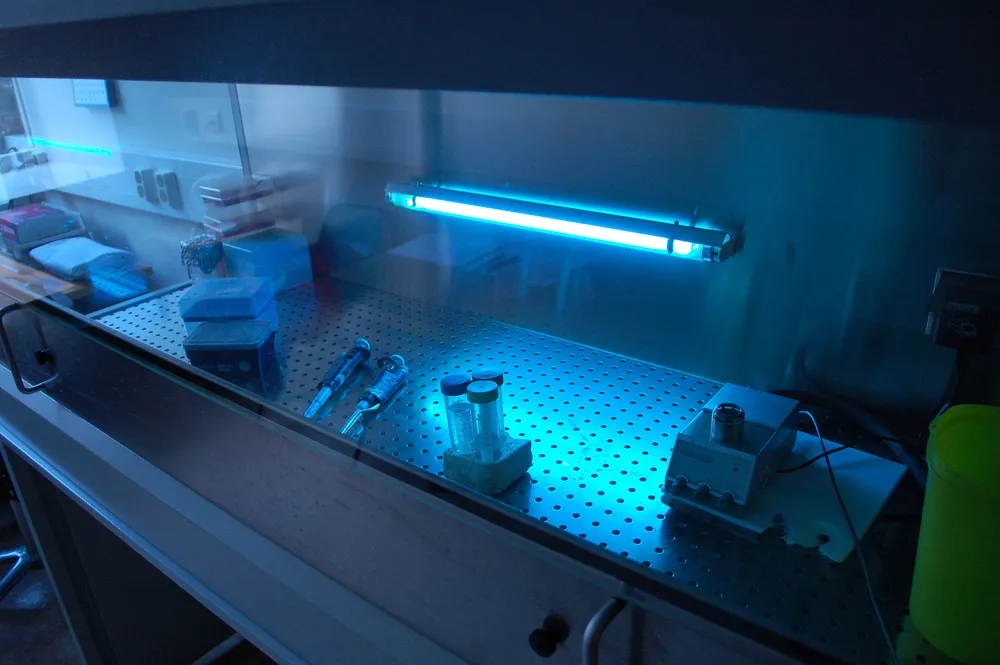
- UV light below 300 nanometers in wavelength strikes water
- The light energy splits water molecules (H₂O), generating hydrogen radicals with unpaired electrons
- These highly reactive radicals attack the C-F bonds of PFAS molecules
- They progressively strip away fluorine atoms, breaking down PFAS into smaller, less persistent compounds
"Breaking those bonds is the main challenge. By identifying hydrogen radicals as a dominant driver, we now have a clearer direction for how to design more efficient and sustainable technologies," said Associate Professor Wei.
The Results: Nearly Half of GenX Destroyed in 5 Hours
The team tested the process on GenX (HFPO-DA), a newer-generation PFAS compound developed as a replacement for PFOA after PFOA was banned in many countries (used in Teflon and fluoropolymer production). The results after just 5 hours — with zero chemical additives:
- GenX degradation: 49.1% (nearly half of the starting amount)
- Defluorination: 21.2% (fluorine atoms successfully removed)
The numbers are not 100%, but that is not the point. What matters is what was not used: no added chemicals, no catalysts — just water and UV light. This is fundamentally different from previous PFAS destruction approaches that typically required added oxidants or reductants.
Why This Matters More Than Current Treatment Methods
The water treatment technologies most widely used to deal with PFAS today — activated carbon filtration and membrane systems — have a significant flaw: they do not destroy PFAS. They merely transfer it from water into filter material, which must eventually be disposed of, often via high-temperature incineration or landfill — both of which carry risks of PFAS re-entering the environment.
The UV-hydrogen radical approach is different because it genuinely destroys PFAS molecules by breaking C-F bonds one by one, rather than moving the problem elsewhere. Since it requires only water and UV light, it has the potential to be a far cleaner and more sustainable process.
PFAS in Thailand: Closer Than You Think
Many people assume PFAS is primarily a problem for heavily industrialised Western nations. In fact, international research has already detected PFAS contamination across Thailand:
- Chao Phraya River: PFOS (a key PFAS compound) levels increase from upstream to downstream, with agricultural and industrial zones showing higher concentrations
- Groundwater: Widespread PFAS contamination has been detected in underground water sources across Thailand
- Bangkok tap water: PFAS traces have been found in municipal water supplies, though currently at levels below the thresholds now being set in the US and EU
Thailand is currently in the process of updating its Hazardous Substances Act to introduce stricter PFAS controls aligned with international standards — a move that positions the country ahead of the curve in Southeast Asia.
Limitations and What Comes Next
Associate Professor Wei's team is clear: this discovery is fundamental research, not a ready-to-deploy solution. Key limitations remain:
- Degradation rate is still slow for practical-scale water treatment
- Intermediate compounds form during the breakdown process, requiring further study for safety evaluation
- High-intensity UV light sources need to become more energy-efficient before large-scale industrial deployment is feasible
But the most important contribution of this research is not the degradation percentages — it is identifying the correct mechanism. Once scientists and engineers know that hydrogen radicals are the key driver, they can optimise UV systems to maximise hydrogen radical generation, select the most effective wavelengths, and reduce energy requirements — paving a clear road toward practical application.
As of 20 June 2026, this research marks another significant step in the global effort to solve long-standing environmental contamination challenges — alongside progress in clean hydrogen energy and protecting 10% of the world's oceans that the world is pursuing simultaneously.
Sources
- ScienceDaily / Aarhus University — Hidden Weakness in Forever Chemicals
- SciTechDaily — Scientists Just Found a Surprising Way To Destroy Forever Chemicals
- Environmental Science & Technology (DOI: 10.1021/acs.est.5c16178)
- Innovation News Network — Hydrogen Radicals as Key to Breaking Down Forever Chemicals
Frequently asked questions
- What are PFAS and why are they dangerous?
- PFAS (per- and polyfluoroalkyl substances) are a group of over 14,000 synthetic chemicals with extremely strong carbon-fluorine bonds that resist natural degradation. Found in non-stick cookware, food packaging, waterproof clothing, and firefighting foam, they are linked to multiple cancers, liver damage, hormonal disruption, and developmental harm in infants.
- Is this UV method ready for use in real water treatment plants?
- Not yet — the research is at the fundamental stage. Degradation is still relatively slow and intermediate compounds form during the process. However, identifying hydrogen radicals as the key mechanism is a crucial step toward engineering faster, more efficient UV-based systems that can be scaled up.
- Is PFAS contamination a concern in Thailand?
- Yes. Studies have detected PFAS in the Chao Phraya River, groundwater sources, and Bangkok tap water. Contamination levels increase from upstream to downstream areas. Thailand is currently updating its Hazardous Substances Act to introduce stricter PFAS controls aligned with international standards.
Related news
 World
WorldNASA Set to Launch Roman Space Telescope to Probe the Universe
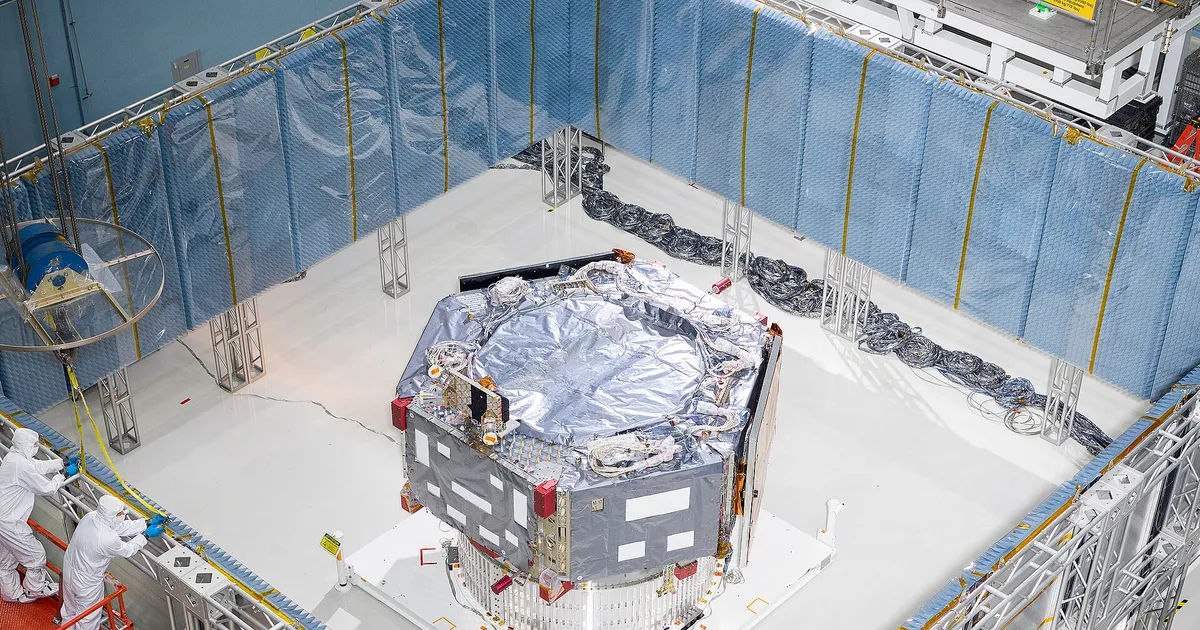
NASA is set to launch the $4.3 billion Nancy Grace Roman Space Telescope aboard a Falcon Heavy on Aug 30, 2026, to investigate dark energy and hunt for exoplanets.
 World
WorldScientists Generate Quantum Entanglement From Sunlight
University of Ottawa and Max Planck Institute researchers used sunlight, not a laser, to create entangled photon pairs with 94% fidelity.
 World
WorldOpenAI's Astra Solves 10 Open Math Problems, Some Stuck for 47 Years
OpenAI's next model resolved decades-old math problems, verified by the machine-checkable proof system Lean, at a compute cost of roughly $2,000.